


Dragon fruits come in different colors because they belong to different species and cultivars of cacti that produce varying natural pigments. The most common varieties are why are dragon fruits different colors – red-fleshed, white-fleshed, and yellow-skinned types, each containing distinct levels of betalains and other plant compounds that determine their unique hues, flavors, and nutritional profiles.
Why are dragon fruits different colors: The science behind it
When customers at Ogani VN ask us about the rainbow of pitaya colors in our fruit section, we love explaining the fascinating biology behind these stunning tropical fruits. The color isn’t just for show—it tells a complete story about the fruit’s genetics, chemistry, and even where it grew.
Natural pigments that create the color palette
The dramatic color differences you see in dragon fruit flesh come from specific plant compounds called betalains. Red and magenta dragon fruits contain high concentrations of these powerful pigments, the same family of compounds that give beets their deep crimson color. White-fleshed varieties have significantly lower betalain levels, which is why their flesh appears pale or creamy.
What’s truly interesting is that betalains aren’t just pigments—they’re also potent antioxidants. This means the deeper the red color, the more antioxidant properties that fruit typically contains. At Ogani VN, we’ve noticed that customers who understand this connection often gravitate toward the red varieties for their health benefits.
Genetic factors and different species
Here’s where it gets technical but important: not all dragon fruits are created equal genetically. The red and white-fleshed varieties both come from the species Selenicereus undatus (formerly called Hylocereus undatus), but they’re different cultivars—like how Granny Smith and Fuji are both apples but taste completely different.
Yellow dragon fruit, on the other hand, is an entirely different species called Selenicereus megalanthus. That’s why it doesn’t just have different flesh—it has those distinctive smaller, bumpier spines on the outside and a completely unique flavor profile. We source our yellow pitaya from specialized growers because it requires different growing conditions than its pink-skinned cousins.
Why are dragon fruits different colors: Main varieties explained
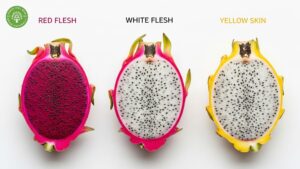
The dragon fruit market offers more diversity than most people realize. At Ogani VN, we regularly stock three main varieties, and occasionally get our hands on rarer types that customers go crazy for.
Red and magenta flesh varieties
Red-fleshed dragon fruit is the showstopper of the bunch. When you slice one open, you’re greeted with that stunning deep pink to magenta interior that stains everything it touches—from your cutting board to your tongue. The skin is typically bright pink or fuchsia with those characteristic leafy scales.
The taste? Sweeter and more robust than white varieties, with an almost berry-like quality. The texture tends to be softer and juicier. We’ve found that customers buying why are dragon fruits different colors for smoothie bowls or Instagram-worthy fruit platters almost always choose this variety because of its vibrant visual appeal and sweet flavor.
One thing we always tell first-time buyers: yes, that red color will turn your urine pink the next day. Don’t panic—it’s completely harmless and just means you’re getting those beneficial betalains!
White flesh varieties
White dragon fruit might look less dramatic inside, but don’t underestimate it. The pale, almost translucent flesh dotted with tiny black seeds has its own subtle beauty. The exterior looks nearly identical to red varieties—that same bright pink skin with green-tipped scales—which catches many people off guard when they cut into it.
The flavor profile is milder and more delicate, sometimes described as lightly sweet with hints of kiwi or pear. The texture is generally firmer and slightly crunchier than red varieties. At Ogani VN, we notice that customers who prefer less sweet fruits or want something refreshing for hot Vietnamese summers often choose the white variety.
Nutritionally, white dragon fruit is still impressive—it just has fewer betalains and a different antioxidant profile compared to its red counterpart.
Yellow skin varieties
Yellow dragon fruit is the exotic cousin that looks completely different from the outside. Instead of the smooth pink skin, it has a vibrant yellow exterior covered in smaller, softer spines that look almost like a pineapple’s armor. The flesh inside is typically white, and the entire fruit tends to be smaller than pink-skinned varieties.
Flavor-wise, this is often considered the sweetest and most flavorful of all dragon fruit types. There’s a more pronounced tropical taste—some say it resembles a cross between kiwi and melon with honey notes. Because it’s a different species (Selenicereus megalanthus), it’s less common in markets and typically more expensive.
We bring in yellow pitaya seasonally at Ogani VN, and it always sells out fast. If you see it, grab it—the taste experience is worth the premium price.
Why are dragon fruits different colors: Taste and nutrition differences
Understanding the relationship between dragon fruit colors and their characteristics helps you make better choices for your specific needs, whether you’re focused on flavor, health benefits, or cooking applications.
Sweetness levels and flavor profiles across colors
The color-to-sweetness correlation in dragon fruit is pretty reliable. Yellow varieties typically register the highest sugar content, often measuring 15-18 degrees Brix (the scale for sweetness). Red-fleshed pitaya falls in the middle range around 10-13 degrees Brix, while white varieties are the mildest at 8-12 degrees Brix.
But sweetness isn’t the whole story. Red dragon fruit has a more complex flavor with slight earthy undertones that complement its sweetness. White varieties offer that clean, refreshing taste that doesn’t overwhelm your palate—perfect for combining with other fruits or adding to salads where you don’t want competing flavors.
The texture differences matter too. Red varieties tend to be juicier with softer flesh that almost melts in your mouth when perfectly ripe. White dragon fruit maintains a firmer, crunchier bite even when fully mature. This makes white better for fruit salads where you want pieces to hold their shape, while red is ideal for blending into smoothies or making fruit purees.
Nutritional content and health benefits by color
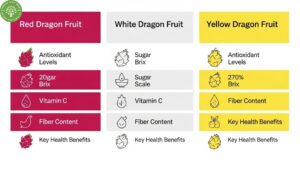
This is where the color differences become really significant from a health perspective. Red dragon fruit contains substantially higher levels of betalains, which research suggests have anti-inflammatory and antioxidant properties. Studies have shown that the antioxidant activity in red-fleshed varieties can be 2-3 times higher than white varieties.
Both colors provide excellent vitamin C content, fiber (from all those tiny seeds), and beneficial prebiotics. However, the red variety edges ahead in terms of overall antioxidant capacity. At Ogani VN, we’ve had nutritionists and health-conscious customers specifically request red pitaya for their smoothie programs and wellness routines.
White dragon fruit isn’t nutritionally inferior—it simply has a different profile. It often contains slightly higher iron levels and provides the same excellent digestive benefits from fiber. The lower sugar content in white varieties can actually be preferable for customers managing their blood sugar levels.
Yellow dragon fruit brings its own nutritional advantages, with higher natural sugar content providing quick energy, plus a good balance of vitamins and minerals. The different species means it contains some unique phytonutrients not found in the same concentrations in Selenicereus undatus varieties.
Frequently Asked Questions

Does the color of dragon fruit affect how ripe it is?
No, the flesh color is genetic and doesn’t change with ripeness. However, the skin color does change—unripe dragon fruit has green-tinged skin that brightens to vibrant pink (or yellow) when ready to eat. The flesh color remains red, white, or pale yellow regardless of maturity.
Can you tell what color the inside is by looking at the outside?
Not easily with pink-skinned varieties—both red and white flesh types have nearly identical exteriors. Yellow dragon fruit is obvious from its distinctive yellow spiky skin. Some growers use stickers or labels to differentiate red from white flesh varieties at the market.
Which color dragon fruit is healthiest?
Red-fleshed varieties have higher antioxidant levels due to betalains, giving them a slight nutritional edge. However, all colors provide valuable nutrients, fiber, and health benefits. Choose based on availability, taste preference, and your specific nutritional goals rather than worrying too much about which is “healthiest.”
Why does red dragon fruit stain everything?
The betalain pigments in red dragon fruit are water-soluble and very potent. They’ll temporarily stain your hands, cutting boards, and clothes, and turn your urine pink—all harmless effects that wash away. This is actually proof you’re getting those beneficial antioxidant compounds!
Are different colored dragon fruits different prices?
Generally yes. White-fleshed varieties are most common and affordable. Red varieties are slightly more expensive due to higher demand and superior antioxidant content. Yellow dragon fruit commands the highest price because it’s a different species, less commonly grown, and has the sweetest flavor profile.
Your guide to choosing the perfect dragon fruit color
Why are dragon fruits different colors? Now you understand it’s a beautiful combination of genetics, species variation, and natural chemistry at work. Whether you choose the antioxidant-rich red varieties, the refreshing white types, or the sweet yellow pitaya, each brings unique benefits to your fruit bowl.
At Ogani VN, we’re passionate about helping customers discover the perfect dragon fruit for their needs. Visit our store or browse our online selection to explore the full spectrum of fresh, premium-quality pitaya. Our produce specialists can help you select the ripest fruits and share preparation tips to maximize your dragon fruit experience. Don’t settle for ordinary fruit—embrace the color, taste the difference, and nourish your body with nature’s most vibrant tropical treasure.
Read more:
- Red Pitaya Powder: The Ultimate Superfood Guide For Health
- Dried Mango Nutrition: Complete Guide To Health Benefits.
- Dried Mango vs Freeze‑Dried Mango: Nutrition, Texture & Best Uses
- Dragon Fruit Dried: Your Complete Guide to This Exotic Superfood Snack
- Why Are Dragon Fruits Different Colors