


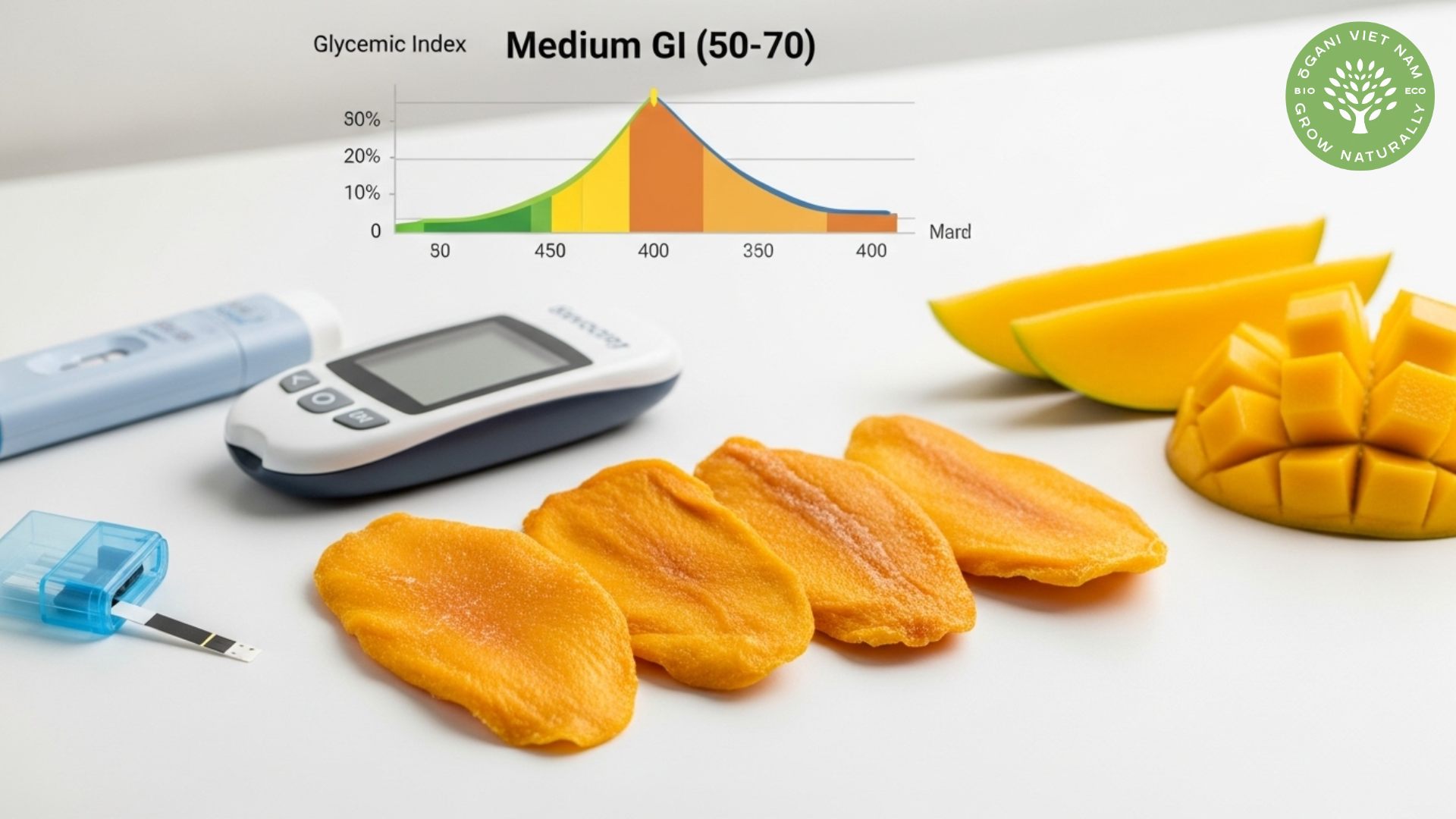
Dried mango GI is around 60, which is medium. This means it can raise blood sugar a little, so portion control is important.
At Ogani VN, we know that knowing the GI of snacks helps you eat smart. If you have diabetes, want to lose weight, or just want healthy snacks, understanding how dried mango affects blood sugar helps keep your energy steady.
What is the glycemic index of dried mango?
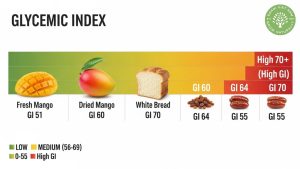
The dried mango GI is usually 55-65, depending on how it is made and if sugar is added. Fresh mango has a GI of about 51-56.
Drying removes most water, from 84% to 15-20%, which makes sugars more concentrated. A 30 g serving of dried mango has about 24 g of carbohydrates, like 150 g of fresh mango.
Glycemic load (GL) is also important. GL counts both the GI and the carbohydrate amount. A 30 g serving of dried mango has a GL around 14, which is medium.
How mango is processed changes the GI. Unsweetened, naturally dried mango has lower GI than sweetened or preserved types. Freeze-dried mango keeps more fruit structure, so blood sugar may rise a bit slower.
How dried mango affects blood sugar levels
Knowing how dried mango GI works helps control blood sugar. When you eat dried mango, your body breaks down its sugars. Blood sugar can rise in 15-30 minutes.
Fresh mango is different. It has more water and fiber, so sugar is absorbed slower. You feel full longer, and blood sugar stays steadier.
Dried mango is still better than candy or white bread. Its fiber helps slow sugar release and prevent quick spikes.
For people with diabetes, portion and timing are important. Eat dried mango with protein or healthy fat, like nuts or yogurt. This slows sugar absorption and gives a balanced snack.
Dried mango has antioxidants like mangiferin. They may help with insulin and blood sugar, but more research is needed.
Nutritional benefits and considerations for dried mango
Vitamin and mineral content
Dried mango has a lot of vitamin A. One 30-gram serving gives about 25% of daily needs. Vitamin A helps your eyes, immune system, and cells. Drying keeps most vitamins, so dried mango is an easy way to get nutrients.
It also has vitamin C, but less than fresh mango. One serving gives about 15% of daily needs. Vitamin C helps make collagen and protects your body. Dried mango has folate too, which is good for pregnant women and people who need more B vitamins.
Dried mango has potassium, which is good for the heart and muscles. Drying makes minerals stronger. One serving gives about 10% of daily potassium. Eating a small amount is a healthy snack for your heart.
Fiber content and digestive health
Dried mango has fiber, but less than fresh mango. One 30-gram serving has about 2 grams of fiber. This fiber helps your digestion and makes you feel full.
The soluble fiber in dried mango slows sugar absorption. It helps keep blood sugar stable. The fiber also helps good bacteria in your gut grow, which is good for digestion.
Caloric density considerations
Dried mango gi means you need to watch calories. A 30-gram serving has about 100 calories. It has more calories than fresh mango. Small portions give energy. This is good for active people but may affect weight if you eat too much.
Dried mango has natural sugar. It gives quick energy. It is good before exercise or when you feel tired. But it has little water, so you may not feel full fast. Eat small amounts to stay healthy.
Optimal consumption strategies for blood sugar management
Portion control guidelines
We suggest eating 20-30 grams of dried mango per serving, about 4-6 pieces. This amount gives nutrients but keeps blood sugar steady. Measuring portions helps avoid eating too much and sudden sugar spikes.

Making small snack containers helps you eat the right amount. Eating dried mango with other foods can slow digestion and lower blood sugar spikes. Adding protein, like almonds or Greek yogurt, makes the snack healthier and more balanced.
Timing considerations
The time you eat dried mango changes how it affects your blood sugar. Eating it with a meal lowers its sugar impact compared to eating it alone. Eating it after exercise helps muscles use the sugar for energy.
Eating dried mango in the morning gives your body more time to use the sugar. In the evening, eat it with protein to reduce blood sugar spikes. Avoid eating it right before bed to keep sugar levels stable.
Combination strategies
Eating dried mango with protein and healthy fats lowers its effect on blood sugar. Nuts, seeds, or nut butter help slow sugar absorption and give extra nutrients. This keeps energy steady and helps you feel full longer.
Mixing dried mango into oatmeal or yogurt makes a balanced meal. The protein and complex carbs reduce sugar spikes and give lasting energy. This works well for breakfast or before exercise.
Comparing dried mango to other dried fruits
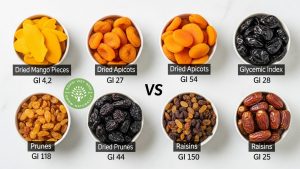
Knowing how dried mango GI compares to other dried fruits helps you choose snacks wisely. Dried apricots have a lower GI of about 30-32, good for controlling blood sugar. Dates can be high, 55-100+, while raisins are 54-66.
Prunes have the lowest GI, around 29, because of fiber and sugar type. Taste and nutrition goals also matter. Dried figs are about 61, similar to dried mango, but have different minerals.
When choosing dried fruits, pick ones without added sugar and without sulfur. This helps keep the sugar effect on blood low. Check labels to avoid products with extra sugar that can raise the GI. Organic dried fruits are usually processed gently, keeping more good nutrients.
The way dried fruits are made changes their GI. Freeze-dried fruits keep more of the original fruit than hot-dried ones, so they may raise blood sugar less. But price and availability also affect what you can buy.
Frequently Asked Questions
Q: Can diabetics eat dried mango safely?
A: Yes, diabetics can eat dried mango in small amounts. Stick to 20-30 grams per serving and watch blood sugar. Always ask a doctor for advice.
Q: How does dried mango compare to fresh mango for blood sugar?
A: Fresh mango has less effect on blood sugar because it has more water and fiber. Dried mango GI is usually 10-15 points higher than fresh mango.
Q: What’s the best time to eat dried mango?
A: Eat it after exercise or with breakfast. Avoid eating it alone on an empty stomach or late at night to keep blood sugar steady.
Q: Does organic dried mango have a lower GI?
A: Organic does not always mean lower GI. But organic dried mango usually has no added sugar or sulfur, which can help control blood sugar. Check labels carefully.
Q: How much dried mango is safe daily?
A: Limit to 20-30 grams (4-6 pieces) per day. This gives nutrients without too much sugar or calories.
Making informed choices with dried mango gi knowledge
Knowing the GI of dried mango helps you choose healthy snacks. Dried mango has many nutrients and is easy to eat, but its medium GI means you should eat only a small amount.
At Ogani VN, we give you high-quality dried mango with natural taste and no added sugar. It’s a tasty and healthy choice for your diet.
You can enjoy dried mango as part of a balanced meal. Try our organic, unsweetened dried mango and eat it in small portions. Contact our team for simple tips on how to add dried fruits to your daily diet.
Read more:
- Are Dried Mango Slices Healthy? Complete Nutrition Guide 2025
- Pitaya Powder: Complete Guide to Benefits & Uses
- Organic Dried Mango Wholesale: Premium Quality from Ogani VN
- Unsweetened Vs No Sugar Added Vs Low Sugar Dried Mango: What’s The Difference?
- Dried Mango GI: Complete Guide For Blood Sugar Management