

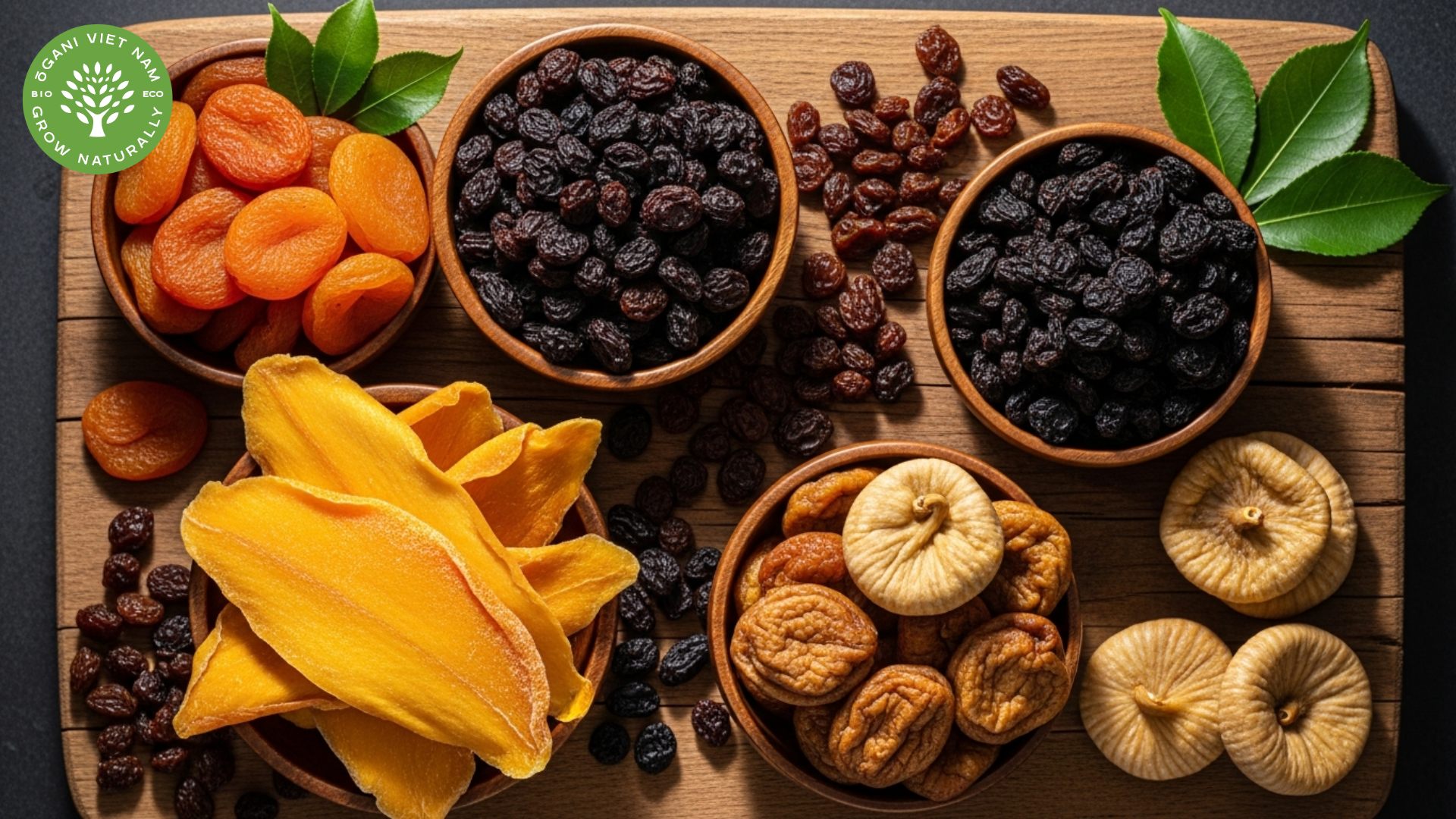
When you pick up a bag of bright orange dried apricots at the store, have you ever wondered why they look so vibrant? The answer often lies in sulphur dioxide (SO2), a common preservative used in conventional dried fruit production. At Ogani VN, we believe you deserve to know exactly what goes into your snacks, which is why we’re passionate about unsulphured dried fruit – a natural alternative that’s gaining attention among health-conscious consumers.
Unsulphured dried fruit is simply fruit that has been dehydrated without the use of sulphur dioxide or any artificial preservatives. While these fruits may look darker and less “perfect” than their sulphured counterparts, they offer a more authentic taste and avoid potential health concerns associated with sulphur additives. Let’s explore why more people are making the switch to this natural option.
What exactly is unsulphured dried fruit?
The term “unsulphured” refers to dried fruits processed without sulphur dioxide (SO2), a preservative commonly used in the food industry. When we dry our fruits naturally at Ogani VN, we use traditional air-drying or low-temperature dehydration methods that preserve the fruit’s natural nutrients without chemical intervention.
Here’s what happens during natural drying: as moisture evaporates, the fruit’s natural sugars concentrate, creating that sweet, chewy texture we all love. Without sulphur treatment, fruits undergo a natural browning process called enzymatic oxidation. This is why unsulphured apricots appear brown rather than bright orange, and unsulphured mango takes on a deeper, richer color.
The conventional food industry uses sulphur dioxide for three main reasons: maintaining the fruit’s original color at ripeness, keeping the texture soft and pliable, and extending shelf life. While these benefits sound appealing, many consumers are now questioning whether the trade-off is worth it, especially those with sulphur sensitivities or allergies.
Health benefits of unsulphured dried fruit worth knowing
We’ve noticed a significant shift in customer awareness over the past few years. More people are reading labels carefully, and they’re concerned about what they’re putting into their bodies – and rightfully so.
Avoiding sulphur dioxide sensitivity
Sulphur dioxide is known to trigger adverse reactions in sensitive individuals, particularly those with asthma. The FDA estimates that approximately 5-10% of people with asthma may experience reactions to sulphites, ranging from mild breathing difficulties to more severe respiratory issues. Symptoms can include wheezing, chest tightness, hives, or digestive discomfort.
By choosing unsulphured dried fruit, you’re eliminating this risk entirely. We’ve had customers tell us they can finally enjoy dried apricots again after switching to our natural, preservative-free options – and that feedback means everything to us.
Preserving natural nutrients
Without chemical processing, unsulphured fruits retain more of their original nutritional profile. While both sulphured and unsulphured dried fruits offer concentrated nutrients, the natural drying process we use maintains the integrity of vitamins, minerals, and antioxidants without interference from preservatives.
The darker color you see in unsulphured fruits? That’s actually evidence of the natural compounds and antioxidants present. Those brown hues in our dried apricots or the deep amber in our dried mango indicate authentic, minimally processed fruit.
Clean eating and allergen awareness
For those following clean eating principles or managing food allergies, unsulphured dried fruits align perfectly with a whole-foods approach. They typically contain just one ingredient: fruit. No SO2, no artificial colors, no mysterious additives – just pure, concentrated fruit goodness.
How to identify genuine unsulphured dried fruit
Not all products labeled as “natural” are truly unsulphured, and we want you to be an informed shopper, even when you’re not buying from us.
Check the color first. This is your most reliable visual indicator. Authentic unsulphured apricots should be brown, not bright orange. Unsulphured golden raisins will be darker than conventional ones. If the fruit looks too perfect or unnaturally vibrant, it’s likely been treated with preservatives.
Read the ingredient list carefully. Look for these red flags on the label: sulphur dioxide, SO2, sulfites, sodium bisulfite, or potassium metabisulfite. A truly unsulphured product should list only the fruit itself, perhaps with the addition of natural oils to prevent clumping.
Examine the texture. Unsulphured dried fruits may feel slightly drier or less uniform than sulphured versions. This variation is natural – real fruit isn’t perfectly consistent, and that’s okay. At Ogani VN, we embrace these natural variations as a sign of authenticity.
Consider the source. Look for brands that specialize in organic and natural products. Companies committed to clean ingredients are more likely to offer genuinely unsulphured options. Check for certifications like USDA Organic, Non-GMO Project Verified, or allergen-free labels, which often indicate a commitment to minimal processing.
Comparing unsulphured dried fruit with conventional options

Let’s break down what sets these two categories apart, because the differences go beyond just color.
Appearance: Sulphured fruits maintain their bright, fresh-picked appearance – think vivid orange apricots or golden-yellow pineapple. Unsulphured fruits develop darker, earthier tones through natural oxidation. While they may not win beauty contests, they’re authentic and unaltered.
Taste profile: Here’s where things get interesting. Many of our customers report that unsulphured dried fruit has a more intense, genuine fruit flavor. Without sulphur’s tangy undertone, you experience the pure sweetness and complexity of the fruit itself. Our dried mango, for instance, tastes like actual mango – not like mango plus something chemical.
Shelf life: Sulphured fruits last longer on the shelf due to their preservative content. Unsulphured options have a shorter shelf life but remain perfectly safe and delicious when stored properly. We typically recommend consuming our unsulphured products within 6-12 months of opening for optimal quality.
Processing method: Conventional sulphured fruits are often treated with SO2 gas or dipped in sulphite solutions before drying. Our unsulphured process at Ogani VN involves selecting ripe, high-quality fruits and using gentle dehydration methods that work with the fruit’s natural characteristics, not against them.
Best ways to store and enjoy unsulphured dried fruit

Getting the most out of your unsulphured dried fruit requires a bit more attention than conventional options, but it’s worth the effort.
Storage essentials
Keep your unsulphured dried fruits in airtight containers or resealable bags to protect them from moisture and air exposure. Store them in a cool, dry place away from direct sunlight – a pantry shelf works perfectly. For longer-term storage, consider refrigeration, which can extend freshness by several months.
You might notice natural clumping in unsulphured fruits, especially in humid conditions. This is completely normal and doesn’t indicate spoilage. Simply break apart the pieces gently before eating.
Creative ways to enjoy

At Ogani VN, we love seeing how our customers incorporate dried fruits into their daily routines. Add them to morning oatmeal or yogurt for natural sweetness without refined sugar. Blend them into smoothies for concentrated fruit flavor and nutrients. Chop them into homemade trail mix with nuts and seeds for a balanced snack.
For cooking and baking, unsulphured fruits work beautifully in grain salads, tagines, chutneys, and baked goods. Their deeper flavors actually enhance savory dishes more effectively than sulphured varieties. Try our dried mango in curry or our apricots in a Moroccan-inspired stew – the results are incredible.
Frequently Asked Questions
Is unsulphured dried fruit more expensive than regular dried fruit?
Yes, unsulphured options often cost slightly more due to the careful selection of high-quality fruit and the natural drying process that takes more time and attention. However, many customers find the investment worthwhile for the health benefits and authentic taste.
Does unsulphured dried fruit taste different?
Absolutely, and most people prefer it once they adjust. The flavor is more concentrated and genuine, without the slight tangy or chemical aftertaste that sulphur can leave. You’re tasting pure fruit, exactly as nature intended.
How long does unsulphured dried fruit last?
When stored properly in airtight containers in a cool, dry place, unsulphured dried fruit typically stays fresh for 6-12 months. Refrigeration can extend this to a year or longer. Always check for any off-odors or mold before consuming.
Can people with asthma safely eat unsulphured dried fruit?
Yes, that’s one of the main advantages. Since there’s no sulphur dioxide, individuals with asthma or sulphite sensitivity can enjoy these fruits without worrying about respiratory reactions or other adverse effects.
Why does my unsulphured dried fruit look darker?
The darker appearance is actually a positive sign – it indicates the absence of chemical preservatives. Natural enzymatic browning occurs during the drying process, which is completely normal and doesn’t affect the fruit’s safety or nutritional value.
Ready to make the switch to natural snacking?

After exploring the world of unsulphured dried fruit, you can see why so many health-conscious consumers are choosing this natural alternative. The benefits speak for themselves: no chemical preservatives, authentic fruit flavor, reduced allergy risks, and a commitment to clean eating that aligns with your values.
At Ogani VN, we’re committed to bringing you the finest selection of naturally dried fruits that honor both tradition and your health. Our unsulphured mango, apricots, and other dried fruit varieties represent our belief that good food shouldn’t require compromise. When you choose our products, you’re choosing transparency, quality, and the pure taste of Vietnamese-sourced fruits dried the way nature intended.
Ready to experience the difference? Browse our collection of premium unsulphured dried fruit today and discover what real fruit should taste like. Your body – and your taste buds – will thank you.
Read more:
- Baking With Dried Red Dragon Fruit: Breads, Muffins & Cookies
- Dried Red Dragon Fruit vs Fresh: Color, Nutrition & When to Use Each
- Dragon Fruit Powder: Unlocking Ít Superfood Potential for Health and Wellness.
- Dehydrated Mango – Healthy Snack From Fresh Mangoes
- Unsulphured Dried Fruit: Your Complete Guide to Natural, Healthier Snacking