


Sweet dried fruits are nature’s most honest treat — concentrated flavor, long shelf life, and a surprising amount of nutrition packed into every chewy bite. Whether you’re hunting for a smarter snack alternative to candy or looking to level up your morning oatmeal, this guide from Ogani VN will walk you through everything worth knowing.
Why sweet dried fruits are naturally so sweet
When fresh fruit loses its water content — through sun drying, dehydration, or freeze-drying — the natural sugars don’t disappear. They concentrate. A single handful of dried mango can carry the sweetness of two or three fresh slices, without a drop of added syrup. That’s why sweet dried fruits hit the palate so hard yet still qualify as whole food.
At Ogani VN, we’ve worked closely with farmers in the Mekong Delta and Central Highlands to source fruits that are dried at peak ripeness. Why does that matter? Because fruit picked too early never fully develops its fructose profile — you end up with something chewy but flat. Peak-ripeness drying is the difference between a dried mango that tastes like sunshine and one that just tastes like… sugar.
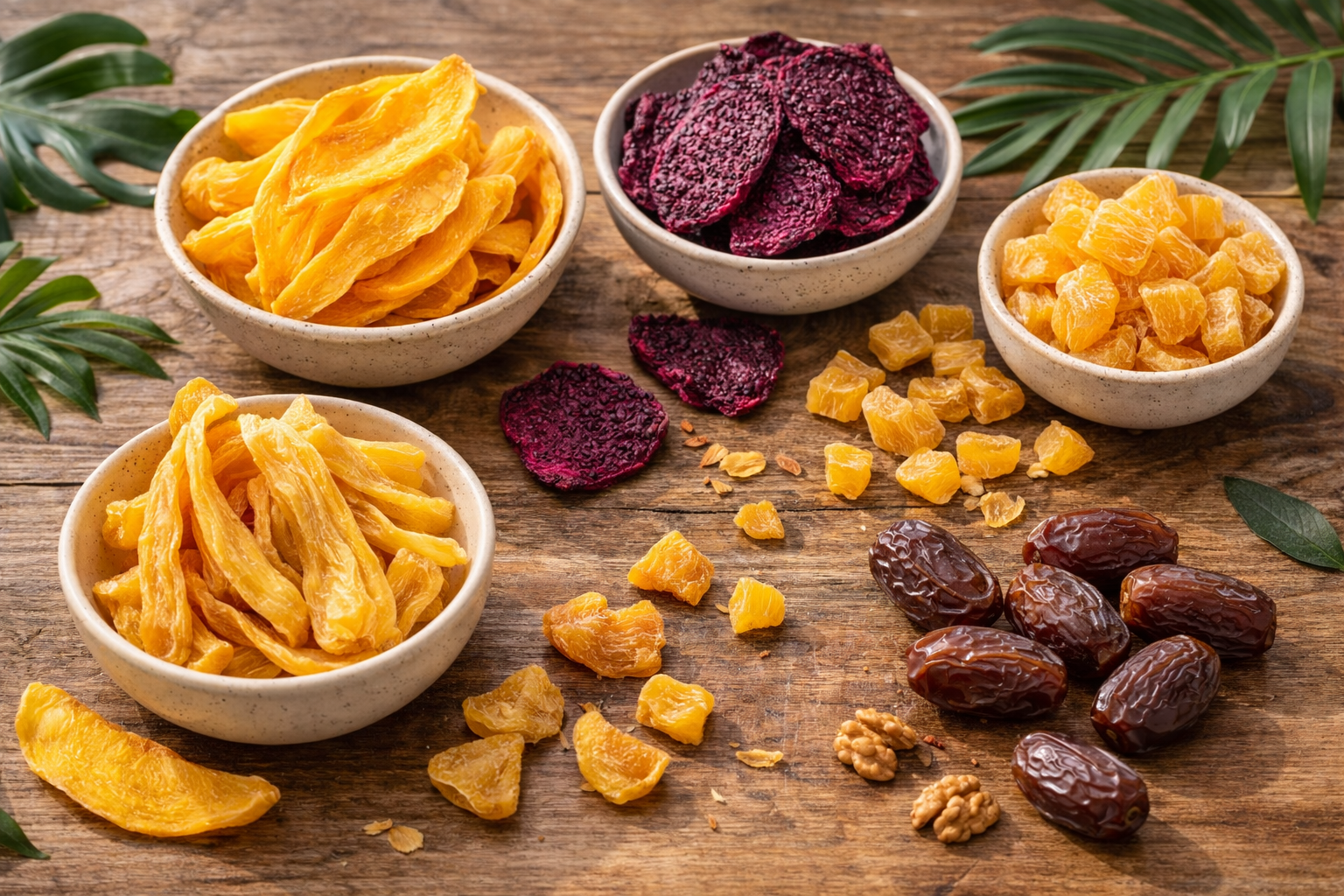
The main naturally sweet varieties you’ll encounter include:
- Dried mango — tropical, fibrous, rich in beta-carotene
- Dried dragon fruit — mild sweetness, visually stunning with its magenta color
- Dried jackfruit — dense, caramel-like chew with a uniquely floral note
- Dried pineapple — bright acidity balanced by concentrated natural sugar
- Medjool dates — arguably the sweetest of all, with a honey-like depth
Sweet dried fruits vs. candy: the comparison most people get wrong
There’s a Reddit thread that pops up often in SERPs asking whether dried fruit is a good candy alternative. The short answer: yes, but with context.
Candy — especially the mass-market kind — relies primarily on refined corn syrup and artificial flavoring. You get a sugar spike, a short flavor ride, and then nothing. Sweet dried fruits, on the other hand, bring fiber, micronutrients like potassium and vitamin C, and polyphenols that act as antioxidants in the body. The glycemic response is still real, especially if you’re eating sweetened varieties with added sugar, but the overall nutritional profile is incomparable.
| Feature | Sweet dried fruits | Regular candy |
|---|---|---|
| Natural sugar | Yes (fructose, glucose) | Mostly no (corn syrup) |
| Dietary fiber | Present (slows sugar absorption) | Virtually none |
| Vitamins & minerals | Yes (varies by fruit) | None |
| Antioxidants | Yes (polyphenols, beta-carotene) | No |
| Added sweeteners | Sometimes (check label) | Almost always |
| Shelf life | 6–18 months | 12–24 months |
One thing worth watching: some commercial dried cranberries, blueberries, and tropical fruits are infused with cane sugar or glucose syrup before drying. Always check the ingredient list. At Ogani VN, we keep our products unsweetened where the fruit’s natural flavor allows — and clearly label when any sweetener is used.
Best ways to use sweet dried fruits every day
Here’s where most guides stop at “add to trail mix” and call it a day. But there’s genuinely more creative territory worth exploring.
As a natural sweetener replacement
Chopped dried dates or dried figs blend into smoothies and energy balls beautifully, replacing refined sugar without any compromise in sweetness. Medjool dates in particular have a caramel undertone that works in raw dessert bases, no oven required. We’ve seen customers use our dried jackfruit as a topping for rice porridge — a Vietnamese breakfast staple — instead of sugar.
In savory cooking
This surprises people. Sweet dried fruits balance beautifully against savory and umami flavors. Dried mango pairs with grilled pork; dried pineapple lifts a coconut curry; a few pieces of dried dragon fruit can brighten a cold noodle salad. Vietnamese cuisine already has a long tradition of using sweet-sour contrasts — sweet dried fruit fits in more naturally than most people expect.
Everyday snacking and portion control
The concentration of sugar means portion awareness matters. A reasonable serving is around 30–40 grams — roughly a small handful. Because the flavor is intense, you naturally eat less than you would with fresh fruit. That said, it’s easy to overdo dried mango in front of a screen (speaking from experience here). Pre-portioning into small bags or containers makes a real difference.
How to choose high-quality sweet dried fruits
Not all dried fruit is created equal. Here’s what Ogani VN recommends checking before you buy:
- Ingredient list: Ideally just the fruit itself. No sulfur dioxide (SO₂ is a common preservative that can trigger reactions in sensitive individuals), no added glucose syrup.
- Color: Naturally dried apricots are brown, not bright orange. Vivid unnatural colors usually indicate sulfite treatment or artificial dye.
- Texture: Should be pliable and moist, not rock-hard or sticky-wet. Both extremes suggest improper drying or storage.
- Packaging: Airtight, resealable packaging extends shelf life and protects against humidity — critical in Vietnam’s climate.
- Origin transparency: Knowing where the fruit was grown tells you a lot about pesticide practices, ripeness standards, and post-harvest handling.
At Ogani VN, we visit source farms directly and apply clean drying methods — sun-drying where climate allows, low-temperature dehydration for delicate fruits like dragon fruit powder. The result is a product where you can actually taste the terroir of the fruit.
Frequently Asked Questions
Are sweet dried fruits healthy for daily consumption? Yes, in moderate amounts. Most dried fruits retain their fiber, minerals, and antioxidants after drying. The main consideration is caloric density — dried fruit has roughly 3–4x the calories per gram of fresh fruit due to water removal. 30–40g per day is a sensible daily serving for most adults.
Which dried fruits are the sweetest naturally? Medjool dates, dried figs, and dried jackfruit rank among the highest in natural sugar content. Dried mango and dried pineapple follow closely. If you prefer milder sweetness, dried dragon fruit and freeze-dried strawberries are gentler options.
Is it safe for people with diabetes to eat dried fruits? It depends on the individual and the quantity. Dried fruits have a higher glycemic load than fresh fruit because sugars are concentrated. Unsweetened varieties with higher fiber content — like dried apricots or prunes — tend to have a lower glycemic impact. Consulting a nutritionist for personalized guidance is always recommended.
What’s the difference between sun-dried and dehydrated dried fruit? Sun-drying is the traditional method — slower, dependent on weather, but often preserves more aromatic compounds. Dehydration uses controlled heat in a chamber, giving more consistent results and better moisture control. Freeze-drying is the premium option: retains the most nutrients and original flavor, but costs more. Ogani VN uses all three methods depending on the fruit type.
How long do sweet dried fruits last? Properly stored in an airtight container away from heat and sunlight, most dried fruits last 6 to 18 months. Once opened, consume within 1–2 months for best flavor. In Vietnam’s humid climate, refrigerating opened packages is a smart move.
Make the switch to sweet dried fruits today
Sweet dried fruits offer something rare in the snack world: genuine flavor, real nutritional value, and versatility that goes far beyond just nibbling out of a bag. From naturally sweetened dried mango to nutrient-dense dragon fruit powder, the range is wider — and more useful — than most people realize.
At Ogani VN, our entire product philosophy is built around one idea: clean sourcing, honest drying, no shortcuts. If you’re ready to swap out empty-calorie snacks for something that actually tastes incredible and does your body a favor, explore our full range of sweet dried fruits at oganivn.com. Got questions about specific products, sourcing, or how to use them in cooking? Reach out directly — we love hearing from people who take their food seriously.
Read more:
- Dried Red Dragon Fruit vs Fresh: Color, Nutrition & When to Use Each
- Sweet Dried Fruits: Nature’s Candy That’s Actually Good for You
- Red Dragon Fruit Dried: Your Complete Buying Guide
- Dried Mango Fibre Content: What You Need to Know
- Dried Mango Shelf Life: How Long Does It Really Last?