


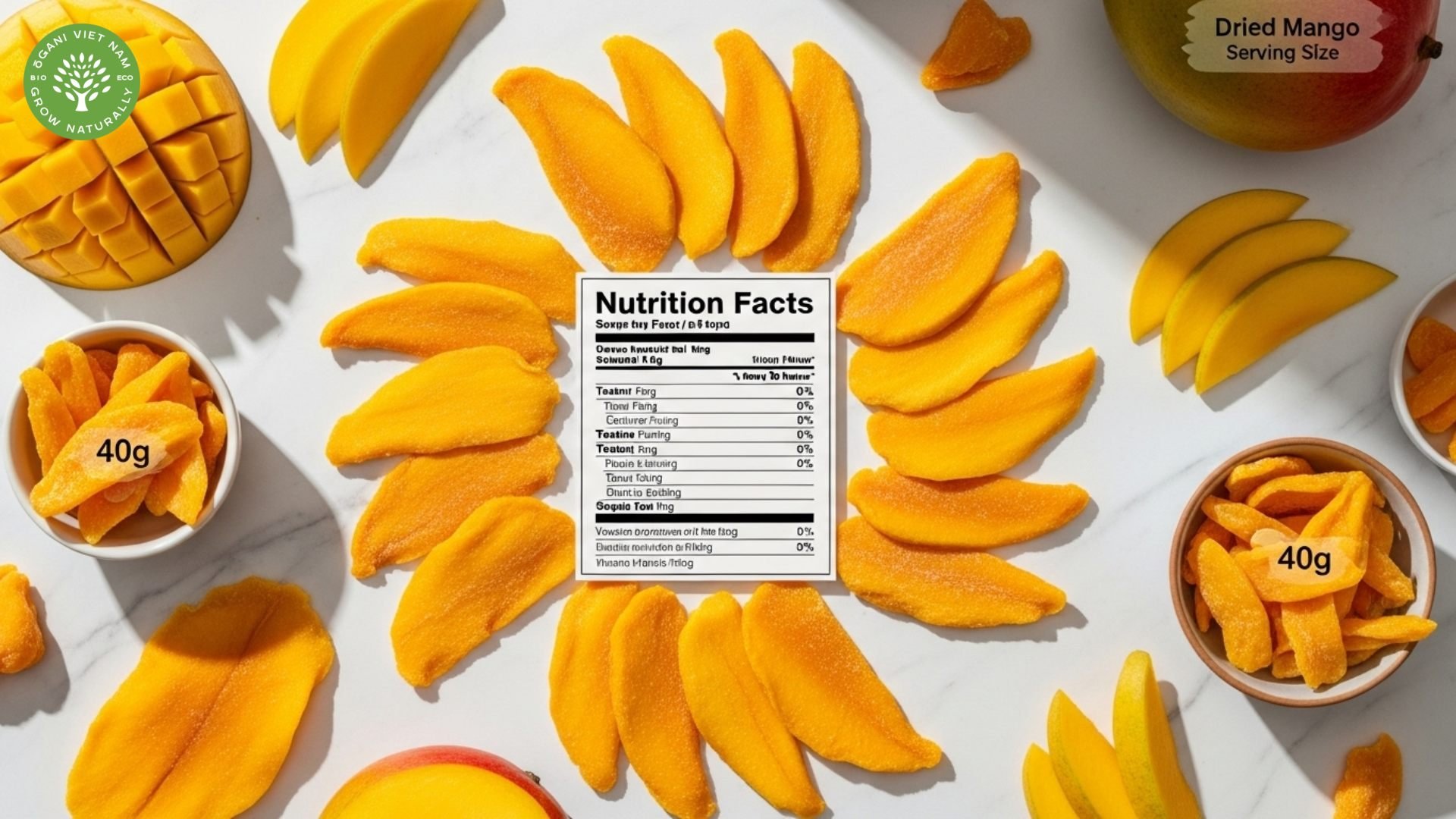
When you pick up a pack of dried mango, you’re essentially holding concentrated tropical nutrition in your hands. Nutrition facts dried mango reveal a snack that’s calorie-dense yet packed with essential vitamins and minerals – but there’s more to the story than just the numbers on the label.
At Ogani VN, we’ve noticed that many of our customers grab dried mango without fully understanding what they’re getting nutritionally. Some are surprised by the sugar content, while others don’t realize just how much vitamin A they’re consuming in those chewy golden slices. Let’s break down exactly what’s in your dried mango and how it impacts your health.
Nutrition facts dried mango: Breaking down the complete profile
A standard serving of dried mango (about 40-45 grams or roughly 5-6 pieces) contains approximately 120-134 calories. That’s significantly more concentrated than fresh mango, which makes sense when you consider that the dehydration process removes water while leaving all the natural sugars and nutrients behind.
The macronutrient breakdown looks something like this: you’re getting around 31-35 grams of carbohydrates per serving, with about 27-30 grams coming from natural fruit sugars. Protein content sits at about 1 gram, and fat is nearly negligible at less than 1 gram. The fiber content hovers around 1-2 grams per serving – not as high as you might expect for a fruit product, but still contributing to your daily intake.
What really matters here is understanding that dried mango is fundamentally different from fresh mango in terms of caloric density. If you eat the same volume of both, you’ll consume roughly 3-4 times more calories from the dried version. This isn’t inherently bad – it just means you need to be mindful of portion sizes, especially if you’re watching your calorie intake.
Key vitamins in nutrition facts dried mango you should know

This is where dried mango truly shines. The dehydration process concentrates not just the sugars, but also the beneficial nutrients that make mango such a nutritional powerhouse.
Vitamin A and beta-carotene content
Dried mango is absolutely loaded with vitamin A, primarily in the form of beta-carotene (which gives it that gorgeous orange color). A single serving can provide 20-25% of your daily vitamin A needs. This nutrient is crucial for maintaining healthy vision, supporting immune function, and keeping your skin looking vibrant.
We’ve had customers tell us they started incorporating dried mango into their afternoon snack routine specifically for the vitamin A content, especially during months when fresh produce variety is limited. Your body converts that beta-carotene into active vitamin A as needed – it’s like having a built-in nutrient management system.
Vitamin C and antioxidant properties
While some vitamin C is lost during the drying process (heat and air exposure can degrade this sensitive vitamin), dried mango still retains about 15-19% of your daily vitamin C requirement per serving. That’s not insignificant, though fresh mango definitely wins this category.
The antioxidant profile goes beyond just vitamin C. Dried mango contains polyphenols and mangiferin – compounds that help combat oxidative stress in your body. These aren’t always listed on nutrition labels, but they’re there, working quietly in the background.
Essential minerals: potassium, iron, and calcium
Potassium content in dried mango varies by brand and preparation method, but you’re typically looking at 100-200 milligrams per serving. That’s about 2-4% of your daily needs – modest, but every bit counts toward maintaining healthy blood pressure and proper muscle function.
Iron content is similarly modest at around 2-4% of the daily value, while calcium contributes about 2% per serving. These aren’t standout sources of these minerals, but when you consider dried mango as part of a varied diet, these small contributions add up throughout the day.
Sugar and calories in nutrition facts dried mango explained
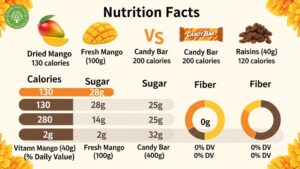
Let’s address the elephant in the room: yes, dried mango is high in sugar. Those 27-30 grams per serving translate to about 6-7 teaspoons of sugar. However – and this is important – it’s naturally occurring fruit sugar (fructose), not added refined sugar (assuming you’re buying unsweetened varieties).
Your body processes natural fruit sugars differently than it processes added sugars, thanks to the fiber, nutrients, and other compounds present in the fruit. That said, sugar is still sugar when it comes to blood glucose impact. If you’re managing diabetes or watching your sugar intake carefully, dried mango requires portion control.
Here’s a practical comparison that might help put things in perspective:
| Snack Option | Calories | Sugar | Fiber | Vitamin A |
|---|---|---|---|---|
| Dried mango (40g) | 130 | 28g | 2g | 20% DV |
| Fresh mango (100g) | 60 | 14g | 2g | 21% DV |
| Candy bar (40g) | 200 | 25g | 0g | 0% DV |
| Raisins (40g) | 120 | 32g | 2g | 0% DV |
What you’ll notice is that while dried mango has concentrated sugars, it also delivers actual nutritional value alongside those calories. A candy bar might have similar sugar content but offers nothing beneficial in return.
Comparing nutrition facts dried mango vs fresh mango

The debate between fresh and dried isn’t really about which is “better” – they each have their place. Fresh mango wins on water content (keeping you hydrated), lower calorie density, and higher vitamin C levels. But dried mango offers unmatched convenience, longer shelf life, and concentrated nutrients in a portable package.
One advantage of dried mango that often gets overlooked is its fiber becomes more accessible during digestion. Some people actually digest dried mango more easily than fresh, though this varies individually. The chewy texture also means you eat more slowly, which can help with satiety signals – your brain has more time to register that you’re eating.
We stock both organic unsweetened and conventional dried mango at Ogani VN, and honestly, the nutrition facts dried mango comparison between these types shows minimal difference beyond the absence of preservatives in organic versions. What matters more is whether sugar has been added during processing. Always check ingredient lists – it should say just “mango” or “organic mango,” nothing else.
The key to enjoying dried mango healthfully is treating it like the concentrated nutrition source it is – a little goes a long way.
When you compare dried mango to other dried fruits, it holds up well. It has a lower glycemic index than raisins or dates, meaning it causes a slower rise in blood sugar. The vitamin A content far exceeds most other dried fruits. And unlike some dried fruits that are commonly sulfured (sulfur dioxide added for color preservation), many dried mango brands now offer unsulfured options that maintain a more natural appearance and avoid potential sensitivities.
Frequently asked questions
How many pieces of dried mango should I eat per day?

A reasonable portion is 5-6 pieces (about 40-45 grams), which keeps you around 130 calories and 28 grams of sugar. If you’re active or need the calories, you might go slightly higher, but most people should treat it as an occasional snack rather than a daily staple.
Is dried mango good for weight loss?
It can be included in a weight loss diet, but it’s calorie-dense so portion control is essential. The fiber and natural sweetness can help satisfy cravings, but eating too much can easily put you over your calorie budget. We recommend pre-portioning it rather than eating straight from the bag.
Does dried mango have as much vitamin C as fresh?
No, the drying process reduces vitamin C content significantly – you retain about 15-20% compared to fresh mango. However, vitamin A content remains high, and other nutrients are actually concentrated through dehydration.
Can diabetics eat dried mango?
Diabetics should approach dried mango cautiously due to its high natural sugar content. Small portions (2-3 pieces) paired with protein or healthy fat can slow sugar absorption. Always monitor blood glucose response and consult with your healthcare provider about incorporating it into your meal plan.
What’s the difference between sweetened and unsweetened dried mango?
Unsweetened dried mango contains only the fruit’s natural sugars (about 28g per serving). Sweetened versions have added sugar, cane juice, or corn syrup, pushing sugar content to 35-40g per serving. Always read labels carefully – the difference matters for both calorie and sugar management.
Making smart choices with nutrition facts dried mango
Understanding nutrition facts dried mango helps you make informed choices about this tropical treat. Yes, it’s higher in sugar and calories than fresh mango, but it also delivers concentrated vitamin A, convenient portability, and satisfying sweetness that can replace less nutritious snacks in your diet.
At Ogani VN, we believe in transparent nutrition information and helping our customers choose quality dried fruits that fit their lifestyle. Whether you’re looking for an afternoon energy boost, a vitamin A source during winter months, or simply a delicious alternative to processed snacks, dried mango deserves a spot in your pantry – as long as you respect the portion sizes.
Ready to experience premium nutrition facts dried mango for yourself? Visit Ogani VN today to explore our selection of organic, unsweetened dried mango and other wholesome dried fruits. Our team can help you find the perfect options for your nutritional needs and taste preferences. Your healthier snacking journey starts here.
Read more:
- Baking With Dried Red Dragon Fruit: Breads, Muffins & Cookies
- Dried Red Dragon Fruit vs Fresh: Color, Nutrition & When to Use Each
- Nutrition Facts Dried Mango: Complete Guide To Benefits And Values
- Dried Mango vs Freeze‑Dried Mango: Nutrition, Texture & Best Uses
- Red Dragon Fruit: The Exotic Superfruit You Need To Try