


Yes, dried mango is better than candy from a nutritional standpoint. While both satisfy sweet cravings, dried mango retains essential vitamins, minerals, and fiber that candy simply doesn’t offer. But here’s the thing—it’s not quite as simple as “good versus bad.” We at Ogani VN want to give you the full picture, because understanding what you’re actually eating matters more than following blanket rules.
Is dried mango better than candy nutritionally?
Let’s get real about what you’re putting in your body. When you reach for a piece of candy, you’re basically eating refined sugar, artificial colors, and maybe some corn syrup if you’re lucky. There’s practically zero nutritional value—just empty calories that spike your blood sugar and leave you crashed an hour later.
Dried mango? Completely different story. Sure, it’s concentrated with natural sugars because the water’s been removed, but it comes packaged with actual nutrients your body can use. We’re talking vitamin C for your immune system, vitamin A for your eyes and skin, and a solid amount of dietary fiber that helps keep your digestion running smoothly. Plus, you get minerals like potassium and magnesium that candy manufacturers forgot existed.
Here’s a comparison that might surprise you:
| Nutrient | Dried Mango (100g) | Typical Candy (100g) |
|---|---|---|
| Calories | 319 | 400-550 |
| Fiber | 3-5g | 0-0.5g |
| Vitamin C | 40-60mg | 0mg |
| Potassium | 700mg | Trace amounts |
| Added Sugar | 0g (natural only) | 70-85g |
| Protein | 2-3g | 0-1g |
The numbers tell a story, but they don’t tell the whole story. The fiber content alone makes dried mango a more balanced energy source. It slows down sugar absorption, preventing those nasty blood sugar roller coasters that leave you reaching for another candy bar an hour later. Your body actually gets something useful out of dried mango—antioxidants that fight cell damage, nutrients that support bodily functions, and energy that doesn’t abandon you mid-afternoon.
Is dried mango better than candy when comparing sugar content?
This is where people get confused, and honestly, the internet doesn’t help. You’ll see articles screaming “sugar is sugar!” while others claim natural sugar is fine. The truth? It’s somewhere in the middle, and context matters more than most people realize.
Natural fructose versus refined sweeteners

Dried mango contains fructose that comes straight from the fruit itself. No one added it—it’s been there since the mango was growing on the tree. When you eat dried mango, you’re getting that sugar alongside fiber, vitamins, and minerals. Your body processes this differently than it processes the refined white sugar or high-fructose corn syrup in candy.
Candy sugar is isolated and refined. It hits your bloodstream fast and hard, with nothing to slow it down. That’s why you get the initial rush followed by the crash. It’s pure fuel with no nutritional passengers along for the ride. The glycemic response is brutal—your pancreas has to work overtime pumping out insulin to deal with the sugar bomb you just dropped on it.
Portion control makes all the difference
Now, here’s where I need to be honest with you. Just because dried mango has natural sugar doesn’t mean you can eat unlimited amounts. A 100-gram serving of dried mango contains about 66 grams of sugar—that’s a lot. Compare that to fresh mango at around 14 grams per 100 grams, and you can see why the “dried” part matters.
But—and this is important—most people naturally eat smaller portions of dried mango than they would candy. The fiber makes you feel fuller faster. The chewy texture takes longer to eat. And there’s something about knowing you’re eating fruit that makes your brain more satisfied than when you’re mindlessly popping M&Ms.
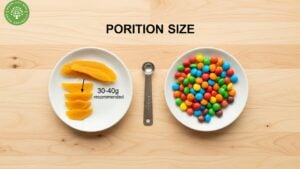
We recommend sticking to about 30-40 grams of dried mango as a snack. That’s roughly a small handful, maybe 5-6 pieces depending on the cut. You’ll get around 20 grams of sugar, plus actual nutrients, and you’ll probably feel satisfied rather than wanting more immediately.
Is dried mango better than candy for your health goals?
The answer depends on what you’re trying to achieve. Let me break down different scenarios where is dried mango better than candy becomes a question worth examining closely.
For weight management
If you’re watching your weight, neither dried mango nor candy should be your go-to snack in large quantities. But if you absolutely need something sweet? Dried mango wins because of the fiber. Studies show that fiber-rich snacks improve satiety responses—basically, you feel fuller longer and are less likely to overeat later.
One research study comparing fresh mango, dried mango, and white bread found that fresh mango gave the best satiety and glucose control. Dried mango came in second. Where was candy? It wasn’t even in the comparison because researchers know it’s basically nutritional dead weight.
The calories are still there though. Don’t fool yourself into thinking dried mango is a “free” food just because it’s fruit. But those 100 calories of dried mango do more for your body than 100 calories of gummy bears ever could.
For athletic performance and energy

Athletes and active people often need quick energy, and this is where things get interesting. The natural sugars in dried mango provide rapid fuel without the artificial ingredients that some people react badly to. Plus, the potassium helps prevent muscle cramps—something your average candy bar definitely won’t do.
We’ve heard from customers who switched from pre-workout candy to dried mango and noticed they had more sustained energy during long workouts. The combination of quick-acting natural sugars and slightly slower-digesting fiber creates a better energy curve than the spike-and-crash of pure candy.
For digestive health
This one’s not even close. Dried mango contains both soluble and insoluble fiber that supports healthy digestion and feeds the good bacteria in your gut. Candy? It does absolutely nothing for your digestive system except maybe give you a stomachache if you eat too much.
The prebiotics in dried mango—natural compounds that feed beneficial gut bacteria—are completely absent in conventional candy. If gut health is even remotely on your radar, the choice is clear.
When candy might be the “better” choice
Okay, let’s be fair here. There are a few niche situations where candy beats dried mango:
- You need the absolute cheapest source of quick sugar (think diabetic emergency)
- You have a specific fruit allergy
- You’re following an extremely low-fiber medical diet
- You genuinely just want candy and are making a conscious choice
That last point matters. Sometimes you just want candy, and that’s okay. Life isn’t about being perfect 100% of the time. But if you’re trying to make healthier choices more often, understanding that dried mango offers real nutritional benefits helps you make informed decisions rather than just grabbing whatever’s closest.
Frequently asked questions
Does dried mango have as much sugar as candy?
Dried mango has about 66 grams of sugar per 100 grams, while candy ranges from 70-85 grams. The key difference is that dried mango’s sugar is natural fructose with fiber and nutrients, while candy contains refined sugars with no nutritional value.
Can I eat dried mango every day?
Yes, in moderation. A small handful (30-40 grams) daily can be part of a healthy diet. Just be mindful of your total sugar intake from all sources throughout the day.
Is unsweetened dried mango better than candy?
Absolutely. Unsweetened dried mango contains only the fruit’s natural sugars, while candy is almost entirely added refined sugar. Always check labels and choose varieties without added sugar or sulfites.
Will dried mango make me gain weight like candy does?
Any food can contribute to weight gain if you eat too much. However, dried mango’s fiber and nutrients make it more satiating than candy, so you’re less likely to overeat. The key is portion control.
What’s the healthiest way to enjoy dried mango?
Pair it with protein-rich foods like nuts or yogurt to balance blood sugar. This combination slows sugar absorption and keeps you fuller longer compared to eating dried mango alone.
Making the smart snack swap: Why dried mango wins

So is dried mango better than candy? For most people, most of the time—absolutely yes. The nutrient density, fiber content, and natural composition make it a smarter choice when you’re craving something sweet. You’re not just satisfying a craving; you’re actually nourishing your body at the same time.
But here’s what we’ve learned at Ogani VN from years of helping people make better snacking choices: knowledge is only powerful when you act on it. Understanding that dried mango offers more nutritional benefits than candy is step one. Step two is actually having quality dried mango available when those cravings hit.
That’s why we source premium dried mango with no added sugars or preservatives—just pure fruit, carefully dried to preserve maximum nutrients and flavor. When you’ve got the good stuff within reach, choosing it over the candy bowl becomes effortless.
Ready to make the switch? Start small. Replace one candy snack per day with dried mango for a week and notice how you feel. Pay attention to your energy levels, your cravings, and whether you feel satisfied or are left wanting more. We’re confident you’ll taste the difference and feel it too. Browse our selection of premium dried mango today and discover what real fruit snacking should be like.
Read more:
- Is Organic Dried Mango Good For You? Health Benefits Revealed
- Best Dried Mango No Sugar Added: Premium Quality Guide
- Calories In Dried Mango No Sugar Added: Complete Nutrition Guide
- Are Dried Mangoes Good For You? The Complete Health Guide
- Is Dried Mango Better Than Candy? The Truth About Your Snack Choice