


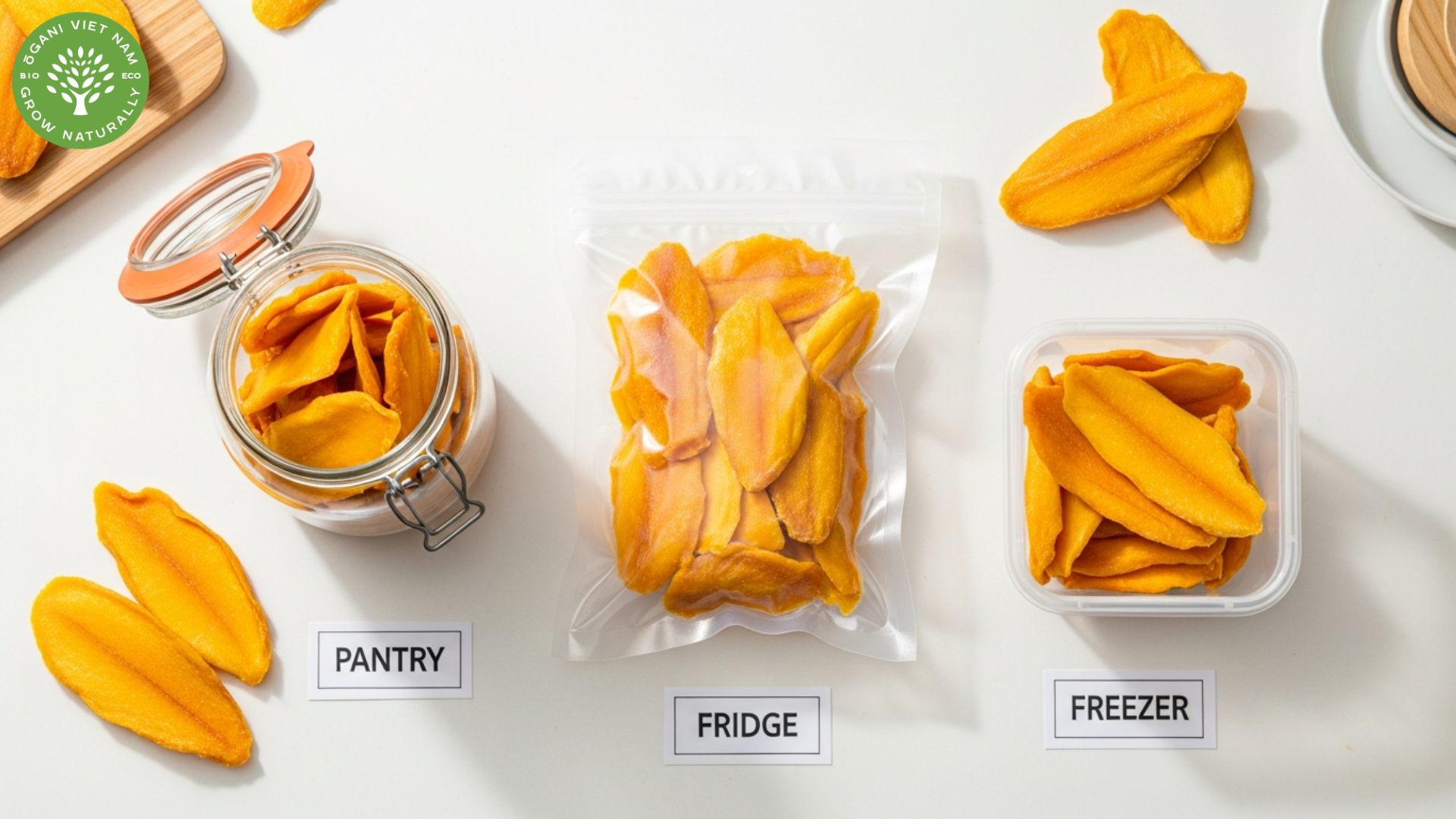
How to store dried mango properly can mean the difference between enjoying your snack for months or tossing moldy pieces after just a few weeks. The key is simple: keep moisture out, store in the right place, and use containers that actually seal. Get these three things right, and your dried mango stays chewy, flavorful, and safe to eat for up to a year or longer.
At Ogani VN, we’ve spent years perfecting not just how we dry our organic mangoes, but also guiding customers on proper storage. Because honestly? The best dried fruit in the world won’t matter if you store it wrong and it goes bad in your pantry. Let’s walk through exactly what you need to know.
How to store dried mango: proper dehydration comes first

Before we even talk about containers and storage locations, here’s something critical that many people overlook: your dried mango needs to be properly dehydrated before storage. I learned this the hard way years ago when I enthusiastically packed up a batch that was still slightly too moist. Two weeks later? Mold city.
Properly dried mango should feel leathery and pliable, not sticky or wet to the touch. When you bend a piece, it should flex without snapping completely, but it shouldn’t leave moisture on your fingers. If you squeeze it and any juice comes out, it’s not ready for long-term storage yet. The moisture content should be around 15-20% for optimal storage—any higher and you’re inviting bacteria and mold to the party.
Here’s a simple test we recommend at Ogani VN: press a piece of dried mango between paper towels for about 30 seconds. If the paper shows any wet spots or oil stains, give it more drying time. The texture you’re aiming for is similar to a dried apricot or raisin—firm but still chewy, never brittle or damp.
If you’ve purchased commercially dried mango (like ours), this step is already done. But if you’re dehydrating at home, don’t rush this part. Better to over-dry slightly than under-dry, because you can always rehydrate dried fruit, but you can’t save moldy fruit.
Choosing the right containers for how to store dried mango
Container choice matters more than most people realize when it comes to how to store dried mango successfully. Not all containers are created equal, and the wrong choice can compromise your dried fruit within weeks.
Airtight is non-negotiable
Your primary weapon against dried mango spoilage is an airtight seal. Exposure to air means exposure to moisture, and moisture is the enemy of dried fruit preservation. Glass jars with rubber-sealed lids (like mason jars) are my personal favorite—they’re reusable, you can see what’s inside, and they seal perfectly. Make sure the rubber seal is in good condition; a worn gasket defeats the whole purpose.
Food-grade plastic containers with snap-lock lids work well too, especially if you’re storing smaller portions or need something lighter for travel. Zip-lock bags can work in a pinch, but here’s the thing: they’re not as airtight as you’d think. If you go this route, double-bag and squeeze out as much air as possible before sealing.
Vacuum sealing takes it to the next level

If you’re serious about long-term storage—we’re talking six months to a year or more—vacuum sealing is worth the investment. A vacuum sealer removes virtually all air from the package, dramatically extending shelf life. We’ve had vacuum-sealed dried mango stay fresh for over 18 months when stored properly.
The beauty of vacuum sealing is that you can portion out your dried mango into smaller bags. This way, you only open what you need, keeping the rest untouched and protected. It’s especially useful if you buy in bulk or if you’re dehydrating large batches at home.
Glass vs. plastic: what works best
Both have their place. Glass is superior for pantry storage—it doesn’t absorb odors, maintains an excellent seal, and you can even sterilize the containers between uses. Plus, there’s something satisfying about seeing rows of golden dried mango in clear glass jars on your shelf.
Plastic containers shine when you need portability or if you’re storing in the freezer (where glass can crack from temperature shock). Just make sure you’re using food-grade BPA-free plastic designed for food storage.
Where to store dried mango: pantry, fridge, or freezer?
The location where you store dried mango depends on how long you plan to keep it and how quickly you’ll eat it. Each option has its sweet spot.
Pantry storage for regular consumption
If you’re going through your dried mango within 3-4 months, pantry storage in an airtight container works beautifully. The key requirements: cool (ideally 60-70°F), dark (away from direct sunlight), and dry (low humidity). A cupboard away from your stove or dishwasher is perfect.
I keep a small jar of dried mango in my pantry for everyday snacking. Room temperature storage preserves that perfect chewy texture—not too hard, not too soft. Just remember: once you open a package, reseal it properly every single time. Leaving it open overnight can introduce enough moisture to start degradation.
Refrigeration extends shelf life
How to store dried mango in the refrigerator is straightforward: use an airtight container or vacuum-sealed bag and pop it in. The cool temperature (around 40°F) slows down any enzymatic activity and gives you 6-8 months of storage time, sometimes even longer.
One trick that doesn’t get mentioned enough: when you first seal your dried mango in a jar for refrigeration, flip the jar upside down and leave it in the fridge for the first 24 hours. If you notice any condensation forming inside the container, your mango wasn’t dry enough. Remove it, let it air dry for another day, then try again.
The downside? Refrigerated dried mango can become slightly firmer in texture. Not a deal-breaker, but noticeable. Let it come to room temperature for 10-15 minutes before eating if you prefer that softer, chewier consistency.
Freezer storage for the long haul
For storage beyond 8-10 months, the freezer is your best friend. Properly dried mango in airtight, freezer-safe containers or vacuum-sealed bags can last 12-18 months in the freezer without significant quality loss. Make sure your freezer maintains a consistent 0°F or below.
Portion control is especially important with freezer storage. Freeze in smaller amounts so you’re not repeatedly thawing and refreezing the same batch—that cycle introduces moisture and degrades quality fast. I like to freeze in 1-2 week portions, labeled with dates so I rotate through oldest first.
Here’s something interesting we’ve discovered at Ogani VN: frozen dried mango actually makes for a fantastic summer treat. Eat it straight from the freezer for an icy, chewy snack that’s intensely flavorful. Try it before you knock it.
Signs your stored dried mango has gone bad

Even with perfect storage, knowing when how to store dried mango methods have failed is crucial for food safety. Here are the telltale signs:
Visual indicators are usually first. Any visible mold—white, green, or black spots—means it’s time to throw it out. No exceptions, no “just cutting off the moldy part.” Mold spreads through dried fruit more than you can see. Also watch for unusual darkening or discoloration that wasn’t there when you first stored it.
Texture changes tell you a lot. If your dried mango becomes excessively hard and brittle, it’s been exposed to too much air and has oxidized. While not necessarily dangerous, it won’t taste good. Conversely, if it feels wet, sticky, or slimy, moisture got in and bacterial growth is likely underway. Discard immediately.
Trust your nose. Fresh dried mango has a sweet, tropical aroma. If it smells off, fermented, musty, or just “wrong” in any way, don’t eat it. Your nose is an excellent safety tool—use it. Strange smells often indicate bacterial or fungal growth before it becomes visible.
Expert tips on how to store dried mango for maximum shelf life

Beyond the basics, here are some battle-tested strategies we share with Ogani VN customers:
Use oxygen absorbers if you’re storing for more than 6 months. These little packets (available online cheaply) remove oxygen from sealed containers, preventing oxidation and extending shelf life significantly. Just toss 1-2 packets in your storage container before sealing.
Keep silica gel packets handy. If you live in a humid climate, adding a food-safe silica gel packet to your storage container absorbs any residual moisture. Just make sure it doesn’t directly touch the dried mango—keep it separated with parchment paper or place it under a false bottom if your container has one.
Label everything with dates. I know it seems obvious, but you’d be surprised how many people store dried mango and then can’t remember when they sealed it. A simple piece of masking tape with the date takes five seconds and eliminates all guesswork later.
Don’t mix old with new batches. When you get fresh dried mango, resist the temptation to just dump it in with your existing supply. Old and new batches may have different moisture levels, and combining them can affect overall storage life.
Check stored dried mango monthly. Once a month, open your containers and do a quick inspection—look for any signs of moisture, mold, or changes in appearance. This five-minute habit can save your entire stash by catching problems early.
Frequently Asked Questions
How long does dried mango last in the pantry?
Properly stored dried mango in an airtight container can last 3-4 months in the pantry at room temperature, provided your storage area stays cool, dark, and dry.
Can you freeze dried mango to extend its shelf life?
Yes, absolutely. Dried mango freezes beautifully and can maintain quality for 12-18 months when stored in airtight, freezer-safe containers or vacuum-sealed bags.
Do I need to refrigerate opened dried mango?
Not necessarily if you’ll finish it within 2-3 weeks. However, refrigeration extends the shelf life of opened dried mango to several months, especially in warm or humid climates.
How do I know if my dried mango is too moist to store?
Press it between paper towels—if moisture appears on the paper, it needs more drying time. Properly dried mango should feel leathery and pliable without leaving wetness on your fingers.
What’s the best container for storing dried mango?
Glass mason jars with rubber seals offer the best combination of airtight storage, visibility, and reusability for most home storage needs.
Your complete guide to how to store dried mango successfully
How to store dried mango doesn’t have to be complicated—just keep it dry, sealed, and in the right temperature environment for your timeline. Whether that’s a pantry jar for quick snacking, the refrigerator for medium-term storage, or the freezer for long-term preservation, you now have all the tools you need.
The difference between dried mango that stays delicious for months and dried mango that goes bad in weeks usually comes down to these simple practices: proper initial drying, truly airtight containers, and smart location choices based on how long you’ll store it.
At Ogani VN, we’re passionate about helping you get the most from your organic dried fruits. Our premium dried mango is carefully processed to ideal moisture levels, making storage simple and shelf life naturally long. Ready to stock up on dried mango that’s made to last? Browse our selection of organic dried fruits and superfoods, or contact our team for personalized storage advice and bulk ordering options. Your perfect, long-lasting dried mango experience starts with quality fruit—and we’re here to deliver exactly that.
Read more:
- Baking With Dried Red Dragon Fruit: Breads, Muffins & Cookies
- Dried Red Dragon Fruit vs Fresh: Color, Nutrition & When to Use Each
- Dragon Fruit Powder: Unlocking Ít Superfood Potential for Health and Wellness.
- Red Dragon Fruit Dried: Your Complete Buying Guide
- Versatile Uses of Dried Fruits: Your Complete Guide