


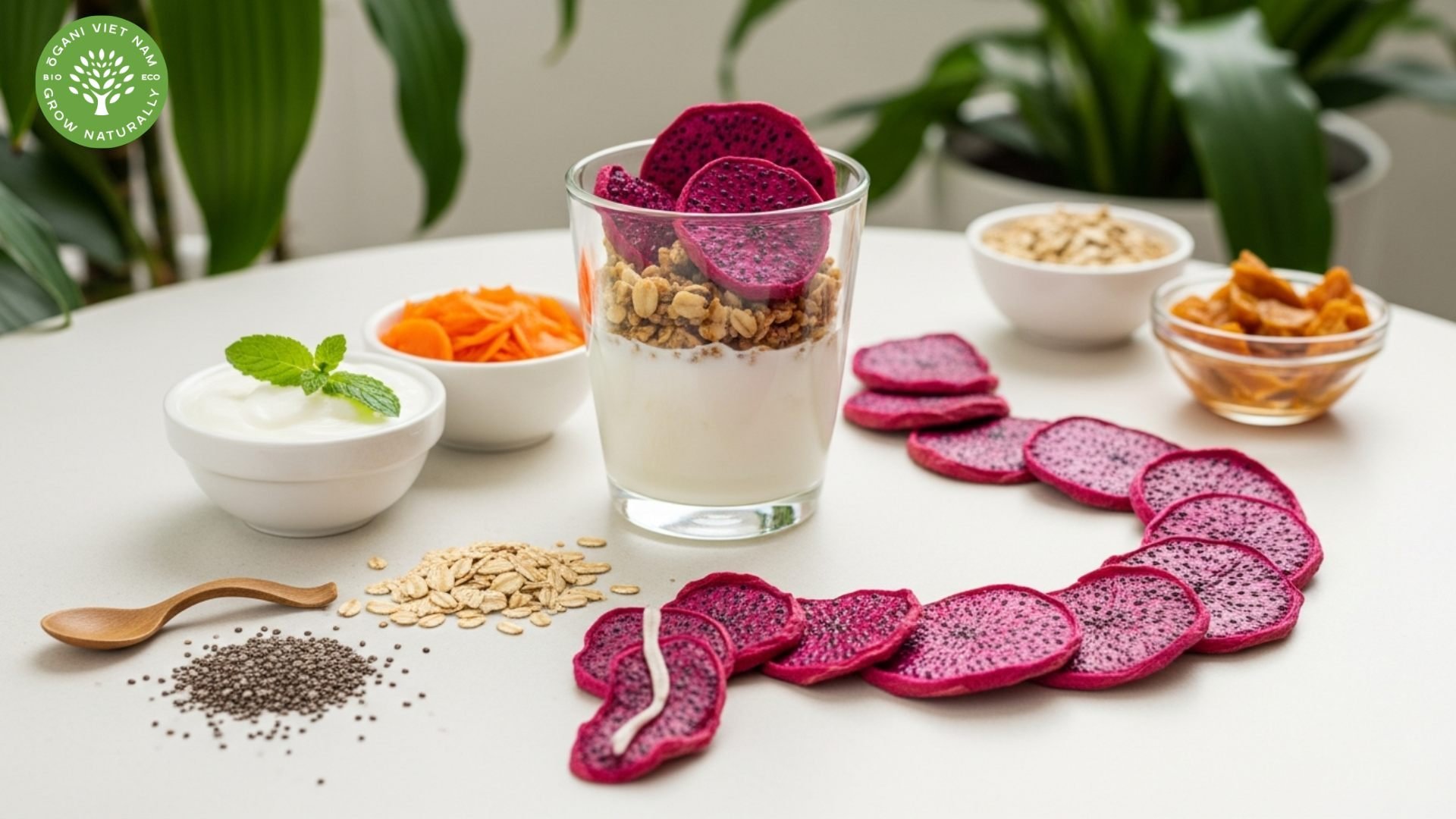
How to dry dragon fruit is simpler than you might think—this process preserves the exotic superfruit for months while concentrating its natural sweetness. You can dehydrate dragon fruit using a food dehydrator at 135°F for 8-12 hours, an oven on low heat, or a freeze dryer for premium results. The process is straightforward—slice the fruit thinly, arrange in single layers, and dry until leathery with no moisture pockets.
At Ogani VN, we’ve perfected the art of drying dragon fruit (also known as pitaya) through years of working with organic tropical fruits. Whether you’re looking to preserve a bumper harvest or create healthy snacks, this guide walks you through everything you need to know about how to dry dragon fruit successfully at home.
How to prepare dragon fruit before drying

The foundation of quality dried dragon fruit starts with proper preparation. Fresh, ripe fruit gives you the best flavor and texture after dehydration.
Begin by selecting dragon fruits that are fully ripe but still firm. The skin should be bright pink or yellow (depending on variety) with minimal brown spots. Overly soft fruit contains too much moisture and takes longer to dry. We always wash the fruit thoroughly under cool running water, even if it’s organic, to remove any surface residue or debris.
Peeling is simple—cut the fruit in half lengthwise and scoop out the flesh with a spoon, or slice off the thick skin with a sharp knife. You’ll notice the white or magenta flesh dotted with tiny black seeds. Those seeds are completely edible and add a pleasant crunch to the dried product.
For slicing, aim for uniform thickness of about ¼ inch (6mm). Consistency matters here because uneven slices dry at different rates—thin pieces become brittle while thick ones stay chewy. Some people prefer circular slices like citrus wheels, while others cut the fruit into strips or cubes. At Ogani VN, we find that circular slices create the most visually appealing dragon fruit chips.
Best methods for how to dry dragon fruit
Different drying methods produce slightly different results in texture, color retention, and nutrient preservation. Here’s how each technique works.

Using a food dehydrator
The food dehydrator method gives you the most control and consistent results. Arrange your dragon fruit slices in a single layer on dehydrator trays, leaving small gaps between pieces for air circulation. Don’t overlap slices or they’ll stick together and dry unevenly.

Set your dehydrator to 135°F (57°C)—this temperature removes moisture efficiently without cooking the fruit. The process typically takes 8-12 hours depending on slice thickness and your dehydrator’s power. White-fleshed varieties dry slightly faster than red-fleshed dragon fruit because they contain less sugar.
Check the fruit after 8 hours by removing a piece and letting it cool for a minute. Properly dried dragon fruit should feel leathery and pliable with no wet spots when you press it. If moisture beads appear when squeezed, continue drying for another 1-2 hours.
Oven drying method
Don’t have a dehydrator? Your oven works too, though it requires more attention. This is one of the most accessible ways for how to dry dragon fruit at home without investing in special equipment. Preheat to the lowest setting, ideally 140-170°F (60-75°C). Line baking sheets with parchment paper and arrange dragon fruit slices without touching.
Prop the oven door open slightly with a wooden spoon to allow moisture to escape—this is crucial because ovens don’t have the same air circulation as dehydrators. The drying time ranges from 6-10 hours. Flip the slices halfway through for even dehydration.
Oven-dried pitaya tends to be slightly darker in color compared to dehydrator results, and there’s a higher risk of over-drying edges while centers remain moist. But for occasional batches, it’s a perfectly acceptable method when learning how to dry dragon fruit on a budget.
Freeze drying for premium quality
Freeze drying preserves the most nutrients, color vibrancy, and original flavor of dragon fruit. If you’re wondering how to dry dragon fruit while maintaining maximum nutritional value, this is your answer. This method works by freezing the fruit, then slowly removing moisture in a vacuum chamber where ice sublimates directly to vapor.
Place pre-frozen dragon fruit slices on freeze dryer trays in a single layer. The process takes 24-36 hours but produces incredibly crispy chips that rehydrate almost instantly. Freeze-dried dragon fruit retains about 97% of its nutritional value compared to 80-85% with heat dehydration.
The main drawback? Freeze dryers are expensive equipment, typically costing several thousand dollars. Unless you’re processing large volumes or running a food business like we do at Ogani VN, stick with a regular dehydrator for home use.
How to tell when your dried dragon fruit is ready
Knowing when your dragon fruit is done prevents under-drying (which causes mold during storage) or over-drying (which makes pieces rock-hard and brittle).
Remove a piece from the dehydrator and let it cool to room temperature for 2-3 minutes. Dried dragon fruit should bend without snapping but shouldn’t feel sticky or damp. When you press it between your fingers, no moisture should transfer to your skin. The texture resembles leather or dried mango—flexible yet firm.
Red dragon fruit turns a deep burgundy color when fully dried, while white varieties become translucent yellowish. The black seeds remain visible and crunchy throughout. If you notice any slimy spots or areas that feel cool to the touch, those sections need more drying time.
Here’s a pro tip from our production floor: cut one piece in half. The interior should look uniform without any darker, wet-looking centers. A properly dried slice shows consistent color throughout with no moisture gradients.
Storing dried dragon fruit for maximum freshness

Proper storage extends shelf life from a few months to over a year. The enemy of dried fruit is moisture and oxygen exposure.
Allow all pieces to cool completely at room temperature before packaging—warm fruit creates condensation inside containers, inviting mold growth. We recommend conditioning the dried dragon fruit for 7-10 days after dehydration. Place pieces in a glass jar, filling it about two-thirds full, and shake daily. If you notice condensation forming inside the jar, return the batch to the dehydrator for additional drying.
For short-term storage (up to 3 months), airtight containers or heavy-duty zip-lock bags work fine. Keep them in a cool, dark pantry away from heat sources. For long-term preservation, vacuum seal packages remove oxygen that degrades color and nutrients. Adding food-grade oxygen absorbers to Mylar bags provides even better protection.
Properly stored dehydrated pitaya maintains quality for 12-18 months at room temperature. Freeze-dried versions last even longer—up to 25 years when vacuum sealed with oxygen absorbers. At Ogani VN, we vacuum seal all our dried dragon fruit products to guarantee maximum freshness to our customers.
You’ll know dried dragon fruit has gone bad if it develops off-odors, visible mold, or loses its flexibility and becomes rock-hard. When stored correctly, though, it remains a convenient, nutritious snack ready whenever you need it.
Frequently asked questions
Can I dry dragon fruit without a dehydrator?
Yes, you can use an oven set to its lowest temperature (140-170°F) with the door propped open for air circulation. Air drying in direct sunlight also works in hot, dry climates, though it takes 2-3 days and exposes fruit to insects and dust.
Does dried dragon fruit lose its nutrients?
Heat dehydration preserves 80-85% of vitamins and minerals while concentrating fiber and natural sugars. Vitamin C decreases somewhat, but antioxidants, iron, and magnesium remain largely intact. Freeze drying retains the most nutrients at about 97%.
Why is my dried dragon fruit sticky?
Stickiness indicates insufficient drying time or high humidity during storage. Return sticky pieces to the dehydrator for another 1-2 hours, then store with silica gel packets to absorb residual moisture.
How thin should I slice dragon fruit before drying?
Aim for ¼ inch (6mm) uniform thickness for consistent results. Thinner slices (⅛ inch) create crispier chips but dry faster and can burn easily. Thicker slices (½ inch) take significantly longer and may develop uneven drying.
Start your journey to dry dragon fruit at home

Learning how to dry dragon fruit transforms this tropical delicacy into a versatile pantry staple. Whether you’re using a food dehydrator, oven, or freeze dryer, the key is maintaining consistent temperature and patience throughout the process. Your homemade dragon fruit chips will taste fresher and more vibrant than store-bought alternatives.
At Ogani VN, we’re passionate about helping you preserve nature’s best organic fruits. If you prefer the convenience of professionally dried dragon fruit with guaranteed quality, browse our selection of premium dehydrated pitaya products. We use only Vietnamese-grown organic dragon fruit, carefully processed to lock in maximum nutrition and flavor.
Ready to explore more dried fruit options? Contact our team for bulk orders, custom packaging, or advice on preserving your own tropical fruit harvest. Your healthy snacking adventure starts here!
Read more:
- Baking With Dried Red Dragon Fruit: Breads, Muffins & Cookies
- Dried Red Dragon Fruit vs Fresh: Color, Nutrition & When to Use Each
- Dragon Fruit Powder: Unlocking Ít Superfood Potential for Health and Wellness.
- Red Dragon Fruit Dried: Your Complete Buying Guide
- How to Dry Dragon Fruit: Complete Step-by-Step Guide