


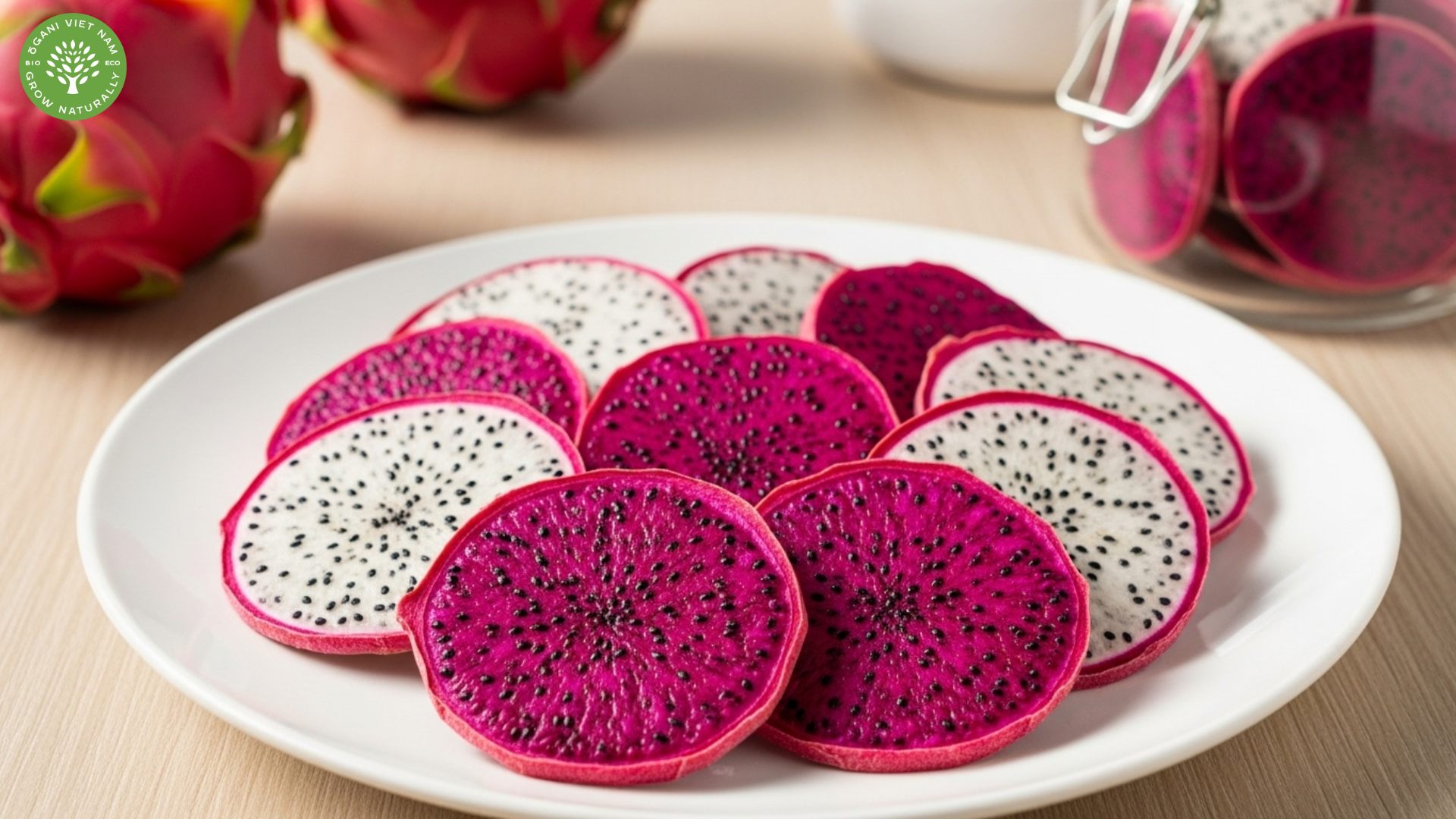
How to dehydrate dragon fruit is simpler than you might think. At Ogani VN, we’ve perfected this process through countless batches, and we’re here to share everything we’ve learned. The key is slicing your pitaya to 1/8″ to 1/4″ thickness and drying at 135°F for 8-12 hours until leathery but still pliable. Whether you’re using a dehydrator, oven, or air fryer, this guide will walk you through each method so you can preserve this vibrant tropical fruit and enjoy it year-round.
How to dehydrate dragon fruit: Preparing your pitaya properly
Before we even think about turning on any equipment, the preparation stage makes or breaks your final product. Trust us—we’ve learned this the hard way after a few batches that turned out either too chewy or completely brittle.
Start by selecting ripe dragon fruit with vibrant color and slight give when pressed. We always wash ours thoroughly under cool water, even though we’ll be removing the skin. It’s just a good habit, you know? Pat them dry with a clean kitchen towel.
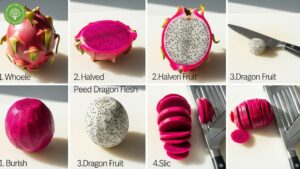
Now here’s where it gets interesting. Use a sharp knife to cut off both ends, then score the skin vertically. The flesh should peel away easily—almost satisfying, really. If you’re working with red-fleshed pitaya, fair warning: your cutting board and hands will look like a crime scene. We keep a dedicated board just for this purpose.
The slicing thickness matters more than most people realize. We recommend using a mandoline slicer set to 1/8″ for crispier chips or 1/4″ for chewier pieces. If you’re going knife-only, aim for consistency rather than perfection. Uneven slices mean some pieces finish before others, which is just annoying when you’re monitoring everything.
Here’s a trick we picked up: squeeze fresh lemon or lime juice over your dragon fruit slices. It’s not absolutely necessary, but the citrus helps preserve the color and adds a subtle tang that complements the natural sweetness beautifully. Some people skip this step entirely, and honestly, the fruit still dehydrates fine—it’s more about your taste preference.
Best methods for how to dehydrate dragon fruit at home

Using a food dehydrator
This is our go-to method at Ogani VN for good reason, and honestly the easiest way how to dehydrate dragon fruit for beginners. Food dehydrators provide consistent temperature and airflow, which translates to evenly dried fruit every single time.
Arrange your dragon fruit slices on dehydrator trays in a single layer. Don’t overlap them—yes, it’s tempting to squeeze in just one more piece, but airflow needs space to work its magic. We typically leave about half an inch between slices.
Set your dehydrator to 135°F (57°C). This temperature sweet spot dries the fruit without cooking it, preserving those gorgeous colors and nutrients. The process takes anywhere from 8 to 12 hours depending on slice thickness and your dehydrator’s efficiency. We usually start checking around the 8-hour mark.
Every few hours, rotate your trays if your dehydrator doesn’t have a fan (though most modern ones do). This ensures even drying across all levels. You’ll notice the slices starting to curl at the edges—that’s completely normal and actually kind of mesmerizing to watch. When people ask us how to dehydrate dragon fruit without any fuss, we always point them to this method first.
Oven dehydration method
Don’t have a dehydrator? No problem. Learning how to dehydrate dragon fruit in your oven works just fine, though it requires more babysitting.
Preheat your oven to its lowest setting—ideally around 140°F to 170°F. Line baking sheets with parchment paper (never wax paper—we made that mistake once) and arrange your dragon fruit slices without touching.
Prop the oven door open slightly with a wooden spoon. This allows moisture to escape, which is crucial for dehydration rather than baking. The process takes 6 to 10 hours, and you’ll need to flip the slices every 2-3 hours for even drying.
The challenge with oven dehydration is temperature control. Most ovens cycle on and off, creating temperature fluctuations. Keep an oven thermometer inside to monitor actual temperatures, not just the dial setting. This oven method is perfect when you want to understand how to dehydrate dragon fruit without investing in special equipment.
Air fryer technique
This is the fastest method, though it produces smaller batches. We use it when we’re testing new flavor combinations or just want a quick snack. If you’re wondering how to dehydrate dragon fruit quickly, this is your answer.
Set your air fryer to its lowest temperature setting, usually around 135°F to 160°F. Some models have a dedicated dehydrate function—use it if available. Place dragon fruit slices in a single layer in the basket.
The drying time is significantly shorter—typically 3 to 5 hours. Check and flip the slices every 30 to 45 minutes. Because air fryers have powerful fans, the fruit can dry unevenly if you’re not careful. We’ve found that thinner slices (closer to 1/8″) work best in air fryers.
Perfect texture guide when you dehydrate dragon fruit
This part trips up a lot of people, so let’s talk about what properly dehydrated dragon fruit should feel and look like.

When your pitaya slices are done, they should feel leathery and pliable—think fruit leather, not potato chips (unless you’re specifically going for crispy chips with ultra-thin slices). There should be no visible moisture when you tear a piece in half, but it shouldn’t snap like a cracker either.
The color changes during dehydration. White dragon fruit develops a slightly translucent, pale appearance. Red varieties darken to a deep magenta or burgundy. Both are stunning, honestly—we’ve framed a few pieces before eating them because they looked so beautiful.
Here’s a test we always do: let a piece cool completely, then squeeze it firmly. If moisture beads appear, it needs more time. If it crumbles into dust, you’ve gone too far (but it’s still edible, just less pleasant).
Some people prefer their dehydrated dragon fruit crispy. If that’s you, slice thinner and extend drying time by 2-3 hours. We personally like them slightly chewy—they rehydrate better in smoothies and oatmeal that way.
Temperature variations affect texture dramatically. Going too hot (above 145°F) can case-harden the outside while leaving moisture trapped inside. Too low (below 130°F) and you’re creating prime conditions for mold during storage. Stick to that 135°F sweet spot.
Storing your dehydrated dragon fruit for maximum freshness
So you’ve successfully dehydrated your dragon fruit—now what? Proper storage determines whether your effort lasts weeks or spoils in days.

Let everything cool completely before storage. This is non-negotiable. Warm fruit creates condensation in containers, and condensation means mold. We usually spread our dehydrated slices on cooling racks for 30-60 minutes.
Store in airtight containers—glass jars work beautifully, but food-grade plastic containers or resealable bags are fine too. We add small silica gel packets to absorb any residual moisture. You can find these in shoe boxes or buy them bulk online.
Keep your containers in a cool, dark place. A pantry shelf away from the stove works perfectly. Avoid anywhere with temperature fluctuations or direct sunlight, which degrades both color and nutrients.
Properly stored dehydrated dragon fruit lasts 6 to 12 months. We’ve pushed it to 18 months with vacuum sealing, but honestly, ours never lasts that long because we keep snacking on it.
Check your stash periodically for any signs of moisture or mold. If you spot anything suspicious, discard that batch. Better safe than sorry when it comes to food preservation.
Creative ways to enjoy your dehydrated pitaya

Now for the fun part—actually using what you’ve made. Dehydrated dragon fruit is incredibly versatile, and we’ve experimented with dozens of applications.
The simplest approach? Eat them straight as a healthy snack. They’re naturally sweet with a concentrated flavor that’s addictive. We keep a jar on our desk and go through it faster than we’d like to admit.
Rehydrate slices by soaking in warm water for 15-20 minutes. The texture won’t be exactly like fresh fruit, but it’s close enough for smoothie bowls, yogurt parfaits, or fruit salads. The rehydration liquid itself makes a beautiful, subtly flavored water.
Grind dehydrated dragon fruit into powder using a high-speed blender or spice grinder. This powder is phenomenal in smoothies, as a natural food coloring, or mixed into baked goods. A tablespoon in vanilla ice cream creates this gorgeous pink swirl that looks Instagram-worthy.
We’ve been incorporating dehydrated pitaya into our trail mix recipes at Ogani VN—paired with cashews, coconut flakes, and dark chocolate, it’s dangerously good. The fruit’s mild sweetness balances savory ingredients without overwhelming them.
For something fancier, try crushing the dried fruit over cocktails as a garnish. It adds visual interest and a subtle flavor that works especially well with tequila or rum-based drinks. Bartenders at a few local spots have started requesting our dehydrated dragon fruit specifically for this purpose.
Frequently Asked Questions
Can I dehydrate dragon fruit with the skin on? No, always remove the skin first. The tough exterior doesn’t dehydrate well and remains leathery and unpleasant to eat. Plus, it’s easier to slice the flesh evenly after peeling.
Why is my dehydrated dragon fruit turning brown? Browning typically results from either oxidation or too high a temperature. Try pre-treating with lemon juice and ensuring your dehydration temperature stays at or below 135°F to preserve color.
How do I know when dragon fruit is fully dehydrated? It should feel leathery and pliable with no visible moisture when torn. After cooling completely, squeeze a piece—if moisture beads appear, continue dehydrating. Properly dried fruit won’t feel sticky or damp.
Can I mix dragon fruit with other fruits in the dehydrator? Yes, but be aware that different fruits have different moisture content and drying times. We recommend grouping similar fruits together or using separate trays to monitor each type independently.
Does dehydrated dragon fruit lose nutritional value? Dehydration preserves most nutrients, though vitamin C content decreases slightly with heat exposure. However, the concentrated nutrients in dehydrated fruit mean you’re getting more antioxidants and fiber per serving compared to fresh.
Start your dragon fruit dehydration journey with Ogani VN
Learning how to dehydrate dragon fruit opens up a world of preservation possibilities and creates a snack that’s both nutritious and delicious. At Ogani VN, we believe in making the most of every fruit, and dehydration is one of the best methods we’ve found for extending the life of this beautiful tropical treasure.
The process isn’t complicated—just consistent slicing, proper temperature control, and a bit of patience. Whether you use a dedicated dehydrator, your trusty oven, or an air fryer, the key principles remain the same: thin slices, low heat, and adequate airflow.
Ready to start your dehydration journey? Browse our selection of premium dragon fruit at Ogani VN, sourced fresh from trusted farms. We also carry food dehydrators and preservation supplies to help you get started. If you need personalized advice on dehydrating dragon fruit or any other produce, our team is always here to help—just reach out through our website or visit our store. Let’s preserve something beautiful together!
Read more:
- Baking With Dried Red Dragon Fruit: Breads, Muffins & Cookies
- Dried Red Dragon Fruit vs Fresh: Color, Nutrition & When to Use Each
- Dragon Fruit Powder: Unlocking Ít Superfood Potential for Health and Wellness.
- Red Dragon Fruit Dried: Your Complete Buying Guide
- How To Dehydrate Dragon Fruit: A Complete Guide