


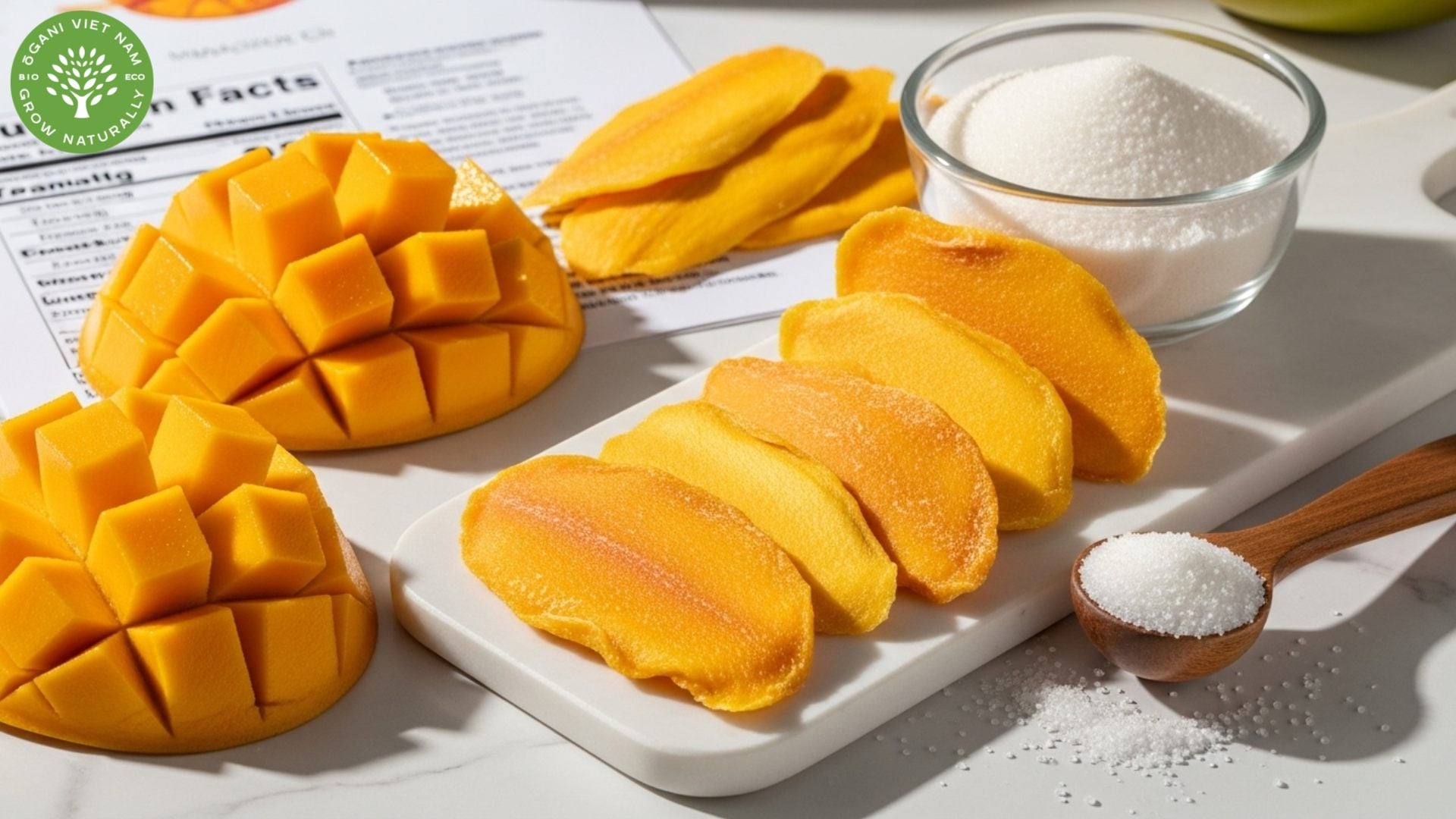
How much sugar is in dried mango is an important question for people who care about health. Dried mango has about 60–75 grams of sugar per 100 grams, which is much higher than fresh mango.
At Ogani VN, we know this information is important when you choose healthy snacks.
How much sugar is in dried mango varieties: A complete breakdown
How much sugar is in dried mango can change a lot depending on how the mango is made. Some brands add extra sugar, so the sugar level becomes even higher.
Natural vs. added sugar
Unsweetened dried mango has about 60–66g of natural sugar per 100g. This happens because when the water is removed, the natural sugar becomes more concentrated.
Sweetened dried mango can have 70–75g of sugar per 100g because companies add sugar during processing. Some brands add 21–26g of extra sugar per serving.
Sugar per serving
A normal 40g serving of dried mango (about 4–5 pieces) contains:
- Unsweetened: 24–26g of sugar
- Sweetened: 28–30g of sugar
- Low-sugar type: 18–22g of sugar
For comparison, one serving of sweetened dried mango has about the same amount of sugar as a can of soda. So it’s important to eat it in small portions to keep your blood sugar stable.
How much sugar is in dried mango compared to fresh fruit
Understanding how much sugar is in dried mango becomes easier when we compare it with fresh mango and other dried fruits.
Fresh mango has only 13–15g of sugar per 100g, so when the mango is dried, the sugar becomes 4–5 times more concentrated. This is why dried mango tastes very sweet and why we should eat it in small amounts.
Here is the sugar content of some dried fruits (per 100g):
- Dates: 80g of sugar
- Raisins: 65g of sugar
- Dried apricots: 53g of sugar
- Sweetened dried cranberries: 72g of sugar
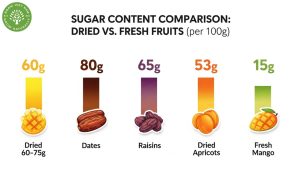
Dried mango is in the middle. It is not the dried fruit with the most sugar, but it is also not the one with the least sugar.
Health implications and blood sugar impact
Dried mango has concentrated sugar, so it affects the body differently from fresh mango. Its glycemic index is 60, which means it has a medium effect on your blood sugar.
=> How Much Sugar Is In Dried Mango: Complete Nutrition Guide
Effects on blood glucose levels
Dried mango can make your blood sugar rise quickly because it has a lot of concentrated fructose and no water. When the water is removed, the fruit loses the natural slow-down effect that fresh fruit has. Because of this, your body absorbs the sugar faster, which can cause a quick energy spike and then a drop.
People with diabetes should be careful. The American Diabetes Association advises limiting dried fruits because they contain a lot of sugar. One small serving of dried mango can have 6–7 teaspoons of sugar, which is already close to the daily limit for added sugar.
Portion control strategies
We recommend treating dried mango as a dessert, not a regular snack. To control your portions, you can:
- Eat only 20–30 grams per day (about 2–3 pieces)
- Eat it with protein or healthy fats to slow sugar absorption
- Choose unsweetened dried mango when you can
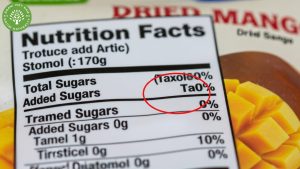
- Check the nutrition label to avoid added sugar

Nutritional benefits beyond sugar content
Even though dried mango has a lot of sugar, it still gives your body important nutrients. These nutrients are helpful, and you shouldn’t ignore them. When you understand the full nutrition of dried mango, it becomes easier to decide if it is right for your diet and your health goals.
Vitamin and mineral content
Dried mango is a great source of vitamin A, giving about 35% of your daily need per serving. This helps your eyes and immune system. Drying the fruit makes these nutrients stronger in each bite.
Other key nutrients in dried mango:
- Vitamin C: 19% of daily need (less than fresh)
- Fiber: 2-3 grams per serving
- Potassium: Good for heart and muscles
- Folate: Helps cell growth and DNA formation
Antioxidant properties
Drying mango keeps many antioxidants like mangiferin and quercetin. These help protect your body from damage and may support heart health. Some antioxidants are lost in the drying process, so fresh mango has more of these heat-sensitive nutrients.
Frequently Asked Questions
Is dried mango healthier than candy? Dried mango has more vitamins and fiber than candy, but it still has a lot of sugar. Pick unsweetened types and eat small amounts.
Can I eat dried mango on a low-sugar diet? It has too much sugar for strict low-sugar diets. Eat fresh mango in small portions instead.
How much dried mango can I eat per day? Eat 20-30 grams (2-3 pieces) a day to enjoy benefits without too much sugar.
Does organic dried mango have less sugar? No, sugar depends on added sugar, not whether it’s organic.
Why does dried mango have more sugar than fresh? Drying removes water, so the natural sugars are more concentrated. 100 grams of dried mango equals a lot more fresh mango.
Making informed choices about dried mango consumption
How much sugar is in dried mango? It depends on the type and processing. Usually, dried mango has 60-75 grams of sugar per 100 grams, much more than fresh mango. It has more nutrients, but the sugar is high, so eat carefully.
At Ogani VN, we suggest choosing unsweetened dried mango and eating it as a treat, not every day. Fresh mango is better for regular fruit, with more water and less sugar.
Want healthier snacks? Try our premium unsweetened dried fruits and enjoy natural sweetness while staying healthy. Contact our nutrition team for advice that fits your diet.
Read more:
- How to Store Dried Mango & Maximize Shelf Life (Pantry, Fridge, Freezer)
- Dried Mango vs Freeze‑Dried Mango: Nutrition, Texture & Best Uses
- How to Rehydrate Dried Red Dragon Fruit (3 Methods) + What to Make with It
- Best Dried Mango No Sugar Added: Premium Quality Guide