


Dried mango typically contains 26-28 grams of sugar per serving (about 40-42 grams or 4 pieces), with most of this being natural fruit sugars. However, sweetened varieties can pack up to 32 grams or more per serving due to added sugars during processing.
At Ogani VN, we understand that knowing the exact sugar content in your favorite snacks is crucial for making informed dietary choices. Whether you’re managing your sugar intake, following a specific diet plan, or simply curious about what you’re eating, this guide breaks down everything you need to know about sugar levels in dried mangoes.
How much sugar in dried mango: Natural vs. added sugars

The sugar content in dried mango varies dramatically based on whether it’s sweetened or unsweetened. This distinction is crucial for anyone monitoring their sugar consumption.
Unsweetened dried mango contains only natural fruit sugars from the mango itself. When fresh mango is dehydrated, the water evaporates but the natural sugars remain concentrated. A 100-gram portion of unsweetened dried mango typically has around 60-66 grams of natural sugar. This might sound high, but remember that you’ve removed about 80% of the water weight, so you’re essentially eating multiple fresh mangoes in a compact form.
Sweetened dried mango, on the other hand, has additional sugar added during processing. Manufacturers often coat the fruit with cane sugar, corn syrup, or other sweeteners to enhance flavor and extend shelf life. These varieties can contain 66-70 grams of sugar per 100 grams, with 10-20% being added sugars. The nutrition label will show this as “Includes XX grams Added Sugars” – a red flag if you’re watching your intake.
The health implications differ significantly. Natural sugars come packaged with fiber, vitamins, and minerals from the fruit. Added sugars provide empty calories without nutritional benefits and can spike blood glucose levels more rapidly. When shopping, always check the ingredients list. If you see “mango” as the only ingredient, you’re getting the unsweetened version. If sugar, cane syrup, or glucose appears, those are added sweeteners.
How much sugar in dried mango per serving size breakdown
Understanding serving sizes is essential because the numbers on nutrition labels can be misleading if you’re not paying attention.
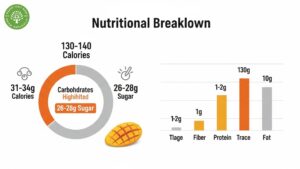
A standard serving of dried mango is approximately 40-42 grams (about 4-5 pieces or a small handful). This serving delivers roughly 130-140 calories, with carbohydrates making up the bulk at 31-34 grams. Within those carbs, you’ll find 26-28 grams of sugar in unsweetened varieties and potentially 32 grams or more in sweetened types.
The fiber content sits at a modest 1-2 grams per serving – significantly less than fresh mango due to processing methods. You’ll also get trace amounts of protein (about 1 gram) and virtually no fat (0.5 grams or less). The vitamin C content varies; some brands claim 19% of your daily value, while others show minimal amounts due to degradation during drying.
Potassium remains one of the bright spots, with dried mango providing 300-350 milligrams per serving. This mineral supports heart health and helps regulate blood pressure. Iron content typically ranges from 4-6% of your daily value, making it a decent plant-based iron source.
Here’s what matters most: if you’re comparing dried mango to fresh, remember that you’d need to eat about 150-180 grams of fresh mango to get equivalent sugar levels to one serving of dried. The concentration effect is real, and it’s easy to overconsume when the fruit is in its dried, snackable form.
How much sugar in dried mango compared to other dried fruits
When stacked against other popular dried fruits, dried mango falls somewhere in the middle of the sugar spectrum.
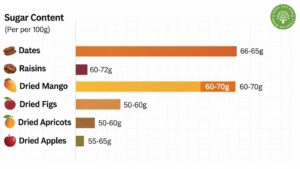
Dried dates lead the pack with approximately 66-75 grams of sugar per 100 grams, making them one of the sweetest options. Raisins and dried cranberries (especially sweetened versions) clock in at 60-72 grams per 100 grams. Dried apricots and dried figs contain slightly less at 50-60 grams per 100 grams, while dried apples typically have 55-65 grams.
How much sugar in dried mango compared to these alternatives? At 60-70 grams per 100 grams, dried mango sits right alongside most conventional dried fruits. The difference often comes down to whether added sugars are involved. Unsweetened dried apple rings or banana chips might be lower, but once manufacturers add sweeteners, they all rise to similar levels.
The glycemic impact varies too. Dried mango has a medium-to-high glycemic index (around 45-55), meaning it can raise blood sugar moderately quickly. Dried apricots and prunes have slightly lower glycemic indices due to higher fiber retention. If you’re diabetic or pre-diabetic, this matters when choosing your snack.
From a nutritional density perspective, dried mango shines with its vitamin A content and potassium levels. Dried apricots excel in vitamin A as well, while prunes are famous for digestive health benefits. Raisins provide more iron gram-for-gram. Your best choice depends on which nutrients you need most, but remember – they’re all concentrated sugar sources that require portion control.
How much sugar in dried mango affects your daily intake

Managing your consumption of dried mango requires strategy and mindfulness, especially when considering your overall daily sugar limits.
Start by treating dried mango as a dessert or occasional treat rather than a daily snack staple. The concentrated sugar means even small portions can impact your blood glucose and total daily sugar intake. The American Heart Association recommends limiting added sugars to 25 grams per day for women and 36 grams for men. One serving of sweetened dried mango could max out that limit instantly.
Portion control is your best friend here. Instead of eating directly from the bag (which makes it far too easy to consume multiple servings), pre-portion your dried mango into small containers or snack bags. A quarter-cup or about 4-5 pieces is a reasonable serving that lets you enjoy the flavor without overdoing it.
Pair dried mango with protein or healthy fats to slow sugar absorption and increase satiety. Try combining a small handful with raw almonds, cashews, or a tablespoon of almond butter. Greek yogurt topped with a few pieces of dried mango makes an excellent breakfast or snack that balances protein with natural sweetness. This combination helps stabilize blood sugar levels and prevents the energy crash that can follow eating dried fruit alone.
Consider diluting the impact by chopping dried mango into smaller pieces and mixing it into other foods. Add it to oatmeal, salads, trail mix, or homemade energy bars where it contributes flavor without being the main component. This stretches your portion while still delivering that tropical taste you crave.
Hydration matters too. The high fiber content (though modest compared to fresh fruit) requires adequate water intake to support digestion and prevent constipation. Drink plenty of water when enjoying dried fruits.
Frequently Asked Questions
Is dried mango healthier than candy?
While dried mango contains more nutrients than candy, it still packs significant sugar content. Unsweetened varieties offer vitamins, minerals, and fiber that candy lacks, making them a better choice. However, sweetened dried mango with added sugars isn’t much different from candy in terms of sugar impact. Choose unsweetened options and practice portion control for the healthiest snacking experience.
Can diabetics eat dried mango?
Diabetics can enjoy dried mango in very small portions, but should monitor blood sugar carefully. The high natural sugar content and medium-to-high glycemic index can cause blood glucose spikes. It’s best to pair a few pieces with protein or healthy fats, and always consult with your healthcare provider about incorporating dried fruits into your meal plan.
Does drying mango increase its sugar content?
Drying mango doesn’t add sugar to the fruit itself – it simply concentrates what’s already there by removing water. Fresh mango is about 13-15% sugar by weight, while dried mango can be 60-70% sugar because you’ve removed most of the water. Sweetened varieties do have genuinely added sugar during processing, which further increases the total sugar content.
How can I tell if dried mango has added sugar?
Check the ingredients list on the package. If it lists only “mango” or “organic mango,” there’s no added sugar. Look for terms like “cane sugar,” “corn syrup,” “glucose,” or “sweetened” which indicate added sugars. The nutrition label will also show “Includes X grams Added Sugars” if sweeteners were used during processing.
Making smart choices with dried mango
Understanding how much sugar in dried mango empowers you to make informed snacking decisions that align with your health goals. At Ogani VN, we prioritize offering unsweetened, unsulfured dried mango options because they contain only the fruit’s natural sugars without unnecessary additives.
Remember that dried mango, despite its concentrated sugar content, still provides valuable nutrients like potassium, vitamin A, and iron. The key is treating it as an occasional treat rather than an everyday staple, practicing mindful portion control, and choosing unsweetened varieties whenever possible.
Ready to enjoy premium quality dried mango with transparent nutrition information? Explore our selection of organic, unsweetened dried fruits at Ogani VN. We’re committed to helping you snack smarter with products that are as wholesome as they are delicious. Visit our store today or contact our nutrition team for personalized recommendations that fit your dietary needs.
- Dragon Fruit Dried: Your Complete Guide to This Exotic Superfood Snack
- Dried Unsweetened Mango: Healthy Snack Guide
- Dragon Fruit Recipes Smoothie: Your Complete Guide
- Does Dried Mango Have A Lot Of Sugar?
- How Much Sugar In Dried Mango: Complete Nutrition Guide