


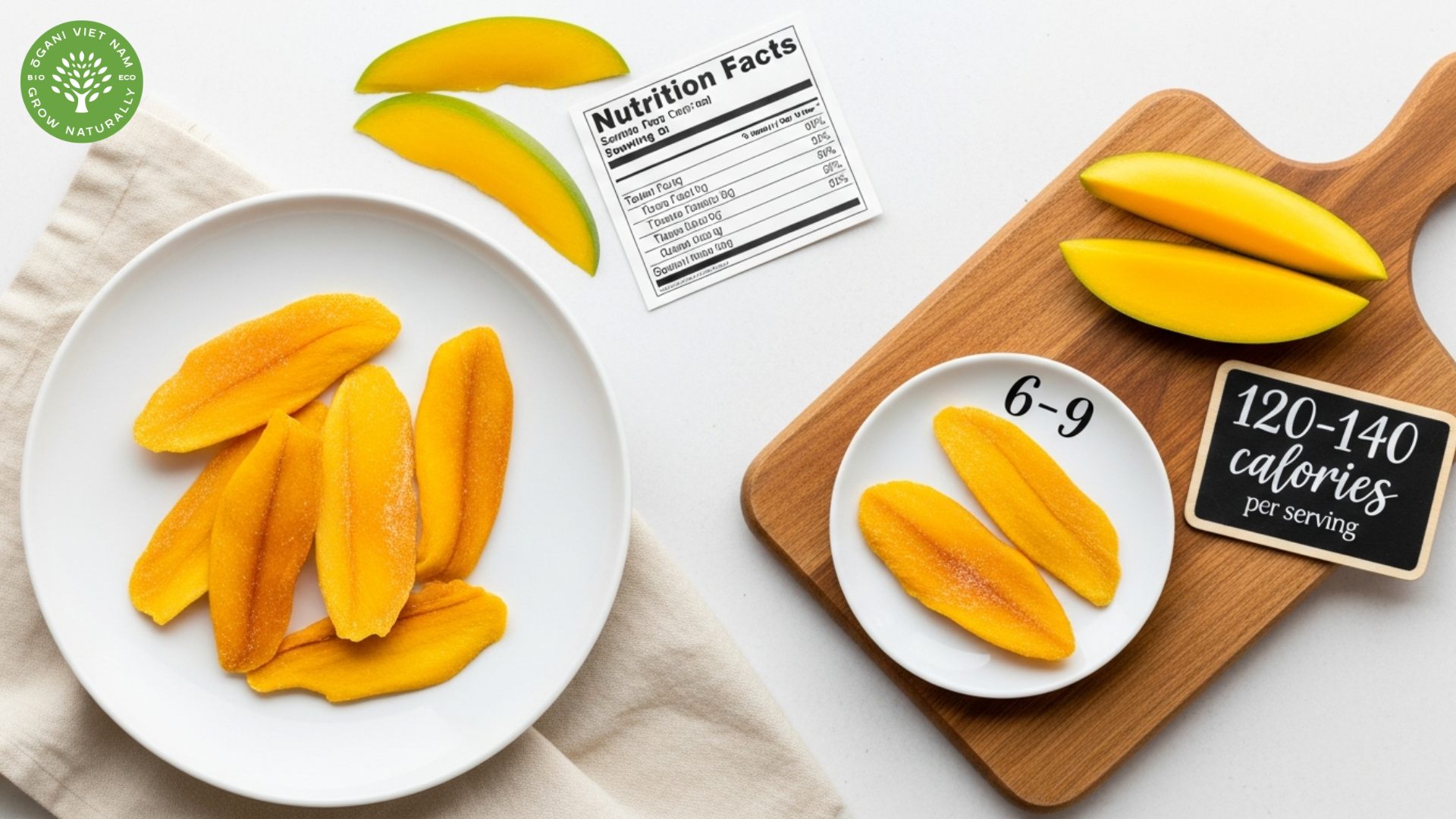
If you’re reaching for that bag of dried mango, here’s what you need to know: a typical 40-gram serving (about 9 pieces) of dried mango contains approximately 120-140 calories. However, this number can vary significantly depending on whether your dried mango is sweetened or unsweetened, and the specific brand you choose.
At Ogani VN, we understand that mindful snacking starts with knowing exactly what you’re putting in your body. Let’s dive deep into everything about dried mango calories so you can make informed choices for your health journey.
How many calories in dried mango by serving size

The calorie content in dried mango isn’t just one fixed number – it changes based on how much you eat and what type you choose.
Here’s a practical breakdown that we’ve compiled from nutritional databases and product labels:
| Serving Size | Approximate Calories | Number of Pieces |
|---|---|---|
| 30-40g | 120-140 calories | 6-9 pieces |
| 1/4 cup (40g) | 128 calories | About 9 pieces |
| 100g | 314 calories | 22-25 pieces |
| Single piece (4-5g) | 13-16 calories | 1 piece |
What surprises most people is the caloric density. You know how you can easily pop 10-15 pieces while watching a show? That’s potentially 200+ calories right there – roughly the same as a small meal.
We’ve noticed customers often underestimate serving sizes because dried fruit pieces look so small. But remember, the dehydration process removes water, concentrating both the nutrients and the calories into those compact, chewy bites.
How many calories in dried mango: sweetened vs unsweetened

Not all dried mango is created equal, and this is where things get interesting for calorie counters.
Unsweetened dried mango
Pure, unsweetened dried mango relies solely on the fruit’s natural sugars. A 40-gram serving typically contains:
- 120-128 calories
- All sugars come from the mango itself
- No added preservatives or sweeteners
- More authentic mango flavor
Sweetened dried mango
Many commercial brands add sugar or syrup during processing, which can bump up the calorie count:
- 140-160 calories per 40-gram serving
- Additional 20-40 calories from added sugars
- Often softer and stickier texture
- Sweeter taste that some prefer
Here’s something we’ve learned from our customers at Ogani VN: checking the ingredient list is crucial. If you see “cane sugar,” “corn syrup,” or “sugar” listed within the first three ingredients, you’re likely getting the sweetened version. For calorie management, unsweetened is your better friend.
Calories in dried mango vs fresh mango comparison
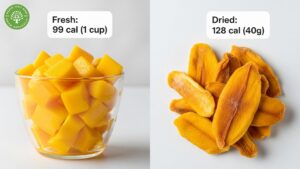
This comparison always surprises people. You’d think dried mango would have fewer calories since it’s smaller, right? Actually, the opposite is true.
Fresh mango:
- 1 cup of fresh mango chunks: 99 calories
- 1 whole medium mango (about 200g): 135 calories
- High water content (about 83% water)
- More filling due to volume
Dried mango:
- 40g dried mango: 120-140 calories
- 100g dried mango: 314 calories
- Water removed, leaving concentrated nutrients and sugars
- Less filling despite similar calories
Think of it this way: when you eat fresh mango, you’re getting a lot of water along with the nutrients. That water takes up space in your stomach, helping you feel satisfied. With dried mango, all that water is gone – you’re left with pure fruit matter. So while 40 grams of dried mango might not look like much compared to a cup of fresh mango, they deliver similar calories.
We often tell our Ogani VN community that dried mango is fantastic for portability and shelf life, but fresh mango wins if you’re looking to feel full on fewer calories.
Understanding dried mango calories and complete nutrition facts
Dried mango offers more than just its calorie count. Let’s look at what else you’re getting in that 40-gram serving:
Macronutrients:
- Carbohydrates: 29-32g (mostly from natural sugars)
- Protein: 1-2g
- Fat: Less than 1g
- Fiber: 2-3g
Key vitamins and minerals:
- Vitamin A: Significant amounts (important for eye health)
- Vitamin C: Moderate levels (though less than fresh due to processing)
- Folate: Present in small amounts
- Potassium: Around 150-200mg per serving
The fiber content is actually one of the underrated benefits. Those 2-3 grams of dietary fiber help with digestion and can slow down sugar absorption, preventing those energy spikes and crashes.
One thing to watch: sodium content. Some brands add salt during processing. Check labels if you’re monitoring sodium intake – ideally, you want 0-5mg per serving.
Managing calories in dried mango with smart eating habits

We’ve gathered these strategies from both nutritional science and real feedback from our Ogani VN customers who successfully enjoy dried mango without derailing their health goals.
Portion control is everything. Instead of eating directly from the bag (we’ve all been there), pre-portion your dried mango into small containers or ziplock bags. Those 120-calorie servings of 6-9 pieces are perfect for:
- Mid-morning snacks between meals
- Post-workout quick energy
- Adding to breakfast oatmeal or yogurt
- Trail mix combinations
Pair it strategically. Dried mango alone can cause blood sugar fluctuations because of its concentrated sugar content. Try combining it with protein or healthy fats to slow digestion. Some winning combinations we’ve seen:
- Dried mango + a handful of almonds
- Chopped dried mango mixed into Greek yogurt
- Dried mango alongside cheese cubes
Use it as a sweetener replacement. Instead of adding sugar to recipes, chop dried mango finely and use it in smoothies, baked goods, or salad dressings. You get natural sweetness plus additional nutrients.
Timing matters too. The concentrated sugars make dried mango ideal for pre- or post-exercise when your body can efficiently use that quick energy. Less ideal? Right before bed when you don’t need that energy surge.
One customer told us she keeps a “mango jar” on her desk with exactly 7 pieces – her daily allowance. Simple, but it works because it removes the guesswork and prevents mindless snacking.
Frequently Asked Questions
Is dried mango good for weight loss?
Dried mango can fit into a weight loss plan when eaten in controlled portions. The key is treating it as a sweet treat rather than unlimited snacking. Its fiber content helps with satiety, but the calorie density means portions must be small – stick to 40 grams or less per serving.
How many pieces of dried mango should I eat per day?
For most people following a 2,000-calorie diet, 6-9 pieces (one 40-gram serving) per day is reasonable. This provides about 120-140 calories – roughly 6-7% of daily calorie intake. If you’re very active, you might have room for more; if you’re trying to lose weight, consider treating it as an occasional indulgence.
Does dried mango have more sugar than fresh mango?
Per 100 grams, yes – dried mango contains about 3-4 times more sugar than fresh mango because the water removal concentrates everything. However, the sugar is still natural fruit sugar (fructose), not added refined sugar (unless you buy sweetened varieties). The total amount you consume matters more than the concentration.
Can diabetics eat dried mango?
People with diabetes should approach dried mango cautiously due to its high glycemic load. The concentrated sugars can spike blood glucose levels. If you have diabetes, consult your healthcare provider, limit portions to very small amounts, and pair with protein or fat to slow absorption.
Making informed choices about dried mango calories
Understanding how many calories in dried mango empowers you to enjoy this delicious snack intelligently. Remember the magic number: approximately 120-140 calories per 40-gram serving for unsweetened varieties. The key to making dried mango work for your health goals isn’t elimination – it’s education and portion awareness.
At Ogani VN, we believe in transparent nutrition information because informed customers make better choices. Whether you’re tracking calories, managing weight, or simply curious about what you’re eating, knowing these numbers puts you in control.
Ready to experience premium quality dried mango with clear nutritional labeling? Visit our Ogani VN store today to explore our carefully selected dried fruit collection. We source only the finest unsweetened varieties so you know exactly what you’re getting – no hidden sugars, no surprises. Your health journey deserves that level of honesty.
Start snacking smarter today with Ogani VN.
Read more:
- Baking With Dried Red Dragon Fruit: Breads, Muffins & Cookies
- Dried Red Dragon Fruit vs Fresh: Color, Nutrition & When to Use Each
- Red Dragon Fruit Dried: Your Complete Buying Guide
- Dried Mango Vitamins: Complete Nutritional Guide
- How Many Calories in Dried Mango: Complete Nutrition Guide