


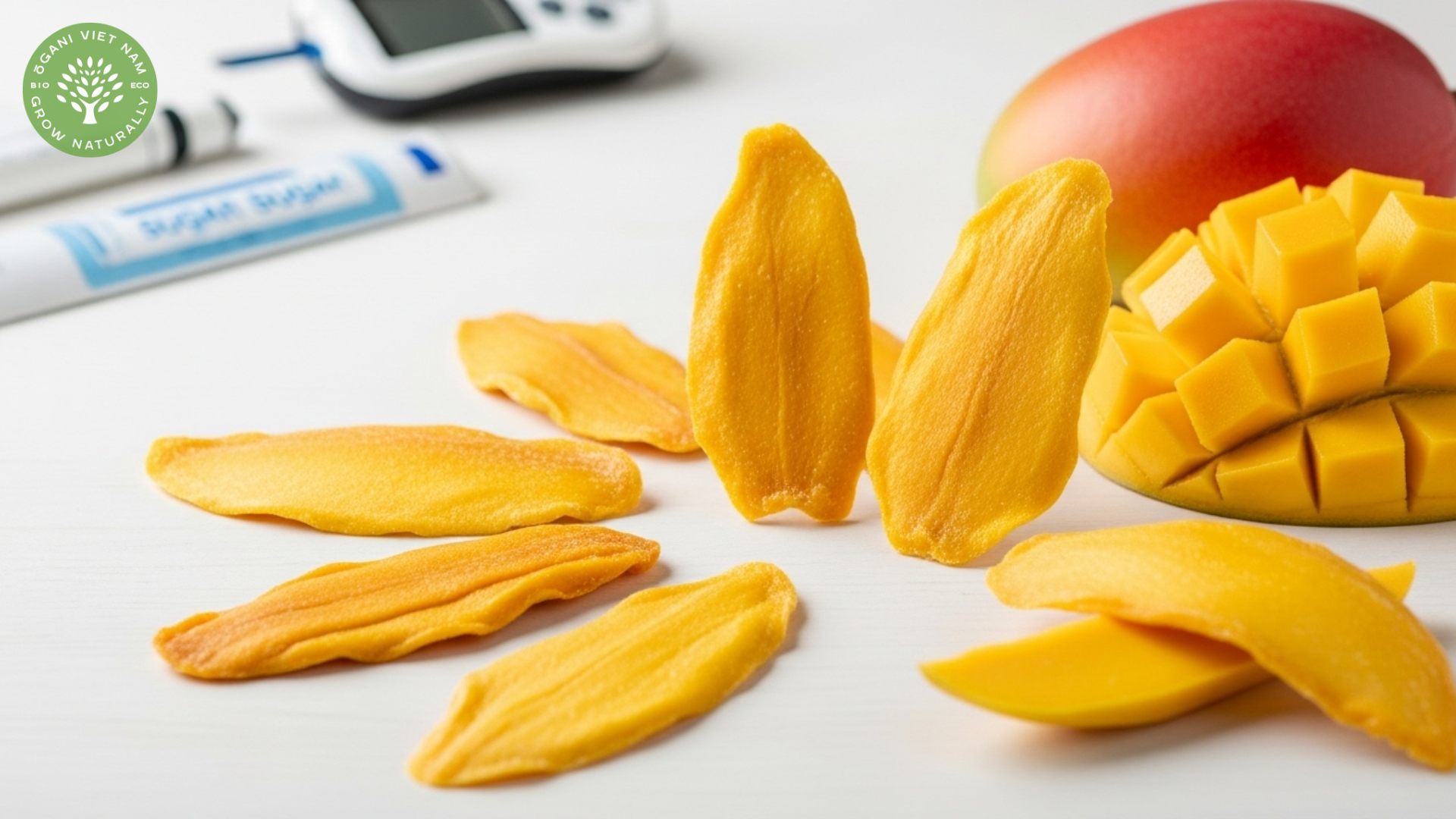
Dried mango has a glycemic index of about 60, so it has a medium effect on blood sugar.
At Ogani VN, we know that keeping your blood sugar stable is important. This simple guide helps you make good choices when you eat dried mango.
Understanding the glycemic index of dried mango
The glycemic index dried mango is around 60, which is higher than the GI of fresh mango at 51. This happens because drying removes water and makes the sugar more concentrated. When you eat dried mango, your blood sugar can go up faster than when you eat fresh mango.
Fresh mango has more water and fiber, so your body absorbs the sugar more slowly. Dried mango has concentrated fructose. One ounce of dried mango has about 27 grams of sugar, so you need to control your portion.
A GI of 60 is in the medium range. Low GI foods are below 55, and high GI foods are above 70. For example, white bread has a GI of about 75, and most fresh fruits are between 25–55.

How dried mango affects blood sugar levels
Blood glucose response patterns
When you eat dried mango, your blood sugar usually rises within 30–60 minutes. The concentrated sugars are absorbed fast, so your blood sugar goes up at a moderate level. The natural fiber helps slow this rise a little.
Studies show that dried mango can cause a longer, steady blood sugar increase compared to simple sugars. Mango also contains mangiferin, a natural compound that may help slow glucose absorption and support better insulin sensitivity over time.
Factors influencing glycemic response
Many things can change how dried mango affects your blood sugar. Portion size is the biggest factor — eating more will make your blood sugar rise more. Your body, your blood sugar at that time, and the other foods you eat also play a role.
Eating dried mango with protein or healthy fats can help slow sugar absorption. For example, eating a small amount with almonds or Greek yogurt can make your blood sugar rise more slowly.
Comparing dried vs fresh mango glycemic impact
Fresh mango helps control blood sugar better because it has a lower GI of 51 and more water. The natural fiber stays whole, so it helps you feel full and slows down sugar release. One cup of fresh mango has about 23 grams of sugar in 165 grams of fruit.
With dried mango, the same amount of sugar is packed into only 30 grams, so it is easy to eat too much. Drying the fruit also breaks some of the fiber, so it cannot slow sugar absorption as well.

Dried mango still has good nutrients like vitamin C, vitamin A, and antioxidants. The difference is concentration – you get the same nutrients in a smaller, high-calorie portion, so blood sugar rises faster.
Best practices for diabetics and blood sugar management
Portion control strategies
Eat 1-2 pieces of dried mango (about 20 grams) per serving to keep blood sugar stable. This gives about 15 grams of carbs, like one fruit portion for people with diabetes.
Read labels carefully. Some dried mango has added sugar that raises blood sugar. Pick unsweetened, organic dried mango without preservatives for a healthy choice.
Timing and combination tips
Eat dried mango earlier in the day when your body uses energy. Do not eat it alone on an empty stomach because it can raise blood sugar fast. Eat it with a meal or snack.
Mix dried mango with nuts, seeds, or protein. For example, 2–3 pieces of dried mango with a small handful of almonds make a filling snack and help keep blood sugar steady.

Nutritional benefits and considerations
Dried mango has a higher glycemic index, but it gives important nutrients like vitamin C, vitamin A, folate, and potassium. These nutrients help your immune system, eyes, and heart. Mango also has antioxidants like mangiferin and quercetin that may reduce inflammation.
Dried mango has more calories. One ounce has about 128 calories, while a cup of fresh mango has 107 calories. This means it is easy to eat too many calories without feeling full.
The fiber is lower than fresh mango but still helps digestion. One ounce of dried mango has about 1 gram of fiber. This can slow sugar absorption a little and help your stomach stay healthy.
Frequently Asked Questions
Is dried mango safe for people with diabetes? People with diabetes can eat 1-2 pieces per serving. Watch your blood sugar because glycemic index dried mango is 60.
Does processing change the glycemic index? Sweetened dried mango has higher GI than unsweetened. Added sugar can make the glycemic index dried mango over 70.
Can I eat dried mango before exercise? Dried mango gives fast energy. Eat 30-60 minutes before exercise.
What is the difference between air-dried and freeze-dried mango? Both remove water and concentrate sugar. Freeze-dried keeps more nutrients. Air-dried may have a little more sugar.
Making informed choices about dried mango consumption
Understanding the glycemic index dried mango helps you make good food choices and keep blood sugar steady. Dried mango has a GI of 60, so eat it in small amounts, but it can be part of a healthy diet.
At Ogani VN, we give you healthy options. Try our organic, unsweetened dried mangoes to enjoy good taste and nutrition. You can also ask our team for advice on adding dried fruits to your meals.
Read more:
- Glycemic Index Dried Mango: Complete Guide For Blood Sugar Management
- Best Dried Mango No Sugar Added: Premium Quality Guide
- Calories In Dried Mango No Sugar Added: Complete Nutrition Guide
- Are Dried Mangoes Good For You? The Complete Health Guide
- Dried Mango Calories: Complete Nutrition Guide & Healthy Snacking Tips