


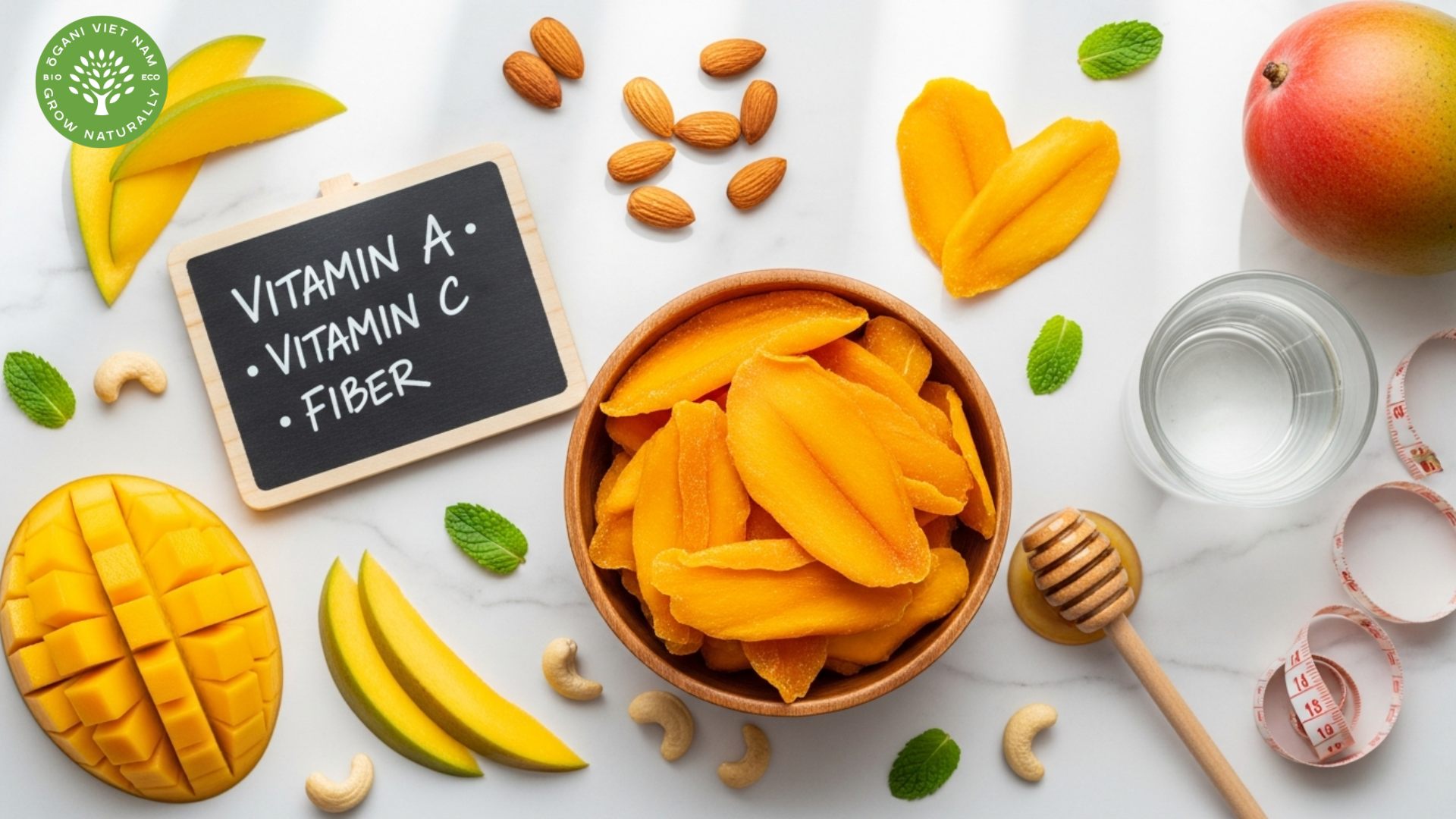
Dry mango health benefits are real and significant—this tropical fruit delivers concentrated vitamins A and C, dietary fiber, and essential minerals that support immune function, digestive health, and skin vitality. However, the drying process also concentrates natural sugars, making portion control essential. At Ogani VN, we’ve spent years working with premium organic dried mango, and we’ve learned that understanding both its strengths and limitations helps you make the most of this nutritious snack.
The question “is dried mango healthy?” doesn’t have a simple yes or no answer. It depends on how you consume it, what type you choose, and how it fits into your overall diet. Let’s break down what science and our experience tell us about this chewy golden treat.
Nutritional dry mango health benefits you should know
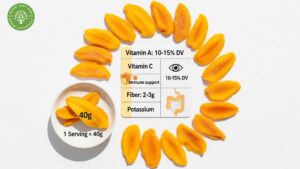
When you bite into a piece of dried mango, you’re getting a concentrated dose of nutrients that fresh mango provides, minus most of the water content. A typical 40-gram serving (about 5-6 pieces) contains roughly 120-140 calories, 1 gram of protein, and virtually no fat.
The vitamin A content is genuinely impressive—one serving can provide 10-15% of your daily needs. This fat-soluble vitamin plays a crucial role in maintaining healthy vision, supporting immune function, and keeping your skin looking its best. We’ve had customers tell us they noticed improvements in their skin’s appearance after making dried mango a regular snack, though individual results vary.
Vitamin C is another standout nutrient, though heat from the drying process does reduce levels compared to fresh mango. You’ll still get a meaningful amount—enough to support collagen production and act as an antioxidant in your body. The fiber content deserves special mention too. Each serving provides about 2-3 grams of dietary fiber, which helps with digestion and creates that satisfying feeling of fullness.
These are just some of the key dry mango health benefits that make this tropical snack worth including in your diet. What surprises many people is the mineral content. Dried mango contains potassium, which supports heart health and helps regulate blood pressure. You’ll also find small amounts of iron, magnesium, and folate—nutrients that play supporting roles in countless bodily functions.
Real dry mango health benefits backed by science
Supporting your immune system naturally

The combination of vitamins A and C in dried mango creates a one-two punch for immune support. Vitamin A helps maintain the integrity of your mucous membranes—the first line of defense against pathogens entering through your nose and throat. Meanwhile, vitamin C supports the production and function of white blood cells.
During cold season, we often reach for dried mango as part of a broader strategy to stay healthy. It’s not a magic bullet, but it’s a far better choice than reaching for processed candy when you need something sweet.
Digestive health and fiber content
The pectin and dietary fiber in dry mango health benefits extend to your digestive system in meaningful ways. Pectin is a type of soluble fiber that can help regulate cholesterol levels when consumed as part of a balanced diet. Research suggests that soluble fiber binds to cholesterol in the digestive tract and helps eliminate it from the body.
The fiber also supports regular bowel movements and feeds beneficial gut bacteria. If you’ve struggled with irregularity, adding a moderate amount of dried fruit like mango to your diet might help—though you’ll want to increase water intake at the same time to avoid the opposite problem.
Antioxidants that protect your cells
Fresh and dried mangoes both contain antioxidants like mangiferin and quercetin. These compounds help neutralize free radicals—unstable molecules that can damage cells and contribute to aging and disease. Some studies have explored connections between mango consumption and reduced cancer risk, particularly for breast, colon, and prostate cancers, though more research is needed.
What we know for certain is that a diet rich in various fruits and vegetables, including dried mango in moderation, provides a spectrum of protective compounds that work together to support overall health.
Understanding dry mango health benefits and sugar content
Here’s where things get complicated, and where honesty matters more than marketing hype. Dried mango contains a significant amount of natural sugar—typically 25-30 grams per serving. When water is removed during drying, everything else becomes concentrated, including fructose and glucose.
This doesn’t make dried mango “bad,” but it does mean you need to be mindful. Those 5-6 pieces contain roughly the same sugar as eating two fresh mangoes in quick succession. Your body processes this natural fruit sugar differently than it would process refined white sugar, thanks to the accompanying fiber, but it still impacts your blood glucose.
We’ve noticed that people who treat dried mango as candy—mindlessly eating handfuls throughout the day—often struggle with energy crashes and unwanted weight gain. On the other hand, those who measure out a portion and pair it with protein (like a handful of nuts) tend to experience more stable energy.
A study comparing fresh versus dried mango consumption found that fresh mango provided better satiety responses and improved postprandial glucose control. The lesson? Dried mango has its place, but it shouldn’t completely replace fresh fruit in your diet.
For anyone managing diabetes or watching blood sugar carefully, dried mango requires extra caution. The concentrated sugars can cause rapid blood glucose spikes. If you do choose to include it, pair it with fat and protein, and monitor your levels to understand your individual response.
Dry mango health benefits compared to fresh mango
| Aspect | Fresh Mango | Dried Mango |
|---|---|---|
| Calories | 60 per 100g | 300-350 per 100g |
| Vitamin C | Higher (remains intact) | Lower (reduced by heat) |
| Vitamin A | Moderate | Concentrated and higher |
| Fiber | Good source | Concentrated source |
| Sugar concentration | Lower (contains water) | 5x more concentrated |
| Convenience | Requires refrigeration, limited shelf life | Portable, long shelf life |
| Satiety | Higher due to water content | Lower, easier to overconsume |
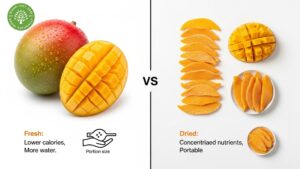
Both forms have their place. Fresh mango wins when you want maximum hydration, fewer calories, and better blood sugar control. The water content fills you up faster, making it harder to overeat.
Dried mango excels in portability and convenience. It travels well, doesn’t require refrigeration, and provides concentrated energy—perfect for hiking, travel, or keeping in your desk drawer. The dry mango health benefits remain significant as long as you respect portion sizes.
At Ogani VN, we encourage customers to enjoy both. Have fresh mango when it’s available and perfectly ripe. Keep quality dried mango on hand for situations where fresh isn’t practical. The key is approaching each with appropriate expectations and portions.
Maximizing dry mango health benefits through smart choices

Not all dried mango is created equal. When selecting products, check the ingredient list first. The only ingredient should be mango—or possibly mango with a small amount of sulfur dioxide as a preservative (which helps maintain color but some people are sensitive to).
Avoid dried mango with added sugar, corn syrup, or artificial colors. Some brands add sweeteners on top of the fruit’s natural sugar, which completely defeats the purpose of choosing fruit as a snack. If the package lists multiple ingredients beyond mango, put it back on the shelf.
Texture and color tell you about quality. Good dried mango should be pliable and slightly sticky, not rock-hard or crystallized. The color should be a natural golden-orange, not neon bright (which suggests artificial dyes) or excessively dark (which might indicate over-processing).
For consumption, we recommend the 40-gram serving size as a reasonable daily maximum for most people. That’s roughly 5-6 medium pieces. Pair it with:
- A handful of raw almonds or cashews
- A tablespoon of nut butter
- Greek yogurt
- Cheese cubes
This combination slows sugar absorption and creates a more balanced snack that sustains energy longer.
Timing matters too. Dried mango works well as a pre-workout snack (the natural sugars provide quick energy) or as part of breakfast. Eating it late at night on an empty stomach is more likely to cause blood sugar fluctuations that interfere with sleep.
Frequently Asked Questions
Is dried mango good for weight loss?
Dried mango can fit into a weight loss plan, but it’s not a weight loss food per se. The concentrated calories and sugars mean you need strict portion control. One serving (40g) contains 120-140 calories—not terrible, but easy to exceed if you eat directly from a large bag. Measure portions ahead of time and pair with protein to increase satiety.
How much dried mango should I eat per day?
For most adults, 40-50 grams (about 5-6 pieces) daily is reasonable as part of a balanced diet. This provides meaningful nutrients without excessive sugar intake. Children and those watching their sugar intake should consume less—perhaps 20-30 grams.
Does dried mango raise blood sugar quickly?
Yes, dried mango has a relatively high glycemic load due to concentrated natural sugars. People with diabetes or insulin resistance should consume it carefully, ideally paired with protein and fat to slow absorption. Monitor your individual response with a glucose meter if you’re concerned.
Can I eat dried mango if I’m trying to lower cholesterol?
The pectin and fiber in dried mango may help with cholesterol management as part of a heart-healthy diet. However, excessive sugar intake can negatively impact triglyceride levels, so moderation remains key. Don’t rely on dried mango alone—focus on overall dietary patterns.
What’s the difference between unsweetened and sweetened dried mango?
Unsweetened dried mango contains only the fruit’s natural sugars (still quite high). Sweetened versions have added sugar or syrups, significantly increasing the sugar content and calories. Always choose unsweetened varieties to get dry mango health benefits without unnecessary additions.
Making the most of dry mango health benefits
The dry mango health benefits are legitimate and meaningful when you consume this dried fruit thoughtfully. You’re getting concentrated vitamins, fiber, and minerals that support immune function, digestive health, and overall wellness. The antioxidants provide cellular protection, and the natural sweetness satisfies cravings in a way that processed sweets simply can’t match.
But—and this is important—dried mango isn’t a superfood that solves all nutritional challenges. The concentrated sugars require mindful consumption, especially if you’re managing weight or blood sugar. Treat it as a nutritious treat rather than an unlimited health food.
At Ogani VN, we’re committed to providing premium organic dried mango that contains nothing but fruit. We believe in transparency about both the benefits and the limitations, because that’s how you make informed choices that actually support your health goals.
Ready to experience the difference that quality makes? Explore our selection of organic dried tropical fruits and discover how the right sourcing and processing creates a product that’s both delicious and nutritious. Have questions about incorporating dried mango into your specific dietary needs? Reach out to our team—we’re here to help you find the balance that works for your lifestyle.
Read more:
- Baking With Dried Red Dragon Fruit: Breads, Muffins & Cookies
- Dried Red Dragon Fruit vs Fresh: Color, Nutrition & When to Use Each
- Dry Mango Health Benefits: What You Need To Know
- Red Dragon Fruit Dried: Your Complete Buying Guide
- Best Dried Mango Brand: Premium Picks for Healthy Snacking