


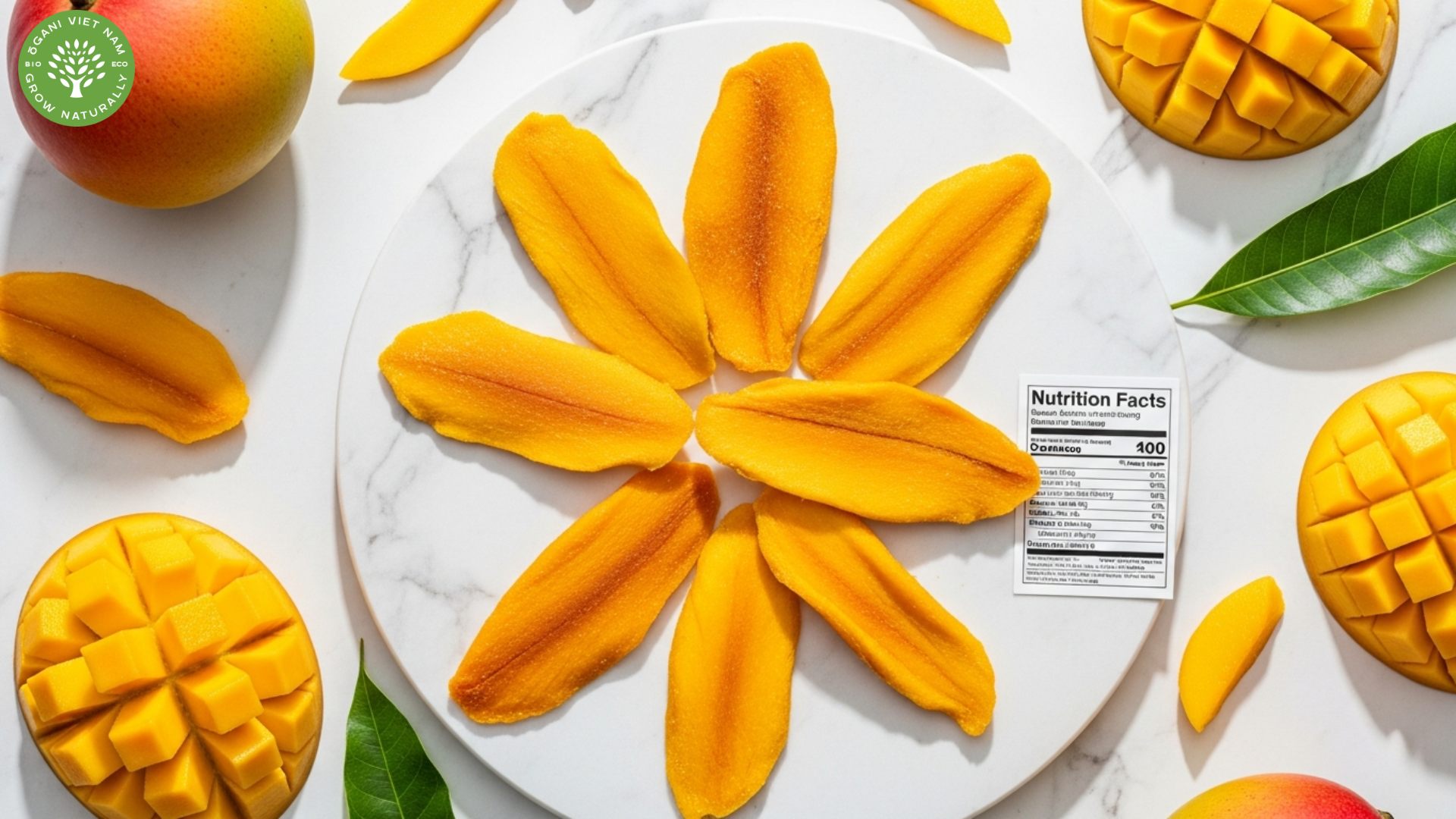
Dried mangoes nutrition facts reveal a concentrated source of natural energy—typically 120-140 calories per 40g serving with about 30-35g carbohydrates, minimal fat, and decent amounts of vitamin A and vitamin C. The catch? Most varieties pack 25-30g of sugar per serving, though unsweetened options exist.
We at Ogani VN get this question constantly from customers eyeing our dried mango section: “Are these actually healthy, or just candy in disguise?” Fair question. Let’s dig into what you’re really getting when you snack on these chewy golden slices.
Breaking down dried mangoes nutrition facts per serving
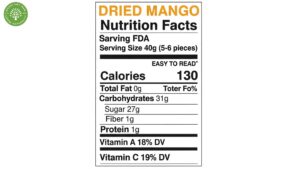
Here’s what a standard 40-gram serving (about 5-6 pieces) of dried mangoes nutrition facts looks like:
- Calories: 120-140 calories
- Total carbohydrates: 31-35g
- Sugar: 25-30g (varies by brand)
- Dietary fiber: 1-2g
- Protein: 1g
- Total fat: 0g
- Vitamin A: 15-20% Daily Value
- Vitamin C: 15-20% Daily Value
- Iron: 2-4% Daily Value
- Potassium: 2-3% Daily Value
Notice something? Almost zero fat, but the sugar content sits pretty high. That’s because drying fruit removes water (about 75-80% of fresh mango is water), which concentrates everything else—including natural sugars.
The vitamin content holds up surprisingly well through the dehydration process. You’re still getting meaningful amounts of vitamin A for eye health and vitamin C for immune support, though fresh mango edges ahead slightly.
The sugar story in dried mangoes nutrition facts
This deserves its own conversation because it trips people up constantly.
Natural sugar in dried fruit
Fresh mango contains about 14g of sugar per 100g. When you dry it, you’re essentially removing water weight, which concentrates that natural fructose. So yes, dried mangoes nutrition facts show high sugar—but it’s mostly the fruit’s own sugar, not necessarily added stuff.
Reading labels matters
Here’s where things get tricky. Some brands add extra sugar, sulfites, or sweeteners during processing. We’ve seen dried mango products at Ogani VN with anywhere from zero added sugar to significant amounts. The ingredient list tells the real story:
- “Organic mango only” = just natural fruit sugars
- “Mango, cane sugar” = additional sweeteners added
- “No sugar added” = only natural fruit sugars present
If you’re watching sugar intake seriously, go for unsweetened varieties. They taste less candy-like but still deliver that tropical mango flavor without the extra hit.
Health benefits hidden in dried mangoes nutrition facts
Let’s talk about what makes dried mango worth eating beyond just satisfying sweet cravings.
Vitamin A for vision and immunity
One serving gives you roughly 15-20% of your daily vitamin A needs. This nutrient supports eye health, immune function, and skin repair. Athletes and active folks often overlook this, but vitamin A also helps with exercise recovery.
Antioxidant properties
Mangoes contain polyphenols and carotenoids—compounds that fight oxidative stress in your body. The drying process concentrates these, though heat can degrade some. Still, you’re getting beneficial plant compounds that fresh produce offers.
Quick energy source
Those 30+ grams of carbs? They’re actually useful if you time it right. Pre-workout snack, mid-hike fuel, or post-workout recovery—dried mango delivers fast-acting energy without requiring digestion of complex foods. Just don’t mistake “quick energy” for “health food for unlimited snacking.”
Fiber content (though modest)
With only 1-2g fiber per serving, dried mango isn’t winning fiber awards. Fresh mango provides more. But in the dried fruit world, every gram counts, and it does help slow down that sugar absorption slightly.
Comparing dried mangoes nutrition facts to fresh mango

People constantly ask us at Ogani VN which is “better.” Honestly? Depends what you need.
Fresh mango per 100g:
- Calories: ~60
- Sugar: ~14g
- Fiber: ~1.6g
- Water: ~83%
- Vitamin C: Higher (fresh wins here)
Dried mango per 100g:
- Calories: ~300-320
- Sugar: ~65-70g
- Fiber: ~2-3g
- Water: ~15-20%
- Vitamin C: Lower (heat sensitive)
Notice the calorie difference? You’d need to eat about 400g of fresh mango to match the calories in 100g dried. That’s because you’re removing water weight, which has zero calories but adds volume.
The practical takeaway: Fresh mango fills you up faster with fewer calories. Dried mango gives concentrated energy in a portable format. Neither is “bad”—they serve different purposes. We keep both stocked at home because sometimes you want juicy fresh fruit, other times you need a backpack-friendly snack.
Using dried mangoes nutrition facts for smart portion control
Here’s where dried fruit gets people into trouble. The dried mangoes nutrition facts per serving look reasonable, but serving sizes matter enormously.
That 40g serving? It’s about 5-6 pieces, which disappears fast when you’re stress-eating in front of Netflix. Suddenly you’ve consumed 3-4 servings (400+ calories, 100g+ sugar) without realizing it.
Smart ways to enjoy dried mango:
- Pre-portion into small containers or bags
- Pair with protein (nuts, cheese) to slow digestion
- Add to oatmeal or yogurt instead of eating plain
- Use as a natural sweetener in homemade trail mix
- Chop into salads for texture and sweetness
We tell customers at Ogani VN: treat dried mango like you’d treat dark chocolate. It’s real food with real benefits, but portion awareness matters. A little adds enjoyment and nutrition; too much becomes a sugar bomb.
Frequently Asked Questions
Is dried mango good for weight loss?
Not particularly. The calorie density makes it easy to overeat. However, if you’re replacing candy or processed snacks with small portions of unsweetened dried mango, that’s a step up. Moderation is key.
Can diabetics eat dried mango?
Check with your healthcare provider, but generally the high sugar content (even natural sugar) can spike blood glucose. If you do eat it, keep portions tiny and pair with protein or healthy fat to minimize blood sugar impact.
Does dried mango lose nutrients compared to fresh?
Some vitamin C degrades during drying due to heat exposure, but vitamin A, fiber, and minerals remain largely intact. It’s still nutritious, just different from fresh.
How long does dried mango stay fresh?
Properly stored in an airtight container, dried mango lasts 6-12 months. Keep it in a cool, dark place. At Ogani VN, we recommend refrigeration after opening if you’re in humid climates.
What’s better: organic or regular dried mango?
Organic avoids pesticide residues and often skips added sulfites. If budget allows, organic is cleaner. But unsweetened regular dried mango still beats sweetened organic in our opinion—focus on the ingredient list first.
Your next steps with dried mangoes nutrition facts
Dried mangoes nutrition facts tell a story of concentrated fruit nutrition—meaningful vitamins, natural energy, and that irresistible tropical sweetness. It’s not a superfood, but it’s not junk either. The key lies in choosing unsweetened varieties and respecting portion sizes.
At Ogani VN, we’ve watched customers transform their snacking habits by swapping ultra-processed treats for quality dried fruits. If you’re looking for clean, organic dried mango without added sugars or sulfites, check out our selection. We source from farms that prioritize natural processing methods, so you’re getting fruit that tastes like actual mango—not candy.
Ready to upgrade your snack game? Browse our dried mango options and taste the difference quality makes. Your body will thank you for choosing real food over processed alternatives.
Read more:
- Red Pitaya Powder: The Ultimate Superfood Guide For Health
- Dried Mango Nutrition: Complete Guide To Health Benefits.
- Is Organic Dried Mango Good For You? Health Benefits Revealed
- Best Dried Mango No Sugar Added: Premium Quality Guide
- Dried Mangoes Nutrition Facts: Your Complete Guide