


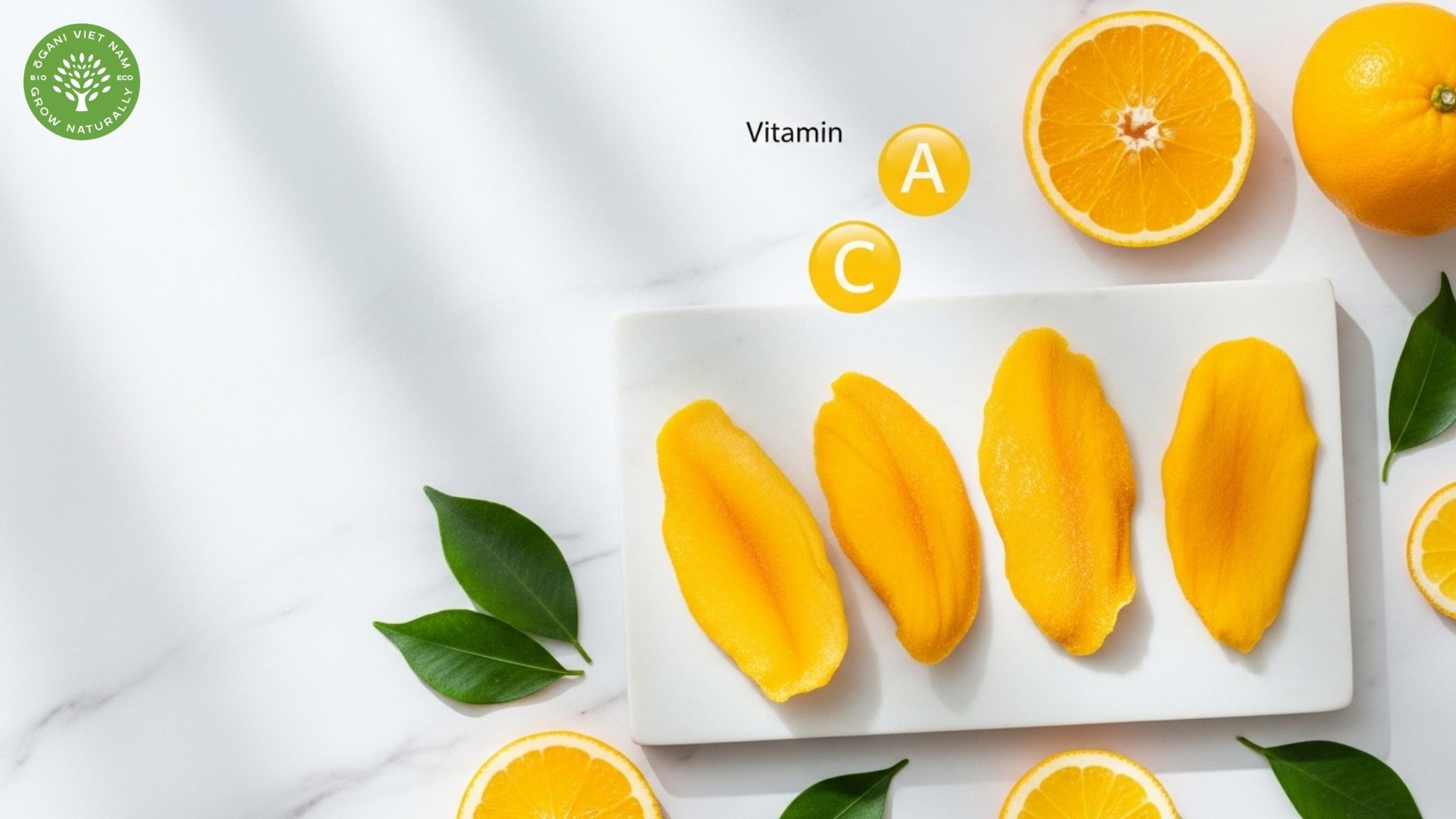
When you reach for that chewy, golden piece of dried mango, you’re getting more than just a sweet snack. Dried mango packs impressive amounts of vitamin A, vitamin C, and several essential minerals that support everything from your vision to your immune system—though the drying process does affect some nutrient levels compared to fresh fruit.
At Ogani VN, we’ve watched dried mango become one of those pantry staples that people either love without question or eye suspiciously, wondering if it’s “too good to be true.” The truth? It sits somewhere in the middle, and understanding exactly what vitamins you’re getting helps you make smarter snacking choices.
Understanding dried mango vitamins: What’s actually inside
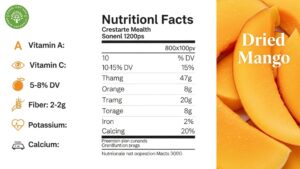
Let’s cut straight to what matters. When you bite into dried mango, you’re primarily getting vitamin A and vitamin C, along with smaller but meaningful amounts of other nutrients.
Vitamin A dominates the nutritional profile here. A single serving (about 40 grams or roughly 1/4 cup) typically delivers around 10-15% of your daily vitamin A needs. This comes from beta-carotene, the same compound that gives mangoes their gorgeous orange color. Your body converts this into usable vitamin A, which explains why dried mango has that reputation for supporting eye health.
Then there’s vitamin C—though here’s where things get interesting. Fresh mango bursts with vitamin C, but the drying process reduces these levels significantly. You’ll still get some (maybe 5-8% of your daily needs per serving), but heat-sensitive nutrients like vitamin C don’t survive the dehydration process intact. We’re not trying to sugarcoat it; dried mango simply isn’t your best vitamin C source.
Beyond vitamins, dried mango contributes several minerals worth noting:
- Potassium helps regulate blood pressure and supports muscle function
- Iron in trace amounts aids oxygen transport in your blood
- Calcium supports bone health, though you’d need to eat quite a bit to make a dent in your daily needs
- Magnesium plays a role in hundreds of enzymatic reactions in your body
The fiber content deserves special mention too—about 2-3 grams per serving. While technically not a vitamin, dietary fiber works alongside these nutrients to support digestive health and helps you feel satisfied after snacking.
Health benefits of dried mango vitamins for your body
Understanding which vitamins are present means little without knowing what they do for you. Let’s connect the dots between dried mango’s nutritional profile and real health outcomes.
Vision support and eye health
That high vitamin A content directly protects your vision. Your eyes need vitamin A to produce rhodopsin, a protein that helps you see in low light conditions. People who consistently get enough vitamin A may reduce their risk of age-related macular degeneration—one of those concerns that sneaks up as we get older.
We’ve had customers tell us they started keeping dried mango at their desks specifically for this reason, especially those who spend hours staring at screens. While it won’t reverse existing eye problems, maintaining adequate vitamin A intake supports long-term eye health.
Immune function and antioxidant protection
Both vitamin A and vitamin C contribute to immune defense, though they work differently. Vitamin A helps maintain the integrity of your skin and mucous membranes—your body’s first line of defense against pathogens. Vitamin C supports various immune cells and acts as an antioxidant, protecting cells from oxidative stress.
The antioxidants in dried mango extend beyond just vitamins. The fruit contains polyphenols and other phytochemicals that survive the drying process reasonably well. These compounds help neutralize free radicals, those unstable molecules that contribute to cellular aging and inflammation.
Digestive and cardiovascular support
Here’s where things get practical for daily life. The fiber in dried mango, combined with pectin (a specific type of soluble fiber), can help lower cholesterol levels when consumed as part of a balanced diet. Pectin binds to cholesterol in your digestive tract, preventing some of it from being absorbed.
The potassium content supports heart health by helping balance sodium levels and maintain healthy blood pressure. Most of us don’t get enough potassium anyway, so every bit helps.

Dried mango vitamins compared to fresh: What you need to know
People constantly ask us whether they should choose fresh or dried mango, and honestly, it depends on what you’re optimizing for. The drying process fundamentally changes the nutritional equation.
When manufacturers remove moisture from fresh mango, the nutrients become concentrated by weight. You’re essentially compressing multiple fresh mango slices into a smaller package. This concentration effect makes dried mango richer in some nutrients per gram—but there’s a catch.
Heat-sensitive nutrients take a hit. Vitamin C levels drop significantly during drying, sometimes by 50% or more depending on the method used. Some B vitamins also decline. However, more stable nutrients like vitamin A, fiber, and minerals remain largely intact. In some cases, they’re even more concentrated than in fresh fruit.
The sugar concentration is where things get tricky. Fresh mango contains natural sugars, but they come packaged with lots of water. Dried mango loses that water, meaning you can easily consume more sugar in a handful of dried fruit than you’d get from eating fresh slices. A small serving of dried mango might contain 20-25 grams of sugar—equivalent to what you’d find in a medium-sized fresh mango.
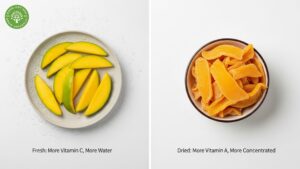
This isn’t necessarily bad, but it requires awareness. The nutrients are more concentrated, yes, but so are the calories and sugars. Fresh mango gives you more volume and hydration for fewer calories, while dried mango offers convenience and a longer shelf life.
Some of our customers rotate between both depending on the situation—fresh mango with breakfast when they’re home, dried mango in their bag for when they’re out. There’s no need to pick sides definitively.
Maximizing dried mango vitamins in your daily diet

The vitamin content in dried mango delivers genuine benefits, but strategy matters. Here’s how we recommend approaching it.
Start with portion awareness. Those resealable bags of dried mango make it dangerously easy to eat far more than you intended. The chewy texture and concentrated sweetness trigger a “just one more piece” response that can sabotage even the best intentions. Measure out a serving (about 1/4 cup or 40 grams) into a small bowl instead of eating directly from the bag.
Timing your dried mango consumption can maximize benefits. The natural sugars provide quick energy, making it useful as a pre-workout snack or mid-afternoon pick-me-up when your energy dips. Pair it with a protein source like nuts or Greek yogurt to slow sugar absorption and extend that energy boost.
Look for dried mango with no added sugar or preservatives. At Ogani VN, we prioritize products that list just one ingredient: mango. Some commercial varieties add sugar (completely unnecessary given mango’s natural sweetness) or sulfites to preserve color. Reading labels takes five seconds and makes a real difference.
Consider dried mango as part of your snack rotation rather than your only snack. Variety in your diet ensures you’re getting different nutrients from different sources. We personally love combining dried mango with other dried fruits, nuts, and seeds to create a more nutritionally balanced trail mix.
The fiber in dried mango means you should stay hydrated. Fiber needs water to do its job effectively in your digestive system. If you’re snacking on dried fruit regularly, make sure you’re drinking enough water throughout the day.
Frequently Asked Questions
How much dried mango should I eat daily?
A reasonable serving is about 40 grams (1/4 cup) per day, which gives you beneficial nutrients without overdoing the sugar intake. Some days you might eat more, some days less—your overall dietary pattern matters more than any single food.
Does dried mango have the same vitamins as fresh mango?
Dried mango retains most vitamin A, fiber, and minerals from fresh mango, but loses a significant portion of vitamin C and some B vitamins during the drying process. Both forms offer nutritional value, just with different profiles.
Is dried mango good for weight loss?
Dried mango can fit into a weight loss diet if you watch portions carefully. The fiber helps with satiety, but the concentrated calories and sugars mean it’s easy to overconsume. Use it as a measured snack rather than eating freely.
Can diabetics eat dried mango?
People with diabetes can include dried mango in their diet, but it requires careful portion control due to its effect on blood sugar. The natural sugars are concentrated, so work with your healthcare provider to determine appropriate amounts for your specific situation.
What’s the best way to store dried mango?
Keep dried mango in an airtight container in a cool, dark place. Properly stored, it lasts several months. We’ve found that keeping it in the refrigerator extends freshness even longer and gives it a firmer, more satisfying texture.
Getting the most from dried mango vitamins
Dried mango delivers a legitimate vitamin boost, particularly for vitamin A, while offering convenient portability and long shelf life that fresh fruit can’t match. The key is understanding both what it offers and what gets lost in the drying process, then incorporating it thoughtfully into your overall diet.
At Ogani VN, we believe in snacking with intention. Dried mango shouldn’t be your only fruit source, but it absolutely deserves a place in your pantry rotation. The vitamins and minerals it provides support real health benefits—from eye health to immune function to digestive wellness.
Ready to experience premium dried mango that’s pure fruit with nothing added? Browse our selection of carefully sourced dried mango and other nutritious dried fruits at Ogani VN. We’ve done the quality checking so you can focus on enjoying every vitamin-rich bite.
Read more:
- Baking With Dried Red Dragon Fruit: Breads, Muffins & Cookies
- Dried Red Dragon Fruit vs Fresh: Color, Nutrition & When to Use Each
- Dragon Fruit Powder: Unlocking Ít Superfood Potential for Health and Wellness.
- Red Dragon Fruit Dried: Your Complete Buying Guide
- Dried Mango Vitamins: Complete Nutritional Guide