


When you’re searching for dried mango sugar free, you’re looking for a snack that delivers tropical flavor without the extra sweetness—and we at Ogani VN completely understand that desire. The truth is, premium dried mango doesn’t need added sugar because ripe mangoes already pack incredible natural sweetness that intensifies during the drying process.
What dried mango sugar free really means
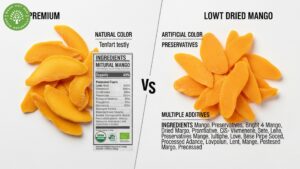
Here’s something most people don’t realize at first: when you see “sugar-free” or “no sugar added” on dried mango packaging, it doesn’t mean the fruit contains zero sugar. Natural mangoes are loaded with fructose—that’s what makes them taste like tropical sunshine in the first place. What “no sugar added” actually means is that manufacturers haven’t dumped extra cane sugar, corn syrup, or artificial sweeteners onto the fruit during processing.
We’ve noticed a lot of confusion around this. Someone picks up a bag of unsweetened dried mango, checks the nutrition label, and sees “20g sugar per serving.” They feel deceived. But that sugar? It’s all from the mango itself—completely natural, coming with fiber, vitamins, and minerals that refined sugar simply doesn’t offer.
Premium quality dried mango sugar free products rely entirely on the fruit’s inherent sweetness. The best varieties use mangoes harvested at peak ripeness, when their natural sugar content hits that perfect sweet spot. Brands like Mariani, Mavuno Harvest, and what we offer at Ogani VN focus on sourcing the right fruit first—because if you start with mediocre mangoes, no amount of processing will create a satisfying snack.
Health benefits of dried mango sugar free

Let’s be honest—dried fruit gets a bad reputation in health circles, and sometimes for good reason. Many commercial dried fruits are essentially candy disguised as health food, coated in so much added sugar that you might as well eat gummy bears. But genuinely unsweetened dried mango? That’s a different story entirely.
One serving of organic dried mango sugar free typically delivers around 130-160 calories, with the majority coming from natural fruit sugars paired with dietary fiber. Unlike candy or sugary snacks that spike your blood sugar and leave you crashed an hour later, the fiber in dried mango slows down sugar absorption. You get sustained energy instead of that awful sugar rollercoaster.
The vitamin A content is particularly impressive—one serving can provide 20-25% of your daily needs. Your eyes, immune system, and skin all depend on vitamin A, and getting it from whole food sources like mango beats popping supplements any day. We’ve also got vitamin C hanging around (though admittedly less than fresh mango, since some degrades during drying), plus small amounts of iron and potassium.
What really matters here is the absence of preservatives, sulfites, and artificial colors that often tag along with cheaper dried fruit. Many conventional dried fruits get treated with sulfur dioxide to maintain that bright, appealing color. While generally recognized as safe, some people experience headaches or allergic reactions to sulfites. USDA organic and premium no-sugar-added varieties skip this entirely, letting the fruit’s natural color shine through—even if it’s a bit darker or more amber-toned.
How to choose premium dried mango sugar free
Not all unsweetened dried mango deserves your money. After years in this industry, we’ve learned exactly what separates premium products from disappointing imitations.
Check the ingredient list first
This should be laughably simple: the ingredient list should say “Mango” or “Organic Mango.” Period. If you see anything beyond that—cane sugar, glucose, citric acid, vegetable oil—keep looking. Some manufacturers add oil to prevent clumping, but truly premium products don’t need it. The mango naturally contains enough moisture and natural oils to maintain the right texture.
Watch out for sneaky labeling, too. “Less sugar added” is not the same as “no sugar added.” We’ve seen products marketed as “healthy dried mango” that still contain added sweeteners. The only exception we’d accept is when companies explicitly list the natural fruit as the sole ingredient, sometimes with a clarification like “contains naturally occurring sugars from fruit.”
Texture and appearance tell you everything

High-quality dried mango sugar free should feel pliable—chewy but not tough. If it’s rock-hard, either it’s been over-dried or it’s old stock. On the flip side, if it feels wet or sticky, that might indicate improper storage or, worse, added moisture-retaining agents.
The color varies by variety and processing method. Thai mangoes tend toward a golden-orange, while some Mexican or South American varieties lean darker, almost amber. Don’t chase the brightest yellow—that often signals added sulfites. A more natural, slightly muted orange-brown is perfectly fine and usually indicates minimal processing.
Source and certification matter
Thailand produces some of the world’s best dried mango, thanks to ideal growing conditions and traditional processing knowledge passed down through generations. Look for products that specify origin—”Premium Grade Thailand Mango” typically indicates serious sourcing standards.
Certifications like USDA Organic, Non-GMO Project Verified, or Vegan certification demonstrate that a company invests in quality control and transparency. At Ogani VN, we prioritize working with suppliers who maintain these standards because your health deserves that level of commitment.
Creative ways to enjoy dried mango sugar free
Smart snacking strategies
Here’s where dried mango really shines: portability and versatility. We keep a bag in our desk drawer for that 3 PM energy dip when coffee just won’t cut it anymore. The natural sugars provide quick energy, while the fiber prevents the crash.
Try pairing dried mango with raw nuts—almonds, cashews, or walnuts work beautifully. The healthy fats in nuts slow down sugar absorption even further, creating a perfectly balanced snack that actually satisfies hunger. Some of our customers swear by chopping dried mango into small pieces and mixing it into trail mix with pumpkin seeds and dark chocolate chips.
For breakfast, dice it and toss it into oatmeal or overnight oats. The mango rehydrates slightly, releasing pockets of intense tropical flavor throughout your bowl. Or fold it into yogurt—the tangy-sweet combination hits differently than boring granola.
Proper storage extends freshness

Even the best dried mango sugar free won’t stay perfect forever. Store it in an airtight container in a cool, dry place—your pantry works fine unless you live somewhere extremely humid. Heat and moisture are the enemies here. If the package comes with a resealable bag, actually use it. Don’t just fold the top and hope for the best.
In high-humidity environments, refrigeration makes sense. Just know that chilled dried mango gets chewier and firmer. Let it come to room temperature for 10-15 minutes before eating if you prefer a softer texture. Properly stored, most premium dried mango maintains quality for 6-12 months, though let’s be real—it rarely lasts that long once you discover how good it actually tastes.
Some people freeze dried mango for extended storage. It works, though the texture changes slightly upon thawing. If you’re using it in smoothies or baking, frozen works perfectly since you’re blending or cooking it anyway.
Frequently Asked Questions
Is dried mango with no sugar added actually healthy?
Yes, when consumed in moderation. Unsweetened dried mango provides vitamins, minerals, and fiber without the refined sugars found in many processed snacks. Just watch portion sizes since the natural sugar content is concentrated—stick to about 1/4 cup (around 40g) per serving.
How many calories are in sugar-free dried mango?
Most organic, no-sugar-added dried mango contains approximately 130-160 calories per 40g serving (about 1/4 cup). The calorie count comes primarily from natural fruit sugars and carbohydrates, with minimal fat and a few grams of protein.
Can diabetics eat dried mango without added sugar?
Diabetics should consult their healthcare provider, as even natural fruit sugars affect blood glucose. The fiber in dried mango helps moderate blood sugar response compared to refined sweets, but portion control remains crucial. Pairing it with protein or healthy fats can further minimize blood sugar spikes.
What’s the difference between dried mango and dehydrated mango?
The terms are often used interchangeably, though technically “dehydrated” suggests a specific low-temperature process that preserves more nutrients and enzymes. Both remove moisture to concentrate flavor and extend shelf life. What matters more is whether sugar has been added during processing.
Why does unsweetened dried mango still taste sweet?
Fresh mangoes naturally contain 12-15% sugar by weight. When you remove 80-85% of the water during drying, those natural sugars become highly concentrated, resulting in intense sweetness without any need for added sweeteners. That’s nature’s own candy.
Your trusted source for authentic dried mango sugar free
The best dried mango sugar free products prove that you don’t need to compromise flavor for health. When you start with premium, ripe mangoes and use careful processing methods, the fruit’s natural sweetness creates a snack that’s both satisfying and nutritious.
At Ogani VN, we’re committed to sourcing only the highest-quality organic dried mango—no added sugars, no preservatives, no compromises. Just pure tropical flavor that transports you straight to sun-drenched mango groves with every bite. Whether you’re looking for a guilt-free snack, a nutrient-dense addition to your recipes, or simply want to experience what dried fruit should actually taste like, we’ve got you covered.
Ready to taste the difference? Browse our selection of premium dried mango sugar free options today and discover why natural sweetness beats artificial every single time. Your taste buds—and your body—will thank you.
Read more:
- Dry Mango Fruit: Your Complete Guide To This Sweet Superfood
- Dried Red Dragon Fruit vs Fresh: Color, Nutrition & When to Use Each
- Red Dragon Fruit Dried: Your Complete Buying Guide
- Dried Mango Fibre Content: What You Need to Know
- Dried Mango Shelf Life: How Long Does It Really Last?