


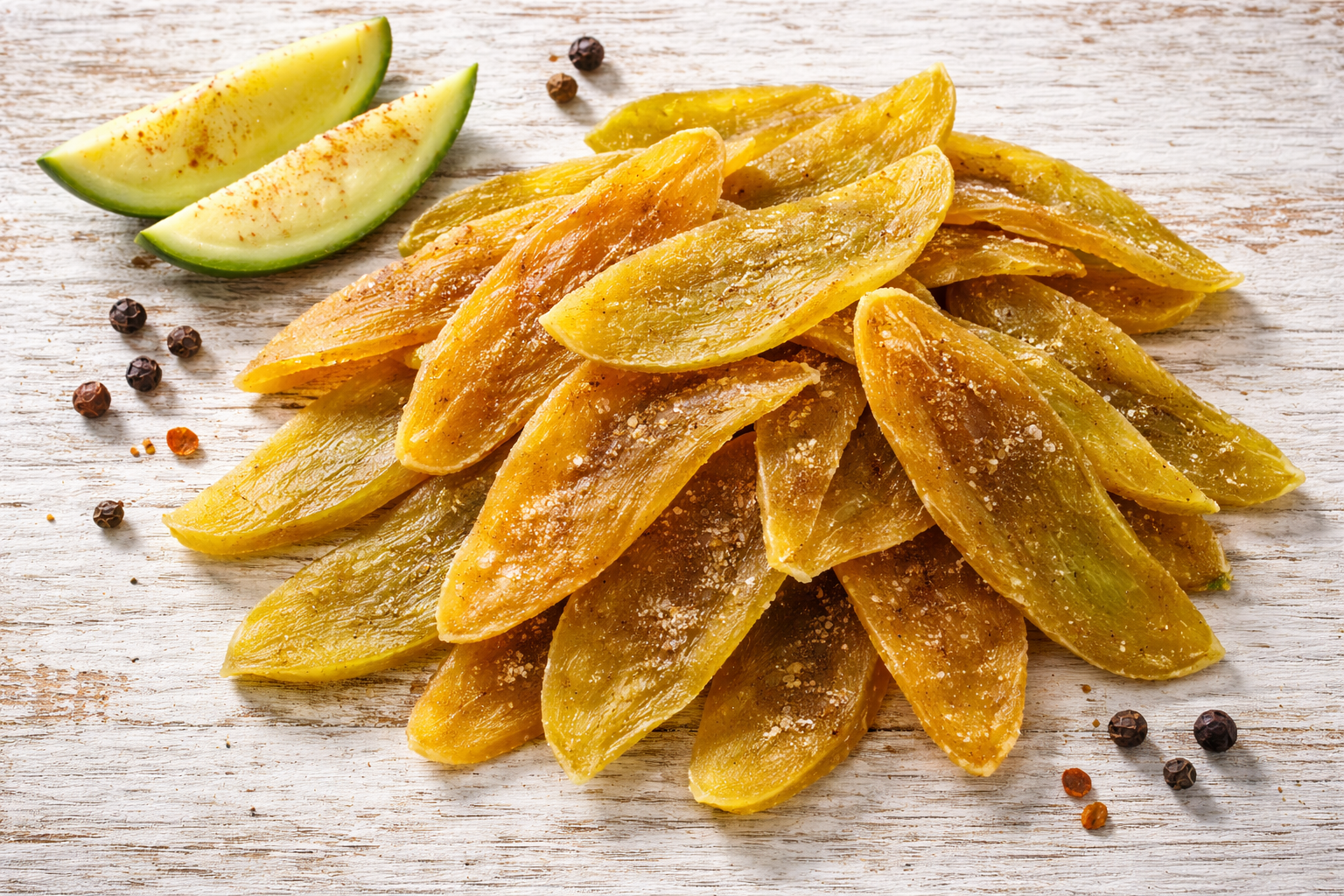
Dried mango sour isn’t a mistake — it’s the whole point. That sharp, electric tang hitting your tongue before the natural sweetness rolls in? That’s exactly what snack lovers are chasing, and at Ogani VN, we think it deserves a lot more credit than it gets.
Why dried mango sour tastes the way it does (and why that’s a good thing)
Most people’s first encounter with dried mango sour goes something like this: you expect something sweet and tropical, you get a face-puckering punch of tartness, and then — surprisingly — you reach back into the bag for another piece. Sound familiar?
Here’s the science behind it, kept simple. Raw and semi-ripe mangoes contain higher concentrations of tartaric acid, citric acid, and malic acid. When the fruit is dried before it fully ripens, those organic acids get concentrated rather than broken down. The result is that signature sour-sweet flavor profile that dried green mango and sour mango snacks are loved for across Southeast Asia and increasingly worldwide.
It’s not a quality defect. It’s a flavor feature — one that’s been enjoyed in Vietnamese, Thai, and Filipino food cultures for generations.
Types of dried mango sour: not all tang is created equal
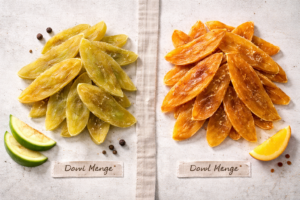
Not all dried mango sour is the same, and this is where a lot of buyers get confused when shopping. The sourness level, texture, and ingredient list can vary wildly depending on the variety and drying method used.
Green mango vs. ripe mango dried sour
Green mango — harvested before full ripeness — is the most naturally sour option. Dried green mango slices have a firm, slightly chewy texture with a bold acidic tang and very little sweetness. Think of it as nature’s sour candy, but without the artificial flavoring.
Ripe mango that’s been dried and then coated with citric acid or tamarind powder sits in a different category. The base fruit is sweeter, but the added souring agents create a sweet-sour contrast that’s popular in candied mango snacks. The flavor is more layered and less “pure” than straight green mango.
At Ogani VN, we focus on the cleaner end of the spectrum — dried mango made from high-quality fruit with no unnecessary additives or preservatives, letting the natural acidity of the fruit do its job.
Freeze-dried sour mango vs. traditionally dehydrated
Freeze-dried mango delivers an airy, crunchy texture with intensely concentrated flavor — the sourness hits fast and sharp. Traditional air-dried or dehydrated mango is chewier and the flavor releases more slowly. Neither is objectively better; it really comes down to what texture experience you’re after.
If you like snacks with a satisfying crunch and explosive flavor, freeze-dried is your lane. If you want something more substantial — something you can actually chew through — dehydrated dried mango sour is the move.
Health benefits of dried mango sour you might not expect
Here’s where things get interesting. Most people think of dried mango sour as just a snack indulgence. But unripe and semi-ripe mangoes actually carry a nutritional profile that’s a little different from fully ripe fruit — and worth knowing about.
- Vitamin C content is significantly higher in unripe mango compared to fully ripe fruit. The acidity you taste correlates directly with ascorbic acid levels, meaning that tangy bite is genuinely doing something beneficial.
- Green mango contains digestive enzymes including amylases that support healthy digestion — a traditional use in Vietnamese folk medicine that modern nutrition is slowly catching up to.
- The fiber content in dried mango supports gut health and satiety, making it a smarter snack option than most processed alternatives.
- Lower natural sugar compared to fully ripe dried mango means a gentler effect on blood glucose — relevant for people monitoring sugar intake who still want a fruit-based snack.
That said, portion awareness still matters. Dried fruit — sour or sweet — is calorie-dense by nature of the dehydration process. A small handful goes a long way.
How to use dried mango sour beyond just snacking
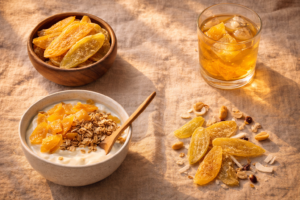
This is the section that tends to surprise people. Dried mango sour isn’t just for eating straight from the bag — though that’s perfectly valid and honestly our most common recommendation. It’s a versatile ingredient that works in more places than you’d think.
- Toss chopped pieces into a green salad with toasted cashews and a lime dressing — the acidity plays beautifully against fatty nuts and neutral greens
- Blend into a smoothie or agua fresca for a natural souring agent without lemon or lime
- Use as a topping for yogurt bowls and overnight oats — the chewiness adds textural contrast
- Incorporate into spicy snack mixes with chili, peanuts, and dried coconut for a Vietnamese-inspired trail mix
- Muddle or steep in warm water as a simple digestive tea — a traditional use in Vietnamese households that’s worth trying
One trick we love at Ogani VN: pair dried mango sour slices with a small piece of dark chocolate. The bitterness of the chocolate and the tartness of the mango cancel each other out in a way that brings both flavors into focus. Try it before you judge it.
Frequently asked questions about dried mango sour
Is it normal for dried mango to be very sour? Yes, especially if it’s made from green or semi-ripe mango. The sourness comes from natural organic acids concentrated during drying. If the sour flavor is accompanied by an off smell or unusual texture, that’s a different issue — that could indicate spoilage. But a clean, bright tartness? That’s just good dried green mango.
Why does some dried mango taste sour while other brands taste sweet? The ripeness of the mango at time of harvest and the drying method both play major roles. Some brands also add citric acid or tamarind as souring agents. Check the ingredient list — natural sour dried mango should have a short, clean ingredient list.
Does dried sour mango go bad? Like all dried fruit, it has a shelf life. Signs of spoilage include a musty or fermented smell, mold, or unusual stickiness. Properly sealed and stored in a cool, dry place, quality dried mango stays good for several months. If it smells sharp in a clean, fruity way — that’s just the natural acid, not spoilage.
Can I make sour dried mango at home? Yes. Slice green or semi-ripe mango thinly, optionally toss with a little salt and chili, and dehydrate at low heat (around 55–65°C) for 8–12 hours. The result won’t be perfectly uniform, but the flavor is genuinely excellent.
Is sour dried mango suitable for children? Generally yes, in moderate amounts. The acidity can be intense for very young children and may irritate sensitive teeth. For kids who enjoy sour candy, it’s a far better alternative nutritionally than artificial sour sweets.
Make dried mango sour your next favorite snack
Dried mango sour is one of those snacks that rewards the people who lean into it rather than away from it. The tartness isn’t a problem to solve — it’s a flavor dimension that makes dried mango genuinely interesting, nutritionally relevant, and culinarily versatile in ways that sweet-only snacks simply aren’t.
At Ogani VN, we believe the best dried fruit is the kind that lets the real fruit character speak clearly — no unnecessary additives, no over-sweetening, no apologies for natural acidity. If you’re ready to explore what proper sour dried mango tastes like, browse our dried fruit collection at Oganivn.com and find the variety that matches your flavor preference. Your snack game is about to get a lot more interesting.
-
- Dried Red Dragon Fruit vs Fresh: Color, Nutrition & When to Use Each
- Sweet Dried Fruits: Nature’s Candy That’s Actually Good for You
- Red Dragon Fruit Dried: Your Complete Buying Guide
- Dried Mango Fibre Content: What You Need to Know
- Dried Mango Sour: The Tangy Snack You’ll Keep Coming Back To