


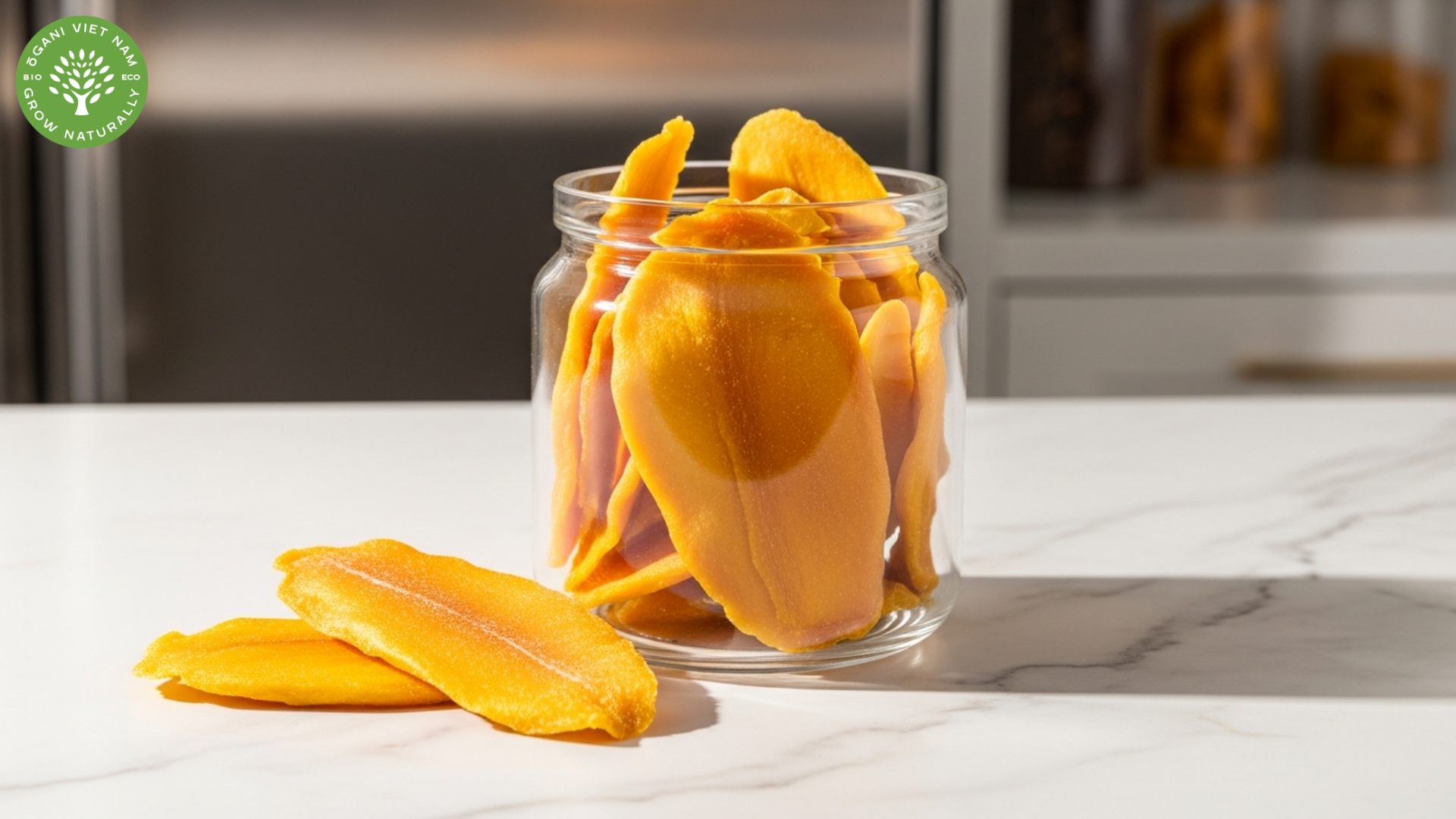
Dried mango shelf life typically ranges from 6 to 12 months when stored properly at room temperature, but this can extend significantly with refrigeration or freezing. At Ogani VN, we’ve seen customers enjoy our organic dried mango for up to 18 months when they follow the right storage practices—though honestly, most of our customers finish their bags way before that!
Understanding dried mango shelf life basics
The longevity of your dried mango depends on several interconnected factors, and it’s not as straightforward as checking an expiration date. We’ve learned through years of working with premium dried fruits that the “6-12 month” guideline is just a starting point.
Think of dried mango as a living product—it still contains trace amounts of moisture (usually 15-20%), which means it’s not completely shelf-stable forever. Unlike freeze-dried varieties that can last 20-25 years in sealed containers, traditionally dried mango maintains that chewy, tender texture precisely because it retains some moisture. This makes it delicious, but it also means the clock is ticking from the moment it’s packaged.
The good news? With proper storage, you’re looking at a year or more of enjoying sweet, tangy mango goodness. We’ve had customers tell us they’ve kept our dried mango for 14-16 months in cool, dry conditions without any quality loss.
How storage conditions impact dried mango shelf life
Where and how you store your dried mango makes all the difference. Temperature, humidity, and light exposure can either preserve that perfect chewy texture or turn it into a science experiment you’d rather forget.
Room temperature storage
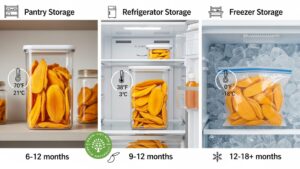
At normal room temperature (around 68-72°F), properly sealed dried mango will maintain its quality for 6-12 months. We recommend keeping it in your pantry away from direct sunlight and heat sources like your stove or dishwasher.
Here’s something we’ve noticed: customers in humid climates like coastal areas or tropical regions often see their dried mango develop a sticky surface or even mold within 4-6 months at room temperature. If you live somewhere humid, you might want to skip ahead to our refrigeration tips.
Once you open the package, the shelf life drops to about 3-6 months at room temperature. Air exposure accelerates moisture absorption and oxidation, so that’s when you really need to be vigilant about resealing.
Refrigerated storage
This is our preferred method at Ogani VN, especially after opening. Refrigeration (35-40°F) extends shelf life to 9-12 months for unopened packages and 6-9 months after opening.
The cool temperature slows down enzymatic activity and prevents microbial growth. Plus, it keeps the mango from getting overly sticky in summer months. Some customers worry that refrigeration will make the mango too hard, but we’ve found it actually helps maintain that ideal chewy texture longer.
Pro tip from our team: let refrigerated dried mango sit at room temperature for 5-10 minutes before eating. It brings out the flavor and softens the texture just enough.
Freezer storage
Want to stockpile? Freezing dried mango can theoretically extend its shelf life indefinitely—or at least for 12-18 months with good quality retention. We’ve tested batches stored for two years in the freezer, and while they were still safe to eat, the flavor and texture started degrading after the 18-month mark.
The key is using airtight, freezer-safe containers or heavy-duty freezer bags with all the air pressed out. Freezer burn is real, and it’ll give your mango an off-flavor and tough texture that’s pretty disappointing.
Key factors that determine dried mango shelf life
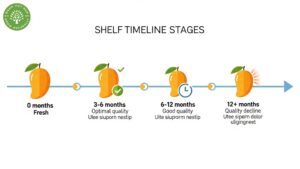
Beyond just temperature, several variables influence how long your dried mango stays fresh. Understanding these helps you make smarter storage decisions.
Moisture content
This is the big one. Commercial dried mango typically has a moisture content of 15-20%, which gives it that signature chewiness. Go below 10%, and you get a crunchier, longer-lasting product (some dehydrated versions can hit 2-3 years). Go above 20%, and you’re basically asking for mold.
At Ogani VN, we carefully control moisture levels during production, but what happens after you buy it matters just as much. If you live in a humid environment or frequently open and close the package, the mango can absorb atmospheric moisture. That’s when shelf life starts shrinking fast.
Packaging quality
Vacuum-sealed packages or resealable pouches with oxygen absorbers dramatically extend shelf life compared to basic plastic bags. We use multi-layer, food-grade packaging that blocks light and minimizes air exposure.
Once opened, transferring your dried mango to a glass jar or high-quality plastic container with a tight seal makes a noticeable difference. We’ve compared the same batch stored in a loosely closed bag versus an airtight container—the difference after three months was striking.
Additives and preservatives
Here’s where things get interesting. Some commercial dried mangoes contain sulfur dioxide (sulfites) or ascorbic acid to preserve color and extend shelf life. These can add several months to the product’s longevity.
At Ogani VN, we stick to minimal processing—no sulfites, no artificial preservatives. This means our organic dried mango has a slightly shorter shelf life than some commercial varieties, but the trade-off is cleaner ingredients and more authentic flavor. We’re okay with that, and most of our customers are too.
How to tell when dried mango shelf life has expired
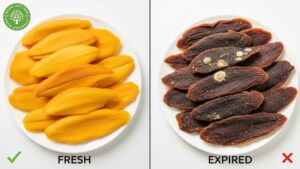
Knowing when to toss your dried mango isn’t always obvious. Here’s what to look for:
Visual changes: Mold is the obvious one—any fuzzy spots, white patches, or unusual discoloration means it’s time to say goodbye. But also watch for dramatic darkening or bleaching of color, which indicates oxidation.
Texture shifts: If your chewy mango has become either rock-hard or suspiciously slimy, that’s a red flag. Some hardening over time is normal, but if it’s tough enough to chip a tooth, it’s past its prime.
Smell test: Fresh dried mango has a sweet, fruity aroma. If it smells fermented, musty, or just “off,” trust your nose. We had a customer describe spoiled dried mango as smelling like “sweet vinegar mixed with basement”—not appetizing.
Taste (if it passes the other tests): Stale or unusually sour flavors indicate degradation. Good dried mango should taste sweet and tangy, not flat or bitter.
One thing we’ve noticed: dried mango rarely goes bad suddenly. It’s usually a gradual decline in quality—the flavor becomes less vibrant, the texture less appealing. Use your judgment.
Best practices for extending dried mango shelf life
After years of testing and customer feedback, here’s our proven storage protocol:
Keep it sealed: Always reseal the package tightly after each use. We recommend using bag clips or transferring to an airtight container immediately after opening.
Control the environment: Store in a cool (below 75°F), dry place away from direct sunlight. Your pantry is fine; the shelf above your stove is not.
Refrigerate after opening: This single step can double your shelf life. Seriously, the difference is dramatic.
Avoid cross-contamination: Don’t use wet or dirty hands to grab dried mango from the bag. Moisture and bacteria are your enemies here.
Consider portioning: If you bought in bulk, divide it into smaller portions and freeze what you won’t use within 2-3 months. This limits air exposure to your entire supply.
Label everything: Write the opening date on the package or container. Your memory isn’t as reliable as you think (ours certainly isn’t).
Monitor for changes: Check your dried mango periodically, especially if stored at room temperature. Catching quality loss early can save the whole batch.
Frequently Asked Questions
How long does dried mango last after opening?
Opened dried mango lasts 3-6 months at room temperature, 6-9 months refrigerated, and up to 12 months frozen. The key is minimizing air exposure and controlling humidity.
Should I refrigerate dried mango?
We recommend it, especially after opening or if you live in a humid climate. Refrigeration extends shelf life without significantly affecting texture or flavor.
Can dried mango go bad if unopened?
Yes, even unopened packages eventually degrade. Most manufacturers (including us) put a “best by” date 12-18 months from production. Unopened dried mango stored properly can often last beyond this date, but quality gradually declines.
What’s the difference between dried and freeze-dried mango shelf life?
Freeze-dried mango can last 20-25 years in sealed containers due to its extremely low moisture content (1-3%). Traditional dried mango retains more moisture, giving it a shorter 6-12 month shelf life but better texture and flavor.
Can I eat dried mango past the expiration date?
Possibly, if it shows no signs of spoilage. The date is about quality, not safety. Use your senses—if it looks, smells, and tastes fine, it’s probably okay. When in doubt, throw it out.
Maximizing your dried mango shelf life: final thoughts
Understanding dried mango shelf life empowers you to enjoy this nutritious snack at its peak quality while minimizing waste. Whether you’re storing it at room temperature for quick snacking or freezing it for long-term supplies, the principles remain the same: control moisture, limit air exposure, and maintain cool temperatures.
At Ogani VN, we’re passionate about delivering premium organic dried fruits that last. Our dried mango is carefully processed and packaged to maximize shelf life without compromising on flavor or nutrition. Ready to experience the difference quality makes? Browse our selection of organic dried mango and discover why our customers keep coming back for more. Have questions about storage or want to share your own preservation tips? Reach out to our team—we’d love to hear from you!
Read more:
- Dry Mango Fruit: Your Complete Guide To This Sweet Superfood
- Dried Red Dragon Fruit vs Fresh: Color, Nutrition & When to Use Each
- Red Dragon Fruit Dried: Your Complete Buying Guide
- Dried Mango Fibre Content: What You Need to Know
- Dried Mango Shelf Life: How Long Does It Really Last?