


When you first bite into a piece of quality dried mango, you’re met with an intense burst of tropical sweetness that’s honestly hard to forget. At Ogani VN, we’ve spent years perfecting our dried mango description to help you understand exactly what makes this golden treat so special—and why it’s become one of our most beloved products.
Dried mango is essentially fresh mango that has undergone a careful dehydration process, transforming juicy fruit slices into chewy, concentrated bursts of tropical flavor. The moisture is gently removed while preserving the natural sugars, nutrients, and that signature mango taste we all crave.
Complete dried mango description: texture, color and taste

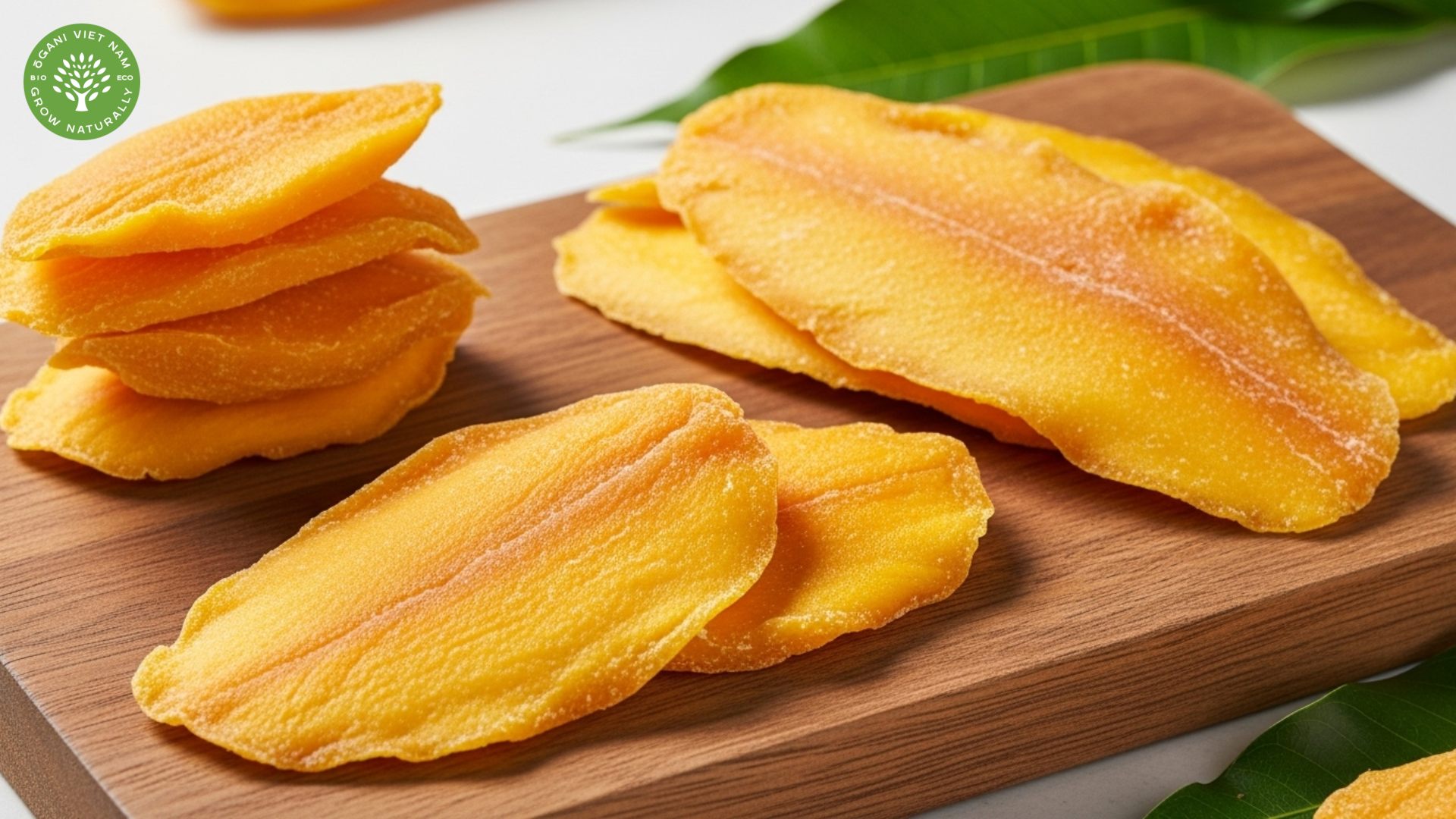
Let’s get specific about what you’re actually getting when you choose dried mango. The texture is probably the first thing you’ll notice—it’s pleasantly chewy, almost like a natural candy, but with more substance. Not tough or leathery (that’s usually a sign of over-drying or poor quality), but with a satisfying give when you bite down.
The color ranges from deep golden yellow to bright orange, depending on the mango variety and drying method. We source ours from specific regions where the mangoes develop this gorgeous amber hue naturally. You’ll sometimes see slight variations in color even within the same batch—that’s actually a good sign. It means we’re not using artificial dyes or bleaching agents.
The taste? Intensely sweet with subtle tangy notes. When mangoes are dried, the natural sugars become concentrated, so you get about 3-4 times the sweetness of fresh mango in each piece. But here’s what separates premium dried mango from the mediocre stuff: you should still taste the complexity of the fruit. That slight floral note. The tropical brightness. Not just generic “sweet.”
Our dried mango slices are typically about 3-5mm thick—thin enough to be flexible and easy to eat, thick enough to maintain that satisfying chew. Each piece retains the natural fiber structure of the mango, which is why you’ll notice those characteristic fibrous threads running through it.
Dried mango description: our production process at Ogani VN

The dehydration process might sound simple, but there’s an art to doing it right. We start with ripe mangoes—and I mean perfectly ripe, not underripe or overripe. The timing matters because it affects both flavor and texture in the final product.
First, the mangoes are carefully peeled and sliced by hand. Yes, hand-cut. It’s more labor-intensive, but machines tend to crush the fruit slightly, releasing too much juice before drying even begins. Our team has this down to a science—they can feel when a mango is at peak ripeness just by touch.
The slices then go into temperature-controlled dehydrators where warm air circulates continuously, gradually removing moisture over 12-18 hours. We keep temperatures relatively low (around 60-65°C) to preserve nutrients and prevent that burnt or caramelized edge some dried fruits develop. The slow drying is crucial—rush it, and you get tough, chewy pieces that stick to your teeth. Too slow, and you risk fermentation or mold.
Throughout the process, we monitor moisture levels constantly. We’re aiming for about 15-20% residual moisture—the sweet spot where the mango is shelf-stable but still pleasantly chewy. Once dried, each batch is hand-sorted to remove any pieces that are too dark, too light, or inconsistently dried.
Here’s something most people don’t know: we don’t add sulfites to preserve color, and we don’t add sugar (the mangoes are already sweet enough). What you’re getting is pure mango, transformed through nothing but time, temperature, and careful attention.
Nutritional profile in our dried mango description
Concentrated natural energy
When moisture leaves the mango, everything else becomes concentrated—including nutrients. A 40-gram serving of our dried mango provides approximately 120-140 calories, primarily from natural fruit sugars. These aren’t empty calories though. You’re getting quick energy plus dietary fiber that helps slow sugar absorption.
The fiber content is particularly impressive—about 2-3 grams per serving. That’s roughly 8-12% of your daily recommended intake. This fiber aids digestion, helps maintain steady blood sugar levels, and keeps you feeling satisfied longer than candy or processed snacks would.
Vitamins and minerals preserved
Dried mango retains much of the fresh fruit’s vitamin A content—often 15-20% of your daily value in a single serving. This vitamin supports eye health, immune function, and skin integrity. We’ve had customers tell us they notice their skin looking better after regularly snacking on our dried mango, though we can’t make medical claims about that.
You’re also getting vitamin C (though less than fresh mango due to heat sensitivity), B vitamins, and minerals like potassium and magnesium. The potassium content is particularly notable for those watching their electrolyte balance, especially active individuals or anyone in hot climates like ours here in Vietnam.
Natural antioxidants
Mangoes contain polyphenols and carotenoids—antioxidants that help protect your cells from oxidative stress. The drying process actually concentrates these compounds, so you’re getting a more potent dose per gram than you would from fresh fruit. The golden color comes largely from beta-carotene, the same compound that makes carrots orange and provides antioxidant benefits.
Storage tips and uses in your dried mango description

Storage is simpler than you might think, but a few details make a difference. Keep your dried mango in an airtight container or resealable bag in a cool, dry place. We package ours in containers that block light and moisture, which helps maintain quality for 6-12 months. Once opened, try to consume within 2-3 months for peak flavor and texture.
Don’t refrigerate dried mango unless you live in an extremely humid environment. The cold can actually make it harder and less enjoyable to eat. Room temperature (around 20-25°C) is ideal. If pieces do get a bit hard, try warming them slightly in your hands before eating—body heat softens them up nicely.
Beyond snacking straight from the bag (our personal favorite), dried mango is incredibly versatile. Chop it into morning yogurt or oatmeal for natural sweetness. Add to trail mixes with nuts and seeds. Rehydrate pieces in warm water for baking—they work beautifully in muffins or energy bars. We’ve even had customers use it in savory applications, like chopping it finely for a chutney or curry garnish.
One tip from our kitchen: if you’re packing dried mango for hiking or travel, portion it into small bags. It’s easy to eat more than you intended because it’s so good, but remember—it’s calorie-dense. A little goes a long way.
Frequently Asked Questions
Is dried mango as healthy as fresh mango?
Both have nutritional benefits, but they’re different. Dried mango has concentrated nutrients and fiber but also concentrated sugars and more calories per gram. Fresh mango has more vitamin C and water content. Think of them as complementary, not competing options.
Why does some dried mango look darker or lighter?
Color variations come from the mango variety, ripeness at harvest, and drying method. Natural dried mango (like ours) ranges from golden to deep orange. If it’s bright, artificial-looking orange or has white powder on the surface, it may contain added sulfites or sugar coating.
Can I eat dried mango if I’m watching my sugar intake?
Dried mango contains natural fruit sugars, so it’s still a consideration for blood sugar management. However, the fiber content helps moderate absorption. We recommend eating it as part of a balanced snack—pair with protein or nuts to further slow sugar release.
How can I tell if dried mango has gone bad?
Signs of spoilage include off-smells (sour or fermented), visible mold, excessive hardness, or sticky/wet texture. Properly stored dried mango should feel pliable but not moist and smell pleasantly fruity.
Experience the best dried mango description at Ogani VN
Understanding what dried mango truly is—from its chewy texture and concentrated sweetness to the careful process that creates it—helps you appreciate why quality matters. At Ogani VN, we’re committed to bringing you dried mango that tastes like sunshine trapped in each golden piece, without shortcuts or unnecessary additives.
Whether you’re reaching for a healthy snack, adding tropical flavor to your recipes, or simply craving something naturally sweet, our dried mango delivers authentic taste and real nutritional benefits.
Ready to experience the difference that quality makes? Browse our selection of premium dried mango products, and taste what careful sourcing and traditional drying methods can achieve. Your taste buds (and your body) will thank you.
Have questions about our drying process, sourcing, or how to use dried mango in your favorite recipes? Reach out to our team—we love talking about fruit as much as we love growing and preparing it for you.
Read more:
- Baking With Dried Red Dragon Fruit: Breads, Muffins & Cookies
- Dried Red Dragon Fruit vs Fresh: Color, Nutrition & When to Use Each
- Dragon Fruit Powder: Unlocking Ít Superfood Potential for Health and Wellness.
- Red Dragon Fruit Dried: Your Complete Buying Guide
- Dried Mango Description: Your Complete Guide