


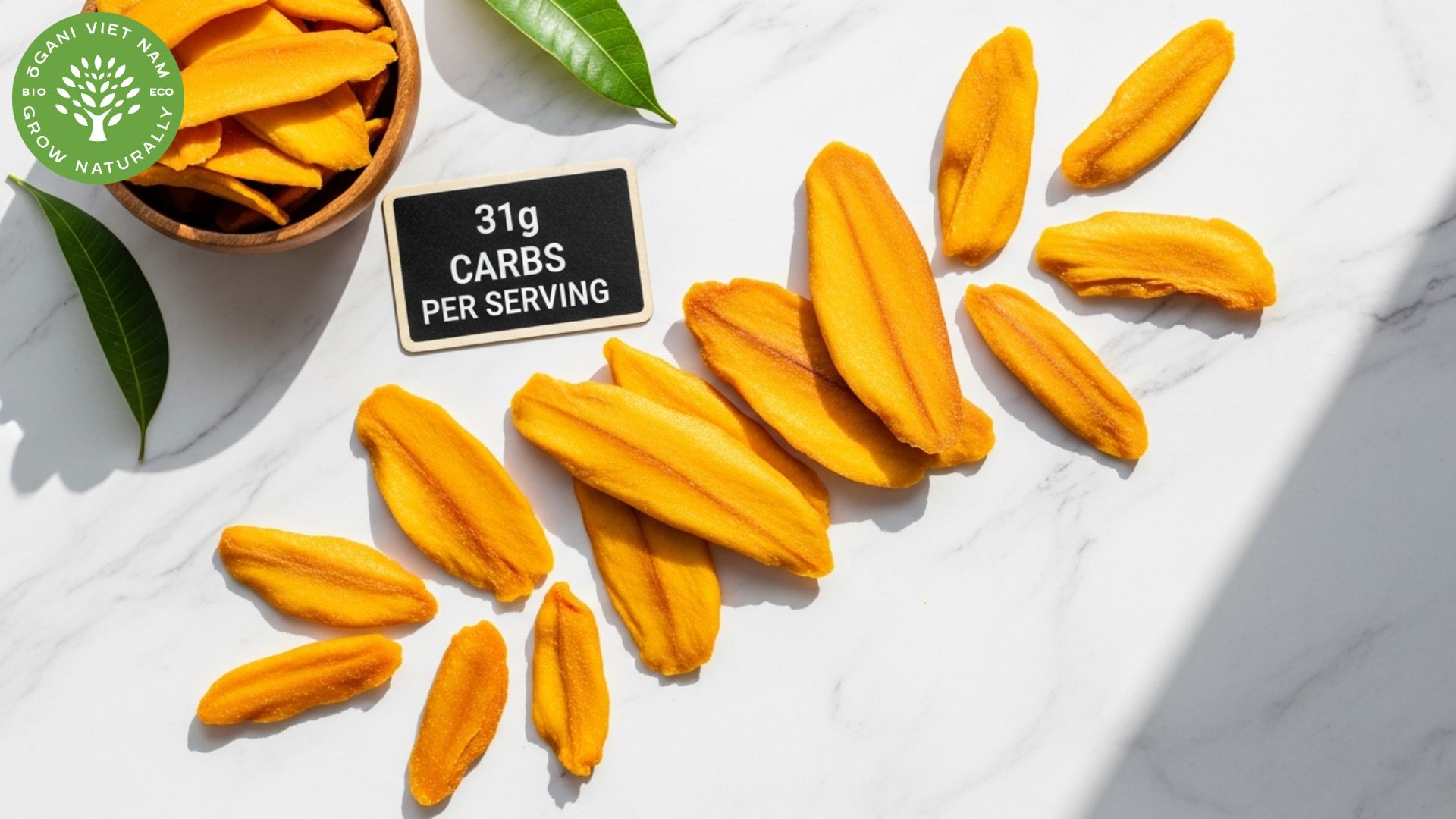
When you reach for that chewy, golden piece of dried mango, you’re probably wondering: just how many carbs am I actually eating? Let’s cut straight to it—a standard 40-gram serving (about 9 pieces) of dried mango contains approximately 31 grams of total carbohydrates. But here’s what matters more: understanding what types of carbs you’re getting and how they fit into your daily nutrition goals.
At Ogani VN, we know that smart snacking starts with knowing exactly what you’re putting in your body. Dried mango is naturally higher in carbs than fresh mango because the dehydration process concentrates the sugars—but that doesn’t automatically make it a nutritional villain. The real story is more nuanced, and we’re here to walk you through it.
Understanding dried mango carbs in detail
The carbohydrate content in dried mango isn’t just a single number—it’s a combination of natural sugars, dietary fiber, and what nutrition experts call “net carbs.” Here’s what a typical serving looks like:
A 40-gram portion (roughly 1/4 cup or 9 pieces) delivers about 31 grams of total carbohydrates. Within that total, you’ll find approximately 27-30 grams of natural sugars and 1-2 grams of dietary fiber. This means the net carb count—which is what many people following low-carb diets care about—sits around 29-30 grams per serving.
Now, compare that to a fresh mango. A 100-gram serving of fresh mango contains about 15 grams of carbs with roughly 14 grams of sugar. Why the difference? When we remove water from mango during the drying process, we’re essentially concentrating all the nutrients—including the natural sugars—into a smaller, denser package. You’re getting the same mango, just without the water weight.
Different brands and processing methods can affect these numbers slightly. Unsweetened, organic dried mango (like what we offer at Ogani VN) contains only the fruit’s natural sugars. Meanwhile, some commercial brands add sugar during processing, which can push the carb content up to 34-35 grams per serving. Always check the ingredient list—if you see “added sugars” on the label, you’ll know you’re getting more than just pure fruit.
Breaking down dried mango carbs: simple vs. complex
Not all carbohydrates are created equal, and this matters when you’re evaluating dried mango carbs in your diet.
Simple sugars vs. complex carbs
The majority of carbs in dried mango come from simple sugars—primarily fructose, glucose, and sucrose. These are the same natural sugars found in fresh mango, just more concentrated. Your body digests these relatively quickly, which means they can provide fast energy but may also cause a quicker spike in blood sugar compared to complex carbohydrates.
That said, dried mango isn’t pure sugar. The small amount of fiber (typically 1-2 grams per serving) does provide some digestive benefits and can slightly slow down how quickly your body processes those sugars. While 1-2 grams might not seem like much, every bit of fiber contributes to your daily intake—and the recommended daily amount is 25-30 grams for adults.
Net carbs explained
For those following keto or low-carb diets, net carbs are the magic number. You calculate net carbs by subtracting fiber from total carbohydrates because fiber doesn’t significantly impact blood sugar levels. With dried mango containing 31 grams of total carbs and about 2 grams of fiber, you’re looking at 29 grams of net carbs per serving. That’s substantial—nearly a full day’s allowance for someone on a strict ketogenic diet (which typically limits net carbs to 20-30 grams daily).
Dried mango carbs vs. fresh mango comparison

Let’s settle this once and for all with a side-by-side look at how fresh and dried mango stack up:
| Nutrient | Fresh Mango (100g) | Dried Mango (40g) |
|---|---|---|
| Calories | 60 | 128 |
| Total Carbs | 15g | 31g |
| Sugars | 14g | 27-30g |
| Fiber | 1.6g | 1-2g |
| Protein | 0.8g | 1g |
Notice something interesting? A 40-gram serving of dried mango has more than double the carbs of 100 grams of fresh mango. This is purely due to water loss—dried mango is about 80-85% lighter than its fresh equivalent because of dehydration.
Does this mean fresh is always better? Not necessarily. Dried mango offers portability, longer shelf life, and convenience that fresh fruit can’t match. Plus, ounce for ounce, dried mango provides more concentrated nutrients—not just carbs, but also vitamins A and C, potassium, and antioxidants. It’s about choosing the right form for your situation and being mindful of portion sizes.
How dried mango carbs fit into different diet plans
The question we get most at Ogani VN: “Can I eat dried mango on my diet?” The answer depends on which approach you’re following.
For balanced diets focusing on whole foods, dried mango can absolutely have a place. Those 31 grams of carbs fit comfortably into the 225-325 grams of carbohydrates recommended daily for most adults eating a 2,000-calorie diet. It’s a natural, unprocessed snack that provides quick energy—perfect pre-workout or during a mid-afternoon slump.
If you’re following a low-carb diet (typically 50-100 grams of carbs per day), dried mango becomes more of a calculated treat. You’ll want to stick to smaller portions—maybe 3-4 pieces instead of a full serving—and account for those carbs in your daily total.
The ketogenic diet is where dried mango carbs become challenging. With a strict 20-30 gram net carb limit, a single serving would consume your entire day’s allowance. That doesn’t mean you can never have it, but you’d need to plan carefully and possibly limit yourself to just 1-2 pieces as an occasional indulgence.
For those managing blood sugar or diabetes, dried mango requires extra attention. The concentrated sugars can cause blood glucose to rise more quickly than fresh fruit. Pairing dried mango with a protein source (like nuts or cheese) can help slow down sugar absorption and create a more balanced blood sugar response.
Managing your dried mango carbs intake

Here’s where practical wisdom meets nutrition science. A “serving” of dried mango might be 40 grams on the nutrition label, but that doesn’t mean you have to eat the entire serving in one sitting.
Try these portion-smart approaches: Mix 2-3 pieces of dried mango with a handful of raw almonds for a balanced snack that combines the fruit’s quick energy with the nuts’ protein and healthy fats. This combination slows digestion and helps stabilize blood sugar. Or chop a few pieces and toss them into your morning oatmeal or yogurt—you’ll get the sweet mango flavor without relying on it as your sole carb source.
Pre-portion your dried mango into small containers or bags when you first open the package. It’s surprisingly easy to mindlessly eat piece after piece straight from a large bag, but when you can see exactly how much you’re consuming, portion control becomes much easier.
Time your dried mango strategically. Those concentrated carbs work well when your body needs quick fuel—think mid-workout, post-exercise recovery, or before a long hike. During these times, your body can efficiently use those sugars for energy rather than storing them.
Beyond carbs: the complete nutritional picture
Yes, dried mango is relatively high in carbohydrates. But focusing solely on dried mango carbs means missing the bigger nutritional story.
Each serving delivers significant amounts of vitamin A (in the form of beta-carotene), which supports eye health and immune function. You’ll also get vitamin C, though in lower amounts than fresh mango since some vitamin C degrades during the drying process. The potassium content helps with electrolyte balance and blood pressure regulation.
The natural antioxidants in dried mango—including mangiferin and various polyphenols—provide anti-inflammatory benefits. These compounds don’t disappear during dehydration; they’re just concentrated along with everything else. Research suggests that mangiferin may support heart health, blood sugar regulation, and even cognitive function.
At Ogani VN, we’re particularly proud of our unsulfured, unsweetened dried mango. Many commercial varieties add sulfur dioxide as a preservative and extra sugar for flavor. Our process keeps it simple: just organic mango and careful dehydration. This means you’re getting the fruit’s natural carbohydrates without any unnecessary additions.
Frequently Asked Questions
How many carbs are in one piece of dried mango?
A single piece of dried mango (approximately 4-5 grams) contains about 3-4 grams of carbohydrates, with roughly 3 grams coming from natural sugars.
Is dried mango keto-friendly?
Dried mango is not typically considered keto-friendly due to its high net carb content (29-30g per serving). However, one or two pieces might fit into a more flexible low-carb approach.
Does unsweetened dried mango have fewer carbs?
Unsweetened dried mango contains only the fruit’s natural carbohydrates (about 31g per 40g serving), while sweetened varieties may have 34-35g or more due to added sugars.
What’s better for low-carb diets: fresh or dried mango?
Fresh mango is better for low-carb diets, containing about 15g of carbs per 100g serving compared to dried mango’s concentrated 31g per 40g serving.
Can diabetics eat dried mango?
People with diabetes can enjoy dried mango in small portions, ideally paired with protein or healthy fats to minimize blood sugar spikes. Always monitor your individual response and consult your healthcare provider.
Making smart choices with dried mango carbs
Dried mango delivers approximately 31 grams of carbohydrates per standard serving—a significant amount that requires mindful consumption, especially if you’re watching your carb intake. But those carbs come packaged with valuable nutrients, natural antioxidants, and the convenience of a portable, shelf-stable snack.
The key is understanding how dried mango carbs fit your personal nutrition goals and adjusting your portions accordingly. Whether you’re fueling an active lifestyle, managing a specific diet plan, or simply looking for a healthier alternative to processed sweets, dried mango can work—you just need to be strategic about it.
Ready to experience the perfect balance of taste and nutrition? At Ogani VN, we offer premium organic dried mango that’s free from added sugars and preservatives—just pure, concentrated fruit goodness. Visit our website to explore our full range of dried fruits and superfoods, or reach out to our nutrition team for personalized guidance on incorporating dried mango into your healthy eating plan. Your journey to smarter snacking starts here.
Read more:
- Baking With Dried Red Dragon Fruit: Breads, Muffins & Cookies
- Dried Red Dragon Fruit vs Fresh: Color, Nutrition & When to Use Each
- Dragon Fruit Powder: Unlocking Ít Superfood Potential for Health and Wellness.
- Red Dragon Fruit Dried: Your Complete Buying Guide
- Dried Mango Carbs: Complete Nutritional Breakdown