


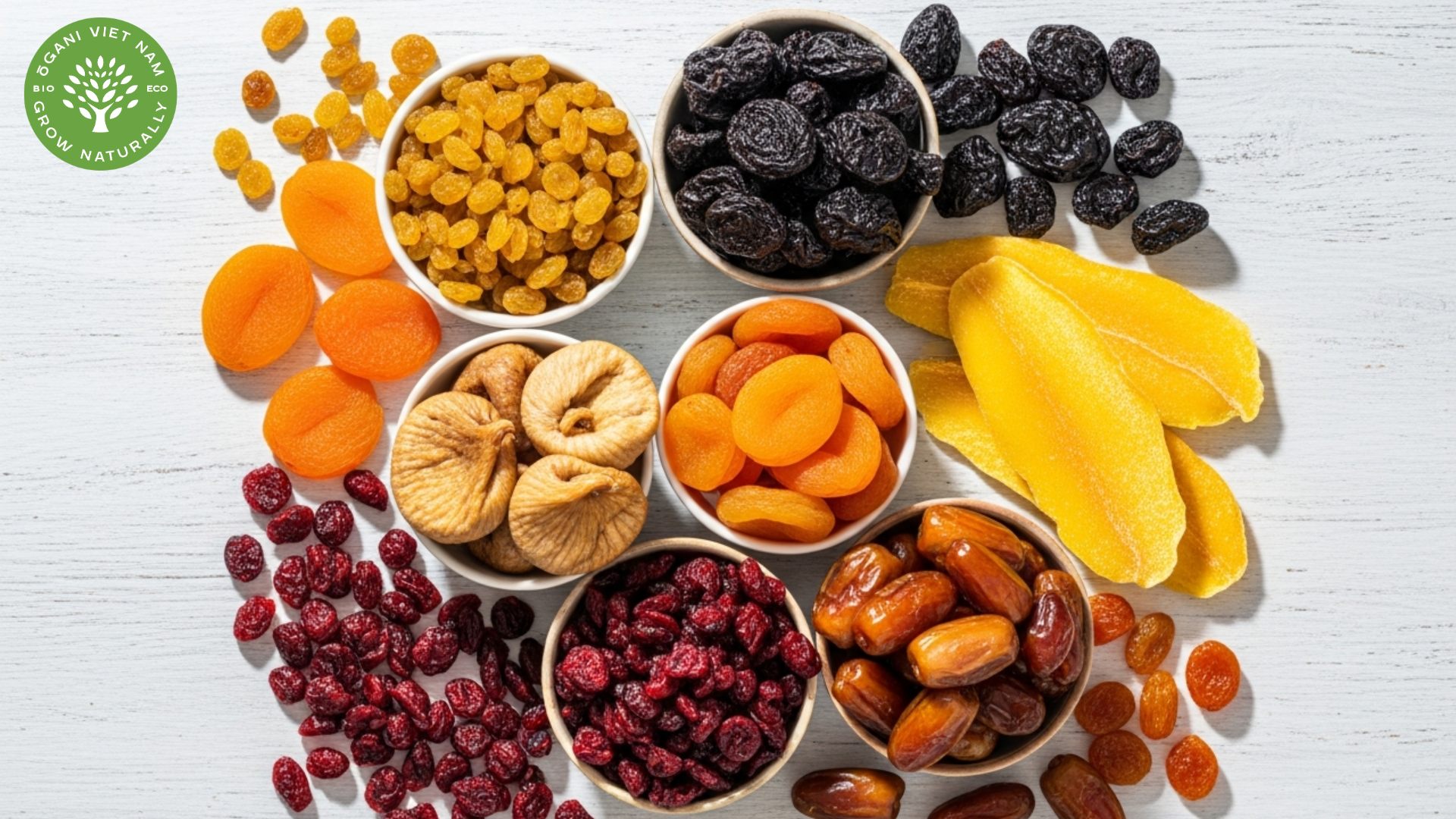
Dried fruits are whole fresh fruits that have undergone a dehydration process to remove most of their water content, transforming them into concentrated sources of vitamins, minerals, and natural sweetness. This ancient preservation method creates shelf-stable snacks that pack the nutritional punch of fresh fruit into convenient, portable packages.
At Ogani VN, we’ve noticed something interesting over the years—many people assume dried fruits are just “candy in disguise.” But here’s the thing: when you understand what they truly are and how they’re made, you realize they’re so much more than that.
Why dried fruits are different from fresh fruits

The fundamental difference lies in moisture content removal. While fresh fruits contain 80-95% water, dried fruits are produced through dehydration processes that reduce this to about 15-20%. This isn’t just about making fruits last longer on your shelf (though that’s definitely a perk we appreciate).
When water evaporates from the fruit, something remarkable happens—the nutrients become concentrated. Think about it this way: if you eat a fresh apricot, you’re getting nutrients plus a lot of water. Eat a dried apricot, and you’re getting those same nutrients in a much smaller package. That’s why a handful of raisins delivers more concentrated nutrition than the equivalent weight of grapes.
The dehydration process preserves most of the fruit’s original nutritional value. We’re talking about fiber, potassium, iron, and various antioxidants that survive the drying process remarkably well. What doesn’t survive as well? Vitamin C and some B vitamins, which are heat-sensitive. But honestly, that’s a small trade-off for the convenience and concentrated nutrition you gain.
Why dried fruits are nutritional powerhouses
Here’s where things get interesting. Dried fruits are often misunderstood because people focus solely on the sugar content without considering the complete nutritional package.
Fiber powerhouses
A quarter-cup of dried figs contains about 3.7 grams of fiber—that’s roughly 15% of your daily requirement. Prunes are even more impressive, delivering both soluble and insoluble fiber that supports digestive health. We’ve had customers tell us they initially bought dried plums for their kids’ lunchboxes, only to discover the whole family benefited from better digestion.
Mineral-rich snacking
The mineral concentration in dried fruits can be genuinely impressive. Dried apricots pack significant amounts of potassium (more than bananas, actually), while dates deliver magnesium and copper. Raisins bring iron to the table—something vegetarians in particular appreciate.
Antioxidant content that holds up
Unlike vitamin C, many antioxidants survive the dehydration process intact. Dried cranberries maintain their proanthocyanidins, while dried apricots keep their beta-carotene. These compounds help fight oxidative stress in your body, supporting everything from eye health to immune function.
What dried fruits are best for your health
Not all dried fruits are created equal, and each variety brings something different to your snacking routine.

Classic favorites
Raisins remain the most consumed dried fruit globally, and for good reason—they’re versatile, affordable, and kids actually enjoy them. We source both golden and dark varieties at Ogani VN, and customers often ask about the difference. Golden raisins are typically treated with sulfur dioxide to preserve their color, while dark raisins dry naturally.
Dates offer incredible natural sweetness—so much so that many health-conscious bakers use them as sugar substitutes. Medjool dates are particularly creamy and caramel-like, while Deglet Noor dates have a firmer texture.
Tropical options
Dried mango has exploded in popularity recently. The chewy texture and intense flavor make it almost addictive (in the best way). We also carry dried pineapple, which retains that tropical tang while developing deeper, almost honey-like notes.
Nutrient specialists
Prunes (dried plums) deserve special mention for their digestive benefits—there’s solid research backing their effectiveness here. Dried figs bring both flavor and an impressive nutrient profile, with more calcium than many other dried fruits.
Why dried fruits are misunderstood about sugar content

Let’s address the elephant in the room: yes, dried fruits are high in natural sugars. But context matters tremendously here.
When fresh fruit dries, the sugar doesn’t increase—it just becomes more concentrated in a smaller volume. A fresh grape and a raisin contain the same amount of sugar; the raisin is just smaller and easier to overeat.
The key difference between dried fruit sugar and added sugar? Dried fruits deliver that sweetness alongside fiber, minerals, and beneficial plant compounds. This whole-food package means the sugar gets absorbed more slowly than if you were eating candy or drinking juice.
At Ogani VN, we recommend treating dried fruits as concentrated nutrition, not as unlimited snacks. A quarter-cup serving—about a small handful—gives you the benefits without overdoing the calories or sugar.
One practical tip we share with customers: pair dried fruits with nuts or seeds. The protein and healthy fats slow sugar absorption even further, creating a more balanced snack that keeps you satisfied longer.
How quality dried fruits are selected and stored

Not all dried fruits on store shelves are created equal. Here’s what we’ve learned from years of sourcing and selling these products.
Check for added sugars first. Many commercially available dried cranberries, for instance, come loaded with additional sweetening because cranberries are quite tart naturally. At Ogani VN, we clearly label which products contain added sugars and which don’t.
Watch out for sulfites. While sulfur dioxide helps preserve color in fruits like apricots and golden raisins, some people are sensitive to these compounds. If you notice headaches or digestive discomfort after eating dried fruits, sulfite sensitivity might be the culprit. Look for unsulfured options—they’ll be darker in color but just as nutritious.
Texture tells you about freshness. Quality dried fruits should be pliable, not rock-hard or overly sticky. If they’re too dry, they’ve likely been sitting around too long. Too sticky or wet? They might have been over-processed or improperly stored.
Ingredient lists should be short. Ideally, you want to see just the fruit itself, maybe with a preservative if necessary. If you spot hydrogenated oils, artificial flavors, or excessive additives, that’s a red flag.
Why dried fruits are perfect for everyday enjoyment
Dried fruits are incredibly versatile ingredients that go far beyond standalone snacking.
For breakfast, we love adding chopped dates or dried cranberries to oatmeal. The natural sweetness means you can skip added sugar entirely. Dried apricots work beautifully in yogurt parfaits, providing chewy texture contrast.
In cooking, dried fruits bring depth to savory dishes. Moroccan tagines traditionally use dried apricots or prunes, creating that sweet-savory balance that makes the cuisine so distinctive. We’ve experimented with adding chopped dried figs to grain salads—the results surprised us in the best way.
Baking with dried fruits opens up endless possibilities. Beyond the obvious (oatmeal raisin cookies), try incorporating dried cherries into scones, dates into energy balls, or dried mango into tropical muffins.
For a quick energy boost during workouts or hikes, dried fruits provide easily digestible carbohydrates that fuel activity without weighing you down. Trail mix combining dried fruits with nuts delivers both quick and sustained energy.
Frequently Asked Questions
Are dried fruits as healthy as fresh fruits?
They’re different but complementary. Fresh fruits provide more vitamin C and water content, while dried fruits offer concentrated nutrients, fiber, and minerals in a shelf-stable form. Both deserve a place in a balanced diet.
How long do dried fruits last?
When stored properly in airtight containers away from heat and moisture, most dried fruits remain good for 6-12 months. Refrigeration extends this further, sometimes up to 18 months.
Can diabetics eat dried fruits?
Yes, but portion control is crucial. The concentrated sugars mean smaller servings are necessary. Pairing dried fruits with protein or fat helps moderate blood sugar impact. Always consult with a healthcare provider for personalized advice.
Why do some dried fruits look brighter than others?
Fruits treated with sulfur dioxide maintain brighter colors, while naturally dried fruits darken. Both are safe; it’s mainly a cosmetic difference and a matter of personal preference or sensitivity.
Are “no sugar added” dried fruits really sugar-free?
No—they still contain the fruit’s natural sugars. “No sugar added” means no additional sweeteners were included during processing. The natural fruit sugars remain concentrated through the dehydration process.
Experience premium dried fruits at Ogani VN
Dried fruits are remarkable foods that bridge the gap between nutrition and convenience. They’re not perfect—the concentrated sugars mean mindful portioning matters—but when chosen wisely and consumed in appropriate amounts, they deliver genuine nutritional benefits that support your health goals.
At Ogani VN, we’re committed to sourcing only the highest-quality dried fruits for our customers. Every product we offer undergoes careful selection to ensure you receive fruits that are naturally processed, properly stored, and bursting with flavor and nutrients.
Ready to discover the difference that quality makes? Browse our selection of premium dried fruits today, from classic raisins and dates to exotic dried mangoes and figs. Whether you’re looking for healthy snacks, baking ingredients, or nutritious additions to your meals, we’ve got you covered.
Visit Ogani VN online or contact our team for personalized recommendations based on your dietary needs and taste preferences. Let us help you make dried fruits a delicious, nutritious part of your daily routine.
Read more:
- Baking With Dried Red Dragon Fruit: Breads, Muffins & Cookies
- Dried Red Dragon Fruit vs Fresh: Color, Nutrition & When to Use Each
- Dragon Fruit Powder: Unlocking Ít Superfood Potential for Health and Wellness.
- Red Dragon Fruit Dried: Your Complete Buying Guide
- Dried Fruits Are Nature’s Nutrient-Packed Powerhouses