


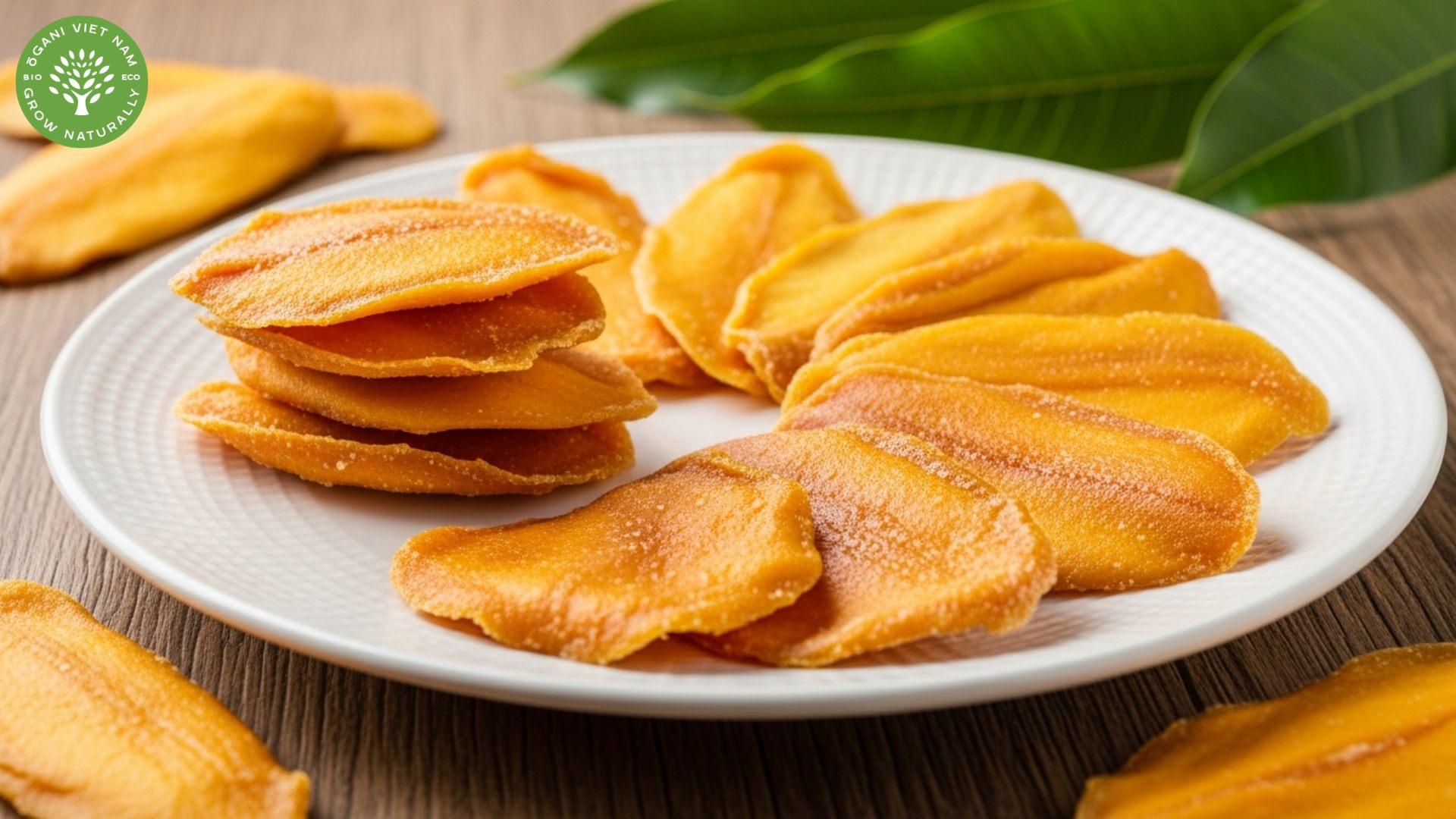
Dried candied mango is sun-ripened mango that’s been sliced and slowly dehydrated with a touch of sweetness, creating chewy, golden slices that capture tropical flavor in every bite. At Ogani VN, we’ve spent years perfecting this beloved snack, and today we’re sharing everything you need to know about selecting, enjoying, and even making your own.
What makes dried candied mango different from regular dried mango
The confusion is real—walk into any store and you’ll see “dried mango,” “candied mango,” and “mango candy” all sitting next to each other. Here’s the honest difference.
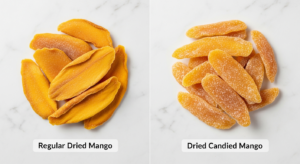
Regular dried mango is just that: mango slices that have been dehydrated with minimal or no added sugar. The natural sweetness of the fruit shines through. Dried candied mango, on the other hand, involves a deliberate sweetening process. We take ripe Thai mango or other premium varieties, slice them thick, then slow-dry them with a sugar treatment that creates that signature sticky-sweet coating.
Think of it this way—if dried mango is like eating concentrated fruit, candied mango is like having nature’s candy bar. The texture shifts from purely chewy to slightly tacky. Some people call it “mango leather” when it’s rolled thin, but the sliced version we’re talking about maintains that satisfying bite.
The sweetening process isn’t just about taste. It actually helps preserve the fruit longer and creates a more stable moisture content. When we process mango at Ogani VN, we use minimal added sugar—just enough to enhance the natural flavor without overwhelming it. Many commercial brands go heavy on the sweetener, which is why reading labels matters.
Health benefits of dried candied mango you should know
Let’s be straight: dried candied mango won’t replace your multivitamin, but dismissing it as “just candy” misses the point entirely.
One handful (about 40g) gives you a solid dose of vitamin A—crucial for eye health and immune function. Mango naturally contains beta-carotene, and the drying process concentrates these nutrients. You’re also getting dietary fiber, which most of us don’t eat enough of anyway.
The sugar situation deserves honesty. Yes, there’s added sweetener. Our version at Ogani VN uses coconut sugar, which has a lower glycemic index than white sugar, but sugar is sugar. If you’re watching your intake, treat candied mango as an occasional pleasure rather than an everyday snack. That said, it beats reaching for processed candy bars filled with artificial colors and preservatives.
Here’s where candied mango actually shines: it’s portable energy. Hikers love it. Parents pack it for kids’ lunchboxes. We’ve had customers tell us they keep a bag in their desk drawer for that 3 PM slump. The natural fruit sugars provide quick energy, while the fiber helps prevent the crash you get from pure refined sugar.
The key is choosing quality. Look for products labeled “no preservatives added,” “vegan,” and ideally “low sugar” or “lightly sweetened.” The best versions let you taste the mango first, sweetness second.
How to make premium dried candied mango at home
Sun-dried versus dehydrator methods
We get asked constantly: “Can I make this at home?” Absolutely. But there’s a reason commercial versions taste consistent—we’ve dialed in the process over thousands of batches.
The traditional method uses pure sunlight. Slice your ripe mangos about 1/4 to 1/2 inch thick, spritz them with lemon juice to prevent browning, then lay them on drying racks. In tropical climates with low humidity, this works beautifully. You’re looking at 2-3 days of full sun exposure.
Dehydrators offer more control. Set yours to 130-135°F and you’ll have finished product in 12-18 hours. The sweetening happens before dehydration—create a simple syrup with 1 cup sugar to 2 tablespoons water, briefly coat your mango slices, then proceed with drying.
Commercial processing at scale
What we do at Ogani VN involves a few extra steps. We source sun-ripened mangos at peak season, sort by size and ripeness, then use commercial dehydrators that maintain precise temperature and humidity. Our candying process uses a light sugar solution—not the heavy syrup some manufacturers use.
The difference shows up in texture. Over-candied mango becomes too sticky and almost translucent. Under-processed fruit stays too tough. That sweet spot produces slices that are pliable, slightly tacky to touch, with a deep golden color that hasn’t darkened to brown.
Quality control means testing moisture content and sugar levels in every batch. We’re aiming for that shelf-stable sweetness without any chemical preservatives. The natural acids in mango help, but proper dehydration is what really extends shelf life.
How to choose the best dried candied mango

Shopping for dried candied mango shouldn’t require a chemistry degree, but store aisles make it feel that way. Here’s what actually matters.
| Quality Factor | What to Look For | Red Flags |
|---|---|---|
| Ingredient List | Mango, sugar (or coconut sugar), citric acid | Artificial colors, sulfur dioxide, corn syrup |
| Texture | Pliable, slightly sticky | Rock hard or mushy |
| Color | Golden to amber | Bright orange (dyed) or brown (oxidized) |
| Sugar Content | 8-12g per serving | 20g+ per serving |
| Origin | Thailand, Philippines, Vietnam | Unspecified |
The country of origin tells you about mango variety. Thai mangos are prized for their creamy texture and low fiber content—they dry beautifully. Philippine mangos (particularly Carabao variety) are intensely sweet but can be stringier.
Packaging matters more than you’d think. Those jumbo reusable containers might seem economical, but if you don’t eat mango quickly, exposure to air after opening affects freshness. We pack our Ogani VN products in resealable bags for this exact reason.
Price can be misleading. Cheap dried mango often means lower grade fruit, more added sugar, or bulk processing that sacrifices texture. You’re not buying premium when mango slices cost less than fresh fruit per pound—think about that math.
Trust your nose and eyes. Quality dried candied mango smells like concentrated mango—fruity, tropical, slightly sweet. If it smells fermented, chemical, or like nothing at all, walk away. The color should make you hungry, not suspicious.
Creative ways to enjoy dried candied mango every day

Most people eat dried mango straight from the bag, standing in the kitchen, possibly at midnight. No judgment—we do it too. But there are moments when getting creative elevates the experience.
Chop it into small pieces and fold into yogurt or oatmeal. The chewy texture adds interest, and as the mango softens from the moisture, it releases flavor into everything around it. We’ve started our mornings this way for years.
Baking transforms dried candied mango. Dice it into muffin or scone batter. The fruit pieces caramelize slightly in the oven, creating these little pockets of intensified sweetness. Trail mix becomes exponentially better with mango instead of (or alongside) raisins.
Here’s something most people miss: rehydrate it. Soak pieces in warm water or juice for 15-20 minutes and you get something close to fresh mango with concentrated flavor. Use this in smoothies, or as a topping for ice cream where the contrast between cold and the mango’s texture is genuinely satisfying.
The savory applications surprise people. Thai cuisine pairs mango with sticky rice, but try it with chicken or pork. The sweetness balances spicy or salty glazes. Chop finely and add to a simple salsa with cilantro and lime—it cuts through rich grilled meats perfectly.
Some of our customers at Ogani VN have gotten really creative. One woman makes “mango chips” by further dehydrating already-candied slices until they’re crispy. Another infuses vodka with it for cocktails. The versatility comes from that concentrated fruit flavor combined with natural sugar content.
Storing dried candied mango for maximum freshness
Dried candied mango lasts longer than fresh fruit, but it’s not immortal. Room temperature in a sealed container gives you 6-12 months easily. The sugar content acts as a natural preservative, but moisture is the enemy.
Once you open the package, transfer any unused portions to an airtight container or resealable bag. Press out as much air as possible. We’ve found that storing in a cool, dark pantry beats keeping it near the stove or window where temperature fluctuates.
Refrigeration extends life but changes texture. The mango becomes firmer, less pliable. Some people prefer this—it’s personal. If you go this route, let it sit at room temperature for 10 minutes before eating so you’re not biting into cold, hard candy.
Freezing works if you’ve bulk-purchased. Freeze in portion-sized bags so you’re not repeatedly thawing and refreezing the whole batch. Frozen candied mango actually makes a decent summer snack on its own—like a fruit popsicle without the stick.
Watch for moisture accumulation inside the package. If you see condensation or the pieces start sticking together in a mass (beyond the normal slight tackiness), that’s moisture introducing potential for mold. When in doubt, smell it. Your nose knows.
Frequently Asked Questions
Is dried candied mango healthy? It’s healthier than candy but not as healthy as fresh fruit. You get vitamins A and C, plus fiber, but also added sugar. Treat it as a moderate snack—portion control matters. A small handful satisfies sweet cravings while providing some nutritional value.
Can people with diabetes eat candied mango? In moderation, possibly. The added sugar raises concerns, but the fiber helps slow absorption. Anyone managing blood sugar should check with their doctor and monitor their response. Low-sugar or naturally dried versions might be better options.
How much dried candied mango should I eat per day? About 30-40 grams (roughly 1/4 cup) is a reasonable serving. That gives you the flavor experience without excessive sugar. Listen to your body—dried fruit is concentrated, so a little goes further than you’d expect.
What’s the white powder sometimes on dried mango? That’s usually sugar crystallization, completely normal and safe. Occasionally it might be natural fruit sugars that have separated. It’s not mold unless accompanied by off-smells or fuzzy growth.
Why does some candied mango taste sour? Different mango varieties have varying acid levels. Some producers add citric acid or lemon juice as a preservative, which creates tang. It also depends on ripeness when processed—slightly underripe mangos retain more acidity.
Why Ogani VN’s dried candied mango stands out
Dried candied mango bridges the gap between healthy snacking and satisfying your sweet tooth. When you choose quality—looking for natural ingredients, minimal additives, and that perfect chewy texture—you’re getting concentrated tropical flavor with real fruit benefits.
At Ogani VN, we’ve built our reputation on doing this one thing exceptionally well. We source premium mangos, use gentle processing that preserves nutrients, and never compromise on quality for profit. Whether you’re packing lunchboxes, fueling a hike, or just need something sweet that isn’t pure junk, our dried candied mango delivers.
Ready to experience the difference quality makes? Visit our store and try Ogani VN’s premium dried candied mango today. Your taste buds—and your body—will thank you.
Read more:
- Baking With Dried Red Dragon Fruit: Breads, Muffins & Cookies
- Dried Red Dragon Fruit vs Fresh: Color, Nutrition & When to Use Each
- Red Dragon Fruit Dried: Your Complete Buying Guide
- Dried Mango Fibre Content: What You Need to Know