


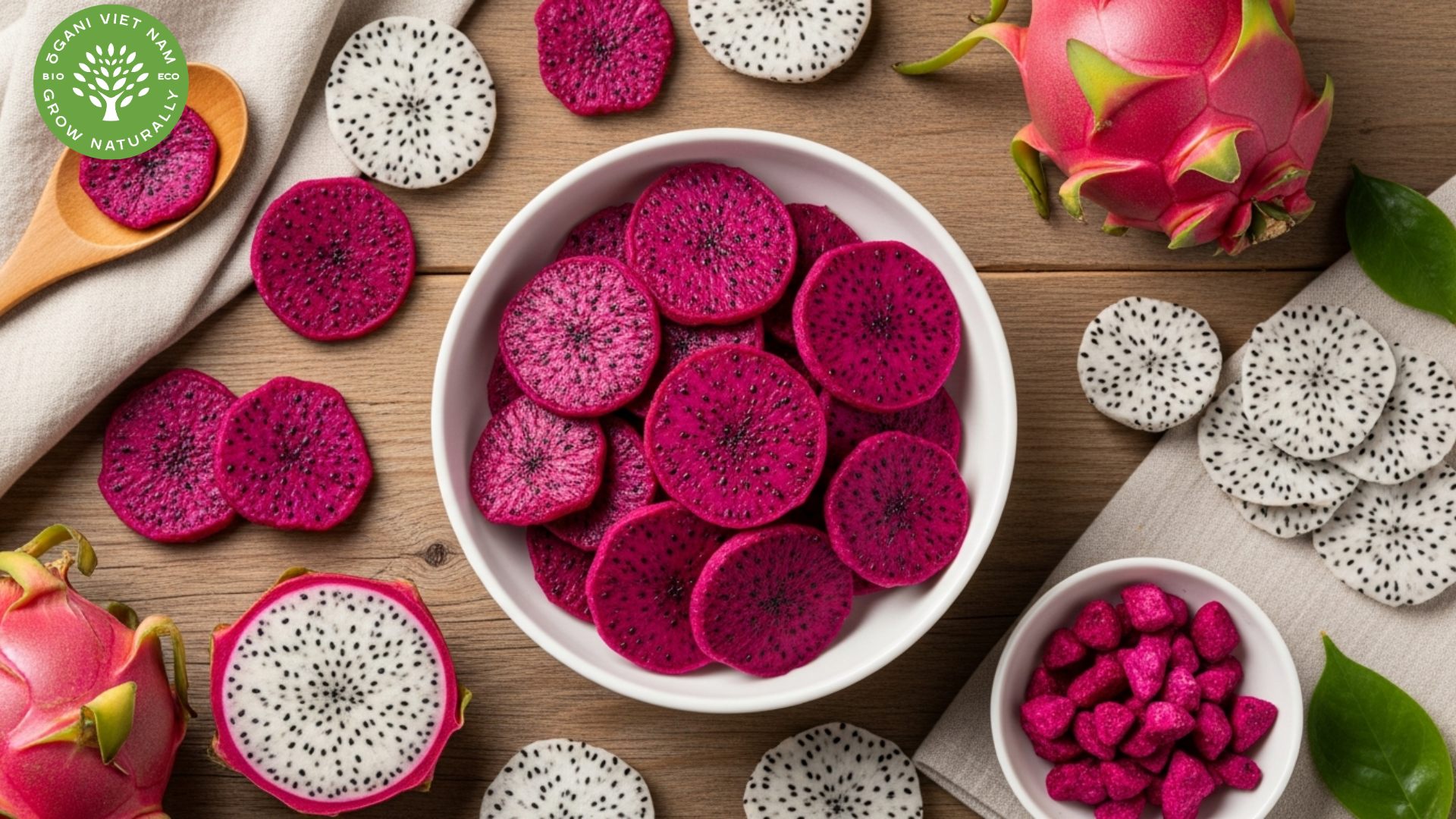
Dragon dry fruit transforms the exotic pitaya into a convenient, nutrient-packed snack that delivers tropical sweetness without added sugars or preservatives. Whether you’re seeking a healthy alternative to processed snacks or exploring ways to incorporate superfoods into your diet, this vibrant dried fruit offers both nutrition and flavor in every bite.
When fresh dragon fruit gets dehydrated or freeze-dried, something remarkable happens – the natural sugars concentrate, the texture shifts from watery to satisfyingly chewy or crispy, and the shelf life extends dramatically. At Ogani VN, we’ve seen growing interest in this superfood snack as more people discover its versatility and impressive nutritional profile.
What makes dragon dry fruit different from fresh dragon fruit?
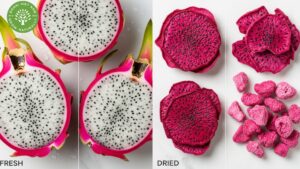
The dehydration process fundamentally changes how you experience pitaya. Fresh dragon fruit contains about 87% water, which gives it that signature mild, slightly sweet taste. Remove that moisture, and you’re left with concentrated flavor, natural sugars, and a completely different texture that many find more appealing as a portable snack.
Dragon dry fruit typically comes in two main forms: traditionally air-dried slices and freeze-dried pieces. Air-dried versions develop a chewy, almost candy-like consistency with crunchy black seeds scattered throughout. The drying process caramelizes the natural sugars slightly, creating deeper sweetness than the fresh fruit. Freeze-dried dragon fruit, on the other hand, maintains a light, crispy texture that dissolves quickly on your tongue – think of it like a fruit chip that melts in your mouth.
The color intensity also shifts during drying. Red dragon fruit becomes even more vibrant, with that stunning magenta hue deepening as water evaporates. White-fleshed varieties develop a pale cream color that still retains those characteristic black seeds. This visual appeal makes dried dragon fruit a popular addition to smoothie bowls, yogurt parfaits, and even cocktail garnishes.
Nutritionally, the concentration effect works in your favor for some nutrients while requiring mindfulness about others. A 100-gram serving of fresh dragon fruit contains roughly 60 calories, while the same amount of dried fruit can pack 300+ calories due to sugar concentration. However, you’re also getting more fiber, iron, and magnesium per gram – the nutrients don’t disappear, they just become more dense.
Health benefits of dragon dry fruit you should know

The antioxidant content in dragon dry fruit deserves special attention. Betalains – the pigments responsible for that striking pink-red color – remain stable through the drying process and function as powerful free radical scavengers in your body. These compounds have shown promise in research related to reducing oxidative stress and inflammation.
We often recommend dragon fruit to customers managing their digestive health. Even after drying, the fiber content remains impressive. The tiny black seeds contain omega-3 and omega-6 fatty acids, while the fruit flesh provides both soluble and insoluble fiber. This combination supports gut bacteria diversity and helps maintain regular bowel movements – though you’ll want to drink plenty of water since dried fruit is, well, dry.
Vitamin C and immune support
One concern people raise: doesn’t vitamin C degrade during drying? Yes, heat-sensitive vitamins do decrease somewhat, particularly with air-drying methods. Freeze-drying preserves more nutrients because the process occurs at very low temperatures. Even so, dried dragon fruit still contributes to your daily vitamin C intake, just not as dramatically as fresh fruit would.
Mineral content and blood sugar considerations
The mineral profile holds up remarkably well. Iron, magnesium, and potassium don’t evaporate with water, so you’re getting concentrated amounts in each serving. For people watching their blood sugar, the glycemic response to dried fruit differs from fresh. The lack of water means sugars absorb more quickly, so pairing dragon dry fruit with protein or fat (like nuts or cheese) helps moderate that spike.
At Ogani VN, we’ve noticed customers using dried dragon fruit as a pre-workout snack specifically because of that quick energy release. The natural sugars provide fuel without the artificial ingredients found in many sports gels or energy bars.
How to use dragon dry fruit in your daily routine

The versatility of dragon dry fruit surprises most first-time buyers. Sure, you can eat it straight from the package as a snack – and many do – but that’s just scratching the surface. We’ve collected customer favorites and tested applications ourselves to find what actually works in real kitchens.
Rehydrating dried dragon fruit unlocks new possibilities. Soak the pieces in warm water or fruit juice for 15-20 minutes, and they plump back up to nearly fresh consistency. This works beautifully for smoothies where you want that dragon fruit flavor without the icy texture that frozen fruit creates. The soaking liquid itself becomes infused with flavor – don’t throw it away. We use it as a base for iced tea or mix it into cocktails.
Dragon dry fruit pulverizes easily in a spice grinder or high-powered blender, creating a vibrant pink powder that’s pure magic for food coloring. No artificial dyes needed. Customers tell us they use it in:
- Homemade ice cream and sorbets for natural color and subtle sweetness
- Yogurt parfait layers for visual appeal
- Baked goods like muffins, cookies, and cakes (the powder integrates seamlessly)
- Smoothie bowls as both topping and blended ingredient
- Oatmeal or overnight oats for morning nutrition boost
- Trail mix combined with nuts, seeds, and dark chocolate
- Cheese boards as a sweet contrast to savory elements
The crispy freeze-dried version works particularly well as a cereal topper or mixed into granola. Unlike raisins or other sticky dried fruits, freeze-dried pieces maintain their crunch even when milk is added – they slowly absorb liquid and soften, but you get a few minutes of textural contrast first.
One application we didn’t expect: dragon dry fruit in savory dishes. A customer shared their recipe for Thai-inspired salads where they crumble dried dragon fruit over spicy green papaya slaw. The sweetness balances chili heat surprisingly well, and the seeds add texture similar to toasted sesame.
Selecting quality dragon dry fruit: what to look for
Not all dried dragon fruit delivers the same experience. We source multiple varieties at Ogani VN, and understanding quality markers helps you avoid disappointment. The ingredient list should be remarkably short – ideally just “dragon fruit” or “pitaya.” Anything beyond that (sugar, sulfites, artificial colors, preservatives) suggests the product compensates for poor-quality fruit or harsh processing methods.
Color indicates freshness and processing quality. Dragon dry fruit from red varieties should maintain that deep magenta-pink hue. If it looks faded, brownish, or dull, the fruit was likely overheated during drying or has been sitting too long. White dragon fruit dried slices should be pale cream to light tan – any gray tones suggest oxidation.
Texture varies by drying method but should always be consistent within a package. Air-dried pieces should bend without immediately snapping (though they’ll be firm). Freeze-dried should be uniformly crispy, not partially soft or soggy. If you open a bag and find some pieces rock-hard while others are flexible, moisture distribution was uneven during processing.
The seed visibility test: you should see those characteristic black seeds throughout. In genuinely dried whole fruit, seeds remain embedded in the flesh. Some lower-quality products pulp the fruit and reform it, which disrupts this natural pattern. We’ve also seen products where seeds seem suspiciously few – suggesting the manufacturer used lower-grade fruit with poor seed development.
Aroma tells you plenty too. Fresh-dried dragon dry fruit should smell mildly sweet and tropical, never musty, fermented, or completely odorless. Strong sweetness might indicate added sugars. Any sour or off-putting smell means the fruit was poor quality before drying or moisture got into the package during storage.
Storing dragon dry fruit to maximize freshness
Proper storage extends the shelf life of dragon dry fruit significantly. We recommend keeping opened packages in airtight containers away from direct light and heat. The biggest enemies: moisture and oxygen. Even small amounts of humidity can make dried fruit sticky or encourage mold growth.

For long-term storage (several months), refrigeration helps. The cold temperature slows any remaining enzymatic activity and prevents insects from finding your stash. Freeze-dried dragon fruit is particularly shelf-stable at room temperature if kept completely dry, but air-dried versions benefit from cooler storage after opening.
Vacuum sealing offers the best protection if you’re buying in bulk. Remove as much air as possible, and the fruit maintains quality for 6-12 months easily. At Ogani VN, we package our dried dragon fruit in resealable bags with minimal air space to give you a head start on freshness.
Watch for signs that dragon dry fruit has passed its prime: excessive hardness (becoming difficult to chew), flavor loss, or visible mold spots. The fruit may also start clumping together if it has absorbed too much moisture. When stored correctly, dried dragon fruit typically outlasts your expectations – we’ve had customers report good quality even a year after purchase when vacuum-sealed.
Frequently Asked Questions
Is dragon dry fruit as nutritious as fresh dragon fruit?
The drying process concentrates most nutrients by weight, so you get more fiber, minerals, and some vitamins per gram. However, heat-sensitive vitamins like vitamin C decrease significantly with air-drying. Freeze-dried versions retain more nutrients overall. The main trade-off is calorie density – dried fruit packs more sugar and calories into smaller portions.
How much dragon dry fruit should I eat daily?
We typically suggest 20-30 grams (about a small handful) as a reasonable serving. This gives you nutritional benefits without excessive sugar intake. Remember that dried fruit is concentrated, so a little goes further than you might think. Listen to your body and adjust based on your overall diet and activity level.
Can I make dragon dry fruit at home?
Absolutely! Use a food dehydrator set to 135°F (57°C) for 8-12 hours, or your oven on the lowest setting with the door slightly ajar. Slice dragon fruit into 1/4-inch thick pieces for even drying. The result won’t be identical to commercial freeze-dried products, but air-dried homemade dragon fruit works beautifully for most applications.
Does dragon dry fruit contain added sugar?
Quality dragon dry fruit contains zero added sugars – just the fruit’s natural sweetness concentrated through dehydration. Always check the ingredient label. If you see “sugar,” “cane sugar,” or “syrup” listed, that’s added sweetener. At Ogani VN, we stock only pure dried fruit without additives.
Why does dragon dry fruit taste sweeter than fresh?
Removing water concentrates the natural sugars present in fresh dragon fruit. What was 6-9% sugar content in fresh fruit becomes 60-70% in dried form. Your taste buds also perceive concentrated flavors more intensely. The texture change affects perception too – chewy, candy-like dried fruit feels more indulgent than watery fresh fruit.
Ready to experience dragon dry fruit for yourself?

Dragon dry fruit offers a practical way to enjoy tropical superfood nutrition year-round without worrying about ripeness windows or spoilage. Whether you’re seeking a healthier snack alternative, exploring new ingredients for your kitchen experiments, or simply curious about this vibrant dried fruit, the concentrated flavor and versatility make it worth trying.
At Ogani VN, we source premium dried dragon fruit that meets strict quality standards – no added sugars, no preservatives, just pure fruit carefully dried to preserve maximum nutrition and flavor. Our customers appreciate the consistent quality and the fact that we test every batch ourselves before it reaches your hands.
Browse our selection of dragon dry fruit options today, from chewy air-dried slices perfect for snacking to crispy freeze-dried pieces ideal for smoothie bowls and baking. Have questions about which variety suits your needs best? Our team is here to help you find exactly what you’re looking for. Start your dragon fruit journey with Ogani VN – where quality meets tropical flavor.
Read more:
- Baking With Dried Red Dragon Fruit: Breads, Muffins & Cookies
- Dried Red Dragon Fruit vs Fresh: Color, Nutrition & When to Use Each
- Dragon Fruit Powder: Unlocking Ít Superfood Potential for Health and Wellness.
- Red Dragon Fruit Dried: Your Complete Buying Guide
- Dragon Dry Fruit: Your Complete Guide To This Tropical Superfood Snack