


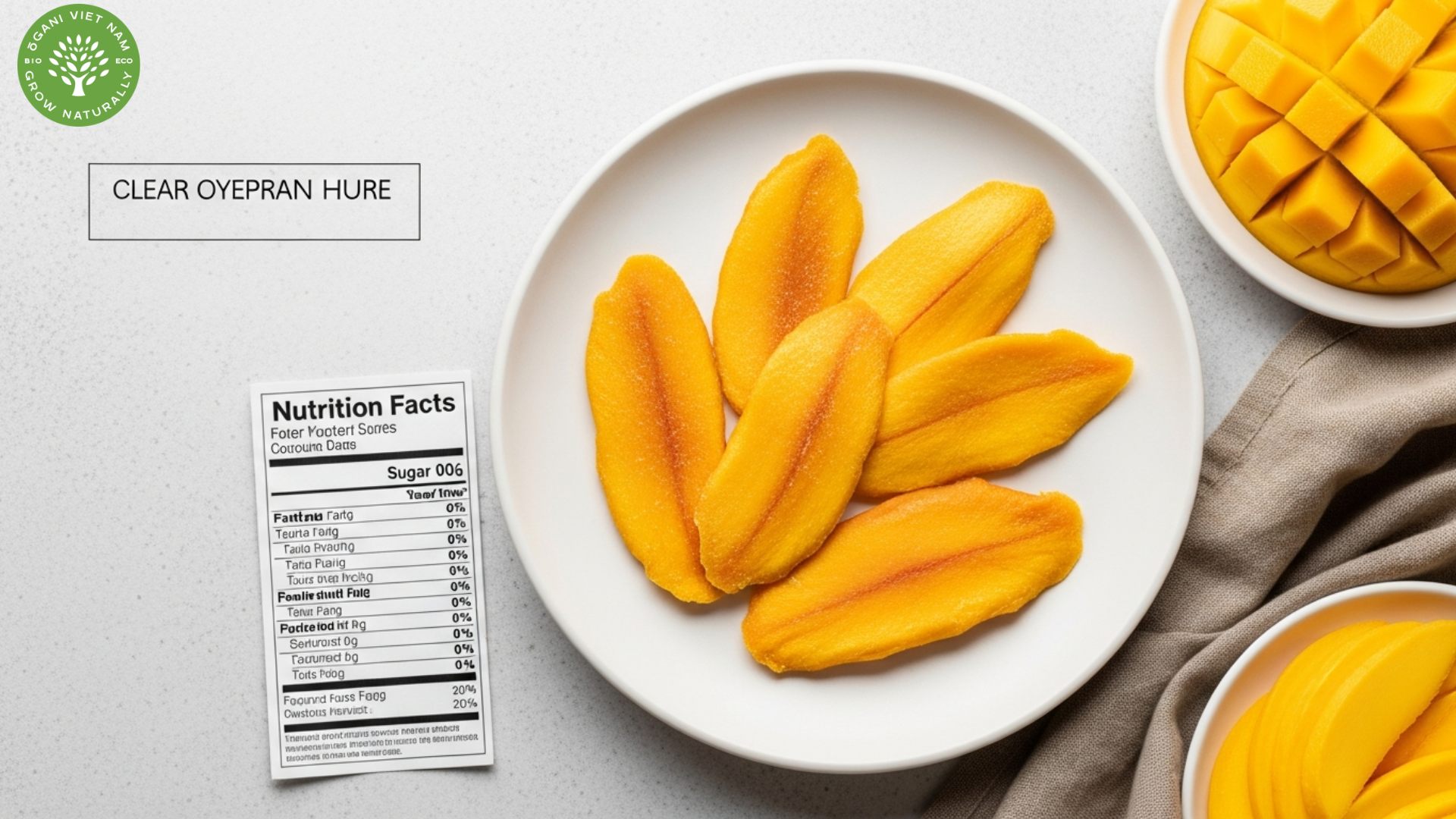
Yes, dried mango has a lot of sugar—typically around 31 grams per 100 grams, which is significantly concentrated compared to fresh mango. But here’s the thing: most of that sugar is naturally occurring, not added. At Ogani VN, we believe in being straight with you about what you’re eating, so let’s dive into the sweet truth.
Does dried mango have a lot of sugar? Understanding the numbers

When you bite into a piece of dried mango, you’re experiencing what happens when water is removed from fresh fruit. That chewy, intensely sweet flavor? It’s the result of sugar concentration. Fresh mango contains about 14-15 grams of sugar per 100 grams, but when we dry it, we’re essentially removing 80-85% of the water content. The sugar doesn’t disappear—it just gets packed into a smaller, denser form.
Think of it like this: imagine squeezing five fresh mango slices into one dried piece. All that natural sweetness gets compressed, which is why dried mango delivers such an intense flavor punch. A typical serving size (about 40 grams or roughly 5-6 pieces) contains approximately 12-13 grams of sugar. That’s roughly the same as eating a medium-sized fresh apple, but in a much smaller volume.
The key distinction here is between natural sugar and added sugar. Many commercial brands do add extra sweetener to their dried mango, which can push the sugar content even higher—sometimes up to 35-40 grams per 100 grams. At Ogani VN, we always recommend checking the ingredient label. If you see “sugar,” “cane sugar,” or “sweetener” listed separately from mango, you’re dealing with added sugar on top of the natural content.
Does dried mango have a lot of sugar from natural sources or added ingredients?
Here’s where things get interesting, and honestly, a bit nuanced. Not all sugars affect your body the same way, even though they might look identical on a nutrition label.
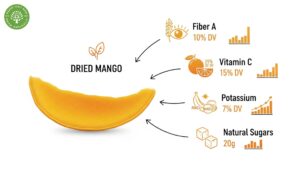
Natural sugar in dried mango comes packaged with fiber, vitamins, and minerals. When you eat dried mango, you’re also getting vitamin C, vitamin A, potassium, and about 2-3 grams of fiber per serving. This fiber slows down how quickly the sugar enters your bloodstream, preventing those sharp blood sugar spikes that make you feel jittery and then crash an hour later.
Added sugar, on the other hand, is just… sugar. No fiber, no nutrients, no buffering effect. It’s like the difference between eating a whole orange and drinking orange soda. Both contain sugar, but your body handles them completely differently.
We’ve noticed something at Ogani VN through customer feedback: people who switch from candy to unsweetened dried mango often report feeling more satisfied with less. There’s probably a psychological component—knowing you’re eating “fruit” rather than “candy”—but there’s also a physical reality. The fiber content means you’re less likely to mindlessly devour an entire bag in one sitting.
That said, let’s be real: 31 grams of natural sugar is still a substantial amount. Your liver doesn’t particularly care whether fructose came from a mango tree or a sugar cane plant. Too much is too much. The advantage is simply that dried mango brings other nutritional benefits to the table, making it a better choice than, say, gummy bears.
The nutritional benefits hiding behind dried mango’s high sugar content
Okay, so dried mango is sweet. Really sweet. But dismissing it as “just sugar” misses the bigger picture. This is where dried mango gets interesting from a nutrition standpoint.
Fiber that actually matters
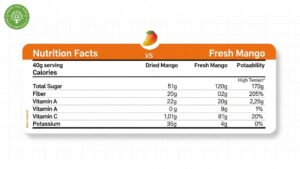
Each 40-gram serving of dried mango contains about 2-3 grams of dietary fiber. That might not sound like much, but it’s roughly 8-10% of your daily recommended intake. This fiber does two important things: it aids digestion (keeping things moving, if you know what I mean) and it moderates sugar absorption. We’ve had customers tell us that dried mango helps them feel fuller longer compared to other dried fruits with similar calorie counts.
Vitamins and minerals you’re actually getting
Dried mango retains much of its vitamin A content—essential for eye health and immune function. You’re also getting vitamin C (though less than fresh mango due to heat exposure during drying), potassium for heart health and muscle function, and small amounts of B vitamins. A single serving provides about 10-15% of your daily vitamin A needs.
The antioxidants in dried mango, including mangiferin and quercetin, remain relatively stable through the drying process. These compounds help fight inflammation and oxidative stress in your body. It’s not a superfood miracle, but it’s legitimate nutritional value.
The calorie reality check
Here’s the less fun part: dried mango is calorie-dense. That same 40-gram serving contains approximately 120-140 calories. Compare that to 40 grams of fresh mango at about 25 calories, and you can see why portion control matters. The concentration process that intensifies the sweetness also concentrates the calories. This isn’t necessarily bad—trail mix exists for a reason—but it’s something to be aware of if you’re watching your calorie intake.
Smart ways to enjoy dried mango despite its high sugar content

Look, we’re not going to tell you to eat three pieces of dried mango and call it a day. That’s technically correct advice, but it’s also kind of miserable. Instead, here are practical strategies we’ve learned from our Ogani VN community.
Pre-portion your servings. This is genuinely the most effective strategy. When you buy dried mango, immediately divide it into small containers or bags—about 6-8 pieces each. It’s embarrassingly simple, but it works. When the bag is in front of you while watching TV, you’ll eat until it’s gone. When you have to consciously reach for a second portion, you often won’t.
Pair it with protein or healthy fats. Dried mango with a handful of unsalted almonds or cashews creates a more balanced snack. The protein and fat slow down sugar absorption even further, and the combination is more satisfying. We’ve also seen customers mix dried mango into plain Greek yogurt—the tanginess offsets the sweetness beautifully.
Use it as a cooking ingredient, not just a snack. Chop dried mango into small pieces and add it to morning oatmeal, blend it into smoothies (use less than you think you need), or incorporate it into savory dishes like curry or salad. When it’s part of a larger meal, you naturally consume less of it.
Stay hydrated. Drink water when you eat dried mango. The fiber absorbs water in your digestive system, which helps with satiety. Plus, proper hydration helps your body process the natural sugars more efficiently.
Choose unsweetened varieties. At Ogani VN, we always stock unsweetened dried mango options. Yes, they’re still sweet from natural sugars, but you’re avoiding that extra 4-8 grams of added sugar per serving. Those grams add up quickly.
Who should be cautious about dried mango’s sugar levels?
We need to have an honest conversation about who should think twice before making dried mango a regular snack.
If you have diabetes or prediabetes, dried mango requires careful consideration. That concentrated natural sugar can affect blood glucose levels, even with the fiber content. This doesn’t mean you can never have it, but you should treat it as you would any high-sugar food—occasional, small portions, and ideally paired with other foods. Monitor your blood sugar response the first few times you try it, because individual responses vary.
People following low-carb or ketogenic diets will find dried mango difficult to fit into their macros. One small serving can contain 30+ grams of carbohydrates, which might be most or all of your daily allowance on strict low-carb plans.
If you’re watching your weight, the calorie density is the main concern rather than the sugar itself. It’s very easy to consume 300-400 calories of dried mango without feeling particularly full. Fresh fruit generally provides better satiety per calorie.
For most healthy adults eating a balanced diet, moderate dried mango consumption—think 2-3 times per week in reasonable portions—is perfectly fine. Your body can handle the natural sugar load when it’s part of an overall healthy eating pattern. The problems arise when dried mango (or any dried fruit) becomes a daily go-to snack in large quantities.
Frequently Asked Questions

Is dried mango healthier than candy?
Yes, because dried mango provides fiber, vitamins, and minerals alongside its natural sugar content, while candy typically offers only added sugars and empty calories. However, both should be consumed in moderation.
How much dried mango can I eat per day?
For most people, 30-40 grams (about 5-6 pieces) per day is a reasonable portion. This provides nutritional benefits without excessive sugar or calorie intake. Adjust based on your individual dietary needs and activity level.
Does dried mango spike blood sugar?
Dried mango can raise blood sugar levels due to its sugar content, but the fiber helps moderate this response compared to refined sugars. People with diabetes should monitor their individual response and consume small portions.
What’s the difference between sweetened and unsweetened dried mango?
Unsweetened dried mango contains only the fruit’s natural sugars (about 31g per 100g), while sweetened versions have added sugars that can increase total sugar content to 35-40g or more per 100g. Always check the ingredient label.
Can dried mango help with digestion?
Yes, the fiber content in dried mango supports digestive health and regularity. However, consuming too much at once may cause digestive discomfort due to the concentrated fiber and sugar content.
The bottom line on dried mango and sugar
So does dried mango have a lot of sugar? Absolutely—but it’s naturally occurring sugar that comes with real nutritional benefits. The key isn’t avoiding dried mango entirely; it’s understanding what you’re eating and making informed choices about portion sizes.
At Ogani VN, we believe in transparent nutrition information and helping you make choices that fit your lifestyle. Whether you’re looking for an afternoon energy boost, a healthier alternative to processed snacks, or just something delicious to satisfy your sweet tooth, dried mango can have a place in your diet—when you respect its sugar content and consume it mindfully.
Ready to try premium quality dried mango with no added sugars? Visit Ogani VN today to explore our carefully sourced dried fruit collection, and discover how to enjoy nature’s candy in a way that works for your health goals. We’re here to help you snack smarter, not harder.
Read more:
- Baking With Dried Red Dragon Fruit: Breads, Muffins & Cookies
- Dried Red Dragon Fruit vs Fresh: Color, Nutrition & When to Use Each
- Dragon Fruit Powder: Unlocking Ít Superfood Potential for Health and Wellness.
- Does Dried Mango Have A Lot Of Sugar?