


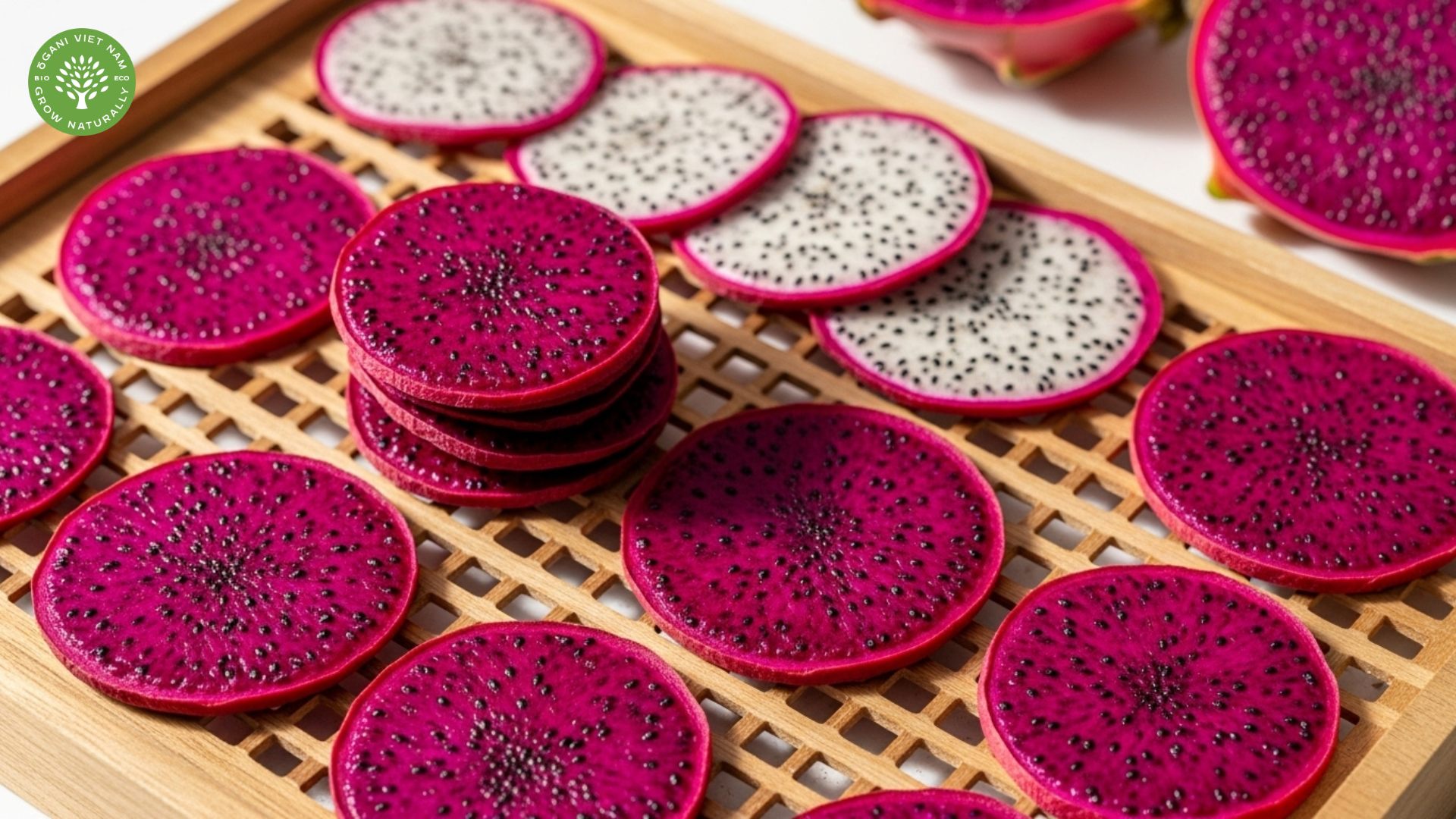
At Ogani VN, we’ve dehydrated countless dragon fruits over the years, and here’s what you need to know: dehydrating dragon fruit takes 8-12 hours at 135°F (57°C) when sliced into ¼-inch pieces. The process is straightforward, but getting that perfect crispy texture without over-drying requires attention to detail.
Why dehydrating dragon fruit is worth your time
Fresh dragon fruit is gorgeous—those vibrant pink or white flesh with tiny black seeds scattered throughout. But let’s be real: they don’t last long. We’ve watched too many beautiful pitaya turn mushy in the fridge after just a few days. That’s exactly why we started experimenting with dehydration.
When you dehydrate dragon fruit, you’re essentially removing about 90-95% of the water content while preserving most of the nutrients. The result? A shelf-stable snack that can last months when stored properly. At our facility, we’ve kept vacuum-sealed dehydrated dragon fruit slices for over 6 months without any quality degradation.
The taste changes, though—it becomes more concentrated, almost candy-like. Some folks love it, others find it lacks the subtle freshness of the original fruit. But for cocktail garnishes, trail mix additions, or rehydrating in smoothies, it’s absolutely worth the effort.
Preparing dragon fruit for dehydrating success
Selecting the right fruit
Not all dragon fruit are created equal for dehydration. We’ve learned this the hard way. You want fruits that are ripe but still firm—if they’re too mushy, they’ll turn into a sticky mess on your dehydrator trays. Press the flesh gently; it should give slightly but spring back.
The variety matters too. Red-fleshed dragon fruit (the ones with that shocking magenta color) look stunning when dried, but they’re often less sweet. White-fleshed varieties tend to have better sugar content, which means better flavor after drying. Yellow dragon fruit? Incredibly sweet when dehydrated, but harder to find.
Washing and cutting technique
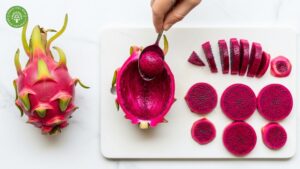
Here’s our process at Ogani VN: rinse the whole fruit under cool water, pat dry, then slice off the top and bottom. You can either scoop out the flesh with a spoon or peel the skin away—honestly, both work fine. The flesh is what we’re after.
Now for the crucial part: slice thickness. Quarter-inch slices are ideal. Go thinner, and they might curl up or dry too quickly in spots. Thicker than that? You’re looking at 14+ hours of drying time, and the texture gets weird—crispy outside, slightly chewy inside. Use a sharp knife or a mandoline if you have one. Consistency matters more than precision here.
Dehydrating dragon fruit: step-by-step process
Temperature and time settings
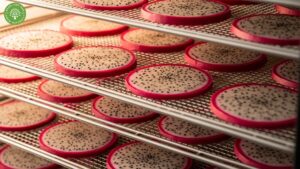
Most dehydrators work best at 135°F (57°C) for dehydrating dragon fruit. We’ve tested everything from 115°F to 145°F. Lower temperatures take forever (sometimes 16+ hours), and higher temps risk case-hardening—where the outside dries too fast and traps moisture inside.
The 8-12 hour range isn’t just a guess. Thin slices in a single layer? Closer to 8 hours. Thicker pieces or if you’ve packed the trays? Expect 12 hours or more. Humidity in your kitchen plays a role too. On rainy days in Vietnam, we’ve had batches take an extra 2-3 hours.
Some people swear by 125°F for 10-12 hours, claiming it preserves more nutrients. The difference is marginal in our experience, but if you’re patient, go for it.
Arranging on dehydrator trays
Don’t overlap pieces—seriously, don’t. We made this mistake early on, and half the batch stayed leathery while the other half turned crispy. Leave about half an inch between slices. Air circulation is everything.
If you’re using mesh screens (which we recommend for pitaya because the pieces can be sticky), spray them lightly with cooking oil first. It makes removal so much easier later. We’ve scraped too many beautiful dragon fruit slices off trays because we skipped this step.
Checking for proper dryness
Here’s the test we use: pick up a cooled slice (always let it cool first—warm pieces feel softer than they actually are). It should snap or break cleanly, not bend. If there’s any flexibility, it needs more time.
The seeds might still look slightly plump, and that’s okay. They won’t get completely flat. What you’re watching for is no visible moisture when you press a slice between your fingers. If you see any dampness, back on the tray it goes.
A properly dehydrated dragon fruit slice feels papery, sometimes almost brittle. The color deepens—white flesh turns slightly beige, red flesh becomes this deep burgundy. First-timers often under-dry because they’re worried about overdoing it, but trust the process.
Storing your dehydrated dragon fruit properly
Short-term vs long-term storage
For immediate use (within 2-3 weeks), an airtight glass jar in a cool, dark cabinet works fine. We keep a small jar on our counter for adding to morning yogurt. But for serious preservation, you need better methods.
Vacuum sealing is the gold standard. It removes oxygen, which is what causes rancidity and off-flavors over time. At Ogani VN, we vacuum seal in portion sizes—about a cup per bag. Then these go into a larger Mylar bag with an oxygen absorber. Stored in a cool spot (not hot garage!), they’ll last 6-12 months easily.
Freezer storage is another option, though it changes the texture slightly. The pieces become more brittle when frozen. But flavor-wise? Still excellent for smoothies and baking.
Recognizing spoilage signs
Even with perfect storage, check your stash periodically. Any off smell—musty, sour, or fermented—means moisture got in somehow. Discard immediately. Visual clues include mold spots (obvious) or pieces that have softened and become sticky again.
We once lost a whole batch because one piece wasn’t fully dried before sealing. The moisture spread, and within two weeks, the entire bag was ruined. That’s why we now test-store a small amount for 3-4 days before committing the whole batch to long-term storage.
Creative ways to enjoy dehydrated dragon fruit

Once you’ve got your crispy pitaya slices, the fun begins. We add them to granola—they rehydrate slightly from the moisture in yogurt and add this gorgeous color. Cocktail garnishes are another favorite. Float a slice on top of a gin and tonic or muddle it into a mojito.
Grind them into powder (coffee grinder works great), and you’ve got natural food coloring. Mix into frosting, smoothie bowls, or even homemade pasta dough for that Instagram-worthy pink color. The powder also works as a subtle fruit flavoring in baked goods.
Rehydrating is simple: soak in warm water for 10-15 minutes. The texture won’t be exactly like fresh, but it’s close enough for fruit salads, salsas, or adding to oatmeal. We’ve also candied rehydrated slices by tossing them in sugar syrup—kids go crazy for them.
Frequently asked questions
How can I tell if my dragon fruit slices are fully dehydrated? Let a slice cool completely, then try to snap it. If it breaks cleanly and shows no moisture when pressed, you’re good. Any flexibility means more drying time is needed.
Can I dehydrate dragon fruit in the oven instead of a dehydrator? Yes, but it’s tricky. Set your oven to the lowest setting (usually 170°F or lower if possible), prop the door open slightly, and expect 12-16 hours. Check frequently to avoid burning.
Does dehydrated dragon fruit retain its nutrients? Most vitamins and minerals remain, though vitamin C levels drop somewhat due to heat exposure. The fiber and antioxidants stay mostly intact, making it still a healthy snack option.
Why did my dragon fruit turn brown during dehydration? Usually from oxidation or too-high temperature. A light spritz of lemon juice before drying can help prevent browning, though it adds tartness to the final product.
Can I mix dragon fruit with other fruits on the same dehydrator tray? We don’t recommend it. Different fruits have different moisture contents and drying times. Dragon fruit pairs reasonably with pineapple or mango if you must, but separate trays are always better.
Start your dehydrating dragon fruit journey today
Dehydrating dragon fruit transforms a delicate, perishable fruit into a versatile pantry staple. The key takeaways: maintain ¼-inch slice thickness, dry at 135°F for 8-12 hours, and store in vacuum-sealed bags for maximum shelf life. Don’t rush the drying process—properly dehydrated pitaya snaps cleanly and stores for months.
At Ogani VN, we’re passionate about helping you preserve nature’s best. Whether you’re dehydrating dragon fruit for the first time or looking to perfect your technique, remember that slight variations in time and temperature are normal. Every dehydrator and climate is different.
Ready to start your dehydration journey? Check out our selection of premium dragon fruit and dehydrating supplies. Have questions? Our team is here to help you succeed—contact us anytime for personalized advice on preserving your favorite fruits.
Read more:
- Baking With Dried Red Dragon Fruit: Breads, Muffins & Cookies
- Dried Red Dragon Fruit vs Fresh: Color, Nutrition & When to Use Each
- Dragon Fruit Powder: Unlocking Ít Superfood Potential for Health and Wellness.
- Red Dragon Fruit Dried: Your Complete Buying Guide
- Dehydrating Dragon Fruit: Complete Guide To Preserve Pitaya