


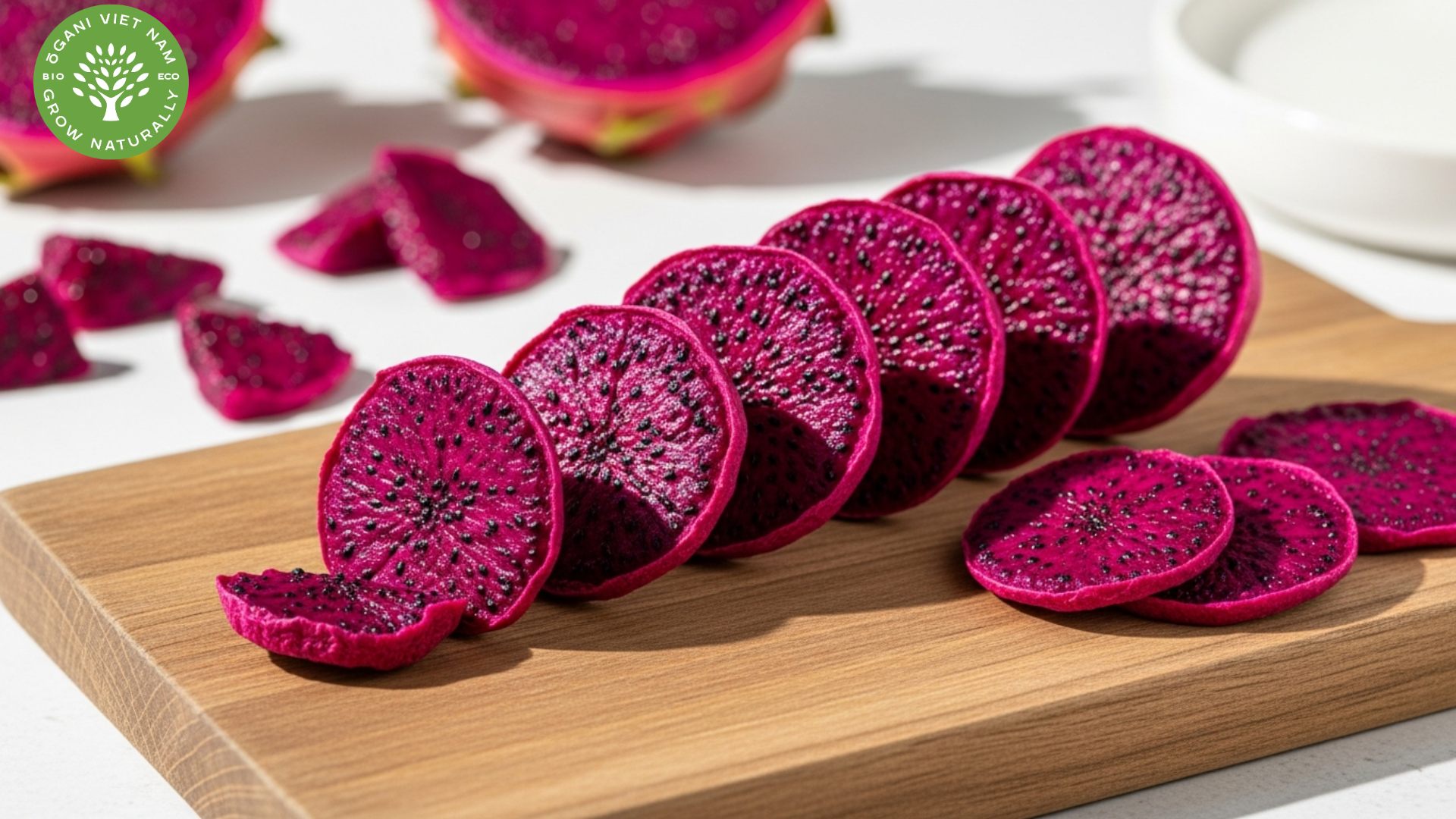
Dehydrated dragonfruit is fresh dragon fruit that’s been carefully dried to remove moisture while preserving its vibrant color, natural sweetness, and nutritional benefits. At Ogani VN, we’ve seen how this tropical superfood transforms from a perishable exotic fruit into a convenient, shelf-stable snack that delivers concentrated nutrients and endless culinary possibilities.
What makes dehydrated dragonfruit special

The beauty of dehydrated dragonfruit lies in what happens during the drying process. When we remove about 90% of the water content from fresh pitaya, we’re left with intensely flavored slices that retain most of their original vitamins, antioxidants, and that stunning pink or white flesh color. Unlike many dried fruits that need added sugar or preservatives, properly dehydrated dragon fruit maintains its natural mild sweetness—somewhere between a kiwi and a pear.
Here’s something interesting we’ve noticed: fresh dragon fruit can be a bit polarizing. Some people find it underwhelming or too subtle in flavor. But once dehydrated? The taste concentrates beautifully. You get this crispy-chewy texture with a more pronounced tropical flavor that actually reminds you why dragon fruit earned its superfood status in the first place.
The dehydration method matters tremendously. Freeze-dried dragon fruit creates an airy, crunchy texture that dissolves on your tongue. Traditional dehydrated slices at lower temperatures (around 135°F) give you something chewier, almost candy-like, but without any of the guilt. Both methods preserve the betalains—those powerful antioxidants responsible for the fruit’s vivid color.
Dehydrated dragonfruit nutrition and health benefits

We’ll be honest: dried dragon fruit won’t magically transform your health overnight. But it does pack some genuinely impressive nutritional benefits into a small package. When water leaves the fruit, the nutrients become more concentrated per gram, which means a handful of dehydrated dragonfruit delivers more fiber, vitamin C, and minerals than you’d get from the same amount of fresh fruit.
The fiber content is particularly noteworthy. Dragon fruit seeds, which remain intact during dehydration, contain healthy omega-3 and omega-6 fatty acids. These tiny black seeds throughout the pink or white flesh act as a gentle digestive aid. We’ve had customers tell us they keep a bag in their desk drawer as an afternoon snack specifically because it helps with regularity without causing any discomfort.
Vitamin C content stays relatively stable during proper dehydration, though you’ll lose some—that’s unavoidable. What survives is still beneficial for immune support and skin health. The real stars, though, are those betalains we mentioned earlier. These plant compounds give dragon fruit its distinctive color and provide anti-inflammatory properties that fresh or dried, remain present and active.
Iron and magnesium levels also concentrate during drying. Not enough to replace a supplement if you’re deficient, but enough to contribute meaningfully to your daily intake. At Ogani VN, we’ve noticed that customers who regularly snack on dried pitaya alongside other dried fruits and nuts report feeling more energized throughout their day.
How to make dehydrated dragonfruit at home
Choosing the right dragon fruit
Start with ripe fruit—this cannot be overstated. Underripe dragon fruit tastes like watery cardboard when fresh, and dehydration only intensifies that disappointment. Look for fruit that gives slightly when pressed, with vibrant pink or yellow skin and minimal brown spots. The leafy “wings” on the outside should be slightly wilted but not completely dried out.
Red-fleshed varieties (the ones with stunning magenta interiors) generally dehydrate better than white-fleshed types. They maintain their color more dramatically and develop a slightly sweeter, more complex flavor profile. That said, white dragon fruit works perfectly fine—it just turns more beige than pink during drying.
We recommend buying a few extra fruits if you’re dehydrating for the first time. Dragon fruit can be inconsistent in quality, and having backups ensures you’re not stuck with mediocre results from mediocre fruit.
The dehydration process step-by-step
Wash your dragon fruit thoroughly, then slice off both ends. Some people prefer to peel the skin completely, while others score it and scoop out the flesh with a spoon—either works. The key is getting uniform slices, about 1/4 inch thick. Too thin and they’ll crisp up too fast and potentially burn; too thick and the centers stay chewy while the edges over-dry.
Arrange slices on dehydrator trays in a single layer with space between each piece. Overlapping creates uneven drying and potential mold issues later. Set your dehydrator to 135°F (57°C)—this temperature preserves nutrients while removing moisture efficiently. The process typically takes 8-12 hours, sometimes longer depending on your fruit’s water content and slice thickness.
You’ll know they’re ready when the slices feel leathery but not brittle. They should bend without breaking and show no moisture when you press them. If they snap cleanly, you’ve gone a bit too far (though they’re still perfectly edible, just crunchier).
Oven method alternative
Don’t have a dehydrator? Your oven can work, though the results won’t be quite as consistent. Set it to the lowest temperature possible—ideally around 150°F to 170°F. Place dragon fruit slices on parchment-lined baking sheets and prop the oven door open slightly with a wooden spoon to allow moisture to escape. This method takes 6-10 hours and requires rotating the trays every couple of hours for even drying.
Creative ways to use dehydrated dragonfruit

This is where things get fun. Dehydrated dragonfruit isn’t just a snack—though eating it straight from the bag is perfectly acceptable and honestly, kind of addictive. The concentrated flavor and unique texture make it surprisingly versatile in the kitchen.
Cocktail garnishes are probably the most Instagram-worthy use. Those vibrant pink or white slices float beautifully in gin and tonics, margaritas, or mocktails. Bartenders love them because they’re shelf-stable, require no prep, and add visual drama. We’ve seen them used in everything from wedding receptions to high-end restaurant bars.
Rehydrate the slices in warm water or juice for about 15-20 minutes, and you get something closer to fresh fruit texture. It won’t be identical—the cell structure changes during dehydration—but it works beautifully in smoothie bowls, oatmeal, or yogurt parfaits. The rehydration liquid itself picks up a subtle dragon fruit flavor that you can use in drinks or sauces.
Grind dehydrated dragonfruit into powder, and suddenly you’ve got a natural food coloring that’s actually nutritious. This works better with red-fleshed varieties. The powder adds a gorgeous pink hue to frostings, protein shakes, or even homemade face masks if you’re into that. At Ogani VN, we’ve had customers use it in everything from macarons to bread dough for the prettiest pink bagels you’ve ever seen.
Trail mix and granola benefit enormously from dried dragon fruit. It provides sweetness and chew without being as sticky as dates or as common as raisins. Mix it with cashews, coconut flakes, and dark chocolate chips for something that feels indulgent but is actually reasonably healthy.
Infused water gets a flavor and visual boost from a few slices of dried pitaya. Just drop them in your water bottle in the morning, and by afternoon, you’ve got subtly flavored water with a beautiful tint. It’s not intensely flavored—dragon fruit is naturally mild—but it’s enough to make plain water more interesting.
Storing and selecting quality dehydrated dragonfruit
What to look for when buying
If you’re purchasing rather than making your own, read the ingredient list carefully. It should say one thing: dragon fruit (or pitaya). That’s it. Many commercial brands add sugar, corn syrup, or preservatives—all completely unnecessary if the fruit was dehydrated properly. The color should be vibrant and relatively uniform, not dull or brown.
Texture matters too. Quality dehydrated dragonfruit should feel pliable, not rock-hard or crumbly. If it’s freeze-dried, it should be crispy and airy, dissolving easily. If it’s been traditionally dehydrated, it should be leathery-chewy. Any stickiness or moisture suggests improper drying or storage.
Price varies wildly. You’ll find cheap options that might be lower quality fruit or have additives. Premium products, especially freeze-dried organic varieties, can cost significantly more. At Ogani VN, we believe the middle ground offers the best value—properly processed fruit without unnecessary markup for fancy packaging.
Storage tips for maximum shelf life

Properly stored dehydrated dragonfruit lasts 6-12 months, sometimes longer. The key enemies are moisture, light, and heat. Store your dried slices in airtight containers—glass jars or vacuum-sealed bags work best. Keep them in a cool, dark pantry rather than above the stove or in direct sunlight.
If you notice any moisture accumulation inside the container, your fruit wasn’t dried completely or moisture got in somehow. You can try dehydrating it again briefly, but honestly, if there’s visible moisture, it’s safer to discard it. Mold can develop quickly in partially dried fruit and isn’t always visible until it’s become a real problem.
Freezing extends shelf life even further. While it seems counterintuitive to freeze dried fruit, it actually works beautifully. The lack of moisture means no ice crystals form to damage the texture. Just portion into smaller bags so you’re not repeatedly exposing the entire batch to temperature fluctuations.
Frequently Asked Questions
Is dehydrated dragonfruit as healthy as fresh?
Not quite identical, but pretty close. You’ll lose some vitamin C during the dehydration process—heat-sensitive nutrients always take a hit. However, fiber, minerals, and antioxidants remain largely intact. The main difference is concentration: dried fruit has less water, so the sugars and calories are more concentrated per gram. A handful of dried dragon fruit has more calories than a handful of fresh, but it’s still a healthy snack when eaten in reasonable portions.
Does dehydrated dragonfruit taste good?
This is subjective, but most people find dried dragon fruit more flavorful than fresh. The dehydration process concentrates the natural sugars and creates a more intense tropical taste. The texture is the bigger variable—some people love the chewy, candy-like quality, while others prefer the crunch of freeze-dried versions. If you found fresh dragon fruit bland or disappointing, you might actually enjoy it dehydrated.
How long does it take to dehydrate dragon fruit?
In a dehydrator at 135°F, expect 8-12 hours for 1/4-inch slices. Thicker slices take longer; thinner ones dry faster but can become brittle. Humidity in your kitchen affects timing too—muggy days mean longer drying times. Using an oven takes 6-10 hours but requires more attention and rotation. Freeze-drying is fastest (24-36 hours) but requires specialized equipment most home cooks don’t have.
Can you eat dehydrated dragonfruit seeds?
Absolutely. The tiny black seeds remain throughout the fruit and are completely edible—in fact, they’re one of the nutritional highlights. Dragon fruit seeds contain healthy fats, particularly omega-3 and omega-6 fatty acids. They also provide a slight crunch that contrasts nicely with the chewy fruit flesh. There’s no need to remove them before or after dehydrating.
Start enjoying dehydrated dragonfruit today
Dehydrated dragonfruit offers a convenient, nutritious, and delicious way to enjoy this tropical superfood year-round. Whether you’re making your own at home with a simple dehydrator or purchasing ready-made slices, you’re getting concentrated nutrition, intense flavor, and remarkable versatility in one colorful package.
At Ogani VN, we’re passionate about bringing premium dried fruits to health-conscious customers who refuse to compromise on quality. Our dehydrated dragonfruit is made from carefully selected, perfectly ripe fruit with nothing added—just pure, concentrated dragon fruit goodness. Ready to experience the difference? Browse our selection of organic dried fruits and discover why customers keep coming back for that distinctive tropical taste and satisfying texture.
Read more:
- Baking With Dried Red Dragon Fruit: Breads, Muffins & Cookies
- Dried Red Dragon Fruit vs Fresh: Color, Nutrition & When to Use Each
- Dragon Fruit Powder: Unlocking Ít Superfood Potential for Health and Wellness.
- Red Dragon Fruit Dried: Your Complete Buying Guide
- Dehydrated Dragonfruit Guide: Benefits & Uses