


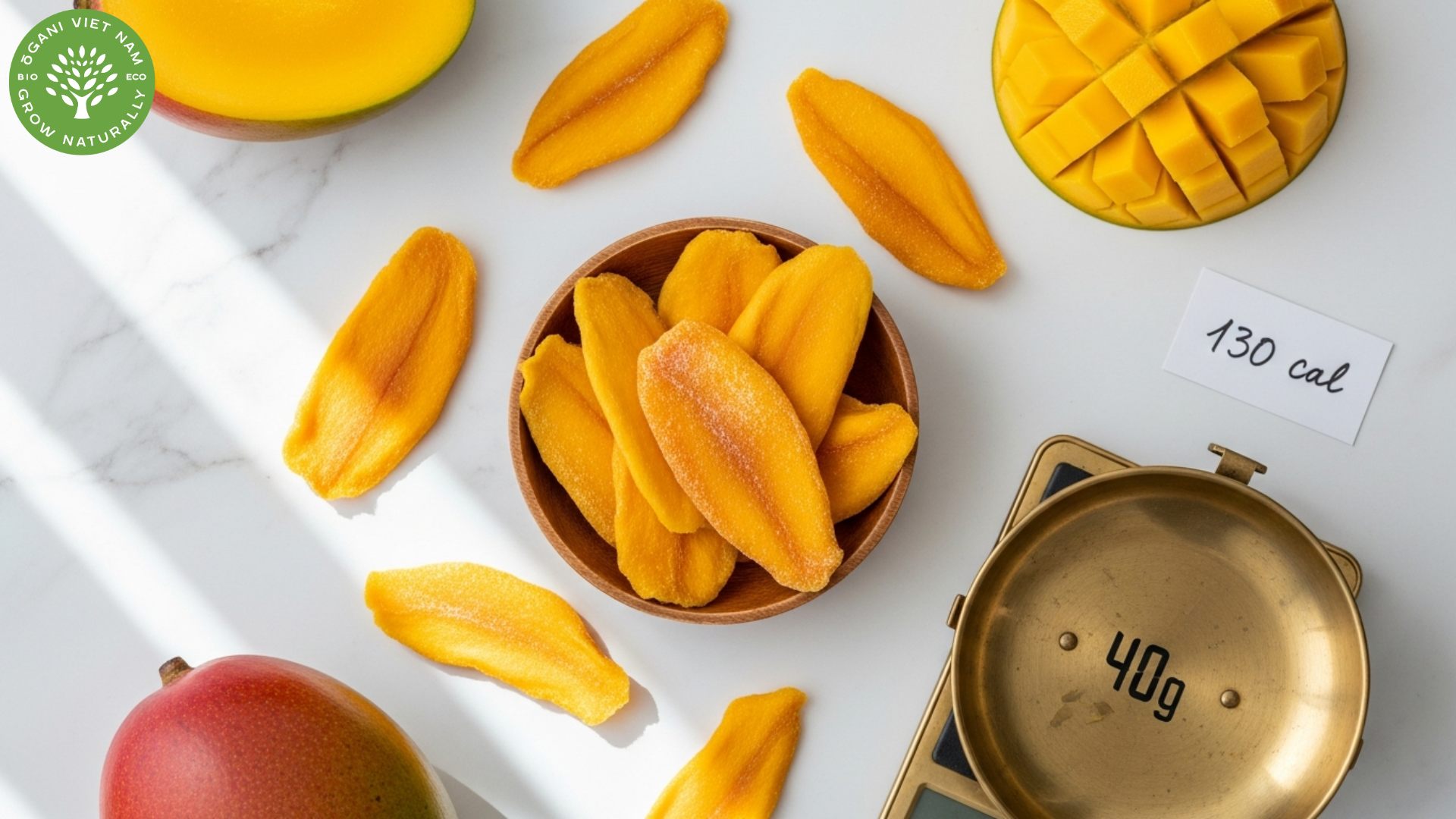
When you reach for a handful of dried mango, you’re getting about 120-140 calories per 30-40 gram serving—roughly 6-8 pieces depending on the cut. That’s significantly more calorie-dense than fresh mango, where a whole cup contains just 99 calories. But here’s what most people don’t realize: those extra calories come with concentrated nutrients that can actually benefit your health when you understand proper portion control.
At Ogani VN, we’ve worked with countless customers who love dried mango but worry about the calorie content. The truth is, calories in dried mango shouldn’t scare you away from this nutritious snack. What matters is understanding what you’re getting, how it compares to other options, and how to enjoy it as part of a balanced diet. Let’s break down everything you need to know.
How many calories dried mango actually contains
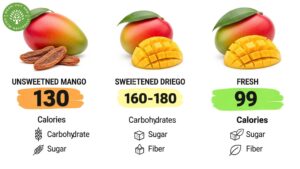
The calorie count in dried mango varies based on whether it’s sweetened or unsweetened, the brand, and the serving size. Most unsweetened organic dried mango contains approximately 120-140 calories per 40-gram serving (typically 4-8 pieces). Sweetened varieties can jump to 160-180 calories for the same amount because of added sugar.
Here’s what a standard serving looks like:
- Unsweetened dried mango (40g): 130 calories, 31g carbohydrates, 27g natural sugars, 1g fiber
- Sweetened dried mango (40g): 160-180 calories, 40-43g carbohydrates, 35-38g total sugars, less than 1g fiber
- Fresh mango (1 cup, 165g): 99 calories, 25g carbohydrates, 23g natural sugars, 3g fiber
The dehydration process removes water content, which concentrates both the natural sugars and the calories. A whole fresh mango weighs about 200 grams and contains roughly 200 calories. When dried, that same mango shrinks to about 50-60 grams but retains nearly the same calorie count—making it much more calorie-dense by weight.
This concentration isn’t necessarily bad. It means you get more nutrients packed into a smaller, more portable package. The issue comes when people eat dried mango the same way they’d eat fresh fruit—by the handful without paying attention to portion size.
Calories dried mango vs fresh mango comparison
Understanding the difference between calories in dried mango and fresh mango helps you make smarter snacking choices. The numbers tell an interesting story that goes beyond just calorie counting.
Fresh mango has high water content (about 83%), which fills you up with fewer calories. A whole cup of fresh mango cubes gives you that satisfying, juicy experience for under 100 calories. You can eat more volume, feel fuller, and stay within your calorie goals more easily.
Dried mango, on the other hand, has had most of its water removed. What remains is concentrated fruit sugar, fiber, and nutrients. Just 6-8 pieces of dried mango (about 40 grams) deliver the same calories as that full cup of fresh mango. For some people, this makes dried mango a calorie trap—it’s easy to mindlessly eat 20-30 pieces while watching TV, racking up 400-500 calories without realizing it.

But here’s the flip side: that concentration makes dried mango incredibly convenient. Hikers, travelers, and busy professionals love it because you get sustained energy from natural sugars without the mess or refrigeration needs of fresh fruit. The key is awareness and portion control.
At Ogani VN, we always recommend pre-portioning your dried mango into small containers or bags. Measure out 40 grams (about a small handful), put it in a snack bag, and you’ve got a perfectly portioned 130-calorie snack that won’t derail your nutrition goals.
Understanding calories dried mango based on sweetened vs unsweetened

Not all dried mango is created equal, and the type you choose dramatically affects your calorie intake. This distinction matters more than most people realize.
Unsweetened dried mango nutrition
Unsweetened or “no sugar added” dried mango contains only the natural sugars found in the fruit itself. A 40-gram serving typically has 120-130 calories and about 27 grams of naturally occurring fruit sugar. These varieties are made by simply dehydrating ripe mangoes without any additives.
The benefits? You’re getting pure fruit with all its natural fiber, vitamins, and minerals. The vitamin C content remains impressive—about 19% of your daily value per serving. You also get small amounts of vitamin A, folate, and several B vitamins. The natural sugar provides quick energy, but the fiber helps slow absorption, preventing dramatic blood sugar spikes.
Sweetened dried mango nutrition
Sweetened dried mango has added cane sugar, corn syrup, or other sweeteners during processing. This bumps the calorie count to 160-180 per 40-gram serving, with total sugars reaching 35-38 grams. Manufacturers add sweetness to appeal to people who find the natural tartness of some mango varieties too intense.
The problem? You’re essentially getting candy disguised as fruit. That extra sugar provides empty calories without additional nutrients. If you’re trying to manage weight, control blood sugar, or simply eat cleaner, sweetened varieties work against your goals.
How do you tell the difference? Check the ingredient list. Unsweetened dried mango should list only one ingredient: mango (or organic mango). If you see “cane sugar,” “organic cane sugar,” “glucose syrup,” or any other sweetener, you’re looking at the sweetened version—no matter what the front label claims about being “natural” or “organic.”
Calories dried mango fits into your daily diet

The question isn’t whether you should eat dried mango—it’s how to incorporate it wisely into your eating pattern. With the right approach, those calories in dried mango can support your health goals rather than sabotage them.
For most adults following a 2,000-calorie daily diet, a 40-gram serving of dried mango (130 calories) represents about 6.5% of your daily intake. That’s perfectly reasonable for a snack, especially if it replaces less nutritious options like chips or cookies.
The timing matters too. Dried mango works beautifully as a pre-workout snack because the natural sugars provide quick energy for exercise. Many of our customers at Ogani VN eat a small serving 30-45 minutes before gym sessions or long runs. The portable nature means you can toss it in your gym bag without worry.
Post-workout, dried mango helps replenish glycogen stores. Pair it with a protein source like Greek yogurt or a handful of nuts, and you’ve got a balanced recovery snack. The combination of quick-digesting carbs from the mango and slower-digesting protein keeps you satisfied and supports muscle recovery.
For weight management, treat dried mango as you would any concentrated sweet food—enjoy it, but measure your portions. Keep a food scale handy the first few times so you learn what 40 grams looks like. After a while, you’ll eyeball portions accurately without thinking about it.
Some people do better avoiding dried fruit entirely if they struggle with portion control or sugar cravings. There’s no shame in that—knowing your triggers is part of smart eating. But for most people who can stick to reasonable portions, dried mango offers genuine nutritional value that makes it worth including.
Frequently Asked Questions
How many pieces of dried mango equal 100 calories?
Approximately 5-6 pieces of unsweetened dried mango contain about 100 calories, depending on the size and thickness of each slice. Sweetened varieties have more calories, so you’d get fewer pieces for the same 100 calories.
Is dried mango good for weight loss?
Dried mango can fit into a weight loss diet if you control portions carefully. The key is measuring servings (stick to 30-40 grams) and accounting for those calories in your daily total. The fiber and nutrients make it more nutritious than processed snacks, but the calorie density means it’s easy to overeat if you’re not mindful.
Does dried mango have more calories than other dried fruits?
Dried mango falls in the middle range. Dried dates and figs tend to be higher in calories (about 140-160 per 40g), while dried apples and pears are often lower (around 100-110 per 40g). Dried bananas and raisins are comparable to dried mango at 120-140 calories per serving.
Can diabetics eat dried mango?
Diabetics should approach dried mango cautiously due to its concentrated sugar content. A small portion (20-30 grams) paired with protein or fat can help minimize blood sugar spikes. Always check with your healthcare provider and monitor your blood glucose response. Unsweetened varieties are definitely preferable to sweetened ones.
How should I store dried mango to keep it fresh?
Store dried mango in an airtight container in a cool, dry place. Properly stored, it stays fresh for 6-12 months. Refrigeration extends shelf life further and helps maintain texture, especially in humid climates. At Ogani VN, we recommend resealable bags or glass jars with tight lids.
Make dried mango work for your lifestyle

The conversation around calories in dried mango shouldn’t be about fear or restriction—it should be about making informed choices that support your health and enjoyment. Yes, dried mango is calorie-dense. Yes, you need to watch portions. But it’s also a whole food packed with natural sweetness, convenient nutrition, and genuine satisfaction.
At Ogani VN, we’ve seen customers transform their snacking habits by swapping ultra-processed foods for quality dried fruits like our organic dried mango. The difference isn’t just in the ingredients—it’s in how you feel. Real food, even in concentrated form, nourishes your body in ways that artificial snacks never can.
Start with awareness. Measure your portions for a week so you understand what a proper serving looks like. Choose unsweetened varieties to avoid added sugars. Pair your dried mango with protein-rich foods for better satiety and blood sugar control.
Ready to experience the difference that quality makes? Our organic unsweetened dried mango contains no added sugars, no preservatives, and no sulfites—just pure Vietnamese mango dried at peak ripeness. Visit Ogani VN today to explore our full range of organic dried fruits and superfoods. Your body deserves real nutrition, and we’re here to deliver it.
Read more:
- Baking With Dried Red Dragon Fruit: Breads, Muffins & Cookies
- Dried Red Dragon Fruit vs Fresh: Color, Nutrition & When to Use Each
- Dragon Fruit Powder: Unlocking Ít Superfood Potential for Health and Wellness.
- Red Dragon Fruit Dried: Your Complete Buying Guide
- Calories in Dried Mango: Complete Nutrition Guide