


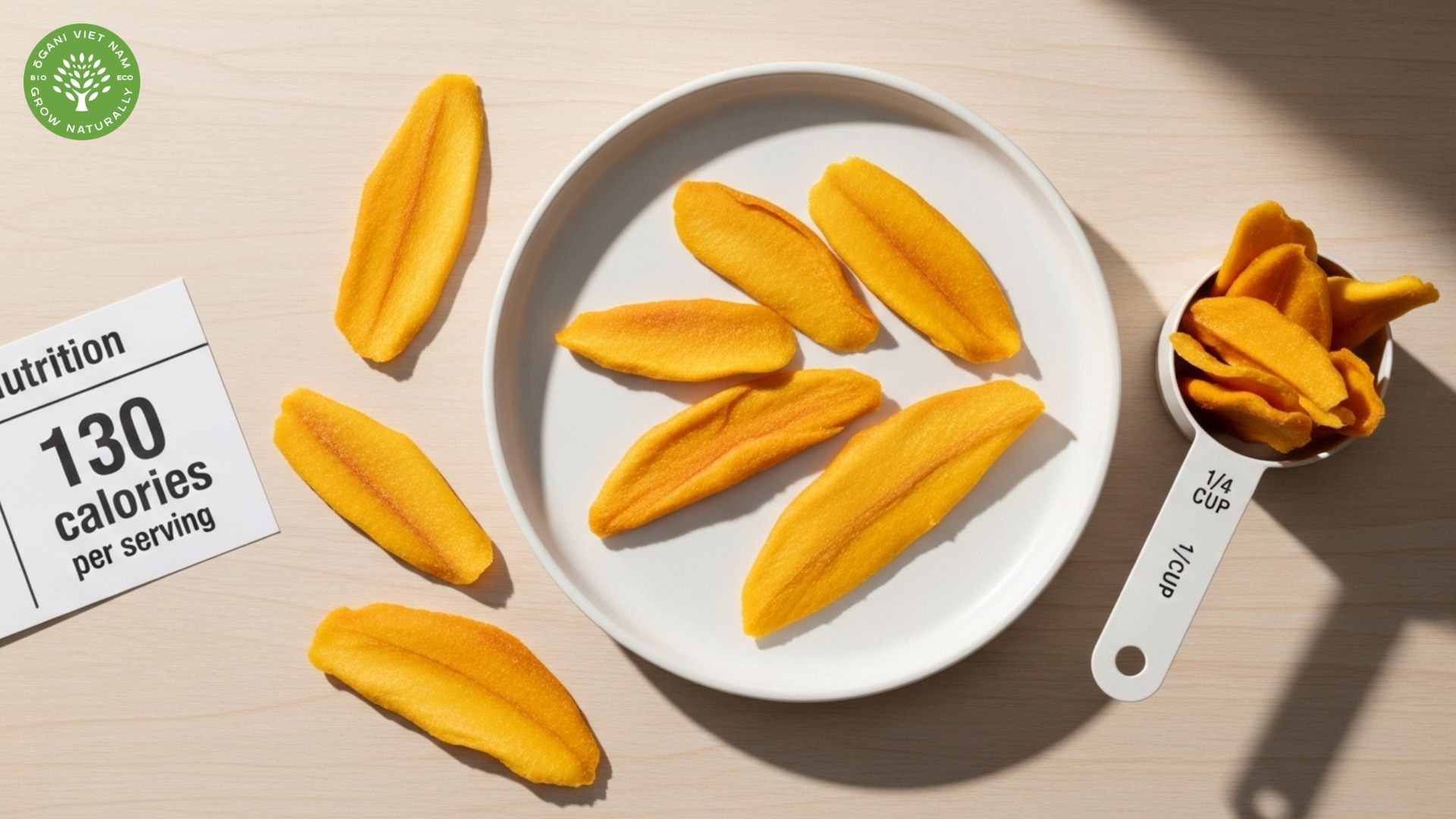
When you reach for that chewy, sweet piece of dried mango, you’re consuming approximately 130 calories per serving (about 40 grams or 8-9 pieces). At Ogani VN, we know that understanding exactly what goes into your body matters, especially when you’re trying to maintain a balanced diet while enjoying delicious snacks.
How many calories in dried mango per serving?
Let’s get specific about what a serving really means. Most nutritional labels define one serving of dried mango as 40 grams or roughly 1/4 cup, which translates to about 8-9 pieces depending on how they’re sliced. This standard serving delivers around 120-140 calories in dried mango, though the exact number varies slightly between brands.
Here’s something we’ve noticed from our customers: many people underestimate how much they’re actually eating. Those “few pieces” you grab as an afternoon snack? They might add up to 2-3 servings without you realizing it. A small handful can easily reach 200-250 calories, which is roughly equivalent to eating an entire fresh mango.
The calorie breakdown for a standard 40-gram serving typically looks like this:
- Total calories: 128-130
- From carbohydrates: ~29 grams (116 calories)
- From protein: ~2 grams (8 calories)
- From fat: 0-1 gram (0-9 calories)
What surprises most people is that dried mango is almost entirely carbohydrates. The drying process removes water but concentrates the natural sugars, which is why it tastes so intensely sweet compared to fresh fruit.
Calories in dried mango versus fresh mango

This comparison always catches people off guard. A whole cup of fresh mango chunks contains only about 99 calories, while just 30-40 grams of dried mango packs 120-140 calories. Why such a dramatic difference?
Water content is the game-changer here. Fresh mangoes are approximately 83% water, which adds weight and volume without adding calories. When you remove that water through the drying process, you’re left with concentrated sugars and nutrients in a much smaller package. Think of it this way: it takes roughly 3-4 fresh mangoes to produce one cup of dried mango slices.
We’ve had customers tell us they thought switching to dried mango would be “healthier” because it seemed like less food. Actually, you’re getting more concentrated nutrition and more calories per gram. That’s not necessarily bad—it just means you need different portion awareness.
The concentration factor
When mangoes are dried, here’s what happens to their composition:
- Water content drops from 83% to about 15-20%
- Natural sugars become 5-6 times more concentrated
- Calorie density increases from about 60 cal/100g to 314 cal/100g
- Fiber becomes more concentrated too (a bonus!)
One medium fresh mango weighing around 200 grams gives you roughly 200 calories. You can have about 60 grams of unsweetened dried mango for roughly the same caloric value—but that 60 grams is just 12-15 pieces, compared to an entire juicy fruit you can sink your teeth into.
Calories in dried mango: sweetened vs unsweetened

Here’s where things get tricky, and honestly, where a lot of “health food” marketing can mislead you. Not all dried mango is created equal.
Unsweetened or “no sugar added” varieties contain only the natural sugars from the fruit itself. These typically provide 120-130 calories per 40-gram serving. The ingredients list should show just one item: dried mango (or organic mango). Brands like Trader Joe’s Organic Dried Mango and Mariani’s No Sugar Added versions fall into this category.
Sweetened dried mango, on the other hand, has additional sugar or sweeteners added during processing. This can bump the calorie count up to 140-160 calories per serving—or even higher. Some heavily sweetened varieties can contain as much as 20-25 grams of added sugar per serving, on top of the natural fruit sugars.
At Ogani VN, we always recommend checking the label for:
- Total sugar content (aim for under 30g per serving)
- Added sugars line (ideally 0g)
- Ingredients list (fewer is better)
- Serving size (don’t assume all brands use the same)
Another thing to watch for: sulfur dioxide or sulfites. While these preservatives don’t add calories, some people are sensitive to them. Unsulfured varieties are becoming more popular for this reason.
What affects calories in dried mango besides sugar?
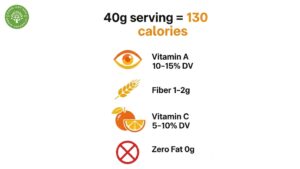
Looking only at calories in dried mango tells an incomplete story. What else are you getting in that 40-gram serving?
Carbohydrates: About 29-31 grams, mostly from natural fruit sugars (fructose). This gives you quick energy, which is why dried mango makes a decent pre-workout snack. The downside? That sugar rush can lead to a crash if you eat too much without protein or fat to balance it.
Fiber: Roughly 1-2 grams per serving. It’s not a fiber powerhouse, but every bit helps with digestion and feeling satisfied.
Vitamin A: This is where dried mango shines. One serving can provide 10-15% of your daily vitamin A needs, supporting eye health and immune function. The orange color comes from beta-carotene, a powerful antioxidant your body converts to vitamin A.
Vitamin C: While some vitamin C is lost during the drying process, you still get about 5-10% of your daily requirement. Fresh mango has more, but dried still contributes.
Iron and Calcium: Small amounts are present, contributing 2-4% of daily needs.
What’s notably absent? Fat. Most dried mango contains zero fat, and protein content is minimal at just 1-2 grams per serving. This means dried mango won’t keep you full for long on its own—it’s primarily an energy-dense carbohydrate source.
Managing calories in dried mango through smart portioning

After talking with hundreds of customers, we’ve learned that portion control is where most people struggle with dried fruit. It’s just so easy to keep eating! Here are practical strategies we’ve seen work:
Pre-portion your servings. When you buy a large bag, immediately divide it into small containers or ziplock bags with 40 grams (8-9 pieces) each. This removes the temptation to mindlessly snack straight from the bag.
Pair it with protein or fat. Have your dried mango with a handful of almonds, a tablespoon of peanut butter, or some cheese. This slows sugar absorption and keeps you satisfied longer. It also balances the calorie load with more nutrients.
Use it as a dessert replacement. If you’re craving something sweet after dinner, 4-5 pieces of dried mango (about 65-80 calories) beats a cookie or slice of cake nutritionally and typically has fewer calories.
Add it to meals strategically. Chop dried mango into morning oatmeal, toss it in salads, or mix it into yogurt. This way you’re using it as a flavor component rather than eating it by the handful.
Stay hydrated. Drink water with your dried mango. The fiber will absorb water in your stomach, helping you feel fuller and preventing you from overeating.
One customer told us she keeps a “dried mango journal” for a week, writing down every piece she eats. She was shocked to discover she was consuming 300-400 extra calories daily from what she thought were “just a few bites here and there.” Awareness is half the battle.
Frequently Asked Questions
How many pieces of dried mango can I eat on a diet?
If you’re watching calories, stick to 8-9 pieces (one 40-gram serving) as a snack, which provides about 130 calories. This fits easily into most 1,500-2,000 calorie diet plans. Some people split this into two smaller portions throughout the day.
Does dried mango make you gain weight?
Dried mango itself doesn’t cause weight gain—excess calories do. Because it’s calorie-dense, it’s easier to overconsume compared to fresh fruit. If you eat reasonable portions and account for the calories in your daily intake, dried mango can be part of a healthy diet.
Is dried mango healthier than candy?
Generally yes, because dried mango provides vitamins, minerals, and fiber along with its natural sugars. However, sweetened dried mango with lots of added sugar isn’t much better than candy calorie-wise. Always choose unsweetened varieties when possible.
Can diabetics eat dried mango?
Diabetics should approach dried mango cautiously due to its concentrated sugar content. A small portion (3-4 pieces) might fit into a meal plan, but it’s essential to monitor blood sugar response and consult with a healthcare provider. Fresh mango in moderation is typically a better choice for blood sugar management.
How long does dried mango last?
Properly stored in an airtight container in a cool, dry place, dried mango stays fresh for 6-12 months. Once opened, it’s best consumed within 3-6 months. If it becomes too hard, you’ve likely had it too long or it’s dried out further from air exposure.
Your guide to enjoying dried mango without calorie worries
Understanding calories in dried mango—about 130 per serving—empowers you to enjoy this delicious snack without guilt or surprises on the scale. The key is treating it like the concentrated energy source it is: measure your portions, balance it with other nutrients, and savor each chewy, tropical-tasting piece.
At Ogani VN, we believe healthy eating isn’t about restriction; it’s about making informed choices. Dried mango absolutely has a place in a balanced diet when you consume it mindfully. Whether you’re looking for a pre-workout energy boost, a natural sweet treat, or a convenient travel snack, dried mango delivers—as long as you respect the portion size.
Ready to stock up on premium quality dried mango? Browse our selection of organic, unsweetened varieties at Ogani VN and discover how we’re making healthy snacking delicious and transparent. Have questions about our products or want personalized nutrition advice? Reach out to our team—we’re here to help you make the best choices for your health goals.
Read more:
- Baking With Dried Red Dragon Fruit: Breads, Muffins & Cookies
- Dried Red Dragon Fruit vs Fresh: Color, Nutrition & When to Use Each
- Dragon Fruit Powder: Unlocking Ít Superfood Potential for Health and Wellness.
- Red Dragon Fruit Dried: Your Complete Buying Guide
- Calories in Dried Mango: Your Complete Nutrition Guide