


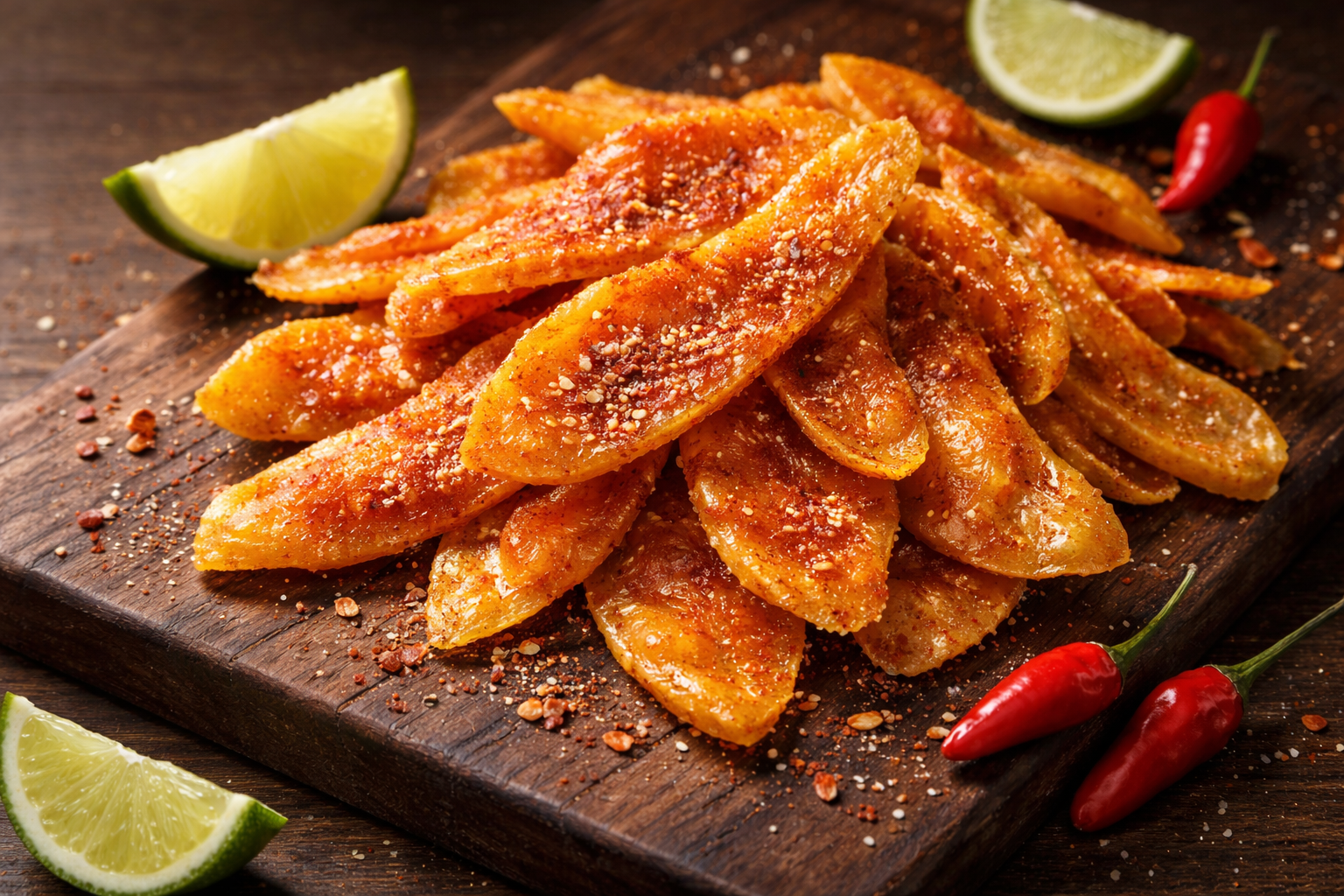
Dried spicy mango slices are exactly what they sound like — chewy, sun-ripened mango strips tossed in a fiery chili seasoning that hits sweet first, then builds into a slow, satisfying burn. At Oganivn.com, we’ve been obsessed with getting this balance right, because honestly? A bad spicy mango snack is a tragedy. Too sweet and it tastes like candy. Too hot and you lose the mango entirely. The goal is that perfect middle ground — and that’s what this guide is all about.
What makes dried spicy mango slices different from regular dried mango
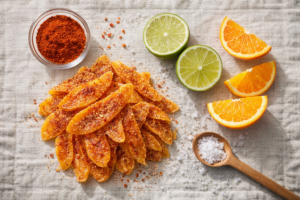
Most people discover spicy mango by accident. They grab a bag expecting the usual tropical sweetness, bite in, and suddenly — hello, chili. From that moment, plain dried mango rarely satisfies the same way again.
The difference comes down to layering. Regular dried mango is one-dimensional: sweet, chewy, done. Dried spicy mango slices add chili powder (sometimes chili lime), salt, and occasionally a touch of cane sugar to amplify the mango’s natural flavor, not cover it. The capsaicin in chili actually enhances your taste receptors, making the mango taste more intensely like mango. It’s a bit of culinary science that snack lovers discovered long before nutritionists wrote papers about it.
At Oganivn.com, our spicy mango starts with ripe, fleshy mango varieties — the kind with low fiber and high natural sugar — dried slowly to preserve that deep, jammy character before the seasoning goes on.
The nutrition inside dried spicy mango slices (it’s better than you think)
Here’s something most snack brands won’t tell you upfront: the chili in your mango isn’t just flavor. It’s actually pulling nutritional weight alongside the fruit itself.
What mango brings to the table
Mango is a genuinely impressive fruit nutritionally. Even after drying, it remains a meaningful source of vitamin C, vitamin A (from beta-carotene), and dietary fiber. A standard 40g serving of dried mango delivers roughly 3–4g of fiber, which supports digestion — useful for anyone who snacks frequently through a work-from-home day or long transit. Iron content is modest but present, which is why several brands call it out specifically.
The natural sugars in mango concentrate significantly during drying, so portion awareness matters. That said, when you’re eating dried spicy mango slices instead of chips or processed crackers, you’re making a trade that tends to work in your favor.
What chili and lime add
Chili powder — the kind used in properly made chili mango seasoning — contains capsaicin, which research has linked to improved metabolism and appetite regulation. Lime (or lime powder) adds a bright acidity that both enhances flavor perception and contributes a small amount of vitamin C. Salt ties everything together and, in reasonable quantities, is not the villain it’s made out to be in a balanced diet.
| Nutrient | Dried Mango (per 40g) | Notable Benefit |
|---|---|---|
| Vitamin C | ~15–20% DV | Immune support |
| Vitamin A | ~10% DV | Skin & vision |
| Dietary Fiber | ~3–4g | Digestive health |
| Iron | ~4% DV | Energy metabolism |
| Capsaicin (from chili) | Variable | Metabolism boost |
How to pick quality dried spicy mango slices worth buying
Walk down any import snack aisle and you’ll find five different versions. Some are legitimately good. Others are mostly sugar with food coloring doing the heavy lifting. Here’s how Oganivn.com recommends reading a label before you commit.
Check the mango first, seasoning second
The mango variety matters. Kent, Ataulfo, and Nam Dok Mai mangoes all dry differently. Kent (common in Mexican-origin products) has a rich, fudgy sweetness. Vietnamese mango varieties tend to be more fibrous with a sharper, slightly sour note — which actually pairs beautifully with chili because the contrast is more dramatic.
Look for products where mango is listed as the first ingredient. If sugar appears before mango, the product is essentially a candy with mango flavor, not a dried mango with seasoning.
Watch the additive list
Some brands rely on artificial coloring — FD&C Sunset Yellow #6 appears in at least one major commercial product’s ingredient list, which is worth knowing if you’re buying for kids or for someone with dye sensitivities. At Oganivn.com, we keep the ingredient list clean: mango, chili, salt, lime. That’s the standard we hold ourselves to.
Texture as a quality signal
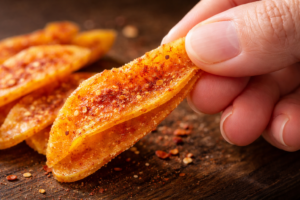
Good dried spicy mango slices should be pliable and slightly sticky — not hard, not wet. If slices crumble when you bend them, they’ve been over-dried or stored poorly. If they feel wet and soft, the moisture content is too high, which shortens shelf life and can affect safety over time.
How Oganivn.com crafts dried spicy mango slices from Vietnamese fruit
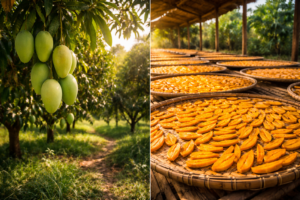
We’re based in Vietnam, and that’s not incidental to the product — it’s the whole point. Vietnam is one of the world’s top mango-producing countries, with growing regions in Đồng Tháp, An Giang, and Khánh Hòa that produce fruit with a flavor profile you don’t get from Mexican or Thai imports. Higher acidity, more aromatic, with that signature slight tartness in the skin-adjacent flesh.
Our drying process is low-temperature and slow — closer to traditional sun-drying methods than industrial dehydration. This preserves more of the volatile aroma compounds that give mango its distinctive smell. When you open a bag of our dried spicy mango slices, the smell hits before the taste does. That’s intentional.
The chili seasoning is applied after drying, not before, which means the spice sits on the surface and builds gradually rather than permeating the fruit. It’s a textural and flavor choice that we think makes for a more interesting eating experience — you get the mango pure for the first half-second, then the heat builds. Not everyone agrees with this approach, but we stand by it.
Frequently asked questions
Are dried spicy mango slices healthy? Yes, in reasonable portions. They provide fiber, vitamins A and C, and the chili adds capsaicin with documented metabolic benefits. The main consideration is calorie density — dried fruit is more concentrated than fresh, so a 40–50g serving is typically appropriate.
How long do dried spicy mango slices last? Properly sealed, most dried spicy mango products last 6–12 months. Once opened, keep them in an airtight container and consume within 2–4 weeks for best texture and flavor. Humidity is the enemy — in tropical climates like Vietnam, a sealed container in a cool spot is essential.
Can children eat spicy dried mango? The mango itself is great for kids. The spice level is the variable. Oganivn.com offers a mild chili version that delivers flavor without significant heat — suitable for older children. For young kids under 5, we’d recommend plain dried mango instead.
What’s the difference between chili mango and chili lime mango? Chili mango uses chili powder and salt. Chili lime adds lime juice or lime powder, which introduces an acidic brightness and a slightly sour aftertaste. Both are excellent — lime version tends to be more refreshing, chili-only version lets the mango sweetness come through more cleanly.
Do Oganivn.com products contain artificial colors or preservatives? No. Our dried spicy mango slices use no artificial coloring, no preservatives beyond the natural acidity of the fruit and lime, and no added MSG. The ingredient list is short by design.
Why dried spicy mango slices deserve a spot in your snack rotation
If you’ve been sleeping on dried spicy mango slices as a serious snack option, this is your sign to reconsider. The combination of natural mango sweetness, chili heat, and chewy texture hits a craving that most snacks just can’t reach — satisfying without being heavy, flavorful without being artificial.
At Oganivn.com, we put real thought into sourcing, drying, and seasoning every batch. Vietnamese-grown mango, clean ingredients, and a spice balance that respects the fruit rather than drowning it. Whether you’re snacking through a work session, packing for travel, or just want something with actual flavor in the pantry, our spicy mango is worth trying.
Browse the full range of dried spicy mango products at Oganivn.com — and if you have questions about sourcing, ingredients, or bulk orders, reach out directly. We’re always happy to talk mango.
Read more:
- Dried Red Dragon Fruit vs Fresh: Color, Nutrition & When to Use Each
- Dried Spicy Mango Slices: Bold Flavor, Real Nutrition
- Sweet Dried Fruits: Nature’s Candy That’s Actually Good for You
- Red Dragon Fruit Dried: Your Complete Buying Guide
- Dried Mango Fibre Content: What You Need to Know