


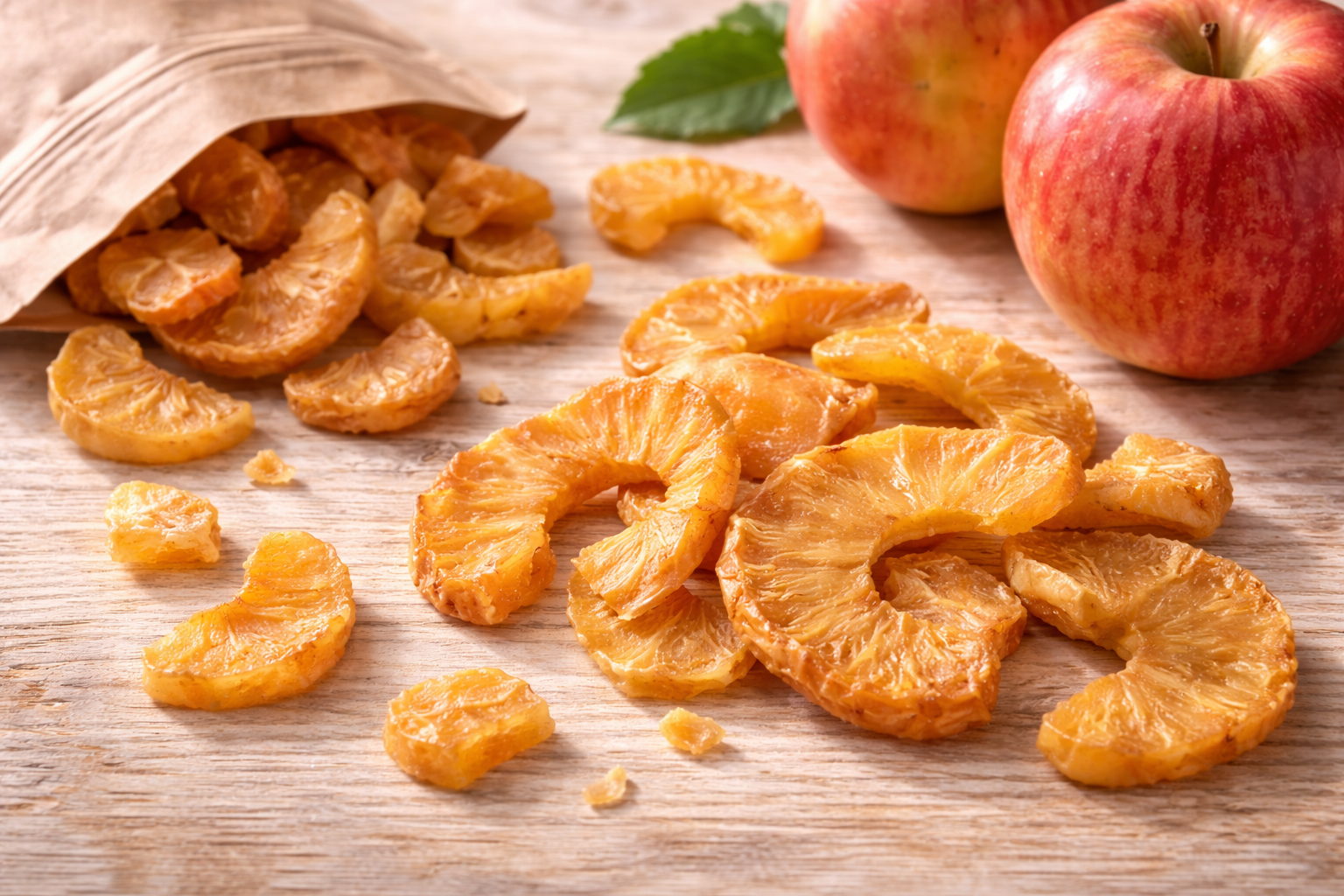
Soft dried apples hit that rare sweet spot — genuinely sweet, satisfyingly chewy, and clean enough that you don’t need to feel guilty about reaching in for another piece. At Ogani vn, we’ve seen customers come back for this product more consistently than almost anything else we carry, and honestly, it makes complete sense once you try them.
What makes soft dried apples different from regular dried fruit
Most dried fruit falls into one of two camps: rock-hard and leathery, or so sugar-coated it might as well be candy. Soft dried apples occupy a different category entirely. The texture is tender and pliable — closer to a thick fruit leather than a crunchy chip — while the flavor stays bright and natural because no added sugar is needed to make them enjoyable.
The difference comes down to how the apples are processed. Slow, low-temperature dehydration preserves the natural fruit sugars, the cell structure, and most importantly, the moisture balance. You lose enough water to concentrate the flavor and extend shelf life, but not so much that the fruit turns brittle. Think of it less like drying and more like slow-coaxing the apple into its best possible version of itself.
What you get at the end is a chewy texture with a natural sweetness, a faint tartness depending on the apple variety, and none of the artificial aftertaste that cheaper brands rely on.
Soft dried apples nutrition: what actually holds up after drying
Here’s something that surprises a lot of people: the dehydration process doesn’t destroy as many nutrients as you’d expect. Fiber stays almost entirely intact. Polyphenols and antioxidants — the compounds that give apples their reputation as a genuinely useful fruit — survive surprisingly well at low temperatures.
What changes is the caloric density. Because water is removed, the natural sugars in the apple are more concentrated per gram. This doesn’t make soft dried apples unhealthy, but it does mean portion awareness matters more than with fresh fruit.
| Nutrient | Per 40g serving (approx) |
|---|---|
| Calories | ~120 kcal |
| Dietary fiber | ~2.5g |
| Natural sugars | ~25g |
| Vitamin C | ~5% DV |
| Potassium | ~3% DV |
| Fat | 0g |
| Sodium | Low (under 10mg) |
At Oganivn, our soft dried apples contain no added sugar, no sulfites, and no preservatives. What you taste is just apple — nothing performed about it.
How to choose quality soft dried apples
Not all products labelled “soft dried apples” deliver the same experience, and it’s worth knowing what to look for before you buy.
Check the ingredient list first
The ingredient list should contain one item: apples. Maybe two if citric acid is used to prevent browning — that’s a legitimate and harmless process. The moment you see added sugar, glucose syrup, artificial flavoring, or sulfur dioxide high up on the list, the product is trying to compensate for something. Usually low-quality fruit or aggressive drying that strips flavor.
Color tells you something real
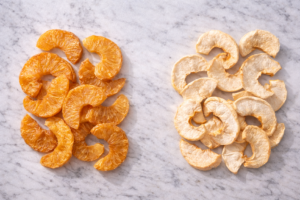
Natural soft dried apples are golden-brown to amber in color. If the product is unnaturally pale or almost white, sulfite preservatives are almost certainly involved. A warm, deep golden color typically signals cleaner processing and better-quality source fruit.
Texture should be forgiving, not stiff
If you can bend a slice without it cracking, you’re in the right zone. Good soft dried apples have give — pliable without being wet or sticky. Stiff or brittle slices usually mean over-drying, which concentrates sugars harshly and kills the nuanced fruit flavor you’re actually after.
Apple variety matters more than most brands admit
Fuji and Gala apples produce a naturally sweeter dried product. Granny Smith or Jonagold varieties tend toward a more complex tart-sweet balance. At Ogani vn, we select varieties specifically for their sugar-acid ratio after drying, not just their fresh flavor profile — because those are genuinely different things.
Creative ways to eat soft dried apples beyond snacking straight
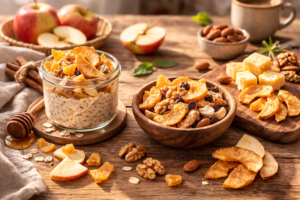
Eating them straight from the bag is obviously valid — that’s how most people go through a pack in a single sitting without realizing it. But soft dried apples are quietly versatile in ways worth knowing about.
Chop them roughly and add to overnight oats or yogurt the night before. By morning they’ve absorbed a little moisture and plumped up slightly, adding texture and natural sweetness without any syrup. It’s a small upgrade that makes breakfast feel considered rather than assembled.
They work beautifully in trail mixes, especially paired with walnuts or cashews and a handful of dark chocolate chips. The contrast between the chewy apple and the crunch of nuts is genuinely satisfying in a way that uniform textures aren’t.
Bakers have been using rehydrated dried apples in muffins, quick breads, and apple cakes for decades — and for good reason. Soak them in warm water or apple juice for 20 minutes, and they behave almost identically to fresh apple pieces, but with more concentrated flavor. The resulting baked goods taste more intensely of apple without needing extra sugar.
For something savory — yes, savory — try thin slices on a cheese board alongside sharp aged cheddar or a creamy blue cheese. The fruit’s natural acidity cuts through fat beautifully. It’s one of those combinations that sounds slightly odd until you try it and then immediately wonder why you weren’t doing this before.
Storing soft dried apples to keep that chewy texture longer
Chewy texture is the whole point, so protecting it during storage actually matters. The enemy of soft dried apples is humidity — ambient moisture gets absorbed back into the fruit and creates a clammy, over-soft texture that’s nothing like what you opened the bag expecting.
- Keep them in an airtight container once opened, ideally with a small food-safe silica packet if you live somewhere humid
- Room temperature storage is fine for up to 2–3 weeks; refrigeration extends this to around 2 months
- Freezing is genuinely effective for longer storage — defrost at room temperature and the texture recovers reasonably well
- Avoid storing near the stove, dishwasher, or any appliance that generates heat and steam
At Ogani vn, our packaging uses a resealable zip closure specifically because we know most people aren’t going through a full bag in one sitting. Small detail, but it matters more than it looks.
Frequently asked questions about soft dried apples
Are soft dried apples the same as apple chips? No — apple chips are sliced thin and fully dehydrated until crispy, similar to a chip texture. Soft dried apples are dehydrated at a lower temperature for less time, preserving more moisture and producing a chewy, pliable texture closer to fruit leather.
Do soft dried apples have added sugar? Quality products don’t need added sugar. The natural sugars in apple concentrate during drying, providing plenty of sweetness on their own. Always check the ingredient label — single-ingredient products are your clearest signal of quality.
Are soft dried apples good for kids? They’re a genuinely solid kids’ snack — no choking risk of hard chips, natural sweetness that appeals to younger palates, and none of the artificial dyes or additives in most packaged snacks. Portion size still matters given the concentrated sugar content, but as a snack option they’re far better than most alternatives.
How are soft dried apples made without preservatives? The dehydration process itself is the preservation mechanism — removing water inhibits microbial growth without any chemical assistance. Some producers add a brief citric acid soak to prevent browning, which is harmless and purely cosmetic. True preservative-free drying simply requires good temperature control and clean processing.
Can I make soft dried apples at home? Yes — a home dehydrator at 57–63°C (135–145°F) for 6–10 hours produces a chewy result depending on apple thickness and variety. Slices between 6–8mm thick tend to hit the soft-chewy texture without drying out fully. The challenge at home is consistency; commercial drying achieves more even results across a batch.
Your next bag of soft dried apples is waiting at Ogani vn
Soft dried apples are the kind of snack that doesn’t need a pitch — they earn repeat purchases by tasting genuinely good and delivering something honest: real fruit, real texture, no noise. Whether you’re stocking your desk drawer, building out a hiking pack, or just trying to get away from the sugar trap of most packaged snacks, this is a product that actually delivers on what it promises.
At Ogani vn, we take sourcing seriously — because the quality of the source apple determines everything that follows, and no amount of clever processing fixes mediocre fruit. Browse our soft dried apple range on Oganivn.com and see why this is consistently one of our most reordered products. Your first bag will tell you everything you need to know.
Read more:
- Dried Red Dragon Fruit vs Fresh: Color, Nutrition & When to Use Each
- Red Dragon Fruit Dried: Your Complete Buying Guide
- Dried Mango Fibre Content: What You Need to Know
- Dried Mango Shelf Life: How Long Does It Really Last?
- Soft Dried Apples: Chewy, Natural Snack You’ll Love