


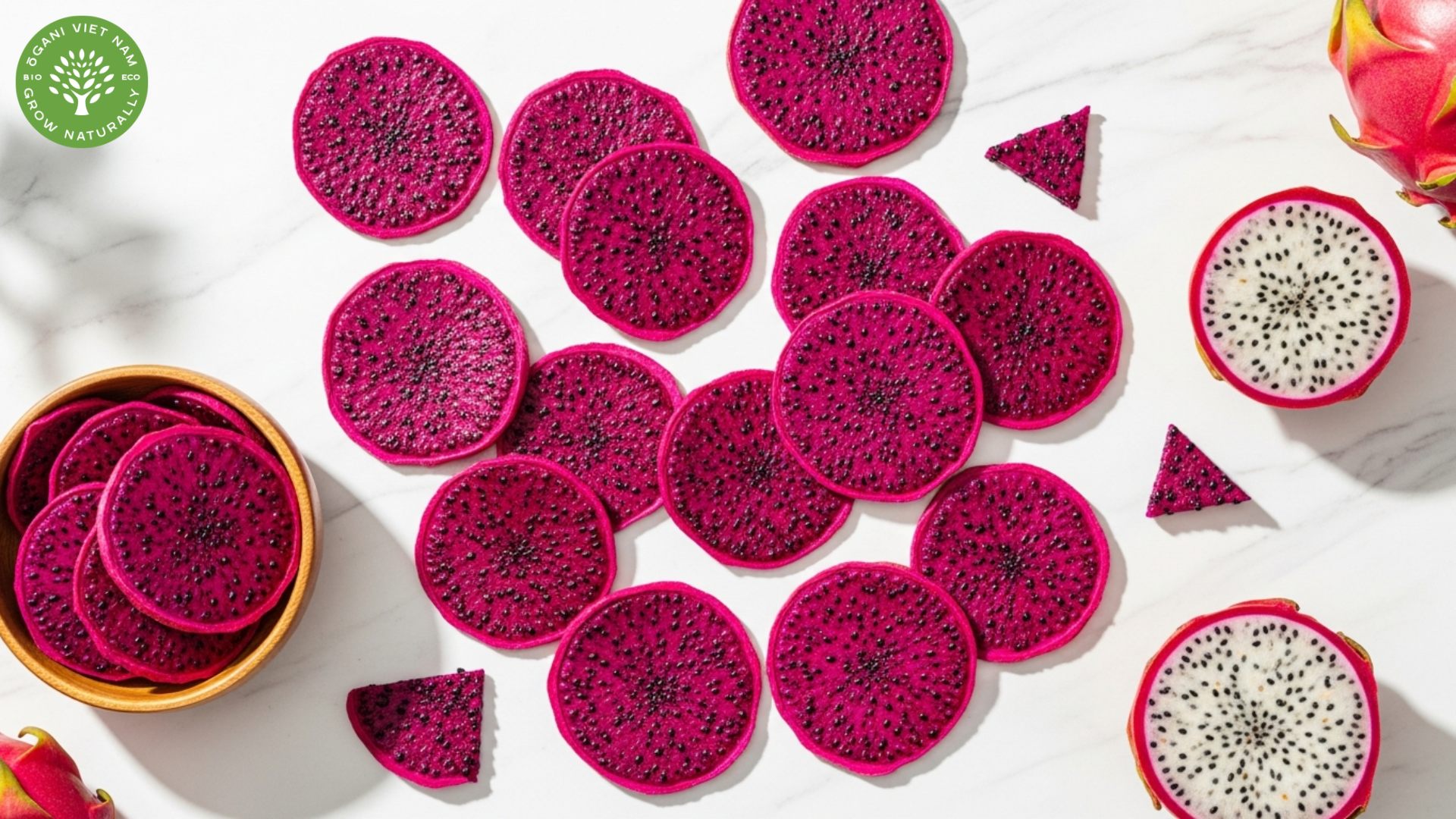
Picture this: you’re standing in your kitchen, staring at a gorgeous hot pink dragon fruit that’s about to go bad. Or maybe you just discovered these vibrant dried slices at a specialty store and wondered what the hype is all about. Either way, you’re in the right place. At Ogani VN, we’ve been working with dehydrated dragon fruit for years, and honestly? It’s become one of our absolute favorite ways to preserve this stunning tropical gem.
Dehydrated dragon fruit (also called pitaya) is simply fresh dragon fruit that’s had its water content removed through a drying process – usually in a food dehydrator or oven. What you’re left with are these incredible chewy-crisp slices that concentrate all the natural sweetness and nutrients into a portable, shelf-stable snack. Think of it like nature’s candy, but without any of the guilt.
Why dehydrated dragon fruit is worth your attention

Let’s be real – fresh dragon fruit is already pretty amazing. But here’s the thing: it’s got about 90% water content, which means it goes bad quickly and doesn’t travel well. When we dehydrate it, we’re essentially creating a time capsule of flavor that lasts for months.
The dehydration process transforms the mild, slightly sweet taste of fresh pitaya into something more intense and candy-like. The texture shifts from watery-crisp to pleasantly chewy, similar to dried mango but with its own unique character. And because we’re removing water rather than adding anything, you get pure fruit – no added sugars, no preservatives, just concentrated dragon fruit goodness.
We’ve noticed that dried dragon fruit slices maintain that stunning pink color (especially from red-fleshed varieties) which makes them absolutely gorgeous for garnishing cocktails, decorating desserts, or just making your snack game Instagram-worthy. The white-fleshed variety gives you pale, almost translucent slices with those distinctive black seeds still visible throughout.
Here’s what really sold us on dehydrated dragon fruit: one pound of fresh fruit yields only about 1.5-2 ounces dried. That’s a lot of concentration, which means all those antioxidants, fiber, and vitamins get packed into every bite.
How to make dehydrated dragon fruit at home

Making your own dried dragon fruit is surprisingly straightforward, though it does require some patience. We’ve dehydrated hundreds of pounds over the years, and we’ve learned a few tricks that make the difference between mediocre and magnificent results.
Selecting and preparing your dragon fruit
Start with ripe but firm dragon fruit. You want fruit that gives slightly when pressed but isn’t mushy. Overripe fruit will turn into a sticky mess in your dehydrator, while underripe fruit lacks that sweet flavor you’re after. We usually buy ours when they’re on sale and slightly underripe, then let them sit on the counter for 2-3 days.
Wash the exterior thoroughly – even though you’re not eating the skin, you’ll be handling it. Slice off both ends, then run a knife down the side to peel away that leathery pink or yellow skin. Some people like to scoop out the flesh with a spoon, which works too.
Now here’s where technique matters: slice your dragon fruit into uniform pieces about 1/4 inch thick. Consistency is key because thicker pieces take forever to dry while thin ones can burn or become brittle. We learned this the hard way after ruining an entire batch with uneven cuts.
The dehydration process
Arrange your slices on dehydrator trays in a single layer without overlapping. Air needs to circulate around each piece. Set your dehydrator to 135°F (57°C) – this is the sweet spot that preserves nutrients while removing moisture efficiently.
The drying time typically runs 8-12 hours, but this varies wildly depending on humidity, slice thickness, and your specific dehydrator model. Red-fleshed dragon fruit often takes slightly longer because of its higher sugar content. We usually check around the 8-hour mark and then every hour after that.
How do you know when they’re done? Properly dehydrated dragon fruit should be leathery and pliable, not wet or sticky. When you bend a slice, it shouldn’t break immediately (that means it’s overdone) or feel damp (underdone). There should be no visible moisture when you squeeze it. Some people prefer a crispier texture and dry theirs longer – totally your call.
If you don’t have a dehydrator, you can use your oven set to its lowest temperature (usually around 170°F) with the door cracked open. This takes longer and uses more energy, but it works. Just rotate your baking sheets every couple hours for even drying.
Creative ways to enjoy dehydrated dragon fruit

This is where things get fun. Once you’ve got a stash of dried pitaya slices, the possibilities multiply. At Ogani VN, we’ve experimented with dozens of applications, and customers keep surprising us with new ideas.
The most obvious use is simply eating them as a healthy snack. They’re naturally sweet with a subtle flavor that’s somewhere between kiwi and pear. Pack them in your gym bag, keep some in your desk drawer, or toss them in your kids’ lunchboxes. The chewy texture makes them satisfying in a way that crispy dried fruits aren’t.
In the beverage world, dehydrated dragon fruit has become the garnish of choice for trendy cocktails and mocktails. Those vibrant pink wheels look absolutely stunning floating in a gin and tonic or perched on the rim of a tropical smoothie. They also work beautifully for infusing water – just drop a few slices in your water bottle and let them rehydrate slightly while adding subtle flavor and color.
Bakers have embraced dried dragon fruit slices as both decoration and ingredient. Chop them up and fold into muffin batter, blend them into powder for natural food coloring, or use whole slices to top cakes and cupcakes. We’ve seen them used in homemade granola bars, trail mix, and even as a creative pizza topping for dessert pizzas.
Here’s a use we didn’t expect but absolutely love: craft projects. The slices are sturdy enough to use in resin jewelry, candle decoration, or as elements in handmade soap. Teachers have used them for kids’ art projects. The naturally vibrant color holds up well, making them popular with crafters.
Nutritional benefits of dehydrated dragon fruit and storage tips
Let’s talk about what’s actually in these little pink powerhouses. Fresh dragon fruit is already loaded with vitamin C, antioxidants, fiber, and B vitamins. When you dehydrate it, those nutrients become concentrated (though you do lose some vitamin C during the drying process – that’s just chemistry).
A one-ounce serving of dried dragon fruit contains roughly 90-100 calories, mostly from natural fruit sugars. You’re getting about 2-3 grams of fiber per serving, plus iron, magnesium, and those beneficial antioxidants called betacyanins that give red dragon fruit its color. Some studies suggest these compounds have anti-inflammatory properties, though we always recommend taking health claims with a grain of salt.
What makes dehydrated dragon fruit particularly appealing is what it doesn’t have: no fat, no cholesterol, no sodium. If you buy it commercially or make it at home without additives, it’s genuinely just fruit. Always check labels on store-bought versions though – some manufacturers add sugar or sulfur dioxide as preservatives.
Storage is straightforward but important. Keep your dried slices in an airtight container away from light, heat, and moisture. We use vacuum-sealed bags or mason jars with oxygen absorbers for long-term storage. Properly stored, they’ll last 6-12 months easily, though ours rarely make it past a few weeks because they’re too tempting.
If you notice any moisture forming inside your container, your fruit wasn’t dried thoroughly enough. You can pop them back in the dehydrator for another hour or two. Mold is rare but possible if moisture gets in, so always inspect before eating if they’ve been stored for a while.
Frequently Asked Questions
Does dehydrated dragon fruit taste the same as fresh?
Not quite. The flavor becomes more concentrated and sweeter when dried, losing some of the subtle freshness of the raw fruit. The texture is completely different – chewy rather than crisp. Some people actually prefer the dried version because it’s less bland.
Can I rehydrate dried dragon fruit?
Yes! Soak the slices in warm water or fruit juice for 20-30 minutes and they’ll plump back up. They won’t be exactly like fresh, but they work great in smoothies or as a topping for oatmeal and yogurt this way.
Is it worth buying a dehydrator just for dragon fruit?
If you only plan to dehydrate dragon fruit occasionally, probably not. But if you’re into food preservation generally – drying herbs, making jerky, preserving seasonal fruits – then absolutely. We use ours for everything from mango to mushrooms.
Why is commercial dried dragon fruit so expensive?
Remember that 5:1 ratio we mentioned? It takes a lot of fresh fruit to produce a small amount of dried product. Plus, dragon fruit itself isn’t cheap, and the dehydration process requires time and equipment. Prices typically range from $15-30 per pound for quality organic dried slices.
Ready to experience dehydrated dragon fruit?
Dehydrated dragon fruit offers a brilliant solution for anyone who loves this exotic fruit but struggles with its short shelf life or limited availability. Whether you’re making your own at home with a food dehydrator or buying premium dried slices, you’re getting a versatile ingredient that works as a snack, garnish, baking ingredient, or even craft supply.
At Ogani VN, we believe in making exotic superfoods accessible and practical. Dragon fruit shouldn’t be something you only enjoy on vacation – it should be part of your everyday routine. The dried form makes that possible without sacrificing quality or nutrition.
Ready to explore the world of dried tropical fruits? Browse our selection of premium dehydrated dragon fruit slices and other exotic dried fruits. We source directly from sustainable farms and dry our products in small batches to ensure maximum quality and flavor. Shop now or contact our team for bulk orders and wholesale inquiries – we’d love to help you discover your new favorite healthy snack.
Read more:
- Dehydrated Dragon Fruit: Your Complete Guide to This Exotic Superfood Snack
- Dried Red Dragon Fruit vs Fresh: Color, Nutrition & When to Use Each
- Red Dragon Fruit Dried: Your Complete Buying Guide
- Dried Mango Fibre Content: What You Need to Know
- Dried Mango Shelf Life: How Long Does It Really Last?