


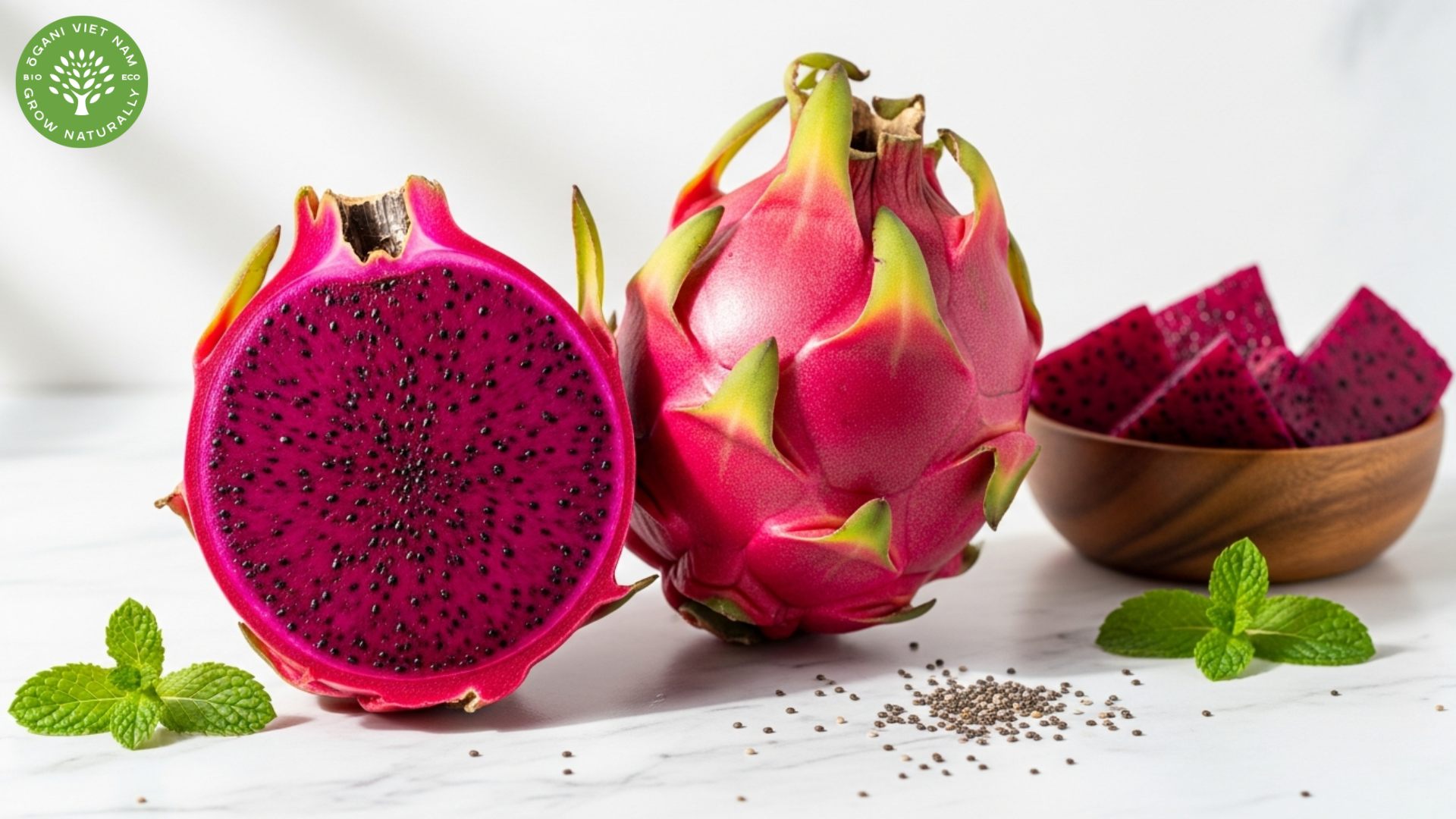
When you bite into that vibrant magenta flesh of a red dragon fruit, you’re not just enjoying an Instagram-worthy snack—you’re getting a serious nutritional punch. With only 60 calories per 100 grams, this tropical beauty delivers vitamin C, iron, magnesium, and powerful antioxidants called betalains that give it that stunning crimson color. Unlike its white-fleshed cousin, red dragon fruit packs significantly higher levels of antioxidants and minerals, making it a genuine superfood worth your attention.
Understanding red dragon fruit nutrition basics

At Ogani VN, we’ve watched red dragon fruit (or pitaya, as some call it) transform from an exotic curiosity into a mainstream health staple. And honestly? The hype is justified.
The red dragon fruit nutrition profile stands out because of what it contains and what it doesn’t. You’re getting essential vitamins and minerals without the baggage of fat, sodium, or artificial additives. A typical 100-gram serving—roughly half a medium fruit—gives you approximately 60 calories, 1.2 grams of protein, 13 grams of carbohydrates (mostly natural sugars), and about 3 grams of fiber.
But here’s where it gets interesting: that deep red color isn’t just for show. The pigment comes from betalains, a class of antioxidants rarely found in other fruits. While blueberries get all the antioxidant glory, red dragon fruit quietly delivers comparable (sometimes superior) antioxidant capacity thanks to these unique compounds.
The mineral content deserves attention too. You’ll find roughly 68 milligrams of magnesium per serving—about as much as half a cup of cooked kale—plus 206 milligrams of potassium, 27 milligrams of phosphorus, and 0.5 milligrams of iron. The vitamin C content ranges from 3 to 9 milligrams depending on ripeness and variety.
Key nutrients at a glance
Here’s what you’re actually getting in a 100-gram serving of red dragon fruit:
- Calories: 60
- Protein: 1.2g
- Carbohydrates: 13g (including natural sugars)
- Fiber: 3g
- Fat: 0.14g (essentially fat-free)
- Magnesium: 68mg
- Potassium: 206mg
- Vitamin C: 3-9mg
- Iron: 0.5mg
- Phosphorus: 27mg
Red dragon fruit nutrition vs white variety
Most people don’t realize that not all dragon fruits are created equal nutritionally. The color difference between red and white varieties isn’t just aesthetic—it represents a fundamental nutritional divide.
Red-fleshed dragon fruit contains significantly higher concentrations of betalains, particularly betacyanin. These are the same antioxidant compounds found in beets and prickly pear, known for their anti-inflammatory and cell-protective properties. White dragon fruit? It has some antioxidants, sure, but nowhere near the levels you’ll find in the red variety.
Research published in the Journal of Food Science found that red dragon fruit exhibits up to 10 times more antioxidant activity than white dragon fruit. That’s not a typo—ten times. The betalain content directly correlates with this increased antioxidant capacity, offering stronger protection against oxidative stress that contributes to aging, inflammation, and chronic disease.
The fiber content also skews higher in red varieties, typically ranging from 3-5 grams per 100 grams compared to 2-3 grams in white dragon fruit. More fiber means better digestive health, improved blood sugar control, and enhanced satiety—all from choosing the red option at your local market or from Ogani VN’s selection.
Iron and phosphorus levels tend to be marginally higher in red dragon fruit as well, though both varieties deliver similar amounts of magnesium and potassium. If you’re tracking micronutrients for athletic performance or general wellness, that extra iron can make a meaningful difference, especially for those prone to anemia.
Health benefits of red dragon fruit nutrition

The nutritional profile translates into tangible health advantages. Let’s talk about what these nutrients actually do in your body.
Immune system support comes primarily from the vitamin C and iron content. While 3-9 milligrams of vitamin C might seem modest compared to an orange, it’s a solid contribution to your daily needs, especially when paired with iron that helps prevent anemia and supports oxygen transport throughout your body.
Cardiovascular health benefits from the potassium-to-sodium ratio. With 206 milligrams of potassium and essentially zero sodium, red dragon fruit helps maintain healthy blood pressure levels. The betalains also show promise in reducing LDL cholesterol oxidation, though more research is needed to confirm these effects in humans.
Digestive wellness improves thanks to that 3-gram fiber content. It’s mostly insoluble fiber, which adds bulk to stool and promotes regular bowel movements. The small edible seeds scattered throughout the flesh also contain omega-3 and omega-6 fatty acids, adding another dimension to digestive benefits.
Blood sugar regulation might surprise you. Despite containing natural sugars, the fiber content helps slow sugar absorption, preventing sharp spikes in blood glucose. The magnesium plays a role here too, as this mineral is crucial for insulin function and glucose metabolism.
Antioxidant protection is where red dragon fruit really shines. Those betalains scavenge free radicals, reducing cellular damage that accumulates over time. Think of it as a maintenance crew constantly repairing wear and tear at the microscopic level. The flavonoids and phenolic acids add additional antioxidant layers, creating a comprehensive protective effect.
We’ve heard from customers who incorporated red dragon fruit into their daily routine and noticed improvements in energy levels, skin clarity, and digestive regularity. One customer told us she replaced her afternoon sugary snack with half a red dragon fruit and felt noticeably less sluggish by 3 PM. That’s the fiber and balanced natural sugars working together.
Maximizing red dragon fruit nutrition in your diet

Knowing the nutrition is one thing; actually getting those benefits is another. Here’s how we recommend enjoying red dragon fruit to maximize its nutritional value.
Eat it fresh and raw. Heat can degrade betalains and vitamin C, so smoothies (using frozen fruit) or fresh fruit bowls are your best bet. At Ogani VN, we always suggest consuming dragon fruit within a day or two of cutting for peak nutrient content.
Pair with healthy fats. While dragon fruit is naturally fat-free, consuming it alongside nuts, seeds, or yogurt can enhance absorption of fat-soluble compounds and provide a more balanced snack that sustains energy longer.
Don’t skip the seeds. Those tiny black seeds are completely edible and contain beneficial fatty acids. Some people strain them out in smoothies—don’t do that. You’re discarding nutritional value.
Timing matters for athletes. The natural sugars plus magnesium make red dragon fruit an excellent post-workout snack. The quick carbs replenish glycogen while magnesium supports muscle recovery and prevents cramping.
Combine with vitamin C boosters. If you’re eating red dragon fruit for iron absorption, pair it with citrus or other vitamin C-rich foods. The vitamin C in the fruit itself helps, but combining with lemon juice or strawberries amplifies iron uptake.
One practical tip: freeze cubed red dragon fruit for smoothie bowls. The nutritional content remains largely intact, and you get that thick, creamy texture without adding ice or banana. Just blend frozen cubes with a splash of coconut water, and you have a nutrient-dense base for whatever toppings you prefer.
Frequently Asked Questions
Is red dragon fruit better than white dragon fruit nutritionally?
Yes, red dragon fruit contains significantly more antioxidants (particularly betalains), higher fiber content, and marginally more iron and phosphorus compared to white dragon fruit. The antioxidant activity can be up to 10 times greater in red varieties.
How many calories are in a whole red dragon fruit?
A medium red dragon fruit (approximately 200 grams of edible flesh) contains about 120 calories. This makes it a low-calorie, nutrient-dense option for weight management while still providing satisfying natural sweetness.
Can I eat red dragon fruit every day?
Absolutely. The red dragon fruit nutrition profile supports daily consumption. Most people can safely enjoy one fruit per day as part of a balanced diet. The fiber content supports digestive health without causing issues when consumed regularly.
Does red dragon fruit have more sugar than other fruits?
Red dragon fruit contains about 13 grams of sugar per 100 grams, which is moderate compared to other fruits. Mangoes have about 14-15g, while berries have 4-7g per 100 grams. The fiber content helps moderate blood sugar response.
What nutrients am I missing if I only eat white dragon fruit?
You’d miss out on higher concentrations of betalains (powerful antioxidants), approximately 30-40% less fiber, and slightly lower levels of iron and phosphorus. Both varieties provide good magnesium and potassium, but red dragon fruit offers superior overall nutritional density.
Start enjoying red dragon fruit nutrition today
The red dragon fruit nutrition story is compelling: low calories, high nutrients, powerful antioxidants, and zero guilt. Whether you’re seeking better immune function, digestive health, or simply want to enjoy a naturally sweet treat that actually nourishes your body, red dragon fruit delivers.
At Ogani VN, we’re committed to bringing you the freshest, highest-quality red dragon fruit available. Our fruits are carefully selected at peak ripeness to ensure maximum nutritional value and flavor. Ready to experience the difference? Browse our selection of premium Vietnamese red dragon fruit today, or contact our team for personalized recommendations on incorporating this superfood into your daily routine. Your body—and your taste buds—will thank you.
Read more:
- Red Dragon Fruit Nutrition: Complete Guide to This Superfood’s Power
- Dried Red Dragon Fruit vs Fresh: Color, Nutrition & When to Use Each
- Red Dragon Fruit Dried: Your Complete Buying Guide
- Dried Mango Fibre Content: What You Need to Know
- Dried Mango Shelf Life: How Long Does It Really Last?