


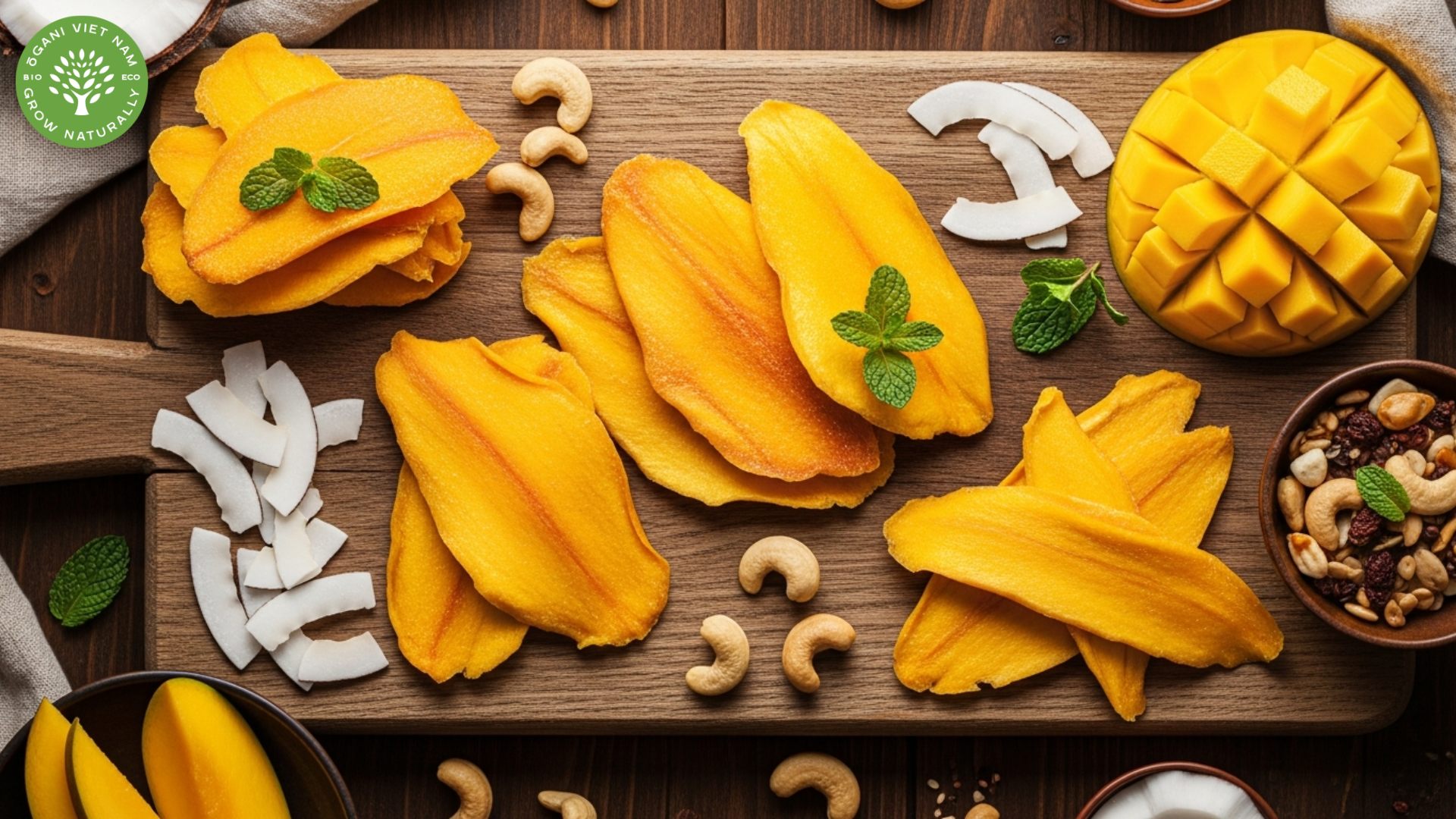
Dehydrated mango recipes range from simple snacking to gourmet cooking applications. At Ogani VN, we’ve discovered that once you master the basic dehydration process, dried mango becomes an incredibly versatile ingredient for smoothies, salads, baked goods, and even savory dishes. The key is understanding proper preparation techniques and knowing how to incorporate this naturally sweet, chewy treat into your daily meals.
You know what’s funny? Most people buy dehydrated mango thinking it’s just a standalone snack—pop it in your mouth, enjoy the sweetness, done. But here at Ogani VN, we’ve been experimenting with dried mango in our test kitchen for years, and honestly, we’ve barely scratched the surface of what you can do with it. Last month, one of our team members added chopped dehydrated mango to her morning oatmeal on a whim, and it completely transformed her breakfast routine. Sometimes the best discoveries happen by accident.
Preparing mango for dehydrated mango recipes

Before diving into recipes, let’s talk about making your own dried mango. The process is surprisingly straightforward, though it does require patience.
Start with ripe but firm mangoes—you want fruit that’s sweet but not mushy. We’ve learned the hard way that overripe mangoes turn into a sticky mess in the dehydrator. Peel your mangoes and slice them about ¼ inch thick. Some people prefer thinner slices (around ⅛ inch) for a crispier result, while thicker pieces stay chewier. There’s no wrong answer here; it’s really about personal preference.
If you’re using a food dehydrator, arrange the mango slices in a single layer on the trays, leaving at least an inch of space between pieces. This spacing is crucial—we once got impatient and crowded the trays, and the mango pieces ended up sticking together into one giant clump. Not fun to separate later.
Set your dehydrator to 135°F (or about 57°C) and let it run for 8-12 hours. The exact time depends on your slice thickness and desired texture. Check around the 8-hour mark—the mango should be pliable and slightly sticky but not wet. If you prefer chewier dried mango, pull them out earlier. For a more leather-like consistency, leave them longer.
Don’t have a dehydrator? No problem. Your oven works too, though it takes more attention. Place mango slices on a baking sheet lined with parchment paper, set your oven to its lowest temperature (usually 170°F), and prop the door open slightly with a wooden spoon. This allows moisture to escape. Flip the slices every couple hours and check frequently after the 6-hour mark.
Best dehydrated mango recipes for every meal
This is where things get interesting. Dehydrated mango isn’t just a snack—it’s an ingredient waiting to elevate your cooking.
Mango energy smoothie bowl

We developed this recipe last summer when our office was testing new product combinations. Blend one cup of frozen bananas, half a cup of chopped dried mango (soaked in warm water for 10 minutes first), a handful of spinach, and a cup of coconut milk. The rehydrated mango pieces add natural sweetness without refined sugar, and they create this amazing creamy texture that you can’t get from fresh fruit alone.
Pour into a bowl and top with granola, coconut flakes, and a few pieces of dried mango for crunch. One of our customers told us she makes this every morning now and has completely stopped buying expensive açai bowls. The soaking step is important—it softens the mango just enough to blend smoothly while retaining that concentrated tropical flavor.
Tropical trail mix with spice

Here’s our go-to afternoon snack at Ogani VN. Combine chopped dehydrated mango slices with roasted cashews, coconut chips, dark chocolate chunks, and a sprinkle of sea salt. The sweet-salty-bitter combination is addictive. We sometimes add a light dusting of Tajín (that Mexican chili-lime seasoning) for a spicy kick.
The ratio we use: 2 cups dried mango pieces, 1 cup nuts, ½ cup coconut chips, ½ cup chocolate. Store it in an airtight container, and it lasts for weeks. Perfect for hiking, road trips, or those mid-afternoon energy slumps when you need something more substantial than a regular snack.
Asian-inspired mango chicken salad
This recipe surprised us. We weren’t sure dried mango would work in savory dishes, but it absolutely does. Dice your dehydrated mango into small pieces and toss with grilled chicken strips, mixed greens, shredded cabbage, sliced bell peppers, and cilantro.
For the dressing, blend a few pieces of dried mango with rice vinegar, lime juice, fish sauce, garlic, and a touch of honey. The mango acts as both a sweetener and a thickening agent. It creates this glossy, restaurant-quality vinaigrette that clings to every leaf. We serve this at company lunches, and people always ask for the recipe.
Baked goods and breakfast additions
Chop dried mango into small chunks and fold them into muffin batter, pancake mix, or scone dough. They work like raisins but with more flavor complexity. We’ve also started adding them to homemade granola—the mango pieces get slightly toasted during baking and develop this deep caramel note that’s incredible.
One trick we discovered: rehydrate the mango pieces briefly before adding to wet batters. This prevents them from absorbing too much moisture from your dough and creating dry spots in the finished product.
Flavor variations for dehydrated mango recipes

Plain dehydrated mango is delicious, but seasoned varieties open up entirely new possibilities.
The simplest variation is a light coating of lime juice and chili powder before dehydrating. The citrus enhances the mango’s natural tanginess while the spice provides gentle heat. We make batches of this every week at Ogani VN—it’s our best-selling flavored variety.
For something different, try a sweet-spicy blend. Mix cinnamon, a tiny pinch of cayenne, and a light dusting of coconut sugar. Toss your mango slices in this mixture before dehydrating. The result tastes like tropical candy with a subtle warmth.
Savory applications benefit from herbs. Before dehydrating, brush mango slices with a thin layer of olive oil and sprinkle with fresh thyme or rosemary. These work beautifully in cheese plates or as garnishes for roasted meats. Yes, it sounds unusual, but trust us on this one.
We’ve also experimented with turmeric-ginger coating for an anti-inflammatory boost, and cardamom-vanilla for a more dessert-like flavor profile. The possibilities really are endless once you start thinking of dried mango as a canvas rather than a finished product.
Storage and shelf life tips for your ingredients

Proper storage makes the difference between dried mango that lasts months and mango that goes bad in weeks.
Once your dehydrated mango pieces have cooled completely (and this is important—never store warm fruit), transfer them to airtight containers. We use glass jars with tight-sealing lids, but quality plastic containers work too. The key is eliminating air exposure.
Store in a cool, dark place. A pantry shelf works perfectly. Properly dried and stored mango can last 6-12 months. If you live in a humid climate, consider adding a food-safe silica gel packet to each container to absorb any moisture that might sneak in.
Here’s a mistake we made early on: storing different flavored varieties in the same container. The flavors blend over time, which sounds nice in theory but actually muddles the distinct taste of each variety. Keep them separated.
If you notice any moisture developing inside your storage container, your mango wasn’t fully dehydrated. You can put it back in the dehydrator for a few hours to finish the process. Better to catch this early than discover mold later.
For long-term storage, vacuum-sealed bags work incredibly well. We’ve kept dehydrated mango in vacuum-sealed packages for over a year with no quality loss. If you’re making large batches, this method is worth the investment.
Frequently asked questions
How do I know when mango is fully dehydrated?
The fruit should be pliable and leathery, not sticky or wet. When you bend a piece, it shouldn’t crack completely (too dry) or feel damp (not dry enough). It should bend with slight resistance and have a chewy texture. At Ogani VN, we do the overnight test: leave a piece in a sealed container overnight—if condensation forms, it needs more drying time.
Can I rehydrate dried mango for cooking?
Absolutely. Soak dried mango pieces in warm water, juice, or even wine for 10-30 minutes depending on thickness. They won’t return to fresh mango texture, but they soften nicely for use in compotes, chutneys, or baked goods. We often rehydrate them partially for smoothies or fully for curry dishes.
What’s the nutritional difference between fresh and dried mango?
Dehydration concentrates both nutrients and natural sugars. Dried mango has more calories per ounce than fresh because you’re removing water weight, but it also has higher concentrations of fiber, vitamins A and C, and antioxidants. The trade-off is that you lose some vitamin C during the heating process, though much remains.
Can I dehydrate frozen mango?
Yes, but thaw it completely first and pat it very dry with paper towels. Frozen mango releases more moisture, so expect slightly longer drying times. The texture may be slightly different from fresh, but it works fine and is actually more economical when mangoes aren’t in season.
Start creating your dehydrated mango recipes today
Dehydrated mango recipes transform a simple dried fruit into a versatile kitchen staple. Whether you’re blending them into smoothies, tossing them in salads, or eating them straight from the jar, dried mango brings concentrated tropical flavor to countless dishes.
At Ogani VN, we believe the best foods are those that adapt to your lifestyle rather than requiring you to adapt to them. Dehydrated mango fits perfectly into this philosophy—it’s shelf-stable, nutrient-dense, naturally sweet, and endlessly versatile. Start with basic dehydration, experiment with our recipes, and don’t be afraid to create your own combinations.
Ready to experience premium quality dried mango? Visit Ogani VN to explore our range of organic dehydrated fruits, all processed with care to preserve maximum flavor and nutrition. Whether you’re new to dried mango or a longtime fan looking for recipe inspiration, we’re here to support your healthy snacking journey. Try our products today and discover why thousands of customers trust Ogani VN for their dried fruit needs.
Read more:
- Dry Mango Fruit: Your Complete Guide To This Sweet Superfood
- Dried Red Dragon Fruit vs Fresh: Color, Nutrition & When to Use Each
- Red Dragon Fruit Dried: Your Complete Buying Guide
- Dried Mango Fibre Content: What You Need to Know
- Dried Mango Shelf Life: How Long Does It Really Last?