


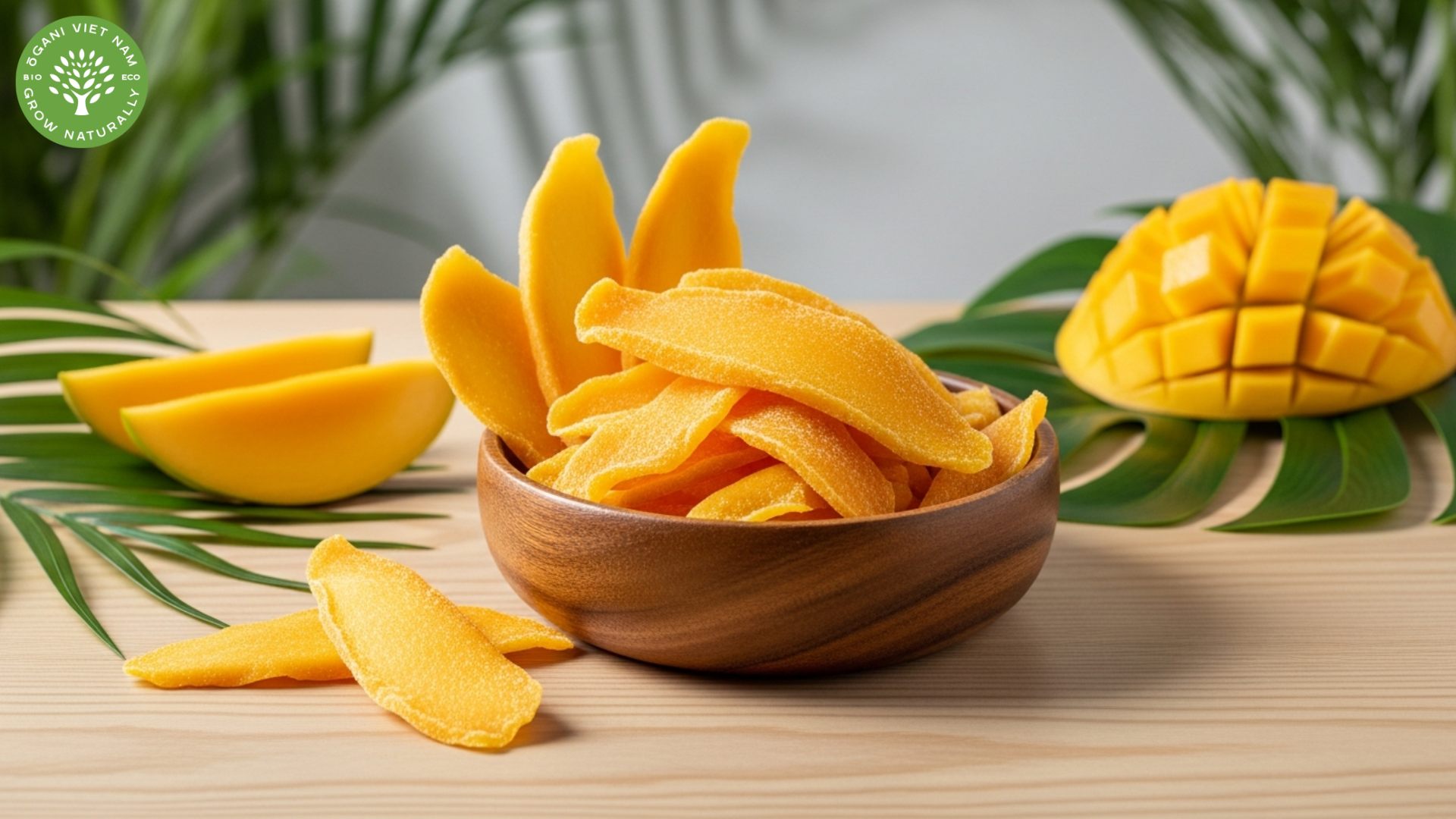
Mango flakes are thin, dried slices of ripe mango that preserve the fruit’s natural sweetness and nutritional benefits in a convenient, shelf-stable form. Whether you’re looking for a healthy snack, a natural sweetener for your breakfast bowl, or a nutritious ingredient for your recipes, these golden treats offer the tropical taste of fresh mangoes year-round without the mess or short shelf life.
What exactly are mango flakes and why should you care?

When we talk about mango flakes at Ogani VN, we’re referring to carefully selected ripe mangoes that have been sliced thin and gently dried to remove moisture while keeping their vibrant color, sweet flavor, and most importantly—their nutrients intact. Unlike those sugar-loaded candied versions you might find at gas stations, quality dried mango slices are simply fruit that’s been preserved through dehydration.
Here’s what makes them different from your typical dried fruit: the flake form means they’re thinner than standard dried mango chunks, which gives them a slightly different texture—some people love the chewier bite, while others appreciate how they reconstitute faster in liquids. Think of them as nature’s fruit chips, but way healthier.
The process matters too. Freeze-dried mango flakes use a special technique that removes water at very low temperatures, preserving more vitamins and giving them that satisfying crisp texture. Air-dried or sun-dried versions have a more traditional chewy consistency that many of us grew up loving. Both methods have their fans, and honestly, we keep both types in our pantry because they serve different purposes.
The nutritional benefits of mango flakes you should know

Let’s get real about what you’re actually eating. A standard serving of mango flakes (about 40 grams or roughly a handful) packs around 120-140 calories, which is pretty reasonable for a snack that actually satisfies your sweet tooth. But the calorie count isn’t the whole story—it’s what comes with those calories that matters.
These tropical fruit flakes are loaded with vitamin A and beta-carotene, which explains that gorgeous orange color. Your eyes, skin, and immune system will thank you. One serving can give you up to 20% of your daily vitamin A needs. Plus, you’re getting vitamin C—not as much as fresh mango since some gets lost during drying, but still a decent amount to support your immune health.
The fiber content is where dried mango really shines compared to fresh. When water is removed, the fiber becomes concentrated. You’re looking at about 2-3 grams per serving, which helps with digestion and keeps you feeling full longer. This is why we always recommend mango flakes to customers who want a snack that won’t leave them hungry 20 minutes later.
Natural sugars are present, yes—mangoes are sweet fruits after all. But these are complex fruit sugars that come packaged with fiber, not the refined stuff in candy bars. Your body processes them differently. Still, if you’re watching your sugar intake, portion control matters. We typically suggest treating them as a dessert substitute rather than eating an entire bag while binge-watching Netflix (though we’ve all been there).
How to actually use mango flakes in your daily life

The versatility of these things surprised even us when we first started stocking them. Sure, eating them straight from the bag is the obvious choice—and honestly, it’s pretty addictive. But there’s so much more you can do.
Morning routine game-changer: Toss a small handful into your yogurt, oatmeal, or smoothie bowl. The flakes soften slightly but retain some texture, adding natural sweetness without reaching for honey or sugar. We’ve had customers tell us they’ve completely replaced their breakfast cereal with Greek yogurt topped with mango flakes and nuts. The tropical essence makes your morning feel less mundane.
Baking and cooking applications: Chop them up and add to muffin batter, granola bars, or trail mix. They work surprisingly well in savory dishes too—try adding reconstituted flakes to chicken salads or rice dishes for a sweet-tart element. Some of our chef clients use them in chutneys and sauces, where they add depth and natural sweetness.
The rehydration trick: If you soak mango flakes in warm water for about 15-20 minutes, they plump back up and become softer, almost like fresh mango. This works great when you want to use them in smoothies or as a topping for desserts. The soaking liquid becomes a naturally sweet mango-infused water that you definitely shouldn’t pour down the drain—use it in cocktails, mocktails, or freeze it into ice cubes.
Travel and outdoor activities: This is where dried fruit really proves its worth. Hiking? Long flight? Road trip? Mango flakes don’t need refrigeration, won’t bruise or leak in your bag, and provide quick energy when you need it. They’re also TSA-friendly, which is more than we can say for fresh fruit.
What separates good mango flakes from the mediocre ones
Not all dried mango is created equal, and we learned this the hard way when we first started sourcing products for Ogani VN. Here’s what to look for when you’re shopping, whether from us or anywhere else.
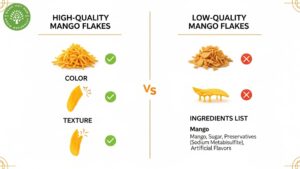
Ingredient list reality check: The ideal dried mango flakes should have exactly one ingredient—mango. That’s it. If you see added sugar, sulfites, preservatives, or anything you can’t pronounce, think twice. Good quality fruit doesn’t need extra sweetness; ripe mangoes are naturally candy-like. Some brands sneak in sugar to mask the fact that they used underripe fruit.
Color and appearance: Quality mango flakes should have a natural golden-orange hue, not an unnaturally bright yellow or deep orange that screams artificial coloring. Some slight variation in color between pieces is actually a good sign—it means they came from real fruit, not a factory formula. The flakes should look slightly translucent when held up to light.
Texture consistency: Good freeze-dried mango flakes should be crisp and shatter easily, while air-dried versions should be pliable and chewy but not sticky or overly hard. If they’re crystallized with sugar or feel greasy, that’s a red flag. The texture tells you a lot about the drying process and whether shortcuts were taken.
Origin matters: Mangoes from different regions have distinct flavor profiles. Philippine mangoes tend to be sweeter and less fibrous. Thai mangoes have that perfect balance of sweet and tart. At Ogani VN, we specifically source from regions known for quality fruit because the end product is only as good as what you start with.
Storage and shelf life: Properly dried and packaged mango flakes should last 6-12 months when stored in an airtight container away from direct sunlight and moisture. If they come in a cheap plastic bag that doesn’t reseal properly, they’ll get stale or absorb moisture quickly. We use 3-layer food-grade aluminum pouches for a reason—freshness isn’t negotiable.
Mango flakes versus fresh mango: the honest comparison
People often ask us whether they should just eat fresh mango instead. Fair question. Let’s break it down without the marketing fluff.
Convenience factor: Fresh mango is messy. There’s the peeling, the cutting, the sticky juice everywhere, and the fact that you need to eat it within a few days or it goes bad. Dried mango flakes? Grab a handful and go. No prep, no waste, no fruit flies gathering around your kitchen counter.
Nutritional trade-offs: Fresh mango wins on vitamin C content and water content (obviously). The drying process does reduce some heat-sensitive vitamins. However, mango flakes concentrate other nutrients like fiber and minerals. The calorie density is higher in dried fruit, so you need to be more mindful of portions. But you also feel satisfied with less volume.
Taste experience: This is subjective, but many people find that the concentrated sweetness of dried mango hits differently than fresh. The chewiness changes the eating experience—it’s more of a candy-like indulgence versus the juicy freshness of the fruit. We don’t think one is better; they serve different purposes and cravings.
Practical seasonality: Unless you live in a tropical region, fresh mangoes aren’t always available or affordable. When they are available, they’re often picked underripe for shipping and never develop that full flavor. Quality dried mango flakes give you consistent taste year-round.
Environmental consideration: Here’s something people don’t often think about—fresh mangoes shipped internationally have a significant carbon footprint. Dried fruit is lighter to transport and doesn’t require refrigeration during shipping or storage. Not saying dried is always better environmentally, but it’s more nuanced than it appears.
Common questions about mango flakes
Are mango flakes as healthy as fresh mango?
They retain most of the nutritional benefits with concentrated fiber and minerals, though some vitamin C is lost during drying. Quality dried mango without added sugar is definitely a healthy snack option, just watch your portions since the calories are more concentrated.
How should I store mango flakes after opening?
Keep them in an airtight container or resealable bag in a cool, dry place away from direct sunlight. Properly stored, they’ll stay fresh for several months. If you live in a humid climate, you might even refrigerate them to prevent moisture absorption.
Can people with dietary restrictions eat mango flakes?
Pure dried mango is naturally vegan, gluten-free, and dairy-free. However, always check the label because some brands add ingredients or process them in facilities that handle allergens. At Ogani VN, we clearly label all our products with allergen and dietary information.
What’s the difference between freeze-dried and regular dried mango?
Freeze-dried mango flakes are crispy and airy because moisture is removed through sublimation at very low temperatures, preserving more nutrients and creating a different texture. Regular dried mango is chewier and often sweeter, processed through air-drying or dehydration methods.
Can I give mango flakes to children?
Absolutely! They make a great alternative to candy and processed snacks. Just supervise young children since the chewy texture could be a choking hazard for toddlers. Start with small pieces and make sure they chew thoroughly.
Why mango flakes deserve a spot in your pantry

Mango flakes deserve a permanent spot in your pantry—not as a guilty pleasure, but as a genuinely nutritious snack that happens to taste amazing. Whether you’re reaching for freeze-dried mango for that satisfying crunch or traditional dried slices for their chewy sweetness, you’re choosing a snack that your body will actually use, not just process and forget.
At Ogani VN, we’ve seen firsthand how switching from processed snacks to quality dried fruit changes people’s relationship with healthy eating. It doesn’t have to be boring or feel like punishment. Sometimes the best choice is also the most delicious one.
Ready to experience the difference that quality makes? Browse our selection of premium mango flakes and other dried tropical fruit at Ogani VN. We source directly from trusted farms, test everything ourselves (someone has to do it), and only stock products we’d feed our own families. Use code MANGO15 for 15% off your first order—your taste buds and your body will thank you.
Read more:
- Baking With Dried Red Dragon Fruit: Breads, Muffins & Cookies
- Dried Red Dragon Fruit vs Fresh: Color, Nutrition & When to Use Each
- Red Dragon Fruit Dried: Your Complete Buying Guide
- Dried Mango Fibre Content: What You Need to Know
- Mango Flakes: Nature’s Sweet & Healthy Tropical Snack