


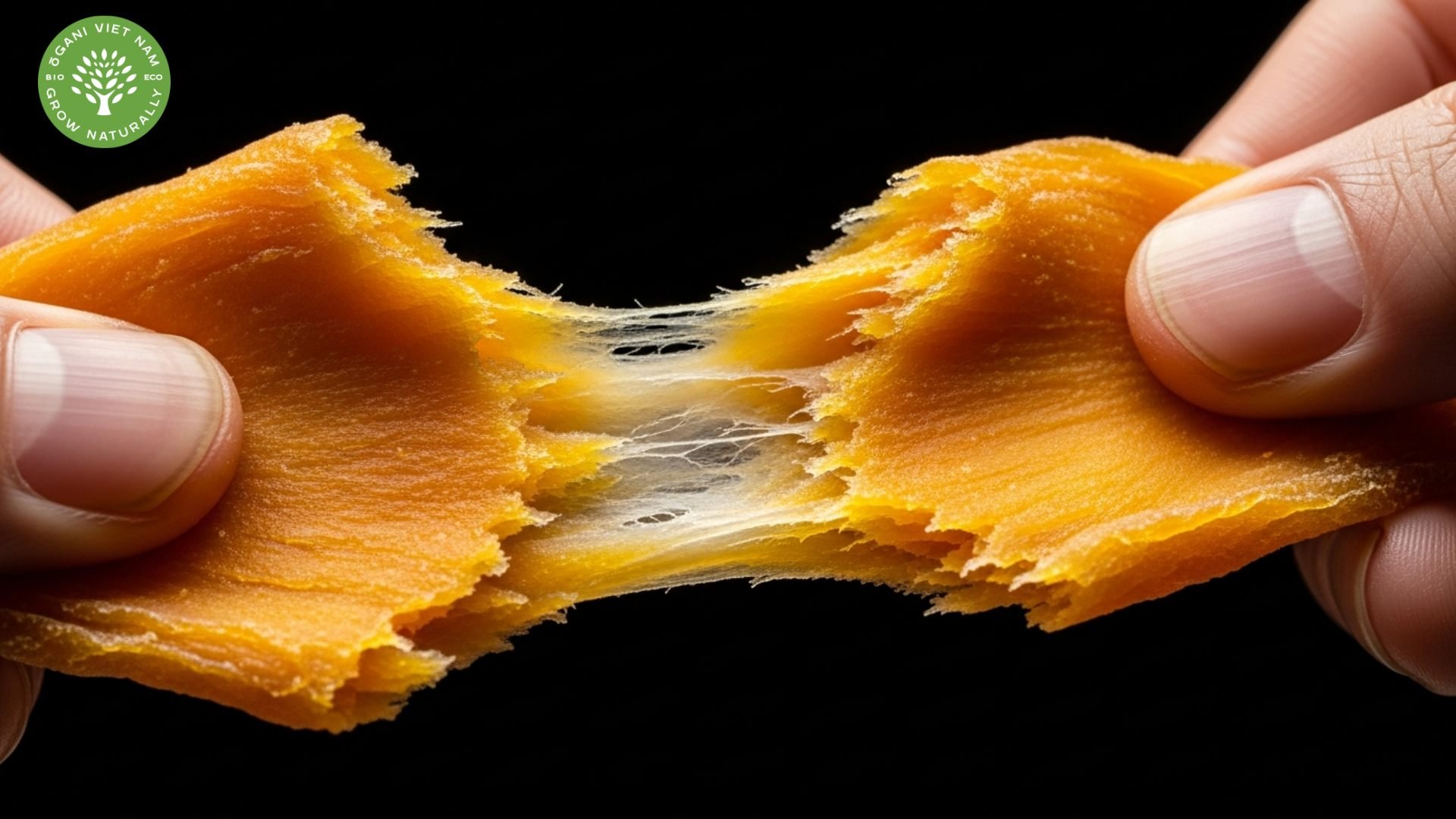
Dried mango tastes intensely sweet with a concentrated tropical flavor—think of fresh mango’s sweetness amplified about three times, with a chewy, slightly fibrous texture and subtle tanginess that balances the sugar. The best dried mango has a natural candy-like quality without tasting artificial.
At Ogani VN, we get this question constantly from first-time buyers who’ve never tried dried mango before. And honestly? What does dried mango taste like is harder to answer than you’d think, because the experience varies wildly depending on quality, processing method, and the original fruit variety. Some dried mango tastes like pure tropical sunshine, while others… well, let’s just say they taste more like disappointment wrapped in plastic. Let me walk you through exactly what to expect when you bite into a quality piece of dried mango.
What does dried mango taste like: the basic flavor profile
Here’s the thing about what does dried mango taste like—it’s not just “mango but dried.” The dehydration process fundamentally transforms the fruit’s flavor in ways that surprise most people.
The dominant note is sweetness, but it’s a complex sweetness. Fresh mango has water content that dilutes its natural sugars, giving you that refreshing, juicy experience. When you remove 80-90% of that moisture, you’re left with concentrated fruit sugars that create an almost honey-like intensity. The first bite hits your tongue with pure tropical sweetness that some people describe as candy-like. And they’re not wrong—good dried mango can taste remarkably similar to those fruit chews you loved as a kid, except it’s 100% real fruit.
But here’s where it gets interesting: beneath that initial sweetness, there’s a subtle tartness. Quality dried mango retains some of the fruit’s natural acidity, which prevents it from tasting cloying or one-dimensional. You get this pleasant tang that appears mid-chew, almost like a tiny squeeze of lime juice dancing through the sweetness. This balance is what separates premium dried mango from the mediocre stuff that just tastes like pure sugar.
The flavor also develops as you chew. Unlike fresh mango that releases its juice immediately, dried mango slowly releases its concentrated flavor over 30-40 seconds of chewing. It’s this gradual unfolding that makes it so satisfying as a snack—your taste buds keep discovering new notes. Some pieces might have a subtle caramel undertone from the natural sugars concentrating during drying. Others carry hints of that floral, almost perfume-like quality that really ripe mangoes have. If someone asks you what does dried mango taste like, this layered complexity is the real answer—not just “sweet,” but an evolving tropical experience.
What does dried mango taste like in terms of texture
When people ask what does dried mango taste like, they’re often equally curious about the texture, which dramatically affects the overall experience and how the flavor presents itself in your mouth.
The chewiness factor
Good dried mango should be pleasantly chewy—not tough, not mushy, but somewhere in that Goldilocks zone. When you first bite into it, there’s a slight resistance, then it yields. The texture is similar to a fruit leather but thicker and more substantial. As you chew, it releases moisture from your saliva and becomes softer, almost creamy in your mouth. This textural journey is part of the appeal and significantly impacts what does dried mango taste like overall.
We’ve noticed that Vietnamese dried mango, particularly from varieties like Hoa Loc mango, tends to have a smoother, more velvety chew compared to some other origins. The natural creaminess of these mango varieties carries through even after drying, creating less of that “leathery” texture some people find off-putting.
Fibrous structure
Here’s something nobody warns you about: dried mango has fibers. Fresh mango has them too, but they’re less noticeable when the fruit is juicy. In dried form, you can really feel those fibers between your teeth. It’s not unpleasant—actually, it confirms you’re eating real fruit—but it can be surprising if you’re expecting something completely smooth like a gummy candy. The fibers run lengthwise along the fruit, so if you eat with the grain, they’re barely noticeable. Across the grain? You’ll definitely feel them. This fibrous quality is an essential part of understanding what does dried mango taste like authentically.
Sticky or not?
The best dried mango shouldn’t be overly sticky. If it leaves your fingers feeling like you just handled candy, that usually means added sugar or preservatives. Natural dried mango has some tackiness from its own fruit sugars, but it shouldn’t glue your teeth together or coat your hands in syrup. At Ogani VN, we actually test this—quality dried mango should leave minimal residue on your fingers after handling.
What does dried mango taste like compared to fresh mango
If you love fresh mango, you might wonder if what does dried mango taste like bears any resemblance to the original fruit.
The core flavor is definitely recognizable as mango—that distinctive tropical taste is unmistakable. But dried mango is to fresh mango what raisins are to grapes: related, but distinctly different experiences. Fresh mango bursts with juice, has that cooling quality, and tastes more delicate. Dried mango is concentrated, chewy, and intense. Some people actually prefer dried mango because the flavor is more pronounced and you don’t have the mess of juice running down your arms.
The aroma is another difference. Fresh ripe mango has that intoxicating floral fragrance that fills a room. Dried mango has a subtler, warmer scent—still fruity and inviting, but more mellow. When you open a bag of quality dried mango, you should get a pleasant sweet-fruity smell, not a chemical or overly sugary candy smell.
One thing dried mango lacks is that refreshing quality of fresh fruit. You’re not going to get that “ahhh” moment of biting into cold, juicy mango on a hot day. What you gain instead is portability, shelf stability, and the ability to enjoy mango’s flavor year-round without worrying about ripeness or spoilage. Fair trade-off, in our opinion.
What does dried mango taste like: factors that affect the flavor
Not all dried mango tastes the same, and understanding why helps you make better choices when shopping and fully grasp what does dried mango taste like in different scenarios.
Mango variety matters enormously
Different mango cultivars have distinct flavor profiles that carry through to the dried product. Philippine Carabao mangoes tend to produce dried mango with more pronounced sweetness and less fiber. Indian Alphonso mangoes (when dried) have that signature perfume-like quality. Vietnamese Hoa Loc mangoes—what we use at Ogani VN—offer exceptional creaminess and a balanced sweet-tart profile that doesn’t need any sugar added.
Drying method changes everything
Sun-dried mango often has a slightly caramelized taste from natural sugars interacting with heat and sunlight over time. It tends to be chewier and darker in color. Dehydrator-dried mango (done at controlled low temperatures) preserves more of the original flavor brightness and produces more consistent texture. Freeze-dried mango is completely different—it’s crunchy rather than chewy and dissolves in your mouth more like a chip than a fruit leather.
Added ingredients alter the experience
Here’s where things get controversial. Many commercial dried mangos have added sugar, preservatives, or sulfur dioxide. These additions change the taste significantly. Added sugar makes it taste more like candy than fruit—overly sweet without complexity. Sulfur dioxide (used to preserve color) can leave a slight chemical aftertaste that some people are sensitive to. At Ogani VN, we keep it simple: just mango, naturally dried. The result tastes authentically like concentrated mango, not a processed snack.
Storage and freshness
Even the best dried mango can taste off if it’s been stored improperly or is past its prime. Fresh dried mango should taste vibrant and fruity. As it ages, especially if exposed to air and humidity, the flavor becomes muted and the texture either gets too hard or develops an unpleasant stickiness. Always smell your dried mango before eating—it should smell inviting, not musty or fermented.
What does dried mango taste like: quality indicators
When you’re trying to evaluate the taste to determine if you’ve got a good product, here’s what to look for in understanding what does dried mango taste like at its best:
First bite should be sweet but not cloying. If it tastes like you’re eating pure sugar, that’s a red flag for added sweeteners. You want to taste fruit first, with sweetness as a supporting character rather than the star.
The flavor should develop and evolve as you chew. One-dimensional sweetness from start to finish usually indicates lower quality fruit or heavy processing. Premium dried mango reveals layers—initial sweetness, mid-chew tanginess, finishing notes that might be slightly floral or caramel-like.
There should be no weird chemical aftertaste. Some mass-market dried mangos leave an odd lingering taste on your tongue after you swallow, almost like artificial flavoring or preservatives. Clean, natural dried mango leaves your mouth feeling fruity and fresh, making you want another piece.
The texture tells you a lot. Consistency matters—if some pieces in the same bag are rock-hard while others are mushy, that’s poor quality control. Good dried mango has even moisture content throughout. It should also rehydrate slightly in your mouth as you chew, not stay tough and leathery the whole time.
Pay attention to color too, though this is more visual than taste-related. Deep orange-yellow color usually indicates good quality fruit that was properly ripe before drying. Pale, washed-out pieces often taste bland. Overly bright, almost neon orange color might mean artificial coloring or sulfur treatment.
Frequently Asked Questions
Is dried mango supposed to taste sweet or sour?
Dried mango should taste predominantly sweet with subtle tartness. The sweetness comes from concentrated natural fruit sugars, while the tartness provides balance. If it tastes sour, the mango might have been under-ripe when dried or has started to ferment due to poor storage.
Why does some dried mango taste like candy?
Quality dried mango naturally tastes candy-like because the dehydration process concentrates the fruit’s sugars by 3-4 times. However, if it tastes exactly like artificial candy, the product likely has added sugar or corn syrup. Check the ingredients—it should just say “mango” or “dried mango.”
Does dried mango taste the same as mango fruit leather?
They’re similar but distinct. Dried mango slices retain the fruit’s fibrous structure and have a chewier, thicker texture. Mango fruit leather is pureed before drying, creating a smoother, more uniform texture without fibers. The flavor intensity is comparable.
Can dried mango taste bad or spoiled?
Yes. Spoiled dried mango develops a fermented, sour, or musty smell and taste. It may also taste overly bitter or have moldy undertones. If your dried mango smells off or tastes unpleasant, discard it immediately.
Why does dried mango from different brands taste so different?
Mango variety, ripeness at harvest, drying method, and added ingredients all affect taste. Some brands use sugar-added formulas, sulfites for preservation, or lower-quality fruit. Origin matters too—Thai, Philippine, Vietnamese, and Indian mangos each have distinct flavor profiles.
Discover the authentic taste of premium dried mango
Now you understand the complete answer to what does dried mango taste like—that perfect balance of intense tropical sweetness, subtle tanginess, and satisfying chew that makes it so addictive. But reading about it only gets you so far. The real question is whether you’re tasting the premium version or settling for something that doesn’t do justice to this incredible fruit.
At Ogani VN, we’re particular about flavor because we know that’s what keeps customers coming back. Our Vietnamese Hoa Loc dried mango showcases exactly what this snack should taste like: naturally sweet without added sugar, properly chewy without being tough, and bursting with authentic tropical flavor that reminds you why mango is called the king of fruits. Each piece delivers that candy-like satisfaction from concentrated natural sugars, balanced by the fruit’s inherent tartness.
The difference between good dried mango and exceptional dried mango isn’t subtle—it’s the difference between tolerating a snack and genuinely craving it. If you’ve only tried mediocre dried mango from random brands, you haven’t experienced what this treat can really be. Visit Ogani VN to taste the difference that premium Vietnamese mangos and careful processing make. Your taste buds will thank you.
Read more: