


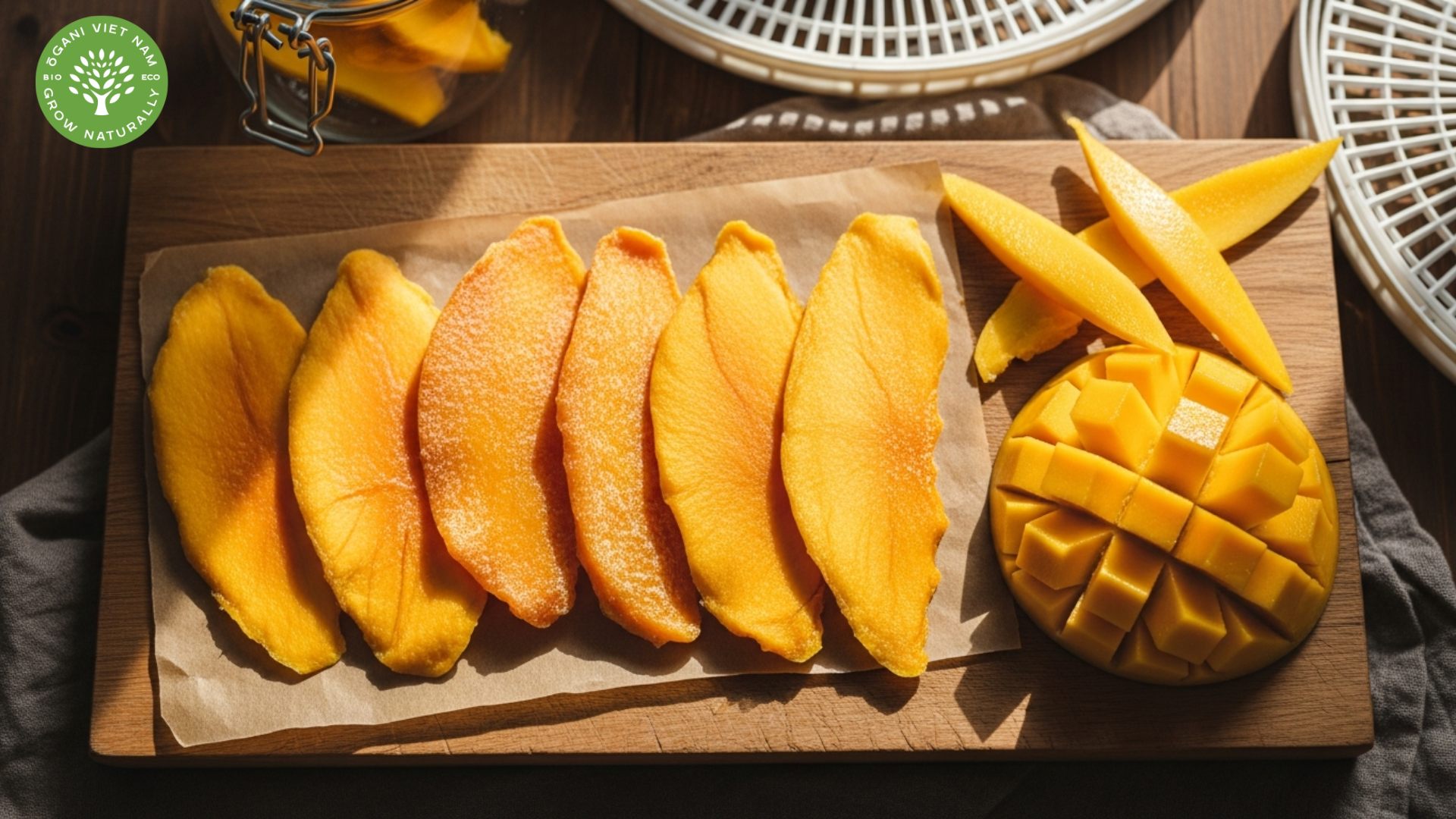
Recipe for dried mango is simpler than you think—you just need ripe mangoes, an oven or dehydrator, and a few hours of patience. We at Ogani VN have perfected this process through countless batches, and we’re sharing everything we’ve learned so you can create sweet, chewy mango slices that rival any store-bought version.
The beauty of making your own dried mango? You control the sweetness, texture, and ingredients. No sulfites, no added sugar unless you want it, just pure mango goodness concentrated into portable, snackable pieces.
Choosing the right mangoes for your dried mango recipe

Not all mangoes are created equal when it comes to drying. We’ve experimented with virtually every variety that comes through our facility, and here’s what actually works.
Ripe but firm mangoes give you the best results. You want fruits that yield slightly to pressure but aren’t mushy—think “ready to eat today” rather than “should have eaten yesterday.” Overripe mangoes turn into sticky messes in the dehydrator, while underripe ones never develop that concentrated sweetness you’re after.
Variety matters too. Tommy Atkins mangoes, despite being less exciting when eaten fresh, actually shine when dehydrated. Their firmer flesh holds shape beautifully. Ataulfo mangoes (those small yellow ones) create intensely sweet dried slices but can be trickier to slice thin. Kent and Keitt varieties fall somewhere in the middle—solid all-around choices.
Here’s a trick we discovered by accident: slightly bruised mangoes? Still perfect for drying. The blemished parts can be cut away, and the rest dehydrates just fine. This is actually how we started using “ugly” mangoes at Ogani VN—they make gorgeous dried mango slices that nobody would ever guess came from imperfect fruit.
The best recipe for dried mango using your oven

Let’s start with the method most people can use right now—your kitchen oven. No special equipment required.
Preparing your mangoes
Peel the mangoes using a vegetable peeler or sharp knife. We prefer peelers because they waste less flesh, but use whatever feels comfortable. Then slice the mango cheeks off the pit—those flat sides that give you the most usable fruit.
Now comes the important part: slice thickness. Aim for about 1/4 inch thick slices. Thinner pieces (1/8 inch) dry faster but can become brittle and chip-like rather than chewy. Thicker slices take forever and sometimes never fully dry in the center. Quarter-inch is that sweet spot we’ve landed on after drying literally hundreds of pounds of mango.
The oven-drying process

Preheat your oven to 175°F (or as low as your oven goes—some only go to 200°F, which still works but requires closer watching). Line baking sheets with parchment paper or use a wire rack set over a baking sheet for better air circulation.
Arrange mango slices in a single layer without touching. Overlapping pieces stick together into weird shapes—trust us on this one.
Bake for 3 to 5 hours, flipping the slices every hour. Yes, this is tedious. Yes, it’s worth it. The flipping ensures even drying and prevents one side from getting too dark while the other stays soft.
You’ll know they’re done when the slices are pliable and slightly tacky but no longer wet. They should bend without breaking but not feel damp. The texture you’re aiming for is similar to a gummy candy—chewy, not crunchy.
Pro tip from our test kitchen: prop your oven door open slightly with a wooden spoon during the last hour. This lets moisture escape more efficiently and can shave 30 minutes off your drying time.
Dehydrator recipe for dried mango: professional results at home

If you’re serious about making dried mango regularly, a dehydrator is a game-changer. We use commercial dehydrators at Ogani VN, but home models work on the same principles.
Temperature and timing
Set your dehydrator to 135-145°F. Higher temperatures can “cook” the exterior while leaving the inside wet; lower temperatures take unnecessarily long and risk bacterial growth. The 135-145 range is that perfect zone where moisture evaporates steadily without altering the fruit’s character.
Arrange slices on dehydrator trays without overlapping. Depending on slice thickness and your specific machine, expect 8 to 12 hours of drying time. Yes, significantly longer than the oven method, but the results? Consistently better. More even texture, better color retention, and you’re not tying up your oven all day.
Checking for doneness

After about 6 hours, start checking every hour. Remove a slice, let it cool for a minute (hot fruit always feels more pliable than it actually is), then bend it. If it tears easily or feels brittle, you’ve overdone it slightly—still edible but less pleasant to chew. If it leaves moisture on your fingers or feels squishy, keep going.
The ideal dehydrated mango slice bends significantly without breaking and has a leathery, slightly sticky surface. When you tear one open, you shouldn’t see any wet spots in the center.
Here’s something interesting we noticed: mango dried at lower temperatures (closer to 135°F) retains more vibrant color, while higher temperatures (around 145°F) darken the fruit slightly but can intensify the flavor. Both are good; it’s personal preference.
Creative ways to use your homemade dried mango

Once you’ve made your batch of dried mango, the snacking possibilities extend far beyond eating them straight from the container (though that’s perfectly valid). The recipe for dried mango you just mastered opens up dozens of creative culinary applications.
We’ve played around with dried mango in countless ways at our test kitchen. Rehydrate pieces by soaking in warm water for 15-30 minutes, then blend into smoothies for concentrated tropical flavor. The texture becomes plump and soft, almost like fresh mango but sweeter.
Chop dried mango into small pieces and fold into trail mix with nuts, seeds, and coconut flakes—one of our most popular combinations pairs dried mango with cashews and dark chocolate chips. The sweet-tart mango cuts through the richness beautifully.
For cooking applications, dried mango works surprisingly well diced into salsa (it adds sweetness and chew alongside tomatoes and cilantro) or as a topping for oatmeal. We’ve seen customers use it in homemade energy bites blended with dates and nuts, in mango bread as a substitute for fresh fruit, and even steeped in hot water to make a naturally sweet tea.
One unexpected winner: mango vinaigrette. Rehydrate a few pieces, blend with olive oil, lime juice, and a touch of honey, and you’ve got a dressing that makes any salad interesting. This is where your recipe for dried mango truly shines—transforming a simple snack into gourmet ingredients.
Storage tips and shelf life

Proper storage makes the difference between dried mango that lasts months and dried mango that gets moldy in two weeks. After following this recipe for dried mango, protecting your hard work with proper storage is crucial.
Once your slices are completely cooled (warm fruit releases condensation in containers—bad news), store them in airtight containers. Glass jars work beautifully, but zip-top bags or plastic containers are fine too. The key word is airtight. Even a small gap lets in humidity, and humidity is the enemy of dried fruit.
Stored at room temperature in a cool, dark pantry, properly dried mango lasts 6 to 12 months. In the refrigerator, you can push that to 18 months. Frozen? Easily two years, though the texture might be slightly altered when thawed. These storage timelines apply to any homemade recipe for dried mango you make.
Watch for signs of spoilage: any mold (even tiny spots), off smells, or sliminess means it’s time to toss the batch. If pieces start sticking together excessively after a few weeks, they weren’t dried enough initially—still safe to eat but consume sooner rather than later.
We recommend storing in smaller portions rather than one large container. Every time you open the container, you introduce moisture and air. Dividing your batch into several smaller jars means the unopened ones stay pristine longer.
Frequently Asked Questions
Can I add sugar to my homemade dried mango?
You absolutely can, though ripe mangoes are naturally sweet enough that we rarely bother at Ogani VN. If you want extra sweetness, dissolve 1/4 cup powdered sugar in a bit of lemon juice and brush it lightly onto slices before drying. This creates a slightly crystallized surface that some people prefer.
Why is my dried mango turning brown?
Some browning is normal—it’s oxidation, similar to how apples brown when cut. A light brush of lemon juice before drying helps slow this down. Dark brown or black spots, however, indicate over-drying or too-high heat.
Can I make dried mango without any equipment?
Sun-drying is possible in hot, dry climates but risky in humid areas. You’d need several consecutive days of hot, sunny weather and a way to protect the fruit from insects. Honestly, the oven method is more reliable for most home cooks.
How thin should I slice mangoes for drying?
Quarter-inch thickness is ideal for chewy texture. Thinner slices become crispy chips, thicker ones may not dry completely.
Start making your perfect dried mango today
Making your own recipe for dried mango transforms how you think about preserved fruit. The process is straightforward—select ripe mangoes, slice consistently, dry with patience, and store properly. Whether you use an oven or dehydrator, the result is intensely flavorful mango slices free from additives and preservatives.
At Ogani VN, we believe the best dried fruit starts with quality ingredients and proper technique. Now that you know our methods, you can create batches that rival anything you’d find in stores.
Ready to take your dried fruit experience further? Explore our selection of premium organic dried mango and other tropical superfoods at Ogani VN. We source from sustainable farms and use these exact methods to ensure every slice meets our standards. Visit our website to discover the difference quality makes, or contact us for bulk orders and wholesale inquiries. Your next favorite snack is waiting.
Read more:
- Recipe For Dried Mango: Your Complete Guide to Making Perfect Chewy Slices
- Dried Red Dragon Fruit vs Fresh: Color, Nutrition & When to Use Each
- Dragon Fruit Powder: Unlocking Ít Superfood Potential for Health and Wellness.
- Red Dragon Fruit Dried: Your Complete Buying Guide
- Dried Mango Fibre Content: What You Need to Know