


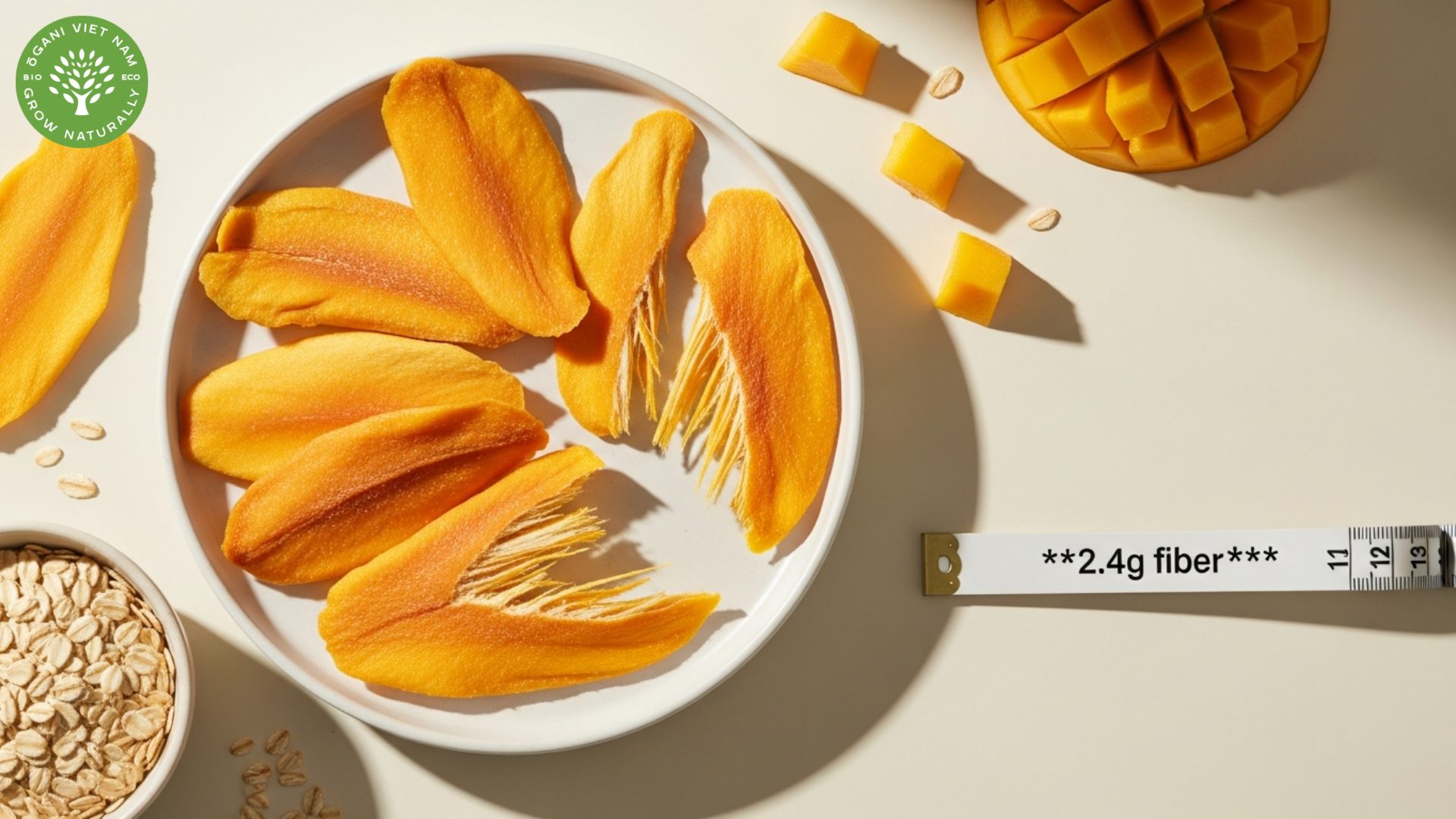
Dried mango fibre content typically ranges from 2.4 to 3.4 grams per 100-gram serving, making it a decent source of dietary fiber among dried fruits. At Ogani VN, we’ve noticed many customers are curious about exactly how much fiber they’re getting when they reach for this sweet, chewy snack—and honestly? The numbers might surprise you.
The thing is, not all dried mango is created equal. Some brands add sugar, some don’t. Processing methods differ. And that affects everything from fiber density to overall nutrition. Let’s break down what you’re actually getting in each handful.
Understanding dried mango fibre content: the actual numbers
Here’s where it gets interesting. Fresh mango contains about 1.6 grams of fiber per 100 grams. But when you dry it? The water evaporates, and everything else becomes concentrated—including the fiber. Most unsweetened dried mango fibre content lands around 2.4 grams per 100 grams, though some sources report up to 3.4 grams depending on the variety and drying process.
A typical serving size (about 40 grams or roughly a small handful) gives you approximately 1 to 1.4 grams of dietary fiber. That’s not going to win any fiber championships—prunes pack about 5.2 grams and dried apricots boast 8.1 grams per 100 grams—but it’s still a respectable contribution to your daily intake. The recommended daily fiber intake sits at 25 grams for women and 38 grams for men, so dried mango can help you chip away at that goal, especially when paired with other fiber-rich foods.
What matters more than the raw numbers? Understanding that sweetened varieties often have slightly lower fiber density because added sugar dilutes the concentration. When we source dried mango at Ogani VN, we prioritize naturally dried options that preserve the original fiber structure without unnecessary additives.
Why dried mango fibre content matters for your digestion

You’ve probably heard that fiber is good for you. But let me tell you what actually happens when you eat fiber-rich dried mango. The soluble and insoluble fiber work as a team in your digestive tract—one slows down sugar absorption (which we’ll get to), and the other keeps things moving smoothly, if you know what I mean.
The dried mango fibre content does something clever: it adds bulk to your stool and helps prevent constipation. About 2-3 grams of fiber per serving might not sound like much, but when combined with adequate water intake, it supports regular bowel movements. This is particularly helpful for people who struggle with digestive sluggishness or irregularity.
Beyond just keeping you regular, fiber feeds your gut bacteria—those microscopic workers that influence everything from mood to immune function. The prebiotic effect of fruit fiber helps beneficial bacteria thrive, creating a healthier gut microbiome. And honestly, in our experience talking with customers, many people notice they feel fuller longer after eating dried mango compared to other sweet snacks. That satiety factor comes directly from the fiber content slowing gastric emptying.
One caution though: if you’re not used to eating much fiber, going overboard with dried mango can backfire. Start with small portions and increase gradually to avoid bloating or digestive discomfort.
Dried mango fibre content compared to other dried fruits
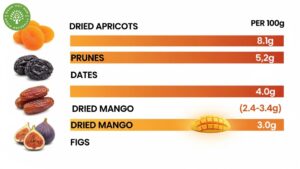
Let’s be real—dried mango sits somewhere in the middle of the fiber spectrum among dried fruits. It’s definitely not the highest, but it’s far from the lowest either.
Here’s how common dried fruits stack up per 100 grams:
| Dried Fruit | Fiber Content | Calories |
|---|---|---|
| Apricots | 8.1g | 215 |
| Prunes | 5.2g | 168 |
| Dates | 4.0g | 270 |
| Mango | 2.4-3.4g | 304 |
| Figs | 3.0g | Variable |
Notice anything? Dried apricots absolutely dominate the fiber category. Prunes come in strong second—which is why grandma always recommended them for digestive health. But dried mango brings something else to the table: a more approachable, tropical sweetness that makes eating fiber feel less like a chore and more like a treat.
The calorie count for dried mango runs higher than some alternatives, mainly because of natural sugar concentration. But those sugars come packaged with fiber, vitamin C, and various antioxidants—not just empty calories. When customers ask us at Ogani VN which dried fruit to choose, we always say it depends on your goals. Need maximum fiber? Go for apricots or prunes. Want a balance of taste, nutrition, and reasonable dried mango fibre content? Dried mango hits that sweet spot.
How dried mango fibre content affects blood sugar levels
This is where things get a bit complicated—and where a lot of people get confused. Yes, dried mango contains quite a bit of sugar. About 27 grams per typical serving, which sounds alarming until you understand how the fiber changes the equation.
The dried mango fibre content, even though modest, slows down how quickly those sugars hit your bloodstream. Think of fiber as a speed bump for glucose absorption. Without any fiber, concentrated fructose would spike your blood sugar rapidly, then crash you hard. The 2-3 grams of fiber in a serving creates a gentler, more sustained energy release.
That said—and I’ll be completely honest here—dried mango is still a high-sugar food. The fiber helps, but it doesn’t erase the glycemic impact entirely. If you’re managing diabetes or watching your sugar intake closely, portion control becomes crucial. A small handful as part of a balanced snack (maybe with some nuts for protein and healthy fats) works better than eating half a bag in one sitting.
We’ve had customers tell us they pair our dried mango with almonds or cashews. Smart move. The added protein and fat further slow sugar absorption, making the whole snack more blood-sugar friendly. The fiber in dried mango does its part, but it needs teammates to really shine in the glycemic control department.
Frequently Asked Questions
Does dried mango have more fiber than fresh mango?
Yes, dried mango typically contains more fiber per gram than fresh mango because the dehydration process concentrates nutrients. Fresh mango has about 1.6g fiber per 100g, while dried versions range from 2.4-3.4g per 100g.
Can dried mango help with constipation?
The fiber in dried mango can support digestive regularity when consumed with adequate water. However, it’s not as effective as prunes or dried apricots, which have higher fiber content specifically beneficial for constipation relief.
How much dried mango should I eat per day for fiber benefits?
A reasonable serving is 40-50 grams (about a small handful), which provides 1-1.4 grams of fiber. This contributes to your daily fiber needs without overloading on sugar and calories.
Is unsweetened dried mango better for fiber?
Unsweetened varieties typically have slightly higher fiber density since no added sugar dilutes the concentration. At Ogani VN, we recommend choosing naturally dried options without added sugars for maximum nutritional benefit.
Does the fiber in dried mango reduce its sugar impact?
Partially, yes. The fiber slows sugar absorption, creating a more gradual blood glucose response. However, dried mango still contains concentrated natural sugars, so portion control remains important, especially for those monitoring blood sugar.
Making the most of dried mango in your diet

So here’s the bottom line: dried mango fibre content isn’t going to revolutionize your fiber intake overnight, but it absolutely has a place in a balanced, health-conscious diet. The 2-3 grams per serving adds up when you’re mindful about combining it with other fiber sources throughout your day.
At Ogani VN, we encourage you to think of dried mango as part of your fiber strategy, not the whole solution. Mix it into your morning oatmeal with chia seeds. Chop it up in a salad with leafy greens. Pair it with fiber-rich nuts for an afternoon snack. These combinations amplify the benefits while keeping the sugar impact reasonable.
Ready to experience premium quality dried mango with optimal fiber retention? Visit our website to explore Ogani VN’s selection of naturally dried, organic mango products. We carefully source and process our dried fruits to preserve maximum nutritional value—including that important fiber content you’re looking for. Your digestive system will thank you.
Read more:
-
- Baking With Dried Red Dragon Fruit: Breads, Muffins & Cookies
- Dried Red Dragon Fruit vs Fresh: Color, Nutrition & When to Use Each
- Dragon Fruit Powder: Unlocking Ít Superfood Potential for Health and Wellness.
- Red Dragon Fruit Dried: Your Complete Buying Guide
- Dried Mango Fibre Content: What You Need to Know