


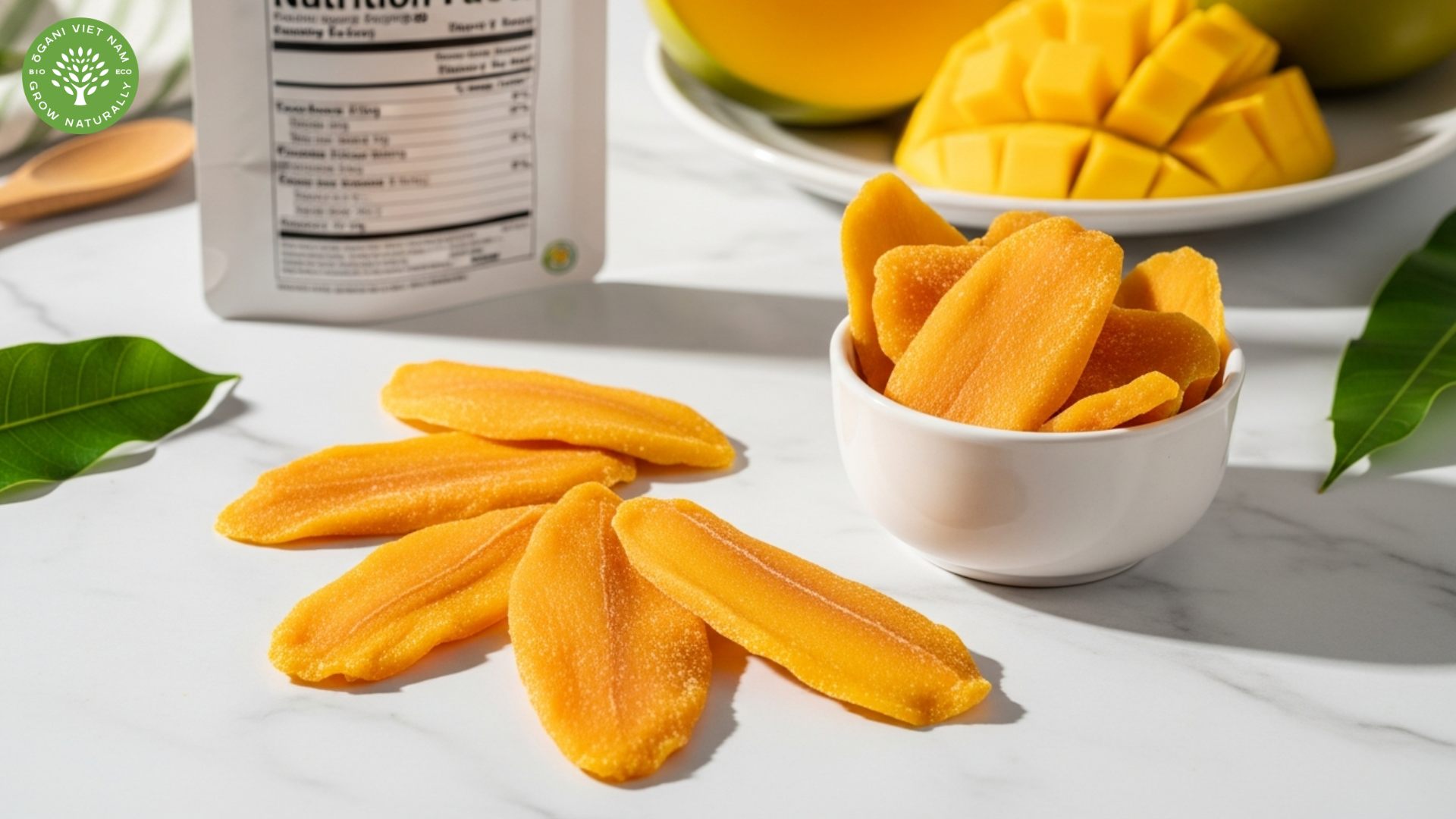
When you pick up a bag of dried mango, you’re probably wondering just how much sugar you’re about to consume. Here’s the straightforward answer: most dried mango contains between 24-27 grams of sugar per 40-gram serving, with sweetened varieties reaching up to 66 grams per 100 grams. That’s roughly 4-5 times more concentrated than fresh mango, which naturally contains about 14 grams per 100 grams.
At Ogani VN, we believe in transparency about what goes into your body. The sugar content of dried mango varies significantly depending on whether you choose unsweetened organic options or commercially sweetened varieties. Let’s break down everything you need to understand about dried mango’s sweetness, so you can make choices that align with your health goals.
Natural versus added sugar content of dried mango

The dehydration process fundamentally changes mango’s sugar profile, but not all dried mango is created equal. When fresh mango loses its water content during drying, the natural sugars become concentrated in a smaller volume. Think of it like reducing a sauce on the stove—the flavors intensify as the liquid evaporates.
Unsweetened dried mango relies entirely on the fruit’s inherent sugars—primarily fructose, glucose, and sucrose. A 40-gram serving typically delivers 24-26 grams of these natural sugars along with beneficial fiber and vitamins. Your body processes these differently than refined sugars because they come packaged with nutrients.
However, many commercial brands add extra sugar, corn syrup, or sulfur dioxide during processing. These sweetened versions can contain 11-15 grams of added sugars per serving on top of the natural fruit sugars. We’ve noticed that some dried mango slices taste almost candy-like, and that’s your clue that significant sweeteners have been introduced.
The ingredient list tells you everything. If you see “organic mango” as the only ingredient, you’re getting pure concentrated fruit. If sugar appears within the first three ingredients, you’re looking at a product with substantial additions. At Ogani VN, we stock exclusively unsulfured, unsweetened dried mango because we want you to experience the fruit’s authentic tropical sweetness without unnecessary additives.
Comparing sugar content of dried mango to fresh fruit
Let’s put this into perspective with real numbers that might surprise you. Fresh mango contains approximately 13.7 grams of sugar per 100 grams—that’s about one medium-sized fruit. When you remove the water through dehydration, those sugars concentrate dramatically.
Here’s what happens: fresh mango is roughly 84% water. Remove that water, and suddenly the same weight of dried mango packs 66.3 grams of sugar per 100 grams in sweetened varieties, or around 50-55 grams in unsweetened versions. You’re essentially eating five times the sugar in the same weight comparison.
But here’s where it gets interesting—you probably won’t eat 100 grams of dried mango in one sitting. A typical snack portion is 30-40 grams, which feels substantial because it’s so concentrated. That same amount of fresh mango would barely fill your palm and wouldn’t satisfy you as a standalone snack.
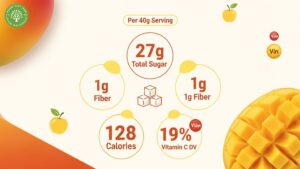
The sugar content of dried mango becomes less alarming when you consider portion sizes. Three or four dried mango slices (about 40 grams) give you 25 grams of sugar alongside 2 grams of fiber and notable amounts of vitamin A and vitamin C. Half a fresh mango delivers similar sugar but with more water volume that fills you up differently.
We’ve found that people often underestimate how many dried mango pieces they consume because they’re so convenient and delicious. That’s why we always recommend measuring out your portion rather than eating straight from the bag—it’s surprisingly easy to work through several servings without realizing it.
Health effects of sugar content of dried mango

Now for the question everyone really wants answered: is dried mango too sugary to be healthy? The answer isn’t black and white, and honestly, it depends on your overall diet and health status.
Blood sugar impact and glycemic considerations
Dried mango has a glycemic index around 55-60, which categorizes it as a medium-GI food. The sugar hits your bloodstream faster than fresh mango because there’s less fiber and water to slow digestion. If you’re managing diabetes or prediabetes, this matters.
One of our customers with type 2 diabetes shared that she enjoys dried mango successfully by pairing it with a handful of almonds. The protein and fat from nuts moderate the blood sugar spike. This strategy works because you’re not consuming concentrated sugars in isolation.
Caloric density and weight management
Let’s be honest—dried mango is calorie-dense. Those 40 grams contain roughly 130-140 calories, mostly from carbohydrates. Compare that to the same weight of cucumber (about 6 calories) and you see why dried fruits require mindful consumption.
However, dismissing dried mango as “junk food” misses the bigger picture. Unlike candy or cookies, unsweetened dried mango provides vitamin A for eye health, vitamin C for immune function, and polyphenols with antioxidant properties. The natural sugars come bundled with nutrients that processed sweets simply don’t offer.
Dental health considerations
Here’s something most people don’t think about—the sticky texture of dried mango means sugar clings to your teeth longer than when you eat fresh fruit. The concentrated sweetness combined with that chewy consistency creates an environment where bacteria thrive.
We recommend rinsing your mouth with water after snacking on dried mango, or better yet, brushing your teeth within 30 minutes. If you’re giving dried mango to kids, make it part of a meal rather than a constant grazing snack throughout the day.
Nutrient benefits versus sugar concerns
The sugar content of dried mango shouldn’t overshadow its legitimate nutritional contributions. A 40-gram serving delivers about 19% of your daily vitamin C needs and significant beta-carotene that your body converts to vitamin A. These aren’t trivial benefits.
The dietary fiber, though reduced from fresh mango, still supports digestive health. The polyphenols—particularly mangiferin—have anti-inflammatory properties that researchers continue studying. You’re not just eating sugar; you’re consuming a whole food with complex nutritional benefits.
How to manage sugar content of dried mango in your diet
The key to enjoying dried mango without derailing your health goals lies in strategic consumption and smart pairing strategies. We’ve learned from years of helping customers that small adjustments make dried mango perfectly compatible with healthy eating patterns.
Portion control strategies
Measure your servings beforehand. Transfer 30-40 grams (about 3-5 slices depending on thickness) into a small bowl instead of sitting with the entire bag. This simple act prevents mindless overconsumption that happens when delicious food is readily available.
Time your dried mango consumption around physical activity. Eating it 30-60 minutes before a workout gives you easily accessible energy from natural sugars that your muscles will burn efficiently. Post-workout works too, as your body efficiently shuttles those carbohydrates into muscle glycogen stores.
Smart food pairings

Combining dried mango with protein and healthy fats dramatically changes how your body processes the sugar. Try these combinations we recommend at Ogani VN:
- Dried mango with raw cashews or almonds creates a balanced trail mix
- Chopped dried mango mixed into Greek yogurt adds natural sweetness while protein slows sugar absorption
- Dried mango pieces with cheese cubes offer sweet-savory satisfaction with minimal blood sugar impact
- Adding dried mango to oatmeal means the soluble fiber from oats moderates the sugar release
Reading labels effectively

When shopping for dried mango, scrutinize the nutrition facts panel. Look for total carbohydrates, then check the breakdown between dietary fiber and total sugars. Finally, see if there’s an “added sugars” line—this tells you exactly what’s natural versus supplemented.
Products labeled “unsweetened” or “no sugar added” still contain the fruit’s natural sugars but avoid unnecessary additions. At Ogani VN, our unsweetened organic dried mango has zero added sugars—just pure concentrated mango goodness.
Compare serving sizes across brands. Some manufacturers list nutritional information for 28-gram servings while others use 40 grams. This makes direct comparison tricky unless you calculate per 100 grams to see the real picture.
Alternative dried fruit options
If you’re concerned about sugar intake but love dried fruits, consider rotating between options. Unsweetened dried apricots contain about 53 grams of sugar per 100 grams—slightly less concentrated than mango. Dried apples check in around 57 grams per 100 grams.
Interestingly, no common dried fruit is “low sugar” because the dehydration process concentrates natural sugars in all cases. The solution isn’t finding a sugar-free dried fruit (which doesn’t exist outside of vegetables like tomatoes), but rather managing portions and choosing unsweetened varieties.
Frequently Asked Questions
Is 27 grams of sugar in dried mango too much?
For context, 27 grams equals about 6.5 teaspoons of sugar. Whether that’s “too much” depends on your total daily sugar intake and health status. The American Heart Association recommends limiting added sugars to 25 grams daily for women and 36 grams for men. Since unsweetened dried mango contains natural rather than added sugars, it fits differently into these guidelines. If you’re consuming it as your only concentrated sugar source for the day alongside whole foods, it’s manageable for most people.
Does unsweetened dried mango have less sugar than sweetened versions?
Yes, significantly. Unsweetened dried mango contains only the fruit’s natural concentrated sugars—about 50-55 grams per 100 grams. Sweetened versions add corn syrup, cane sugar, or other sweeteners, pushing the total to 66+ grams per 100 grams. That’s 10-15 grams of added sugar you can avoid by choosing unsweetened varieties.
Can diabetics eat dried mango?
Diabetics can include dried mango in moderation with proper planning. The key is portion control (stick to 20-30 grams), pairing it with protein or fat to slow sugar absorption, and monitoring blood glucose response. Some diabetics tolerate it better as part of a meal rather than alone as a snack. Always consult your healthcare provider about incorporating dried fruits into your specific meal plan.
How many pieces of dried mango equal one fresh mango?
Approximately 40-50 grams of dried mango equals the sugar content of one medium fresh mango (about 200 grams). However, you’re getting the sugar without the water content that makes fresh mango filling. This is why dried mango feels less satisfying volume-wise despite delivering equivalent or higher sugar levels.
Does organic dried mango have less sugar than conventional?
No, the organic designation doesn’t affect sugar content. Organic refers to growing practices (no synthetic pesticides, GMOs, or conventional fertilizers) rather than the fruit’s nutritional composition. Both organic and conventional dried mango contain similar natural sugar levels after dehydration. The real difference appears when comparing unsweetened versus sweetened products, regardless of organic status.
Making informed choices about dried mango sugar

Understanding the sugar content of dried mango empowers you to enjoy this tropical treat without guilt or confusion. The reality is that dried mango contains concentrated natural sugars—about 24-27 grams per standard 40-gram serving for unsweetened varieties, and significantly more in sweetened products.
At Ogani VN, we encourage you to embrace dried mango as a nutrient-dense snack option when consumed mindfully. Choose unsweetened organic varieties to avoid added sugars. Measure your portions instead of eating directly from the bag. Pair dried mango with protein-rich foods to minimize blood sugar spikes.
The sugar content of dried mango doesn’t disqualify it from a healthy diet—it simply requires informed consumption. You’re getting vitamin A, vitamin C, dietary fiber, and beneficial polyphenols alongside those natural sugars. That makes dried mango nutritionally superior to processed snacks with equivalent sugar levels.
Ready to experience premium unsweetened dried mango? Visit Ogani VN today to browse our selection of organic, unsulfured dried mango with nothing added except tropical Vietnamese sunshine. We’re here to help you make choices that satisfy your taste buds while supporting your health goals.
Read more:
- Baking With Dried Red Dragon Fruit: Breads, Muffins & Cookies
- Dried Red Dragon Fruit vs Fresh: Color, Nutrition & When to Use Each
- Dragon Fruit Powder: Unlocking Ít Superfood Potential for Health and Wellness.
- Red Dragon Fruit Dried: Your Complete Buying Guide
- Sugar Content Of Dried Mango: What You Need To Know