


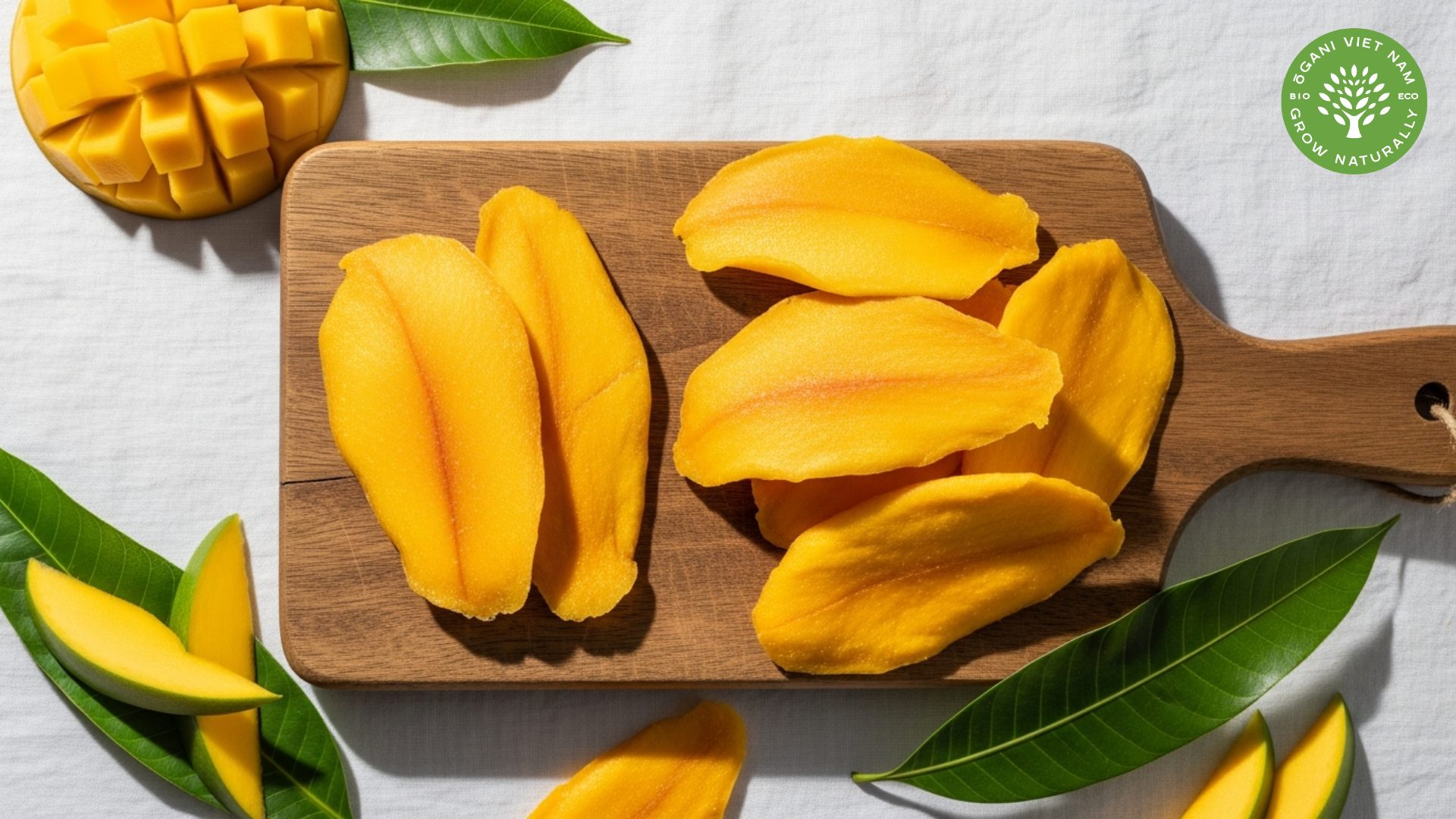
Dehydrated mango (dried mango) consists of fresh mango slices that have had their moisture removed through a low-temperature drying process, preserving the natural sweet flavor, vibrant color, and most of the nutrients found in fresh fruit. This isn’t just a convenient snack but also provides vitamin A, fiber, and natural energy – perfect for those seeking a healthy snack alternative to processed sweets.
If you’ve ever wondered why dried mango is so popular, or simply want to know whether it’s suitable for your children – Ogani VN is here to share everything from A to Z about this special dried fruit. From the production process to the types available on the market, to how to choose and store them for optimal quality.
The Standard Process of Making Dehydrated Mango
The production process of dehydrated mango may sound simple, but it requires meticulous attention at every stage to ensure the final product is both delicious and retains nutritional value. Ogani VN uses a low-temperature drying method (around 55-60°C) for 8-12 hours – this is the ideal temperature range that allows water to evaporate gradually without destroying heat-sensitive enzymes and vitamins.

Before entering the dehydrator, fresh mangoes are carefully selected – prioritizing fruits that are perfectly ripe, neither too soft nor still green. After washing and peeling, mangoes are hand-sliced into uniform thin pieces, about 0.3-0.6cm thick. This thickness is crucial: too thin and the mango becomes crispy like crackers, losing its characteristic chewy texture; too thick and the inside may retain moisture, reducing shelf life.
What’s special about Ogani VN‘s organic dried mango is that we don’t add sugar or use sulfur dioxide to preserve color – it’s 100% pure mango. Therefore, the color may be slightly darker compared to industrial dried mango you see in markets, but that’s the hallmark of a natural, chemical-free product.
After drying, the mango is allowed to cool completely before being vacuum-sealed or packed in zipper bags with one-way valves to prevent moisture return. Quality dehydrated mango, when gently squeezed, will be soft and pliable, not overly hard, and when torn apart shows no moisture inside.
Health Benefits From Dehydrated Mango

Many people think dried fruit is less nutritious than fresh fruit, but that’s not entirely true. While some vitamin C may be lost during drying due to heat and oxidation, most other nutrients – especially vitamin A, fiber, and minerals – remain nearly intact.
Vitamin A and beta-carotene are the highlights of dehydrated mango. Just a small handful of dried mango (about 40-50g) provides nearly 20% of your daily vitamin A needs. This vitamin is crucial for vision, skin health, and immune system – especially for growing children. And honestly, getting kids to eat dried mango is much easier than forcing them to eat greens, right?
The fiber content in dried mango is no joke either. Every 100g of dried mango contains about 3-4g of fiber – helping improve digestion, prevent constipation, and create lasting satiety. If you’re planning to lose weight or stabilize blood sugar, unsweetened dried mango is a smart choice over cookies and candy.
Additionally, mangoes contain many antioxidants like mangiferin – a plant compound extensively researched for its support in reducing inflammation and protecting cells from free radical damage. Of course, eating dried mango can’t replace medicine or a balanced diet, but it’s certainly a valuable addition to your daily menu.
One important note: since water has been removed, the natural sugar content (fructose) in dried mango is more concentrated. So if you’re monitoring sugar intake, eat in moderation – about 30-50g per day (equivalent to a small handful) is enough to enjoy the benefits without excess calories.
Distinguishing Types of Dehydrated Mango on the Market
Not all dried mangoes are created equal. When shopping at markets or online, you’ll see various types: Thai dried mango, Vietnamese dried mango, organic dried mango, sweetened dried mango, crispy dried mango, chewy dried mango… Sounds confusing, right? Don’t worry, Ogani VN will help you distinguish to choose the right type.
Traditional dried mango vs. high-tech dried mango
Traditional dried mango is usually sun-dried or dried in primitive ovens with unstable temperatures. The advantage is low cost, but disadvantages include susceptibility to bacterial contamination, poor color, and often requires preservatives. Meanwhile, mango dried with specialized dehydrators provides more consistent quality, controlled temperature and time, natural color retention, and food safety compliance.
Sweetened vs. unsweetened dried mango
This is the most important distinction to note when reading labels. Sweetened dried mango is typically soaked in syrup or sugar-coated before drying to increase sweetness and extend shelf life. This type tastes good and looks attractive but contains an additional 20-30% industrial sugar – not suitable for diabetics or those managing weight.
Conversely, unsweetened dehydrated mango contains only fresh mango as its ingredient, with nothing added. The sweetness comes entirely naturally from fructose already present in the fruit. This is the type Ogani VN always prioritizes providing to customers.
Organic vs. conventional dried mango
Organic mangoes are grown without synthetic pesticides, non-GMO, and the processing follows strict organic standards. Higher cost but you can be assured about origin and safety. Conventional dried mango is cheaper but may not have controlled chemical residues.
| Criteria | Organic Dried Mango | Conventional Dried Mango |
|---|---|---|
| Price | 30-50% higher | Budget-friendly |
| Origin | Organically certified | Unclear |
| Color | Natural yellow-orange, may be slightly darker | Bright yellow from sulfur use |
| Flavor | Naturally sweet, clean aftertaste | Intensely sweet, may have chemical taste |

How to Choose and Store Quality Dehydrated Mango
Buying dried mango without knowing how to identify quality is like “buying a pig in a poke” – easy to get fooled. Ogani VN shares some tips we use when evaluating products.
Visual inspection: Quality dried mango has a natural yellow-orange color, possibly slightly darker due to no color preservatives. Avoid those with overly bright neon yellow – that’s usually a sign of sulfur dioxide. The mango surface may be slightly matte from natural sugar secretion, not shiny like wax coating.
Touch and squeeze test: Quality dried mango when gently squeezed will be soft and pliable, not hard like plastic. If you tear a piece apart, the center shouldn’t have wet spots or cloudy white areas – those are signs of insufficient drying and susceptibility to mold.
Smell test: Natural mango scent should be sweetly fragrant, not sharp. If you smell sour or sulfur odors (like boiled egg yolk), don’t buy it.
Read ingredient labels: The golden rule is “fewer ingredients is better.” Ideally, it should only say “100% mango” or “organic mango.” Avoid products with added sugar, syrup, preservatives (E220, E223), or synthetic colors.
For storage, dehydrated mango should be kept in airtight containers or zipper bags, in a dry, cool place. Avoid direct sunlight and high humidity. If stored properly, dried mango can last 6-12 months while maintaining its flavor. A small tip: adding 1-2 moisture absorber packets to the container will help prevent mold during rainy seasons.

If you notice signs of mold, strange odors, or white-green spots on the surface – don’t hesitate to throw it away, don’t eat it. Health is more important.
Creative Applications With Dehydrated Mango in Daily Life
Don’t think dehydrated mango is only for snacking alone or putting in your child’s lunch box. Actually, there are countless creative uses many people haven’t thought of.
Beverage ingredient: Dried mango can be steeped in water or tea to create naturally sweet drinks without added sugar. Or blend it with yogurt, banana, and coconut water – a beautiful and nutritious smoothie bowl in just 5 minutes. For those who love the “infused water” trend, dried mango is a great choice – try adding lime slices and mint leaves.
Baking and desserts: Chopped dried mango can be mixed into batter for muffins, cookies, or granola bars. The natural sweetness of mango helps reduce sugar in recipes. If you make oatmeal in the morning, try sprinkling some dried mango on top – both visually appealing and adds fiber.
Pairing with savory dishes: Sounds unusual but minced dried mango mixed with green salads, roasted cashews, and honey-lime dressing creates a balanced sweet-sour-rich flavor that’s very appealing. Or if you like experimenting, add dried mango to Thai-style chicken curry – the flavor becomes much more complex.
Candy substitute for children: Instead of giving kids candy full of artificial colors, dried mango is a much smarter choice. Naturally sweet, high fiber, and doesn’t stick to teeth like soft candy. You can cut dried mango into small pieces, put them in a cute container for kids to bring to school – both nutritious and something to proudly share with friends.
Frequently Asked Questions About Dehydrated Mango
Is dried mango better than fresh mango?
Neither is absolutely better than the other; it depends on intended use. Fresh mango is richer in vitamin C and water content but spoils easily and is hard to transport. Dried mango is convenient, retains most nutrients except some vitamin C, and has long shelf life. Ideally, you should incorporate both in your diet.
Does eating dried mango cause weight gain?
Dried mango isn’t a fattening food if you eat the right amount. About 30-50g/day (equivalent to a small handful) only provides around 100-120 kcal. The problem is if you mindlessly eat an entire 200g pack at once, you’ll obviously have excess calories. Remember that everything needs “moderation.”
Is dried mango suitable for diabetics?
Diabetics can still eat dried mango but should note: choose unsweetened varieties, eat small amounts (about 20-30g), and combine with protein or healthy fats (like walnuts, almonds) to slow sugar absorption. Should eat as snacks and monitor blood sugar levels.
How to know if dried mango has gone bad?
Signs to recognize: sour smell, white or green mold spots on surface, excessively mushy or abnormally sticky texture, bitter taste or fermented. If you see any of these signs, don’t hesitate to throw it away.
Should children under 1 year old eat dried mango?
Children under 1 year can eat dried mango but need it cut into very small pieces or softened to prevent choking. Should consult a pediatrician before giving babies any dried food.
Dehydrated Mango – Smart Choice for Family Health
Dehydrated mango isn’t just a convenient snack but a smart choice for those who care about health and want a natural, clean, safe energy source. From choosing the right type, proper storage, to creative uses – everything contributes to helping you fully enjoy the value this gift from nature brings.
At Ogani VN, we’re proud to provide organic dried mango products without sugar or preservatives – processed from the finest fresh mangoes through low-temperature drying to preserve complete nutrition. If you’re looking for a healthy snack choice for the whole family, or want to gift loved ones something both delicious and nutritious, visit Ogani VN’s website or contact us directly.
Don’t forget to share this article if you find it helpful, and leave a comment if you have any questions about dried mango. Ogani VN is always ready to accompany you on your journey to natural and sustainable health care!
Read more:
- Baking With Dried Red Dragon Fruit: Breads, Muffins & Cookies
- Dried Red Dragon Fruit vs Fresh: Color, Nutrition & When to Use Each
- Dragon Fruit Powder: Unlocking Ít Superfood Potential for Health and Wellness.
- Dehydrated Mango – Healthy Snack From Fresh Mangoes