



Dehydrating dragon fruit transforms this exotic tropical treasure into crispy, concentrated slices that last for months. At Ogani VN, we’ve perfected this preservation method to help you enjoy this vibrant pink superfruit year-round, whether you’re creating stunning cocktail garnishes or healthy snacks.
The process is straightforward: slice your pitaya into 1/4-inch rounds, arrange them on dehydrator trays, and dry at 135°F for 8-12 hours until completely crisp. What you get is a naturally sweet, intensely flavored product that maintains most of the fruit’s nutritional benefits.
Why dehydrate dragon fruit instead of eating it fresh?
Fresh dragon fruit is wonderful, but it has a short shelf life—usually just 5-7 days in the refrigerator. We’ve found that dehydrating dragon fruit solves several practical problems at once.
First, the obvious benefit: preservation. Properly dried and stored dragon fruit slices can last 6-12 months in an airtight container, even longer if vacuum-sealed. This means you can stock up when prices drop or when your garden produces more than you can consume fresh.
But there’s more to it than just storage. The dehydration process concentrates the natural sugars and flavors, creating a completely different taste experience. Think of how a sundried tomato compares to a fresh one—that’s the kind of transformation we’re talking about. The texture becomes crispy, almost chip-like, with an intensified sweetness that makes dried pitaya slices addictive.
At Ogani VN, we also appreciate the versatility. Dehydrated dragon fruit isn’t just a snack—it’s a garnish for cocktails, a colorful addition to smoothie bowls, an ingredient for herbal teas, and even a natural food coloring when powdered. You’re essentially creating a multi-purpose ingredient from a single fruit.
How to prepare dragon fruit before you dehydrate it

The preparation stage determines the quality of your final product, so we never rush this step.
Selecting the right fruit
Choose dragon fruits that are ripe but still firm. The skin should have even color—bright pink for red varieties or yellow for white-fleshed types—with minimal brown spots. Slightly underripe fruit actually works better for dehydration than overripe ones, which can become too sticky and take forever to dry.
We prefer red-fleshed dragon fruit for its vibrant color and slightly higher antioxidant content, but white-fleshed varieties work just as well. The taste difference becomes less noticeable once dehydrated anyway.
Washing and slicing technique
Rinse your pitaya under cool water and pat dry completely. Any excess moisture adds unnecessary drying time. Cut off both ends, then slice the fruit crosswise into rounds—1/4 inch thickness is ideal. Too thick and they won’t dry evenly; too thin and they become too brittle.
You have two options here: peel before slicing or leave the skin on. We typically remove the bright pink peel since it doesn’t dehydrate well and can be tough to chew. Simply use a spoon to scoop out the flesh from each half, or peel it like a banana if it’s very ripe.
Arrange your slices in a single layer on dehydrator trays, leaving space between each piece for air circulation. Crowding leads to uneven drying and potentially sticky spots that might spoil during storage.
Best methods to dehydrate dragon fruit at home
Using a food dehydrator

This is our preferred method at Ogani VN. Set your dehydrator to 135°F (57°C)—this temperature is perfect for preserving the maximum nutritional content, especially vitamin C and antioxidants, while still ensuring complete moisture removal.
Drying time varies based on several factors: slice thickness, humidity levels in your area, and the water content of your specific fruit. Generally, expect 8-12 hours. Red-fleshed dragon fruit often takes slightly longer because of its higher moisture content.
Check your slices after 8 hours. They should feel completely dry to the touch, not sticky or flexible. When properly dried, they’ll snap cleanly rather than bend. This crispness is crucial—any remaining moisture invites mold growth during storage.
Oven dehydration alternative
Don’t have a dehydrator? Your oven can work in a pinch. Set it to the lowest temperature possible (ideally 150-170°F) and prop the door open slightly with a wooden spoon to allow moisture to escape.
Place dragon fruit slices on parchment-lined baking sheets. This method takes less time—usually 4-6 hours—but requires more attention. Check every hour and flip the slices halfway through to ensure even drying.
The main downside? Oven dehydration can result in slightly darker edges and less consistent texture compared to a dedicated dehydrator. But if you’re just experimenting or processing a small batch, it’s perfectly acceptable.
Storing dehydrated dragon fruit for maximum freshness
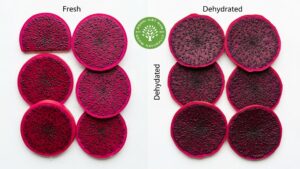
Once your dehydrated dragon fruit slices have cooled completely—and this is important, never store warm product—transfer them to airtight containers. Glass jars with tight-fitting lids work beautifully, as do food-grade plastic containers.
For the longest shelf life, we recommend vacuum-sealing. This removes all air and prevents oxidation, extending storage time to 12-18 months easily. Add a food-safe silica gel packet if you live in a humid climate.
Store your containers in a cool, dark place. A pantry or kitchen cabinet away from the stove works perfectly. Avoid anywhere that experiences temperature fluctuations, as condensation can form inside the container and compromise your dried fruit.
Label each container with the date. While dried dragon fruit technically stays safe for a long time, quality gradually diminishes. The vibrant pink color may fade, and flavors can become muted after a year.
Creative ways to use your dehydrated dragon fruit

This is where things get fun. At Ogani VN, we’ve discovered that dried pitaya slices are ridiculously versatile.
The most popular use? Cocktail garnishes. Those Instagram-worthy drinks with beautiful pink dragon fruit wheels? That’s dehydrated fruit. They’re lighter than fresh slices, float better, and won’t get soggy. Bartenders love them for tropical drinks, gin and tonics, and even champagne cocktails.
Break them into smaller pieces for smoothie bowls, oatmeal toppings, or yogurt parfaits. They add a satisfying crunch and natural sweetness without any added sugar. Kids particularly love snacking on them straight from the jar—they taste like fruit candy but without the guilt.
Grind dried dragon fruit slices into powder using a coffee grinder or food processor. This creates a natural pink food coloring perfect for frostings, smoothies, or baked goods. The powder also works as a nutritional boost—sprinkle it over anything that needs extra vitamin C and antioxidants.
We’ve even used them in homemade trail mix combinations, paired with nuts, coconut flakes, and other dried fruits. The mild sweetness and tropical flavor complement almost everything.
Frequently Asked Questions
How do I know when dragon fruit is completely dehydrated?
The slices should be completely dry with no sticky or soft spots. They’ll snap cleanly when bent rather than bending flexibly. If there’s any doubt, run them for another hour—better over-dried than under-dried.
Can I dehydrate dragon fruit with the peel on?
While technically possible, we don’t recommend it. The peel becomes tough and unpleasant to eat when dried. It’s better to remove it before slicing for the best texture and eating experience.
Does dehydrated dragon fruit retain its nutritional value?
Most of the vitamin C and antioxidants survive the dehydration process at 135°F, though some vitamin C is inevitably lost. The fiber content remains completely intact, and the natural sugars become concentrated, making it more calorie-dense per ounce than fresh fruit.
Why did my dried dragon fruit turn brown?
This usually happens from too-high temperatures or oxidation. Stick to 135°F and ensure fruit is completely fresh when you start. Some browning at the edges is normal, but significant darkening suggests the temperature was too high.
Can I rehydrate dried dragon fruit?
Yes, though the texture won’t be exactly like fresh. Soak slices in warm water for 15-20 minutes. This works well for adding to baked goods or smoothies, but for garnishes and snacking, we prefer using them in their dried form.
Start dehydrating dragon fruit today with Ogani VN
Learning to dehydrate dragon fruit is one of the most rewarding food preservation projects you can tackle at home. With minimal equipment and just a bit of patience, you transform perishable exotic fruit into a shelf-stable superfood ingredient that’s both beautiful and delicious.
At Ogani VN, we believe in making organic, nutritious foods accessible and convenient for everyone. Whether you’re growing your own dragon fruit or taking advantage of seasonal abundance, dehydration ensures nothing goes to waste.
Ready to start your own batch? Visit our website to explore premium dehydrators and discover more of our organic dried fruit collection. We’re here to support your journey toward healthier, more sustainable eating habits—one dried slice at a time.
Read more:
- Baking With Dried Red Dragon Fruit: Breads, Muffins & Cookies
- Dried Red Dragon Fruit vs Fresh: Color, Nutrition & When to Use Each
- Dragon Fruit Powder: Unlocking Ít Superfood Potential for Health and Wellness.
- Red Dragon Fruit Dried: Your Complete Buying Guide
- How to Dehydrate Dragon Fruit: Complete Guide