


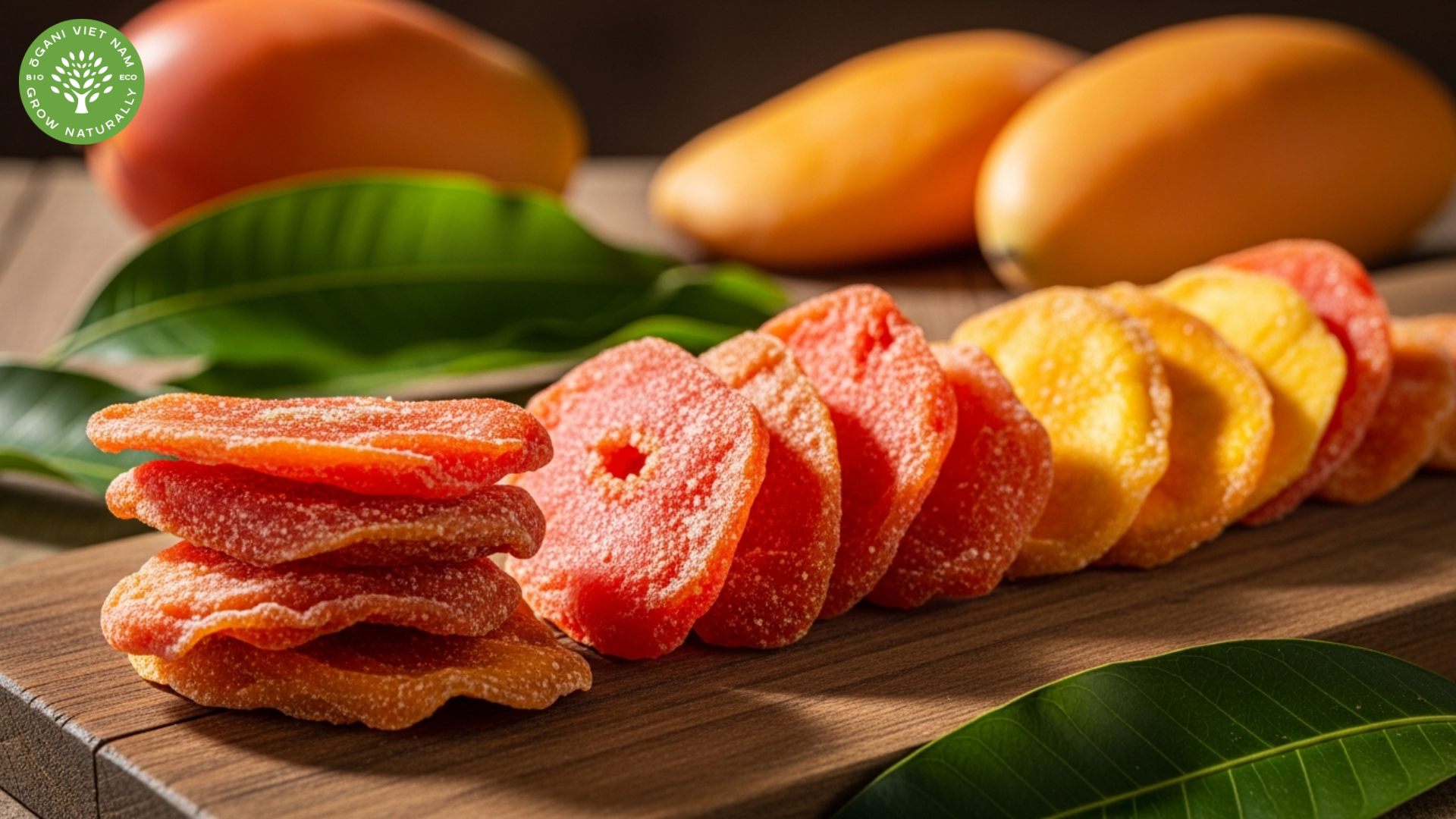
Red dried mango is a preserved fruit delicacy created through careful dehydration of ripe mangoes, often enhanced with natural seasonings that give it a distinctive reddish hue and an irresistible sweet-salty flavor profile. Unlike ordinary dried mango, this tropical treat offers a chewy texture and concentrated taste that makes it the perfect guilt-free snack for any time of day.
At Ogani VN, we’ve spent years perfecting our red dried mango selection, and honestly? We’ve seen how this simple snack transforms from an occasional treat into a household staple once people discover its versatility and bold flavor.
What makes red dried mango different from regular dried mango?

The name itself tells part of the story. While standard dried mango slices maintain their golden-yellow color, red dried mango gets its characteristic appearance from the dehydration process combined with natural additions like salt, chili powder, or even traditional spices like red Kampot pepper. Think of it as dried mango’s more adventurous cousin.
The texture? Chewy, but not tough. We’re talking about that perfect balance where each bite releases tropical flavor without making your jaw tired. The taste profile shifts from purely sweet to something more complex – a dance between the mango’s natural sugars and savory notes that keep you reaching for another piece.
What really sets premium versions apart is the mango variety used. Irwin mangoes from Taiwan, for instance, bring deeper sweetness. Caribbean varieties offer tangier notes. At Ogani VN, we hand-pick each mango at peak ripeness because – and this might sound obvious but it matters tremendously – you can’t make exceptional preserved fruits from mediocre fresh fruit.
The dehydration process itself is an art. Temperatures matter. Rush it with high heat and you get brittle, flavorless chips. Go too slow and… well, let’s just say moisture becomes your enemy. Our process keeps temperatures below 130 degrees, preserving that authentic mango experience while removing just enough moisture to create that signature chewiness.
Health benefits of red dried mango you should know

Here’s where red dried mango surprises people. Yes, it’s a snack. Yes, it tastes indulgent. But the nutritional profile? Actually impressive.
First, the fiber content. One serving delivers about 2-3 grams of dietary fiber, which supports digestive health and keeps you feeling satisfied longer. That’s your gut thanking you for choosing fruit over processed snacks.
The vitamin A concentration deserves attention too. Mangoes already rank high in beta-carotene, and the dehydration process concentrates these nutrients. Your eyes, skin, and immune system all benefit. We’re talking real, measurable nutritional value here – not just marketing fluff.
Now, let’s address the elephant in the room: sugar content. Yes, dried fruits contain concentrated natural sugars. A typical serving has 15-20 grams. But here’s the thing – these are naturally occurring sugars from the mango itself, not added refined sugars. The key word there? Moderation. Enjoy it as a mindful snack, not mindless munching.
The salted varieties bring trace minerals – sodium, yes, but also potassium and magnesium. These electrolytes make red dried mango an excellent option for outdoor adventures or post-workout snacking. We’ve had customers tell us they pack it for hiking trips specifically for this quick energy boost.
One often-overlooked benefit: the antioxidant content. Mangoes contain compounds like mangiferin and quercetin that support cellular health. The drying process doesn’t eliminate these – they’re still there, concentrated and ready to work.
How to choose quality red dried mango (and avoid disappointing purchases)
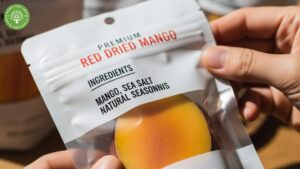
Walk into any market and you’ll find dried mango options ranging from budget to premium. The price differences aren’t arbitrary – quality varies wildly. Here’s what we’ve learned from years in this business.
Check the ingredient list first. Quality red dried mango should have a short list: mango, perhaps salt or natural seasonings, maybe a touch of preservative like sulfur dioxide (which is actually standard for preserving color). Long ingredient lists with words you can’t pronounce? Red flag.
The texture tells stories. Premium dried mango feels pliable in the package. Squeeze gently – it should give slightly without being wet. Too brittle and it’s been over-dried or sitting too long. Too moist and you’re looking at potential mold issues down the line.
Color consistency matters but perfection is suspicious. Natural dried mango shows slight variations in hue. Every piece looking identical might indicate artificial coloring. At Ogani VN, our slices show the beautiful imperfection of real fruit – some pieces slightly darker, others lighter, all delicious.
Look for transparency about sourcing. Where do the mangoes come from? When were they harvested? How were they processed? Brands willing to share these details typically have something worth sharing. We’re proud to specify our mango origins because we know the quality starts at the farm.
Packaging deserves attention too. Resealable bags protect against humidity. Clear windows let you inspect the product. Vague descriptions like “tropical fruit mix” often mean you’re not getting pure mango.
Here’s a pro tip we share with all our customers: smell matters. Open the bag and take a whiff. Fresh, fruity aroma? Good sign. Musty or off odors? Walk away. Your nose knows quality before your taste buds get involved.
Creative ways to enjoy red dried mango beyond snacking

Most people grab red dried mango straight from the bag – and there’s absolutely nothing wrong with that. But limiting this versatile ingredient to solo snacking? You’re missing out on some genuinely delicious possibilities.
Breakfast elevation
Chop red dried mango into small pieces and fold them into your morning yogurt. The chewy texture contrasts beautifully with creamy Greek yogurt, and those sweet-salty notes wake up your taste buds faster than coffee. We’ve also seen customers dice it into overnight oats for a tropical twist that makes Monday mornings slightly more bearable.
Blend it into smoothie bowls for texture. Unlike fresh mango that just liquefies, dried pieces add chewiness that makes each spoonful interesting. Top with granola, chia seeds, and extra dried mango slices for an Instagram-worthy breakfast that actually tastes as good as it looks.
Cooking and baking applications
Here’s where things get interesting. Dice red dried mango and add it to rice pilaf during the last few minutes of cooking. The steam rehydrates the fruit slightly while infusing the rice with subtle sweetness. We stumbled onto this accidentally during a team lunch and now it’s a regular feature in our office kitchen.
Baking? Absolutely. Fold chopped pieces into muffin or scone batter. The dried mango softens during baking while maintaining structure – no mushy fruit pockets like you’d get with fresh mango. Pair it with coconut or lime for flavors that transport you straight to a tropical beach.
Salad game-changer: slice thin strips of red dried mango over mixed greens with grilled chicken or shrimp. Add crushed peanuts, cilantro, and lime dressing. That sweet-salty-tangy combination? Chef’s kiss.
Trail mix and energy bites

Create custom trail mix by combining red dried mango with roasted cashews, pumpkin seeds, and dark chocolate chips. The flavor combination hits every taste note – sweet, salty, bitter, crunchy, chewy. Pack it for long drives, hiking trips, or just keep a container at your desk for afternoon slumps.
Energy bite recipe that our customers swear by: pulse dried mango with dates, almond butter, and oats in a food processor. Roll into balls, refrigerate, and you’ve got grab-and-go snacks that actually provide sustained energy without the sugar crash.
Storing red dried mango for maximum freshness and flavor

You invested in quality red dried mango – now let’s make sure it stays quality. Proper storage isn’t complicated, but small details make huge differences in shelf life and taste.
Room temperature works fine for unopened packages. Store in a cool, dry place away from direct sunlight. Your pantry is perfect. That cabinet above the stove? Terrible idea. Heat and humidity are dried fruit’s worst enemies.
Once opened, the rules change slightly. Transfer your red dried mango to an airtight container if the original packaging isn’t resealable. Glass jars work beautifully – you can see what you have, and they create a perfect seal. Squeeze out excess air before sealing. Oxygen exposure leads to flavor degradation over time.
Refrigeration extends shelf life significantly. In hot, humid climates (hello, tropical weather), we actually recommend refrigerating opened packages. The dried mango might firm up slightly in cold temperatures, but let it sit at room temperature for 10-15 minutes before eating and the texture returns to normal.
Freezing is an option for long-term storage. Portion your red dried mango into smaller bags, squeeze out air, and freeze for up to a year. The texture changes minimally, and you can eat frozen pieces directly as a cool summer treat – trust us on this one.
Watch for signs that your dried mango has gone past its prime: off smells, visible mold (obviously), excessive hardness, or crystallized sugar on the surface beyond normal levels. Quality dried mango from Ogani VN typically stays fresh for 6-8 months when stored properly, but honestly? It rarely lasts that long in most households.
Frequently Asked Questions
Is red dried mango healthier than candy?
Absolutely. While both contain sugar, red dried mango provides fiber, vitamins, and minerals that refined candy lacks. The natural sugars come with nutritional benefits rather than empty calories. That said, portion control still matters.
Can I give red dried mango to children?
Yes, but with supervision for younger kids due to the chewy texture. It’s a much better snack option than processed treats. Many parents slice pieces smaller for toddlers to prevent choking hazards.
Does the red color come from artificial dyes?
Not in quality products. The reddish hue typically comes from natural seasonings like chili powder, paprika, or the mango variety itself. Always check the ingredient list to be certain.
How many pieces of red dried mango should I eat per day?
A reasonable serving is about 40-50 grams (roughly a handful). This gives you the nutritional benefits without overdoing the sugar content. Listen to your body and adjust based on your dietary needs.
Can red dried mango help with constipation?
The fiber content can support digestive health and regularity. Combined with adequate water intake, it may help, though it’s not a medical treatment. Consult healthcare providers for persistent digestive issues.
Experience the authentic taste of red dried mango from Ogani VN
After reading this far, you understand what separates exceptional red dried mango from the mediocre options filling store shelves. Quality ingredients, careful processing, proper storage – these details transform a simple dried fruit into a snack experience worth savoring.
At Ogani VN, we don’t just sell dried mango. We curate tropical fruit experiences that connect you to the orchards where these mangoes grow, the farmers who tend them, and the careful hands that transform fresh fruit into preserved perfection. Every slice tells a story of sunshine, patience, and dedication to quality.
Ready to discover why our customers keep coming back? Browse our selection of premium red dried mango and other tropical dried fruits. Whether you’re looking for a healthy snack alternative, a unique cooking ingredient, or the perfect gift for fruit lovers, we’ve got you covered.
Visit Ogani VN today and taste the difference that quality makes. Your taste buds will thank you, and your snack drawer will never be boring again. Order now and let’s bring a little tropical sunshine into your everyday life.
Read more:
- Red Dried Mango: Your Guide To This Premium Tropical Snack
- Dried Red Dragon Fruit vs Fresh: Color, Nutrition & When to Use Each
- Dragon Fruit Powder: Unlocking Ít Superfood Potential for Health and Wellness.
- Red Dragon Fruit Dried: Your Complete Buying Guide
- Dried Red Dragon Fruit vs Fresh: Color, Nutrition & When to Use Each