


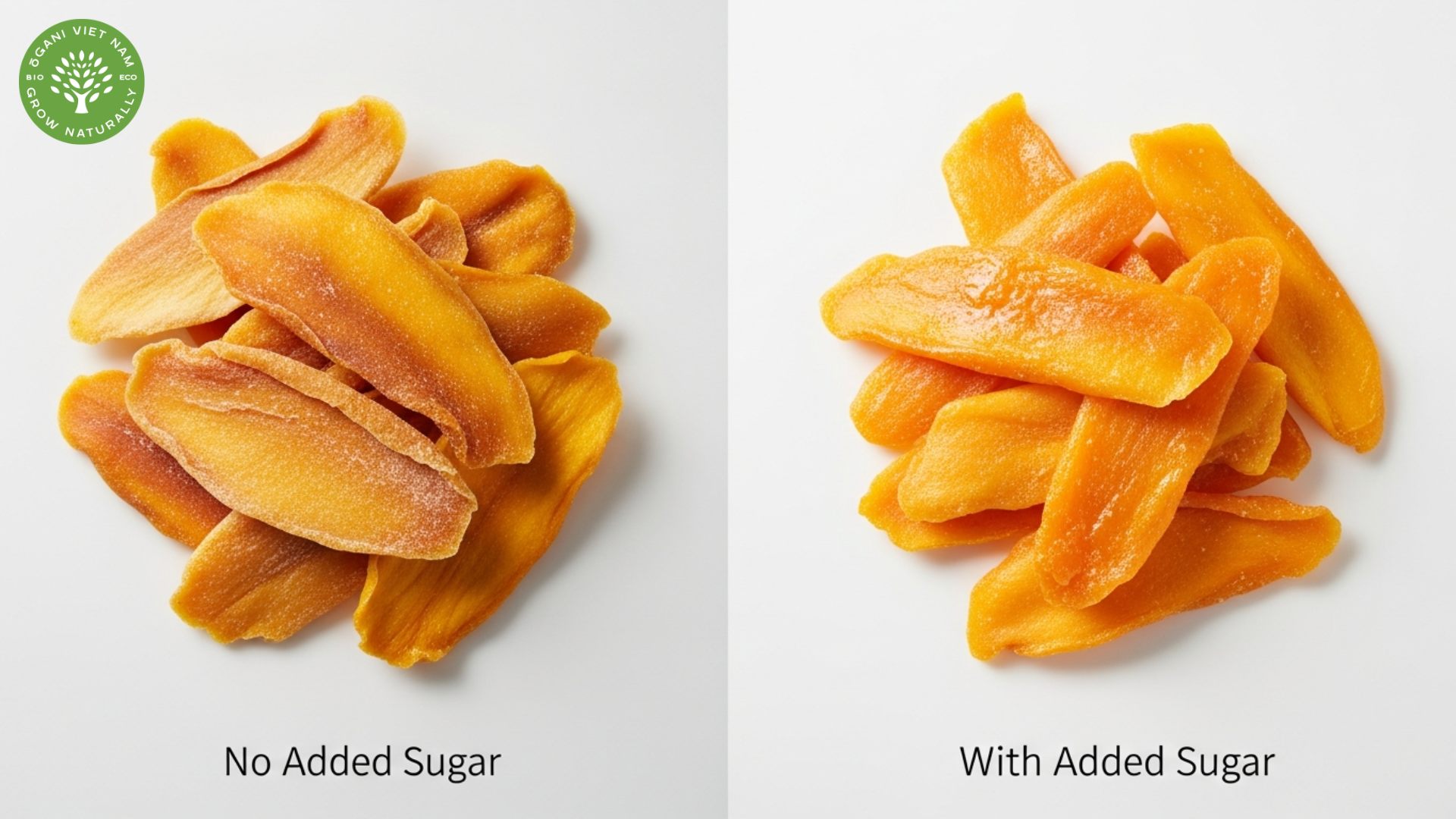
Yes, dried mangoes are high in fiber – providing approximately 2-3 grams of dietary fiber per serving (about 40g or 1.4 oz). While not as fiber-rich as some dried fruits like prunes or figs, dried mango still offers a meaningful contribution to your daily fiber needs, supporting digestive health and promoting satiety.
At Ogani VN, we’ve noticed many of our customers grab dried mango as a quick snack without fully understanding its nutritional profile. Let’s dig deeper into what makes this tropical treat a solid fiber source and how you can maximize its benefits.
Are dried mangoes high in fiber? Understanding the numbers
When fresh mangoes undergo the dehydration process, their water content evaporates, concentrating nutrients – including fiber. A 100-gram serving of dried mango typically contains around 2.4 grams of dietary fiber, which represents roughly 7-10% of the recommended daily intake for adults.

This might not sound groundbreaking at first. However, considering that most people struggle to meet their daily fiber requirements (25g for women, 38g for men), every little bit counts. The beauty of dried mango lies in its convenience – it’s shelf-stable, portable, and requires zero preparation.
The fiber in dried mango is predominantly insoluble fiber, which adds bulk to stool and helps food move through your digestive system more efficiently. There’s also a smaller amount of soluble fiber that can help moderate blood sugar levels and support heart health.
What surprises many people is how the texture changes between fresh and dried fruit affect the fiber experience. Fresh mango’s soft, juicy flesh masks its fiber content, while dried mango’s chewy texture makes you more aware of the fiber you’re consuming. That satisfying chew? That’s partly the fiber at work.
How high in fiber are dried mangoes compared to fresh mango?

Here’s where things get interesting. Fresh mango actually contains more fiber per equivalent calorie than dried mango – and the difference is more significant than you might expect.
A research study published in the PMC database found that an isocaloric serving of fresh mango contained 2.64 grams of fiber compared to just 0.74 grams in dried mango. Why the discrepancy? It comes down to water content and serving size.
The water factor
Fresh mango is about 83% water, which means you’re eating a larger volume of fruit to get the same calories. That larger volume naturally contains more fiber. When you remove the water to create dried mango, you’re left with a denser, more concentrated product where the fiber-to-calorie ratio shifts.
Think of it this way: eating 100 calories of fresh mango means consuming roughly 150 grams of fruit. Those same 100 calories in dried mango equal about 28 grams. The fresh version simply gives you more physical fruit, including more fiber.
Making the right choice
Does this mean fresh is always better? Not necessarily. At Ogani VN, we encourage our customers to consider their lifestyle and goals. Dried mango shines when you need a portable, non-perishable snack with decent fiber content. Fresh mango wins when you want maximum fiber, hydration, and volume for fewer calories.
Many of our health-conscious customers use both strategically – fresh mango in smoothies and breakfast bowls at home, dried mango in their gym bags or office drawers for emergency snacking.
Why dried mangoes high in fiber matter for your health

While we’re focusing on fiber, let’s not ignore the supporting cast of nutrients that make dried mangoes a worthwhile addition to your diet. The fiber works synergistically with other compounds to deliver comprehensive health benefits.
Digestive wellness
The dietary fiber in dried mango doesn’t work alone. These golden slices also contain digestive enzymes – including amylases that help break down carbohydrates. When you combine fiber with these enzymes, you’re supporting both the mechanical and chemical aspects of digestion.
Regular consumption of fiber-rich foods like dried mango can help prevent constipation, reduce bloating, and maintain a healthy gut microbiome. The fiber acts as a prebiotic, feeding the beneficial bacteria in your intestines.
Blood sugar management
This might seem counterintuitive given dried mango’s natural sugar content, but the fiber helps slow sugar absorption into your bloodstream. When you eat dried mango with its fiber intact (as opposed to drinking mango juice), you’re getting a more gradual energy release rather than a sharp spike.
We always remind our customers: the 2-3 grams of fiber per serving helps buffer the sugar impact. Just don’t go overboard with portion sizes.
Satiety and weight management
Here’s something we’ve heard countless times at Ogani VN: “I ate a handful of dried mango and felt satisfied for hours.” That’s the fiber working its magic. Fiber-rich foods expand in your stomach and slow digestion, triggering satiety hormones that tell your brain you’re full.
One serving of dried mango can tide you over between meals far better than the same calories from a fiber-free snack like candy or chips. The chewy texture also forces you to slow down and actually chew your food – a simple behavior modification that supports mindful eating.
Antioxidant and vitamin boost
While discussing fiber, it’s worth mentioning that dried mango remains an excellent source of Vitamin C, Vitamin A, and antioxidants like beta-carotene. These nutrients support immune function, skin health, and cellular protection. The fiber helps these fat-soluble vitamins absorb more effectively when consumed with a small amount of healthy fat.
Making dried mangoes high in fiber work for your diet

Smart consumption strategies can help you get the most nutritional bang for your buck when enjoying dried mango. We’ve compiled practical tips based on customer feedback and nutritional science.
Choose unsweetened and unsulfured varieties. Many commercial dried mangoes contain added sugar, which increases calorie density without adding fiber. At Ogani VN, we stock organic dried mango that’s naturally sweet without additives. Check labels carefully – you want fruit and nothing else.
Practice portion control. A standard serving is about 40 grams (roughly 1/4 cup or 4-5 large pieces). This gives you that 2-3 grams of fiber without overdoing sugar or calories. Pre-portion your dried mango into small containers to avoid mindlessly munching through an entire bag.
Pair with protein or healthy fats. Combine dried mango with a handful of almonds, cashews, or a spoonful of nut butter. This combination increases satiety, slows sugar absorption even further, and creates a more balanced snack that’ll keep you energized longer.
Stay hydrated. Remember, you’re eating concentrated fruit without the water content. Drink plenty of water when consuming dried mango to help the fiber do its job properly. The fiber needs moisture to bulk up and move through your digestive system effectively.
Use it strategically in recipes. Chop dried mango into oatmeal, yogurt parfaits, or homemade trail mix. When combined with other fiber sources like oats, chia seeds, or whole grains, you’re creating a fiber-rich meal that supports digestive health throughout the day.
Time it right. Some of our customers swear by eating dried mango as a pre-workout snack – the natural sugars provide quick energy while the fiber prevents crashes. Others prefer it as a mid-afternoon pick-me-up to bridge the gap between lunch and dinner.
Frequently asked questions
How much dried mango should I eat daily for fiber benefits?
One to two servings (40-80 grams total) provides 4-6 grams of fiber while keeping sugar intake reasonable. This represents about 16-24% of your daily fiber needs.
Is dried mango better than other dried fruits for fiber?
Dried figs, prunes, and apricots contain more fiber per serving than dried mango. However, dried mango offers a unique flavor profile and vitamin composition that other dried fruits don’t match. Variety is key in any healthy diet.
Can I eat dried mango if I’m trying to lose weight?
Yes, in moderation. The fiber content supports satiety and portion-controlled servings fit into most weight loss plans. Just be mindful of quantities since dried fruit is calorie-dense.
Does the drying process destroy fiber in mangoes?
No, fiber remains stable during dehydration. However, some heat-sensitive vitamins like Vitamin C may decrease slightly. The fiber content stays intact.
Will dried mango help with constipation?
The fiber and natural sorbitol in dried mango can support regular bowel movements. Just remember to drink adequate water for fiber to work effectively.
So, are dried mangoes high in fiber? Your next steps
Are dried mangoes high in fiber? Absolutely – they provide a respectable 2-3 grams per serving, making them a convenient way to boost your daily fiber intake. While fresh mango edges out dried in the fiber-per-calorie department, dried mango’s portability, shelf stability, and concentrated nutrition make it a valuable pantry staple.
At Ogani VN, we believe in honest nutrition education. Dried mango isn’t a miracle food, but it’s a smart choice when you want a naturally sweet snack that delivers fiber, vitamins, and sustained energy. The key is choosing quality products without added sugars and enjoying them mindfully as part of a varied diet.
Ready to experience premium organic dried mango? Browse our selection at Ogani VN where we source only the finest unsweetened, unsulfured dried fruits. Your digestive system will thank you, and your taste buds will celebrate. Shop now and discover why thousands of health-conscious customers trust us for their dried fruit needs.
Meta Description: Are dried mangoes high in fiber? Yes! Learn how dried mangoes provide 2-3g fiber per serving, compare to fresh mango, and discover smart ways to enjoy this healthy snack.
Read more:
- Baking With Dried Red Dragon Fruit: Breads, Muffins & Cookies
- Dried Red Dragon Fruit vs Fresh: Color, Nutrition & When to Use Each
- Dragon Fruit Powder: Unlocking Ít Superfood Potential for Health and Wellness.
- Is Dried Mangoes Good For You? The Truth About This Sweet Snack
- Are Dried Mangoes High In Fiber? The Complete Guide