


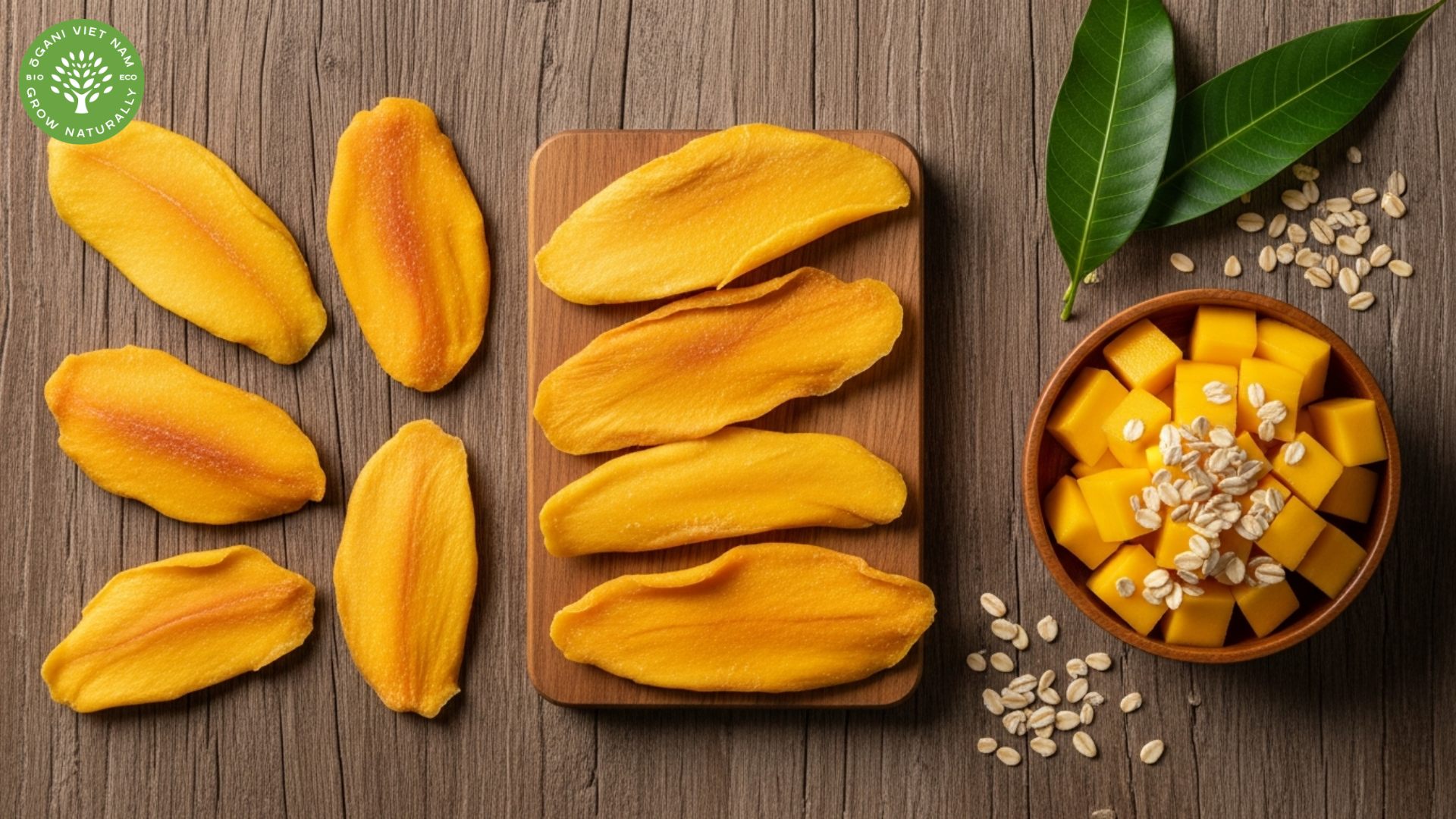
Yes, dried mango is high in fiber compared to many snack options, providing approximately 2-3 grams of fiber per serving (about 40g or 1.4 ounces). While it contains less fiber than fresh mango due to the dehydration process, dried mango remains a convenient and fiber-rich option that supports digestive health when enjoyed in moderation.
Is dried mango high in fiber? Understanding the numbers

Let’s get straight to the numbers because that’s what really matters when you’re trying to boost your fiber intake. When we at Ogani VN talk to customers about dried mango, the fiber question comes up constantly—and for good reason.
A standard 40-gram serving of dried mango typically delivers between 2 to 3 grams of dietary fiber. To put this in perspective, that’s roughly 8-12% of your daily recommended fiber intake (which is 25 grams for women and 38 grams for men). Now, you might be thinking, “Is that a lot or a little?” Here’s the thing: compared to potato chips or candy, it’s significantly higher. Compared to fresh mango or high-fiber champions like raspberries, it’s moderate.
The fiber content can vary slightly depending on the mango variety and processing method. Some brands add sugar or use sulfites, which don’t affect fiber but do impact overall nutritional value. At Ogani VN, we focus on minimally processed dried mango to preserve as much natural fiber as possible.
What makes this fiber content valuable is its concentration. Because the water has been removed, you’re getting a more compact source of nutrients and fiber per bite. However—and this is crucial—this also means the natural sugars are concentrated too, which is why portion control matters.
Is dried mango high in fiber compared to fresh mango?
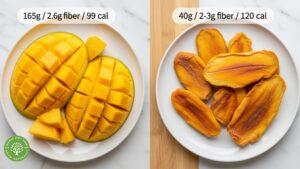
This comparison always surprises people. You’d think removing water wouldn’t change the fiber ratio that much, but the reality is more nuanced.
Fresh mango contains about 1.6 grams of fiber per 100 grams of fruit. That same 100 grams of dried mango packs approximately 2.4 grams of fiber. So technically, gram for gram, dried mango has more fiber. But—and this is where it gets interesting—fresh mango has something dried mango can never match: water content and volume.
When you eat a cup of fresh mango pieces (around 165 grams), you’re consuming about 2.6 grams of fiber along with 99 calories. Compare that to 40 grams of dried mango (roughly equivalent in snacking satisfaction), which gives you 2-3 grams of fiber but packs around 120-140 calories. The fresh version gives you more volume, more satiety, and fewer calories for a similar fiber boost.
Here’s what we’ve noticed working with customers at Ogani VN: dried mango works brilliantly as a portable, shelf-stable fiber source when fresh isn’t available. Think office snacks, hiking trips, or emergency desk drawer stashes. Fresh mango wins for meals and when you want maximum fullness with fewer calories. Both have their place in a fiber-conscious diet—it’s not about one being “better,” it’s about strategic use.
Why dried mango’s high fiber content benefits your health
The fiber in dried mango isn’t just a number on a nutrition label—it actually does meaningful work in your body. Let me walk you through what happens when that fiber hits your digestive system.
Supporting digestive health and regularity

The dietary fiber in dried mango acts as a natural broom for your intestines. It adds bulk to your stool and helps move things along more smoothly. If you struggle with occasional constipation, a small portion of dried mango as an afternoon snack can genuinely help. We’ve had customers at Ogani VN tell us they keep a bag in their desk drawer specifically for this gentle, natural digestive support.
But here’s where dried mango gets clever: it also feeds your gut bacteria. That fiber becomes food for the beneficial microbes living in your intestines, helping maintain a balanced gut microbiome. A healthier gut environment means better nutrient absorption, stronger immunity, and even improved mood regulation. Not bad for a sweet, chewy snack.
Blood sugar management and sustained energy
One benefit that surprises people is how the fiber content helps moderate blood sugar spikes. Yes, dried mango contains natural sugars—no denying that. But the fiber slows down how quickly those sugars enter your bloodstream. Instead of a sharp spike followed by a crash (like you’d get from gummy candy), you experience a more gradual rise and sustained energy.
This makes dried mango a smarter choice for mid-afternoon energy slumps. Pair it with some nuts or yogurt, and you’ve got a balanced snack that keeps you going until dinner without the jittery aftermath of a sugary energy bar.
Satiety and weight management support
Fiber-rich foods help you feel fuller longer, and dried mango delivers on this front. When fiber reaches your stomach, it absorbs moisture and expands, creating a sense of fullness. This is why a small handful of dried mango can curb your appetite more effectively than an equivalent amount of sugar-free candy.
We always tell customers at Ogani VN: if you’re trying to manage your weight, portion control with dried mango is key. Pre-portion your servings instead of eating straight from the bag. The fiber content works in your favor, but only if you don’t override it by eating half a pound in one sitting.
How to maximize the high fiber benefits of dried mango
Knowing dried mango is high in fiber is one thing. Actually using it strategically in your diet? That’s where the magic happens.
Daily serving recommendations
The sweet spot for most people is 30-40 grams of dried mango per day—roughly 5-7 pieces depending on size. This gives you that beneficial fiber boost without overdoing the natural sugars or calories. If you’re specifically trying to increase fiber intake, you could go up to 60 grams, but make sure you’re drinking plenty of water. Fiber without adequate hydration can actually cause constipation, the opposite of what you want.
Timing matters too. Many of our Ogani VN customers find morning or mid-afternoon works best. Morning consumption pairs well with breakfast (think oatmeal or yogurt), while afternoon timing helps bridge the gap between lunch and dinner without spoiling your appetite.
Pairing strategies for maximum benefit

Dried mango’s fiber works even better when you combine it with other nutritious foods. Here are combinations we’ve tested and loved:
- Yogurt parfait: Layer Greek yogurt with dried mango chunks and granola. The protein from yogurt + fiber from mango and granola = serious staying power.
- Trail mix: Mix dried mango with almonds, walnuts, and pumpkin seeds. You’re adding protein, healthy fats, and more fiber from the nuts.
- Breakfast boost: Chop dried mango into your morning oatmeal or whole grain cereal. Double fiber, double satisfaction.
- Smoothie chunks: Add a few pieces to your morning smoothie. They rehydrate slightly and add natural sweetness plus that fiber content.
The principle here is simple: dried mango’s fiber is good, but combining it with protein and healthy fats creates a nutritionally complete snack that sustains energy and supports various health goals.
Is dried mango high in fiber safe for everyone?

Let’s be real about dried mango’s limitations because understanding the full picture helps you use it smartly.
The biggest watch-out is overconsumption. Because dried mango is concentrated in both fiber and natural sugars, it’s easy to eat too much without realizing it. That fiber content we’ve been praising? Too much at once can cause bloating, gas, or digestive discomfort, especially if your body isn’t used to high-fiber foods. Start small if you’re new to dried mango and gradually increase your portion.
Sugar content is another consideration. While the sugars are natural (not added), dehydration concentrates them significantly. A 40-gram serving can contain 20-25 grams of sugar. For context, the American Heart Association recommends limiting added sugars to 25 grams per day for women and 36 grams for men. Dried mango’s sugars aren’t “added,” but they still impact your blood sugar and overall daily sugar intake.
Check ingredient labels carefully. Some commercial brands add extra sugar, corn syrup, or sulfites as preservatives. At Ogani VN, we emphasize transparency in sourcing—ideally, your ingredient list should read: “Mango.” That’s it. The simpler, the better.
One more practical tip: if you have diabetes or are managing blood sugar levels, consult with your healthcare provider about appropriate portion sizes. The fiber helps, but the sugar content still requires mindful consumption.
Frequently Asked Questions
Q: How much fiber should I get from dried mango daily?
A: A 40-gram serving (about 5-7 pieces) providing 2-3 grams of fiber is a good daily amount. This contributes to your total fiber goal without overloading on concentrated sugars. Remember, fiber should come from various sources throughout the day—whole grains, vegetables, legumes, and fruits—not just dried mango.
Q: Is the fiber in dried mango soluble or insoluble?
A: Dried mango contains both types. Soluble fiber (which helps lower cholesterol and regulate blood sugar) and insoluble fiber (which promotes digestive regularity). This combination makes it a well-rounded fiber source that supports multiple aspects of health.
Q: Can dried mango help with constipation?
A: Yes, the fiber content in dried mango can support regular bowel movements. However, you must drink adequate water—fiber needs moisture to work effectively. Without enough hydration, high fiber intake can actually worsen constipation.
Q: Does the drying process destroy fiber?
A: No, fiber remains stable during the dehydration process. What changes is the concentration—as water leaves, the fiber content per gram increases. However, some heat-sensitive nutrients like Vitamin C may decrease slightly during drying.
Q: How does dried mango compare to other high-fiber dried fruits?
A: Dried mango falls in the moderate range. Dried figs and prunes contain more fiber (8-10 grams per 100 grams), while dried apricots are comparable to dried mango (2-3 grams per serving). Choose based on your taste preferences and specific nutritional needs.
Making the most of high-fiber dried mango in your diet
So, is dried mango high in fiber? The answer is a solid yes, especially when compared to typical snack foods. With 2-3 grams of fiber per serving, dried mango offers a convenient, shelf-stable way to boost your daily fiber intake while satisfying your sweet tooth naturally.
The key to making dried mango work for your health goals is mindful consumption. Stick to reasonable portions, pair it with protein or healthy fats, drink plenty of water, and choose minimally processed varieties without added sugars. When you do this, you’re not just getting fiber—you’re supporting digestive health, maintaining stable energy levels, and feeding your beneficial gut bacteria.
At Ogani VN, we’re passionate about helping you make informed choices about nutritious foods like dried mango. Whether you’re looking to improve digestive health, find better snack alternatives, or simply enjoy delicious, fiber-rich foods, we’ve got premium dried mango options that fit your lifestyle.
Ready to experience the fiber benefits of quality dried mango? Browse our selection at Ogani VN and discover why our customers trust us for their healthy snacking needs. Have questions about our products or want personalized recommendations? Our team is here to help—reach out today and let’s find the perfect dried fruits for your wellness journey.
Read more:
- Red Dragon Fruit Dried: Your Complete Buying Guide
- Dried Mango Vitamins: Complete Nutritional Guide
- How Many Calories in Dried Mango: Complete Nutrition Guide
- Dried Mango High in Fiber? The Complete Nutrition Guide