


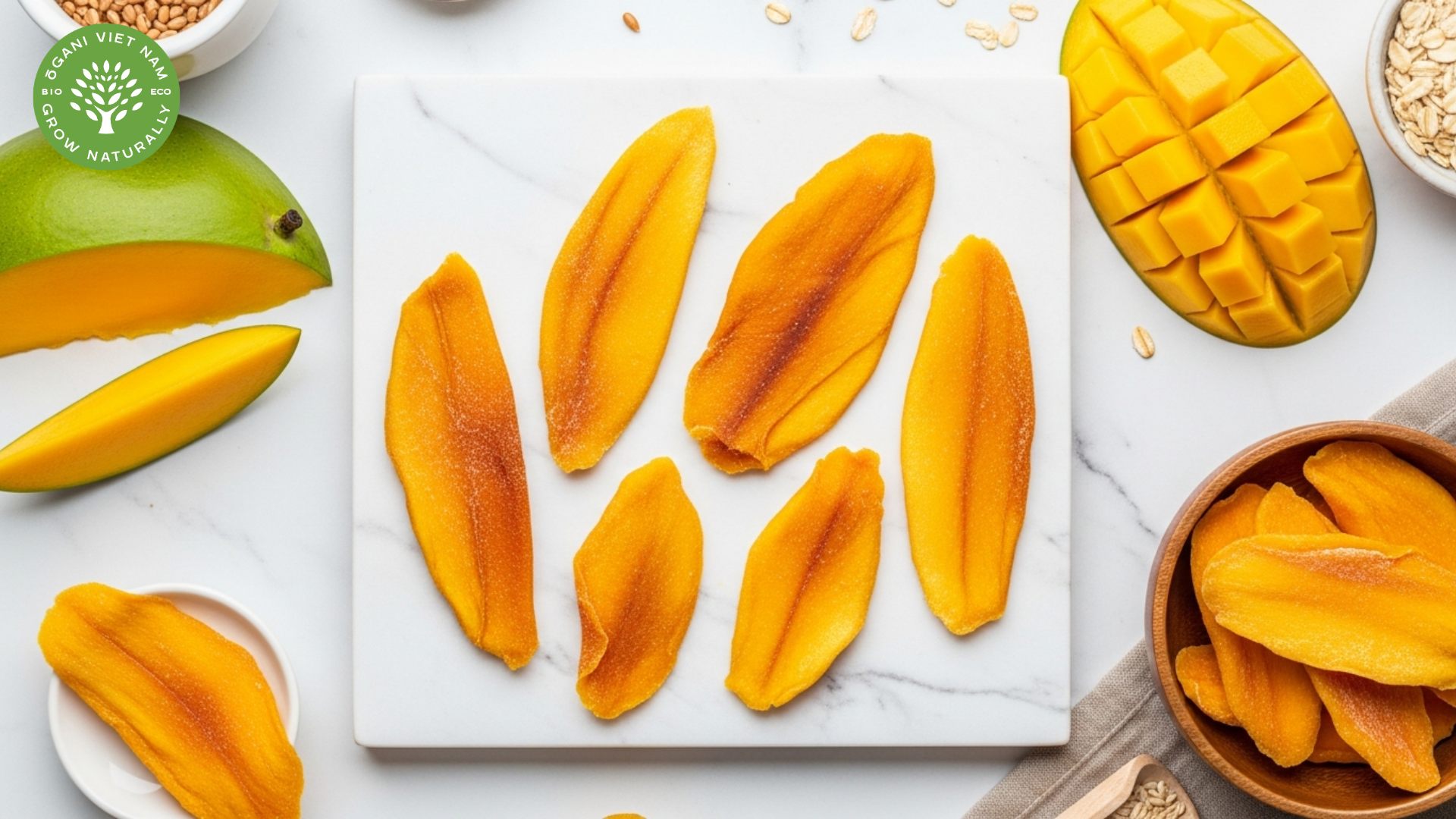
Yes, dried mangoes do have fiber—approximately 2.4 grams per 100 grams serving. While the drying process concentrates the natural sugars, it also preserves much of the dietary fiber found in fresh mangoes, making dried mango a convenient and portable source of this essential nutrient for digestive health.
Does dried mango have fiber content worth considering?
When fresh mangoes go through the dehydration process, water is removed but the fiber structure remains largely intact. At Ogani VN, we’ve noticed many customers are surprised to learn that dried fruit maintains its fiber content even after processing.
The fiber in dried mango comes in two important forms: soluble and insoluble fiber. Soluble fiber helps stabilize blood sugar levels and supports heart health by binding with cholesterol. Insoluble fiber, on the other hand, adds bulk to your digestive system and promotes regular bowel movements. A typical 40-gram serving of dried mango (about a small handful) provides roughly 1 gram of dietary fiber, which contributes to the recommended daily intake of 25-30 grams for adults.
However, here’s something crucial to understand: fresh mango actually contains more fiber per calorie than dried mango. A 100-gram serving of fresh mango delivers about 2.6 grams of fiber along with significantly more water content, while dried mango at the same weight packs 2.4 grams of fiber but with concentrated sugars. The difference isn’t dramatic in absolute fiber numbers, but the calorie density changes everything—you’re consuming far more sugar per bite with the dried version.
How the drying process affects nutritional value and fiber
The dehydration process is fascinating when you think about it. When we remove up to 80-90% of water from fresh mangoes, what’s left behind becomes incredibly concentrated. This concentration works both ways—you get more fiber per weight, but you also get significantly more natural sugars packed into each piece.
Think of it like this: if you eat 100 grams of fresh mango, you’re getting plenty of water that helps fill you up. But 100 grams of dried mango is essentially several whole fresh mangoes compressed down. That’s why dried mango feels so sweet and satisfying, yet it’s also why portion control becomes critical.
Beyond fiber, dried mangoes retain impressive amounts of vitamin A and vitamin C, though some heat-sensitive nutrients do diminish during hot air drying. The beta-carotene that gives mangoes their golden color survives well, which is why dried mango remains an excellent source of antioxidants. At Ogani VN, we source dried mangoes processed with minimal heat to preserve as many nutrients as possible.
What you won’t find in quality dried mango—at least the kind we offer—are artificial preservatives or added sugars. The natural sweetness of ripe mangoes is more than enough. Some commercial brands do add sugar or sulfites, so always check the ingredient list. Pure dried mango should list just one ingredient: mango.
Does dried mango have fiber that supports digestive health?

Do dried mangoes have fiber that actually helps your digestion? Absolutely. The 2-3 grams of fiber per serving can contribute meaningfully to your daily intake, especially if you struggle to eat enough fresh fruits and vegetables.
The soluble fiber in dried mango works by absorbing water in your digestive tract, forming a gel-like substance that slows down digestion. This gradual process helps prevent blood sugar spikes and keeps you feeling satisfied longer. It’s one reason why a small portion of dried mango makes such a good mid-afternoon snack—it provides quick energy from natural sugars while the fiber prevents that crash you’d get from candy.
For those dealing with occasional constipation, the insoluble fiber adds bulk and helps food move through your intestinal tract more efficiently. However, moderation is key here. Eating too much dried mango can actually have the opposite effect due to the high sugar concentration, potentially causing digestive discomfort or bloating.
The polyphenols and antioxidants in dried mango also support gut health in less obvious ways. These compounds help maintain a healthy balance of beneficial bacteria in your microbiome, which influences everything from immunity to mood. It’s not just about the fiber—it’s the entire package of nutrients working together.
Fresh versus dried mango: comparing fiber and nutritional benefits
Here’s where things get interesting. Research shows that when people eat fresh mango versus the same caloric amount of dried mango, the fresh version provides better satiety despite having similar fiber content. A study found that 100 calories of fresh mango contained 2.64 grams of fiber compared to just 0.74 grams in an equivalent caloric serving of dried mango.

This comparison reveals something important: while dried mangoes have fiber, you need to eat more calories’ worth to match the fiber content of fresh fruit. The water content in fresh mango plays a huge role in making you feel full, which dried versions obviously lack.
That said, dried mango has its place. When you’re hiking, traveling, or simply don’t have access to fresh fruit, dried mango delivers concentrated nutrition in a shelf-stable form. We at Ogani VN see customers use it strategically—adding it to morning oatmeal for texture and sweetness, mixing it into trail mix for sustained energy, or keeping a small bag in their desk drawer for emergency snacking.
The key is understanding that fresh and dried mango serve different purposes in a balanced diet. Neither is inherently better—they’re different tools for different situations. Fresh mango hydrates and fills you up with fewer calories. Dried mango travels well and provides quick energy with some fiber benefits when consumed mindfully.
Smart ways to maximize fiber intake from dried mango
Let’s talk about the elephant in the room: it’s ridiculously easy to overeat dried mango. Those chewy, sweet pieces practically beg you to reach for another one, and suddenly you’ve demolished half a bag without thinking about it.
A reasonable portion is about 30-40 grams, which looks like a small handful or roughly 3-4 strips depending on how they’re cut. This amount gives you approximately 1 gram of fiber along with a good dose of vitamins, but also contains around 100-120 calories primarily from natural sugars.
Here are some practical ways we recommend enjoying dried mango:
- Pre-portion your servings into small containers or bags so you’re not eating straight from a large package
- Pair dried mango with protein sources like nuts or cheese to balance the sugar impact and increase satiety
- Chop dried mango into smaller pieces and sprinkle over yogurt or salads—you’ll use less but still get the flavor throughout
- Rehydrate dried mango by soaking it in warm water for 10-15 minutes before adding to recipes for a softer texture
- Treat it as a natural sweetener in homemade energy bars or baked goods rather than eating it standalone

For people with diabetes or those watching their blood sugar, dried mango should be consumed with extra caution. The concentrated sugars can cause blood glucose spikes even though the fiber helps moderate this somewhat. Always test your individual response and consider splitting a portion in half if you’re concerned.
Athletes and active individuals might benefit more from dried mango’s quick carbohydrates and minerals like potassium, which supports muscle function. The fiber helps provide sustained energy rather than just a sugar rush, making it decent fuel for endurance activities when paired with other whole foods.
Frequently Asked Questions
Can dried mango help with constipation?
Yes, the fiber in dried mango can support regular bowel movements when consumed in moderate amounts with adequate water intake. However, eating too much may have the opposite effect due to high sugar content, so stick to recommended portions.
Is the fiber in dried mango the same quality as fresh mango?
The fiber structure remains similar, though fresh mango provides more fiber per calorie and comes with water content that aids digestion. Both soluble and insoluble fiber types are present in dried mango, just in a more concentrated form.
How much dried mango should I eat daily for fiber benefits?
A 30-40 gram serving (about one small handful) provides approximately 1 gram of fiber. This can be part of your daily fiber intake but shouldn’t be your primary source. Combine it with vegetables, whole grains, and other fruits for optimal digestive health.
Does organic dried mango have more fiber than regular?
No, the organic designation doesn’t affect fiber content. The difference lies in farming practices and absence of synthetic pesticides. Fiber levels depend on the mango variety and ripeness at harvest, not whether it’s organic.
Can I rely on dried mango alone for my daily fiber needs?
Definitely not. To get 25 grams of fiber from dried mango alone, you’d need to consume over 1 kilogram, which would deliver excessive calories and sugar. Use dried mango as a supplementary fiber source alongside diverse whole foods.
Making the most of dried mango’s fiber content
Do dried mangoes have fiber? Yes, they provide meaningful amounts of both soluble and insoluble fiber that support digestive health and stable blood sugar when eaten mindfully. While the 2.4 grams per 100 grams may not seem enormous, dried mango serves as a convenient, tasty way to add fiber to your diet—especially when fresh fruit isn’t accessible.
The secret is treating dried mango as the concentrated nutrition powerhouse it is, not as something to mindlessly snack on by the bagful. When you respect the portion sizes and pair it strategically with other whole foods, dried mango becomes a valuable addition to a fiber-rich diet.
At Ogani VN, we’re committed to providing premium quality dried mango without added sugars or preservatives, so you get pure fruit nutrition in every bite. Ready to experience the natural sweetness and fiber benefits of properly dried mango? Browse our selection of organic dried fruits today and discover how a small handful can make a big difference in your daily nutrition. Your digestive system will thank you.
Read more:
- Baking With Dried Red Dragon Fruit: Breads, Muffins & Cookies
- Dried Red Dragon Fruit vs Fresh: Color, Nutrition & When to Use Each
- Dragon Fruit Powder: Unlocking Ít Superfood Potential for Health and Wellness.
- Does Dried Mango Have A Lot Of Sugar?
- Do Dried Mangoes Have Fiber? The Complete Nutritional Truth