


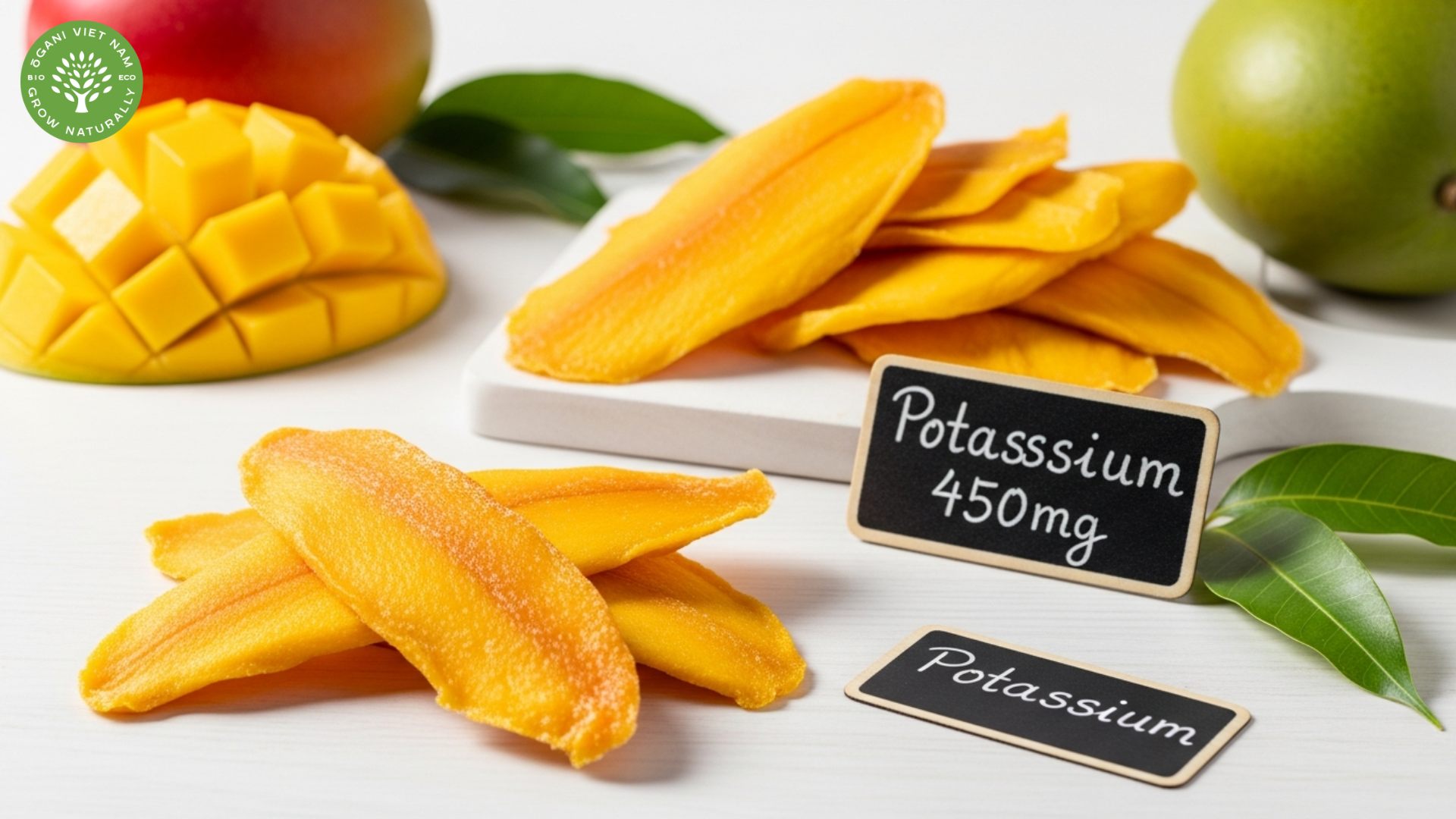
Yes, dried mango is high in potassium – containing approximately 450mg per 100 grams, which represents about 10% of your daily recommended intake. At Ogani VN, we’ve noticed many of our customers are surprised to learn that the drying process actually concentrates the mineral content, making dried mango a more potent source of potassium than fresh mango.
Is dried mango high in potassium compared to other fruits?
When you bite into a piece of our dried mango, you’re getting more than just a sweet treat. The concentration of nutrients during the dehydration process makes dried mango a surprisingly effective way to boost your potassium intake.
How much potassium does dried mango contain?
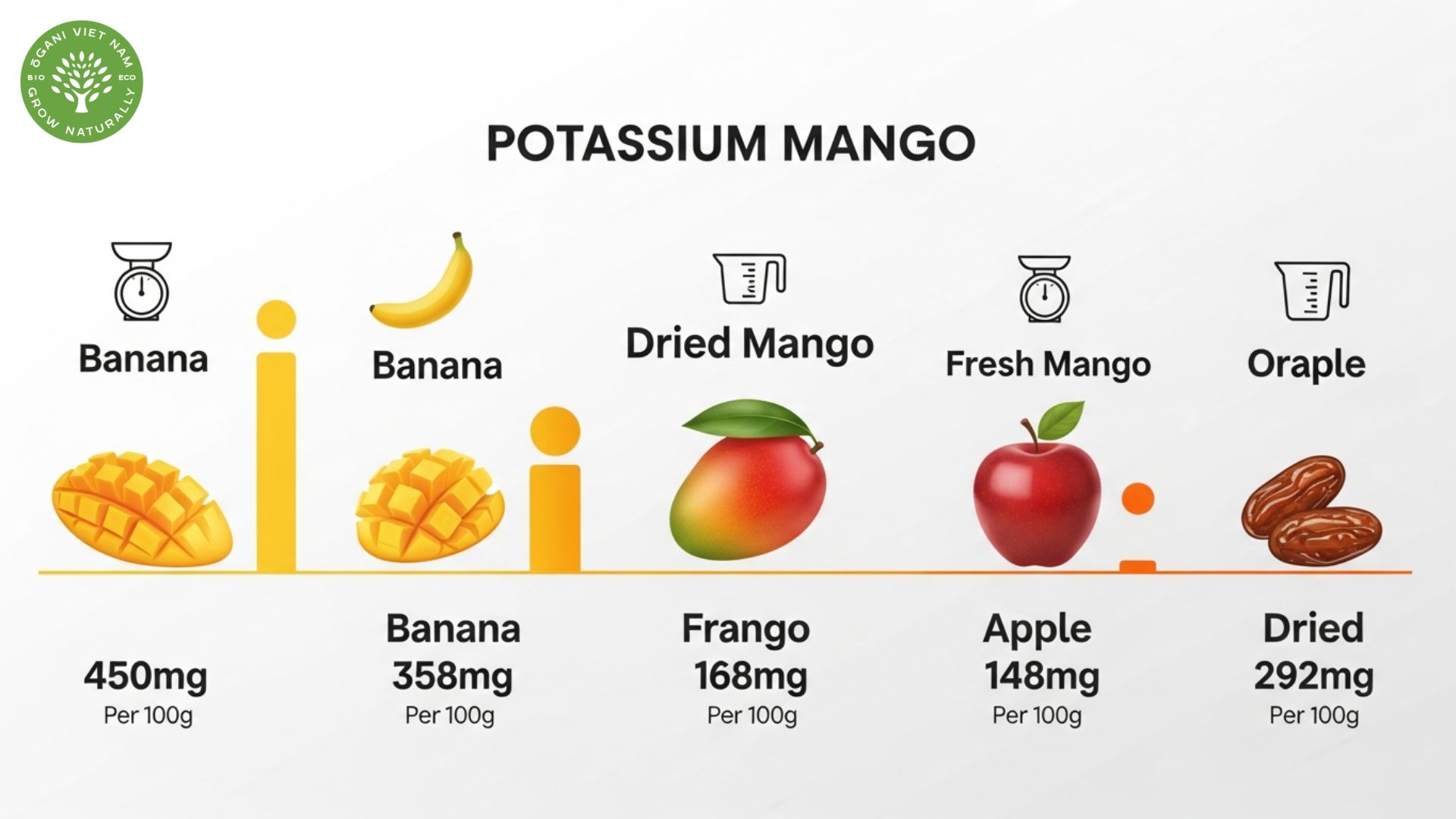
Let’s get specific with the numbers. A 100-gram serving of dried mango provides roughly 450mg of potassium. To put this in perspective, that’s more potassium than you’d find in a medium-sized fresh apple (around 148mg) but less than dried dates, which pack about 292mg in a smaller serving.
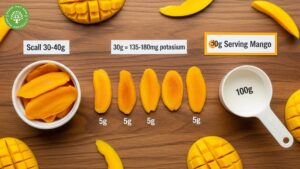
Here’s what matters for your daily snacking: a single piece of dried mango weighs approximately 5 grams, giving you about 20-25mg of potassium per piece. You’d need to eat around 8-10 pieces to get a meaningful contribution to your daily potassium goals. We often tell our customers that dried mango works best as part of a varied diet rather than your primary potassium source.
Comparing dried mango to fresh mango
The fresh versus dried debate always comes up, and honestly, both have their place. Fresh mango contains about 168mg of potassium per 100 grams – roughly one-third of what you’ll find in the dried version. But here’s the thing: when we remove the water content during drying, everything else becomes more concentrated.
Think of it this way – if you eat 100 grams of fresh mango, you’re consuming mostly water. That same amount of dried fruit represents several fresh mangoes compressed into a portable, shelf-stable snack. The trade-off? The sugar content also concentrates, jumping from about 13.7g per 100g in fresh mango to 66.3g in dried. We’ll talk more about managing that later.
How high potassium levels in dried mango support your daily needs
Most adults need between 2,600-3,400mg of potassium daily, depending on age, gender, and activity level. Women typically need around 2,600mg, while men should aim for 3,400mg. Athletes and those who sweat heavily might need even more to replace what they lose through perspiration.
So where does dried mango fit in? That 450mg per 100 grams represents roughly 10-13% of your daily requirement. It’s a decent contribution, but you wouldn’t want to rely solely on dried mango to meet your potassium needs. We recommend thinking of it as one tool in your nutritional toolkit.
Here’s a realistic scenario: if you enjoy a small handful of dried mango (about 30-40 grams) as an afternoon snack, you’re getting approximately 135-180mg of potassium. Pair that with a banana at breakfast (about 422mg), a cup of cooked spinach at lunch (around 840mg), and a baked potato at dinner (about 925mg), and you’ve comfortably hit your daily target while enjoying variety.
Why the potassium in dried mango matters for your health
Let me share something we’ve learned from our customers over the years – many people know they need potassium, but few understand why it’s so crucial. This mineral is an electrolyte that keeps your body running smoothly in ways you might not notice until something goes wrong.
Your heart relies on potassium to maintain a steady, healthy rhythm. Every single beat requires a precise balance of potassium, sodium, and other minerals working together. When potassium levels drop too low, you might experience irregular heartbeats, which is why doctors take it so seriously.
Blood pressure regulation is another major benefit. Potassium helps your blood vessels relax, counteracting the effects of sodium. If you’re watching your blood pressure – and honestly, most of us should be as we age – maintaining adequate potassium intake can make a real difference. We’ve had customers tell us their doctors specifically recommended increasing potassium-rich foods, and dried mango became part of their strategy.
Your muscles need potassium to contract properly. Ever experienced those annoying leg cramps in the middle of the night? Low potassium might be the culprit. From the muscles that move your body to the ones that move food through your digestive system, potassium keeps everything functioning smoothly.
Beyond potassium: What else makes dried mango nutritious?
While we’re talking about potassium in dried mango, it would be unfair not to mention the other nutritional advantages that make this snack worth considering.
Vitamins and minerals
Dried mango brings vitamin A to the party – important for your vision, immune system, and skin health. The vitamin C content remains present too, though some gets lost during the drying process due to heat sensitivity. You’ll also find smaller amounts of calcium, iron, magnesium, and zinc. It’s like getting a mini multivitamin in snack form.
Fiber content
The fiber content in dried mango deserves special mention. With about 2-3 grams of fiber per serving, it helps keep your digestive system moving and can contribute to that satisfied feeling after snacking. This is one reason why dried fruit often feels more satisfying than candy – the fiber slows down how quickly the sugar hits your bloodstream.
What to watch out for when eating high-potassium dried mango
I’m not going to sugarcoat this – well, actually, the sugar situation is exactly what we need to discuss. While dried mango is high in potassium and offers nutritional benefits, the concentrated sugar content means you need to be smart about portion sizes.
That 66.3 grams of sugar per 100 grams is significant. For reference, the American Heart Association recommends limiting added sugars to 25g per day for women and 36g for men. Though the sugar in dried mango is naturally occurring rather than added, it still impacts your blood sugar and overall calorie intake.
Some commercial dried mango products add extra sugar or sweeteners, so check the label carefully. At Ogani VN, we encourage customers to look for unsweetened varieties or those with no added sugar. The fruit is naturally sweet enough.
Another consideration: some people need to monitor their potassium intake carefully, particularly those with kidney disease or taking certain medications. Too much potassium can be harmful if your kidneys can’t process it effectively. If you’re in this situation, talk with your healthcare provider before significantly increasing your dried mango consumption.
The sulfites used in some dried fruit processing can trigger reactions in sensitive individuals. Always check the ingredients list if you have sulfite sensitivity.
Frequently Asked Questions
How does dried mango compare to bananas for potassium?
Bananas contain about 358mg of potassium per 100g in their fresh form, making them slightly lower than dried mango’s 450mg per 100g. However, a medium banana weighs about 118g, giving you roughly 422mg total – more than most people would eat in dried mango at one sitting. Bananas are often more convenient and less calorie-dense.
Can I eat dried mango every day?
You can include dried mango in your daily diet if you account for the calories and sugar content. A small portion (20-30g) daily fits well into a balanced diet for most people. Just be mindful of your overall sugar intake from all sources throughout the day.
Does the drying process destroy the potassium in mango?
No, potassium is a mineral that remains stable during the drying process. Unlike some heat-sensitive vitamins, potassium doesn’t break down when exposed to heat. In fact, the concentration increases as water is removed.
What’s the best time to eat dried mango for potassium?
There’s no magical best time. Some people enjoy it as a pre-workout snack for the quick energy and potassium (which supports muscle function). Others prefer it as an afternoon pick-me-up. Listen to your body and fit it into your meal plan where it makes sense.
Making dried mango work for your potassium needs
So, is dried mango high in potassium? Absolutely – with 450mg per 100 grams, it offers a meaningful contribution to your daily potassium needs while delivering other valuable nutrients like vitamins A and C, fiber, and minerals. The key is enjoying it thoughtfully as part of a diverse, balanced diet rather than relying on it as your sole potassium source.
At Ogani VN, we believe in helping you make informed choices about your nutrition. Dried mango can be a delicious, convenient way to boost your potassium intake, especially when you’re on the go or need a shelf-stable snack. Just remember to watch your portion sizes due to the concentrated sugar content, and combine it with other potassium-rich foods like leafy greens, potatoes, and beans for optimal nutrition.
Ready to experience premium quality dried mango? Explore our selection of organic, unsweetened dried mango products that deliver maximum nutrition and flavor. Visit Ogani VN today and discover how easy it can be to make nutritious snacking delicious.
Read more:
- Baking With Dried Red Dragon Fruit: Breads, Muffins & Cookies
- Dried Red Dragon Fruit vs Fresh: Color, Nutrition & When to Use Each
- Dragon Fruit Powder: Unlocking Ít Superfood Potential for Health and Wellness.
- Red Dragon Fruit Dried: Your Complete Buying Guide
- Is Dried Mango High In Potassium? Complete Nutrition Guide