


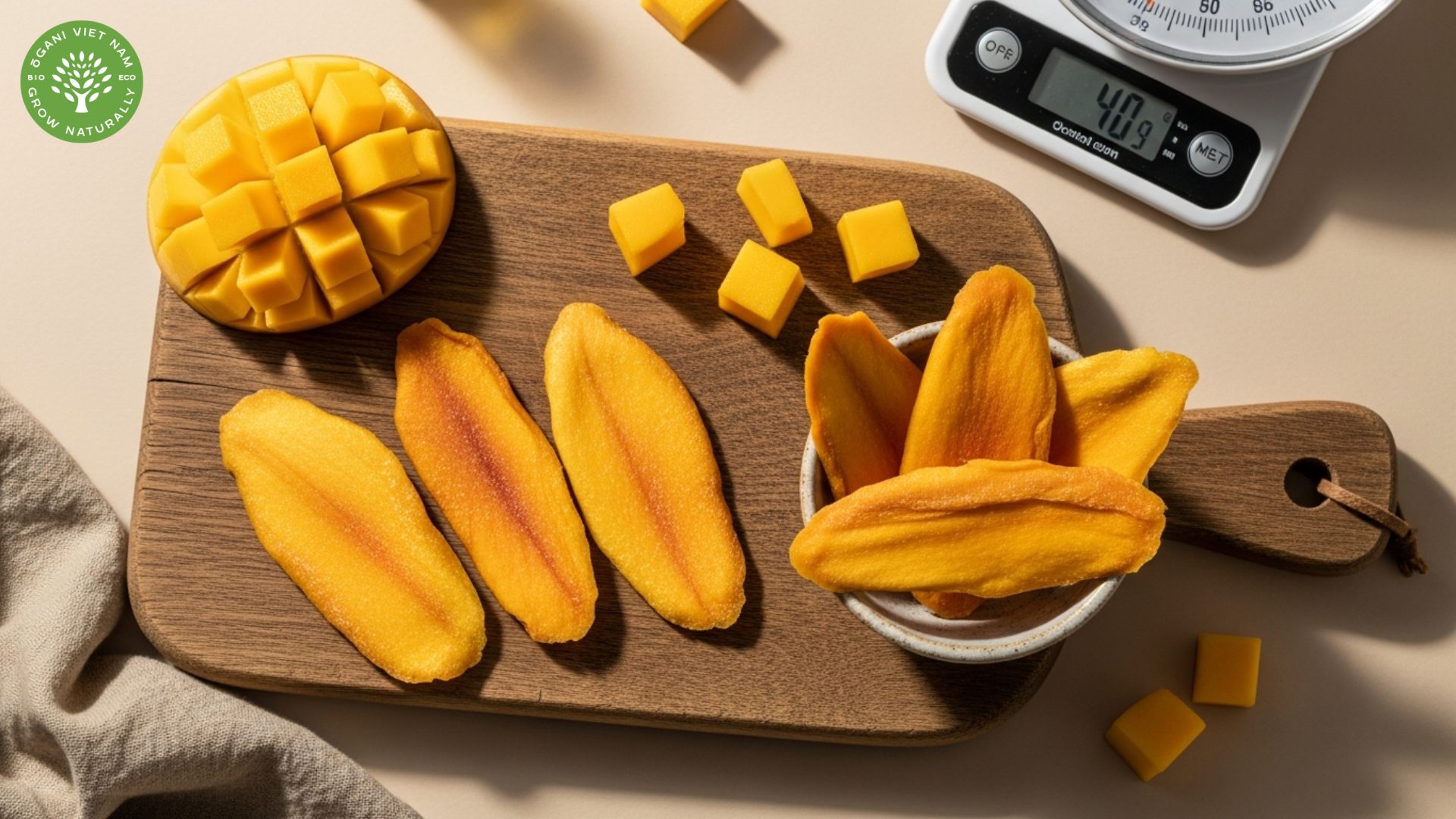
When you reach for that chewy, golden piece of dried mango, you’re probably wondering: how many calories am I actually eating? Let’s get straight to it—dried mango calories typically range from 120 to 140 calories per small handful (about 30-40 grams), which is surprisingly similar to a whole cup of fresh mango at around 99 calories, but the portions work very differently.
At Ogani VN, we’ve noticed customers often grab dried mango thinking it’s a “light snack,” only to realize later they’ve consumed more than planned. That’s because the dehydration process concentrates everything—flavor, sweetness, and yes, energy content. Understanding this isn’t about restriction; it’s about making choices that align with your goals.
How many dried mango calories are in a serving?
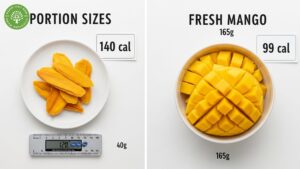
The calorie count in dried mango varies based on whether it’s sweetened or unsweetened, and honestly, that distinction matters more than most people realize.
A standard serving of unsweetened dried mango (around 40-42 grams, roughly 4-6 pieces) delivers approximately 128-140 calories. When we look at the nutritional breakdown per 100 grams, dried mango contains about 314 calories—significantly higher than fresh mango’s 60 calories per 100 grams. But here’s the thing: you’re unlikely to sit down and eat 100 grams of dried fruit in one go unless you’re really not paying attention.
Sweetened varieties? They can sneak up to 180 calories for a similar portion because manufacturers add sugar during processing. We’ve tested different brands at Ogani VN, and the difference between organic unsweetened and conventional sweetened versions can be 30-50 calories per serving. That might not sound like much, but if dried mango is your daily go-to snack, those numbers add up over a week.
The serving size listed on most packages is carefully calculated—usually around 40 grams or “about 4 pieces”—but let’s be real: who stops at exactly four pieces? The chewy texture and concentrated sweetness make it incredibly easy to reach for another… and another. That’s not a flaw in your willpower; it’s just how our brains respond to concentrated sugar and pleasant textures.
Dried mango calorie breakdown: Nutritional profile explained
Dried mango calorie counts tell only part of the story. The macronutrient breakdown reveals why this snack affects your body the way it does.
Carbohydrates and sugar content
Each serving of dried mango packs roughly 31-33 grams of carbohydrates, with 27-28 grams coming from natural sugars. To put that in perspective, that’s about the same sugar content as a small candy bar, except you’re also getting actual fruit nutrients alongside it. The fiber content sits at a modest 1-2 grams per serving—helpful, but not the fiber powerhouse some dried fruits offer.
We’re not here to scare you away from sugar (fruit sugar is still fruit, after all), but understanding this helps explain why dried mango gives you that quick energy spike. If you’re managing blood sugar levels or following a low-carb approach, you’ll want to factor these numbers into your daily carb budget.
Protein and fat content
Dried mango is essentially fat-free (0-0.5 grams per serving) and contains minimal protein (around 1 gram). This means it won’t keep you full for long on its own—something we’ve heard from customers who thought dried mango would tide them over until dinner, only to find themselves hungry an hour later.
Pairing it with a protein source changes the game completely. At Ogani VN, we recommend enjoying dried mango with a handful of almonds or cashews, or stirring pieces into Greek yogurt. The protein and healthy fats slow down sugar absorption and create actual satiety.
Vitamins and minerals
Despite losing some vitamin C during dehydration (fresh mango is the winner here), dried mango still retains about 19% of your daily vitamin C needs per serving. You’ll also get small amounts of vitamin A, potassium (around 350mg per serving), iron, and calcium. Not enough to make it a nutritional superstar, but these micronutrients contribute to your daily intake in a pleasant way.
Dried mango calorie comparison: Fresh vs dried
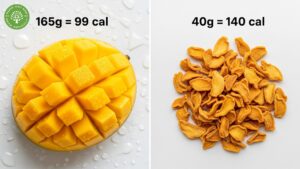
This comparison surprises almost everyone who asks us about it.
One whole cup of fresh mango cubes (165 grams) contains approximately 99 calories. That same amount of fresh mango, once dried, shrinks down to about 30-40 grams and contains 120-140 calories. So weight-for-weight, dried mango is definitely more calorie-dense. But here’s where it gets interesting: you can eat a much larger volume of fresh mango for fewer calories, which matters if you’re someone who eats with your eyes first.
Fresh mango also brings higher water content (about 83% water), which means it hydrates you while filling you up. The fiber in fresh mango is more intact too—you’re getting about 2.6 grams of fiber per cup compared to 1 gram in dried versions. For gut health and sustained energy, fresh wins.
But dried mango has its place. It’s portable, doesn’t bruise in your bag, lasts months in the pantry, and satisfies that chewy-sweet craving when fresh fruit isn’t available. We stock both at Ogani VN because, honestly, they serve different purposes in your eating routine.
The key question isn’t which is “better”—it’s which fits your situation. Hiking trip? Dried wins. Sitting at home with a knife and cutting board? Fresh gives you more volume and hydration for your calorie budget.
Managing dried mango calorie intake: Smart snacking strategies

Since we’ve established that dried mango calories can stack up quickly, let’s talk strategy for enjoying it without accidentally overdoing it.
Pre-portion your servings
This sounds overly simple, but it works. When you buy a large bag from Ogani VN, immediately divide it into small containers or zip bags—each containing about 40 grams (roughly 6-8 pieces depending on thickness). Label them if you’re tracking. When snack time hits, you grab one portion and that’s it. No judgment, no guilt, just a clear boundary.
Combine with filling foods

Remember how we mentioned dried mango lacks protein and fat? Use that to your advantage. Mix dried mango pieces into oatmeal with chia seeds, blend into smoothies with protein powder, or chop over cottage cheese. These combinations create balanced mini-meals instead of pure sugar rushes.
Time it strategically
There are better and worse times to eat concentrated fruit sugars. Post-workout? Your muscles welcome those quick carbs for recovery. Right before bed when you’re already sedentary? Probably not ideal. Mid-afternoon when you need a pick-me-up before your evening activities? Could work perfectly.
Choose unsweetened varieties
This seems obvious but bears repeating: unsweetened dried mango from Ogani VN contains no added sugar beyond what the mango naturally has. You’ll save 30-50 calories per serving and avoid that extra glucose spike. Yes, it’s slightly less candy-sweet, but after a few tries, your taste buds adjust and the natural flavor actually becomes more satisfying.
Stay hydrated alongside
Dried fruit can be a bit binding and doesn’t hydrate like fresh fruit does. Drink water before and after eating dried mango to help with digestion and create a fuller feeling.
Frequently Asked Questions
How many pieces of dried mango equal 100 calories?
About 3-4 pieces of unsweetened dried mango (approximately 25-30 grams) will get you close to 100 calories. The exact number depends on thickness and whether sugar was added during processing.
Can I eat dried mango every day on a diet?
Yes, but portion control is essential. A 40-gram serving can fit into most balanced eating plans when you account for it in your daily calorie and carb totals. We recommend alternating between fresh and dried fruit throughout the week for nutritional variety.
Is dried mango good for weight loss?
Dried mango isn’t specifically a “weight loss food” due to its calorie density and high sugar content, but it can be part of a weight loss plan when portioned properly. It satisfies sweet cravings better than processed candy and provides actual nutrients. The key is treating it as a measured snack, not mindless grazing food.
Does organic dried mango have fewer calories than regular?
Not really. The calorie difference between organic and conventional dried mango is negligible—both hover around 130-140 calories per serving. The “organic” label refers to growing practices, not caloric content. However, organic versions often skip added sugars, which can make a modest difference.
How should I store dried mango to maintain freshness?
Keep dried mango in an airtight container in a cool, dark place. Properly stored, it stays fresh for 6-12 months. If you live in a humid climate, refrigeration extends shelf life and prevents the pieces from sticking together.
Make smarter choices with Ogani VN’s premium dried mango
Understanding dried mango calories puts you in control of your snacking decisions. It’s not about avoiding this delicious treat—it’s about enjoying it mindfully as part of your balanced nutrition.
At Ogani VN, we’re committed to providing you with premium, unsweetened dried mango that delivers authentic flavor without unnecessary additives. Every bag is carefully portioned and transparently labeled, so you always know exactly what you’re eating. Whether you’re meal prepping for the week, looking for a natural energy boost, or simply craving something sweet without the processed sugar crash, our dried mango selection has you covered.
Ready to snack smarter? Browse our collection of organic dried fruits and discover how quality ingredients make all the difference. Have questions about nutrition, storage, or finding the right dried fruit for your lifestyle? Our team at Ogani VN is here to help—reach out through our website or visit us directly. Your journey to mindful, delicious snacking starts here.
Read more:
- Baking With Dried Red Dragon Fruit: Breads, Muffins & Cookies
- Dried Red Dragon Fruit vs Fresh: Color, Nutrition & When to Use Each
- Dragon Fruit Powder: Unlocking Ít Superfood Potential for Health and Wellness.
- Red Dragon Fruit Dried: Your Complete Buying Guide