


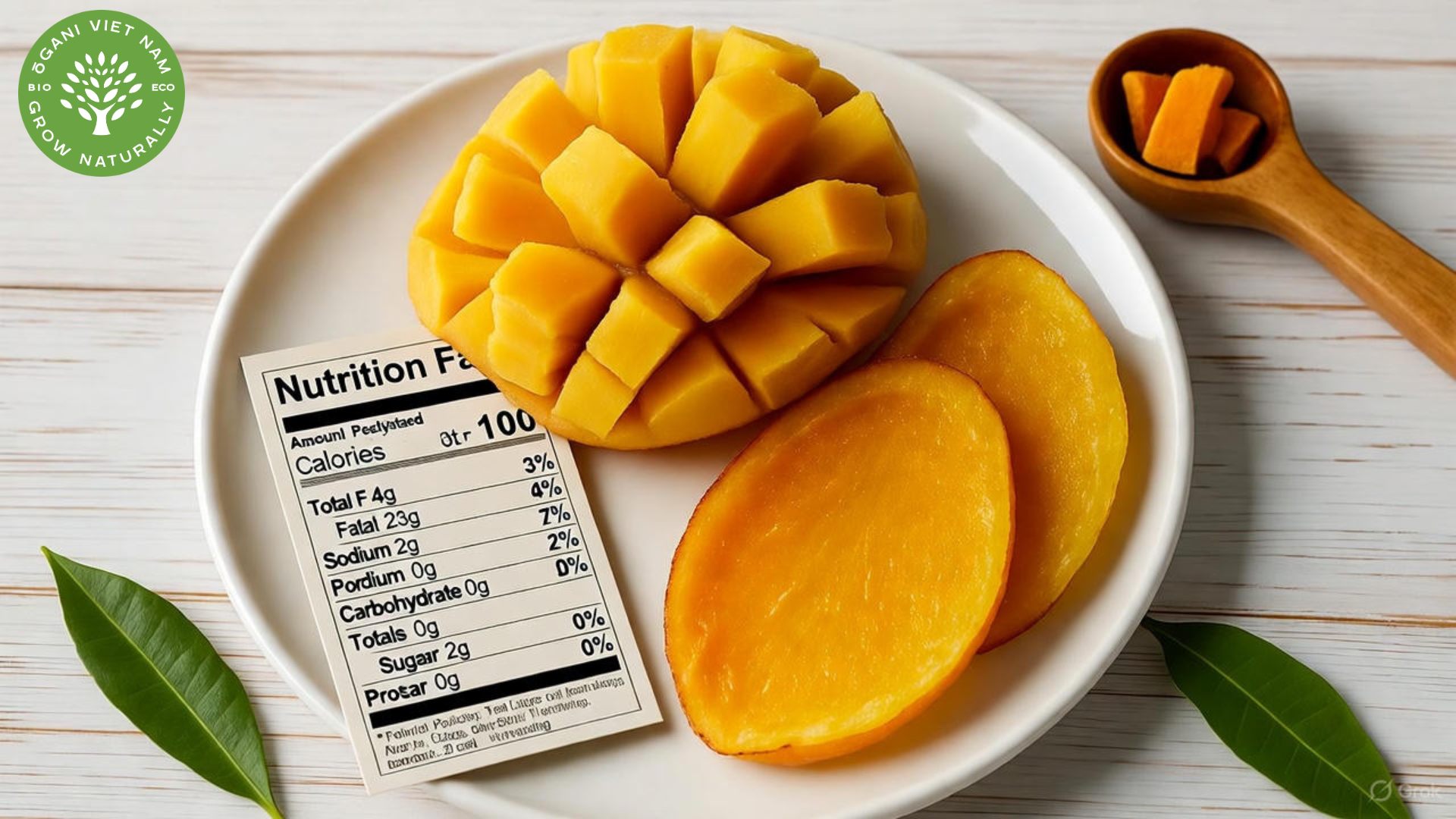
Nutrition facts of dried mango reveal this tropical treat packs around 120-130 calories per serving (about 40g), with significant amounts of vitamins A and C, natural sugars for quick energy, and dietary fiber. When you reach for a bag of dried mango, you’re getting more than just a sweet snack—you’re choosing concentrated nutrition in portable form. At Ogani VN, we believe knowing what’s in your food helps you make better choices—so let’s break down exactly what dried mango brings to your diet.
Breaking down the nutrition facts of dried mango: Basic numbers
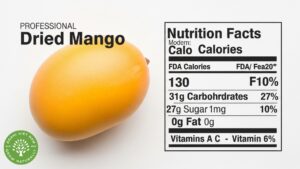
A standard serving of dried mango (roughly 5-6 pieces or 40 grams) delivers approximately 120-134 calories. Here’s what makes up those calories: you’re looking at about 31-35 grams of carbohydrates, less than 1 gram of protein, and virtually no fat. The carbohydrate content is mostly natural fruit sugars—around 27 grams per serving—which gives dried mango that intense sweetness we love.
The fiber content sits at about 1-2 grams per serving. Now, this might seem low compared to other dried fruits, but remember: the drying process concentrates everything except water. What you lose in volume, you gain in portability and shelf life. Understanding these nutrition facts of dried mango helps you plan portions that fit your daily calorie and sugar goals.
One thing that surprises many of our customers at Ogani VN is the sodium content in some products. Some commercial brands add salt during processing, so the nutrition facts of dried mango might show 50-55mg of sodium per serving. Our unsweetened, unsulfured varieties keep sodium minimal—because we think mango’s natural flavor shouldn’t need a marketing makeover.
Key vitamins and minerals in dried mango nutrition facts

Here’s where dried mango really shines. A single serving gives you about 19-25% of your daily vitamin C needs. Yes, the drying process reduces vitamin C compared to fresh mango, but you’re still getting a decent boost for immune function and skin health.
Vitamin A content is even more impressive—some servings provide up to 10% of your daily value. This comes from beta-carotene, the pigment that gives mango its golden-orange color. Your body converts this into vitamin A, supporting eye health and immune defense.
Beyond the headline vitamins, dried mango contains smaller amounts of vitamin E, several B vitamins (including folate), and minerals like potassium, iron, and calcium. The potassium content—around 160-200mg per serving—helps with muscle function and blood pressure regulation. Not earth-shattering amounts, but they add up when dried mango becomes a regular snack.
We’ve noticed customers asking about antioxidants, and yes, dried mango contains polyphenols and other compounds that fight oxidative stress. The concentration varies based on mango variety and processing methods, but the benefit exists regardless.
Dried mango vs fresh: Comparing nutrition facts
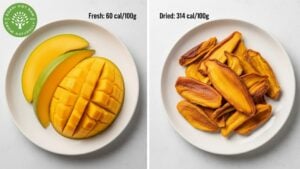
Let’s get real about this comparison—because it’s not as simple as “fresh is always better.” A 100-gram serving of fresh mango has about 60 calories and 15 grams of sugar. The same weight of dried mango? Around 314 calories and 81 grams of sugar. That’s because removing water concentrates everything else.
But here’s the flip side: dried mango is portable, doesn’t require refrigeration, and lasts months in your pantry. Fresh mango spoils quickly and can be messy to eat on the go. At Ogani VN, we see both as valuable—they serve different purposes in your diet.
The vitamin C loss during drying is real. Fresh mango retains more of this heat-sensitive vitamin. However, vitamin A (from beta-carotene) remains relatively stable, and the fiber content per gram actually increases in dried form since water’s removed.
Think of it this way: fresh mango is your go-to when you want hydration and maximum vitamins. Dried mango is your grab-and-go energy source when you need concentrated nutrition in a small package. Neither is “wrong”—just different tools for different situations.
Using nutrition facts of dried mango for smart portion control

Here’s where many people trip up. The nutrition facts of dried mango look reasonable at first glance, but portion control matters enormously. Those 5-6 pieces that equal one serving? They disappear fast. Before you know it, you’ve eaten three servings and taken in nearly 400 calories.
We recommend measuring out your portion rather than eating straight from the bag. Put 40 grams in a small bowl, seal the main package, and walk away from the kitchen. This simple trick helps you enjoy dried mango without overdoing the sugar or calories.
For most people, one serving daily fits comfortably into a balanced diet. Athletes or very active individuals might handle two servings, especially before or after workouts when quick-digesting carbs support performance. But if you’re watching your sugar intake or managing blood glucose, stick to half a serving and pair it with protein or healthy fats to slow digestion.
At Ogani VN, we’ve seen customers use dried mango in creative ways: chopped over morning oatmeal (half serving), blended into smoothies (quarter serving), or mixed into trail mix with nuts and seeds (small handful). These approaches let you enjoy the flavor and nutrition without the sugar bomb of eating dried mango solo.
How to read nutrition facts when buying dried mango

Not all dried mango is created equal—and the nutrition label tells only part of the story. Check the ingredient list first. The best dried mango has one ingredient: mango. That’s it. No added sugar, no sulfur dioxide, no artificial colors or preservatives.
Sulfur dioxide (often listed as sulfites) keeps dried fruit looking bright and extends shelf life, but some people have sensitivities. Unsulfured dried mango looks more brown-orange than bright yellow—that’s natural oxidation, not a quality problem. At Ogani VN, we choose unsulfured options because we’d rather have natural-looking fruit than unnecessary chemicals.
Added sugar is another red flag. Mango already contains 15-20% natural sugar when fresh. Concentrating that through drying gives you plenty of sweetness—no need to dump more sugar on top. “Sweetened” or “candied” dried mango can contain 30-40 grams of sugar per serving, nearly double the natural amount.
Organic certification matters if you want to avoid pesticide residues. Mango trees can be heavily sprayed in conventional farming, and some of those chemicals persist through processing. Our organic dried mango costs a bit more, but customers tell us the peace of mind is worth it.
Texture tells you about freshness and quality too. Good dried mango should be pliable, slightly sticky, and chewy—not rock-hard or crumbly. If it’s too dry, the fruit was over-processed or has been sitting around too long. If it’s too soft and wet, moisture content is high and you risk mold growth.
Frequently asked questions
Is dried mango fattening?
Dried mango isn’t inherently fattening—but calories are calories, and 120 per serving adds up if you eat multiple servings daily. The natural sugars provide quick energy, but excess gets stored as fat like any other carbohydrate. Enjoy it as part of a balanced diet, not as an unlimited snack.
Can diabetics eat dried mango?
People with diabetes can include dried mango in moderation, ideally paired with protein or fat to moderate blood sugar spikes. The concentrated sugar content means portion control is critical—stick to half a serving and monitor your glucose response. Always consult your healthcare provider for personalized advice.
Does dried mango have as much vitamin C as fresh?
No, the drying process reduces vitamin C content by 50-80% depending on method and temperature. However, dried mango retains most of its vitamin A and provides concentrated fiber and minerals, so it’s still nutritious—just different from fresh.
How long does dried mango stay fresh?
Properly stored in an airtight container in a cool, dry place, dried mango lasts 6-12 months. Once opened, try to use it within 2-3 months for best quality. You can refrigerate or freeze it for longer storage—just let it come to room temperature before eating for better texture.
Making dried mango work for your healthy diet

The nutrition facts of dried mango reveal a snack that delivers quick energy, immune-supporting vitamins, and satisfying sweetness in a convenient form. While it’s higher in calories and sugar than fresh mango, it offers portability and shelf stability that fresh fruit can’t match. The key is treating it as a nutrient-dense snack, not an unlimited munch-fest.
At Ogani VN, we source dried mango that respects both your health and your taste buds—unsweetened, unsulfured, and made from quality fruit. When you choose wisely and eat mindfully, dried mango becomes a valuable part of your nutrition toolkit. Ready to try dried mango the right way? Check out our selection of organic, naturally dried tropical fruits and discover snacking that actually serves your body. Your taste buds and your health goals can finally agree on something.
Read more:
- Baking With Dried Red Dragon Fruit: Breads, Muffins & Cookies
- Dried Red Dragon Fruit vs Fresh: Color, Nutrition & When to Use Each
- Dragon Fruit Powder: Unlocking Ít Superfood Potential for Health and Wellness.
- Red Dragon Fruit Dried: Your Complete Buying Guide
- Nutrition Facts of Dried Mango: Complete Guide