


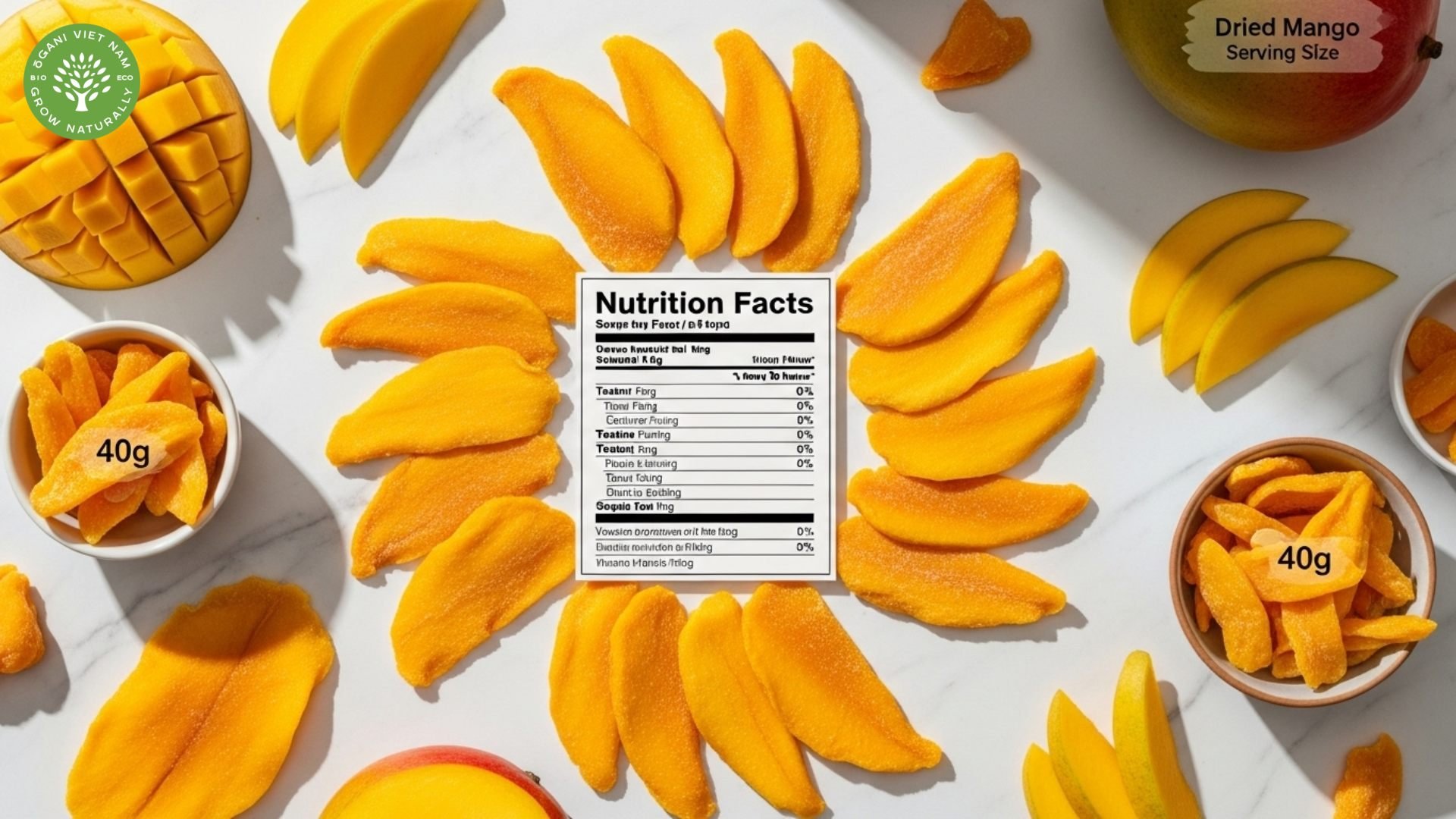
When you reach for that chewy, golden slice of dried mango, you’re getting a concentrated source of natural sugars, vitamins, and minerals. A standard 40-gram serving (about 4-5 pieces) of dried mango nutrition information typically shows around 120-140 calories, 31 grams of carbohydrates with most coming from natural fruit sugars, plus decent amounts of vitamin A, vitamin C, and dietary fiber. But there’s more to the story than just numbers on a label.
Breaking down dried mango nutrition information basics

The dehydration process that transforms fresh mango into those convenient, shelf-stable slices does something interesting to the fruit’s nutritional makeup. Water gets removed, but most nutrients stay put – they just become more concentrated. This means you’re getting more vitamins and minerals per gram, but also more calories and sugars compared to eating fresh mango.
A typical serving of unsweetened dried mango nutrition information breaks down like this: you’re looking at roughly 1 gram of protein, virtually no fat (less than 0.5 grams), and about 1-2 grams of dietary fiber. The carbohydrate content sits around 30-35 grams per serving, with 25-30 grams of that coming from natural fruit sugars. It’s not added sugar in quality brands – it’s the fructose that was already in the fresh fruit, just more concentrated now.
The micronutrient profile is where dried mango really shines. Vitamin A content can provide 15-20% of your daily value, supporting eye health and immune function. Vitamin C, though reduced somewhat during the drying process, still delivers about 15-20% of what you need daily. You’ll also find smaller amounts of vitamin E, several B vitamins including folate and niacin, and minerals like potassium (around 150-200mg per serving), calcium, iron, and magnesium.
One thing worth noting – commercial brands often differ. Some add sugar, which can push the calorie count up to 160-180 per serving. Others use sulfur dioxide as a preservative to maintain that bright orange color, though organic varieties typically skip this step.
Health benefits revealed in dried mango nutrition information
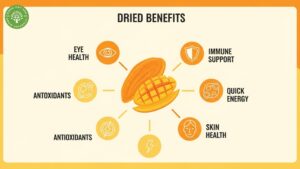
Let’s talk about what eating dried mango does for your body beyond just satisfying a sweet craving. The vitamin A content supports more than just vision – it plays a role in maintaining healthy skin and mucous membranes, which form your body’s first line of defense against infections. If you’re someone who struggles with dry skin or wants to support skin health from the inside out, the beta-carotene in dried mango (which converts to vitamin A) can help.
The antioxidant package in dried mango deserves attention too. You’re getting compounds like mangiferin, quercetin, and various polyphenols that help fight oxidative stress in your cells. Think of these as your body’s cleanup crew, helping neutralize free radicals that contribute to aging and chronic disease. Research suggests these antioxidants may support heart health and reduce inflammation, though eating dried mango alone isn’t a magic bullet.
Digestive health gets a small boost from the fiber content, though honestly, dried mango isn’t a fiber powerhouse compared to something like dried prunes or figs. That 1-2 grams per serving contributes to your daily goal of 25-30 grams, but you’ll need other fiber sources throughout the day. The natural fruit sugars do provide quick energy though, making dried mango a decent pre-workout snack or afternoon pick-me-up when you need something that won’t sit heavy in your stomach.
Here’s something I find interesting: dried mango contains enzymes similar to those in fresh mango (though in lower amounts after processing) that may aid protein digestion. Some people find that a small amount of dried mango after a heavy meal helps them feel less bloated, though this is more anecdotal than scientifically proven.
Dried mango nutrition information: sweetened versus unsweetened

The unsweetened variety
When you see “unsweetened” or “no sugar added” on the package, it means the manufacturer dried the fruit without adding extra sweeteners. The sugar content you see on the nutrition label – usually 25-28 grams per serving – comes entirely from the mango itself. These versions typically have shorter ingredient lists: just “organic mango” or “mango.” They might look less vibrant (more brownish-yellow than bright orange) since they often skip sulfur treatment too.
Calorie-wise, unsweetened dried mango runs about 110-130 calories per 40-gram serving. The taste is intensely fruity and naturally sweet, though some people find it less candy-like than sweetened versions. At Ogani VN, we lean toward recommending unsweetened varieties because you’re getting the fruit as close to its natural state as possible – just with the water removed.
The sweetened varieties
Sweetened dried mango includes added sugar, often cane sugar or syrup, applied during or after the drying process. This bumps the sugar content up to 30-35 grams per serving and adds an extra 20-40 calories. The texture often becomes softer and more pliable, and the color usually stays brighter.
Why would manufacturers add sugar to something already naturally sweet? Partly because it helps preserve the fruit and maintain texture, but also because it creates a more consistent, candy-like sweetness that some consumers prefer. The trade-off is less nutritional density – you’re getting fewer nutrients per calorie compared to unsweetened versions.
For anyone watching their sugar intake or managing conditions like diabetes, the distinction matters. That extra 5-10 grams of added sugar pushes the glycemic impact higher and uses up more of your daily sugar budget (the American Heart Association recommends no more than 25-36 grams of added sugar per day for adults).
Using dried mango nutrition information for portion control
This is where many people trip up with dried fruit. A serving of dried mango seems small – just 4-5 pieces or about 40 grams – but it packs the same calories as a much larger portion of fresh fruit. If you’ve ever found yourself mindlessly munching through half a bag while watching TV, you’ve probably consumed 400-500 calories without realizing it.
Here’s a practical comparison that might help: one fresh mango (about 200 grams of edible fruit) contains roughly 120-130 calories. When that same mango gets dried, it shrinks down to about 40-45 grams but retains nearly all those calories. So eating 40 grams of dried mango is nutritionally similar to eating one whole fresh mango – but it’s much easier to overeat because the volume is so much smaller.
At Ogani VN, we tell customers to pre-portion their dried mango into small containers or bags rather than eating straight from the package. Put 4-5 pieces in a small bowl, close the bag, and put it away before you start eating. It sounds simple, but this one habit prevents the overconsumption that can turn a healthy snack into a sugar bomb.
For active individuals or those with higher calorie needs, dried mango makes an excellent portable energy source. Hikers, cyclists, and endurance athletes often pack dried fruit because it provides quick-acting carbohydrates in a compact, non-perishable form. Just know what you’re eating and plan accordingly.
Applying dried mango nutrition information to different diets
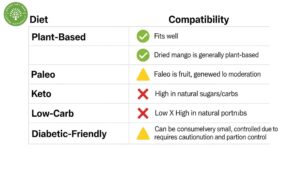
Different eating patterns accommodate dried mango with varying degrees of ease. For those following a whole-food, plant-based diet, unsweetened dried mango nutrition information shows it fits perfectly as a natural sweet treat. The vitamins and minerals support overall nutrition, and it satisfies sweet cravings without processed ingredients.
Keto and low-carb diets struggle with dried mango though. At 30+ grams of carbs per serving, even a small portion uses up a significant chunk of a 20-50 gram daily carb limit. Some people on less strict low-carb approaches (maybe 100-150 grams per day) can fit in a small amount occasionally, but it’s not ideal for strict ketogenic diets.
Paleo eaters generally give dried mango the green light, especially organic, unsweetened varieties. It aligns with the “if a caveman could have eaten it” principle – dried fruit is one of the oldest preserved foods humans have made. Just watch those portions since our ancestors didn’t have unlimited access to dried tropical fruit.
For anyone managing blood sugar, dried mango requires caution. The concentrated sugars can spike blood glucose quickly. If you have diabetes or prediabetes, pair a small amount with protein or fat (like a handful of nuts) to slow sugar absorption, or save it for after exercise when your body handles glucose more efficiently. Always check with your healthcare provider about fitting any dried fruit into your meal plan.
Weight management is about balance. Dried mango isn’t inherently fattening, but its calorie density means portion control becomes critical. As part of a calorie-controlled diet with plenty of vegetables, lean proteins, and whole grains, a small serving of dried mango can satisfy sweet cravings without derailing your goals. Just don’t fool yourself into thinking it’s a “free” food because it’s fruit.
Frequently Asked Questions
Is dried mango as healthy as fresh mango?
Both have nutritional value, but they’re different. Fresh mango has more water content (making it more filling with fewer calories), higher vitamin C levels, and better satiety. Dried mango concentrates nutrients but also concentrates sugars and calories. Neither is inherently “better” – they serve different purposes. Fresh is better for hydration and weight management; dried is better for portability and longer shelf life.
How much dried mango should I eat per day?
Stick to one serving (40-45 grams or about 4-5 pieces) if you’re having it daily. This gives you the nutritional benefits without overloading on sugar or calories. Many nutrition experts recommend treating dried fruit as a “sometimes food” rather than an everyday staple, especially if you’re watching your weight or blood sugar.
Does dried mango have added sugar?
It depends on the brand. Check the ingredient list carefully. If it lists only “mango” or “organic mango,” there’s no added sugar – the 25-30 grams you see on the nutrition label comes from the fruit itself. If you see “cane sugar,” “organic cane syrup,” or any other sweetener listed, it’s been added. Unsweetened is generally the healthier choice.
Can dried mango cause digestive issues?
Some people experience bloating or loose stools from eating too much dried mango, primarily due to the high sugar content and concentrated fiber. The sulfur dioxide used as a preservative in some brands can also trigger reactions in sensitive individuals. If you have IBS or similar digestive conditions, start with a very small amount to see how you tolerate it.
Making smart choices with your dried mango
Understanding dried mango nutrition information helps you make informed choices about incorporating this tropical treat into your diet. Yes, it’s calorie-dense and high in natural sugars, but it also delivers meaningful amounts of vitamin A, vitamin C, antioxidants, and other nutrients. The key is respecting portion sizes and choosing quality products – preferably organic and unsweetened.
At Ogani VN, we believe in transparent nutrition information and helping you select dried fruits that align with your health goals. Whether you’re looking for a convenient snack for busy days, a natural energy boost before workouts, or just a healthier alternative to candy, dried mango can fit into a balanced diet when you approach it mindfully. Browse our selection of premium dried fruits and discover how whole-food snacking can be both delicious and nutritious. Ready to make your next snack count? Check out our organic dried mango options today.
Read more:
- Red Pitaya Powder: The Ultimate Superfood Guide For Health
- Dried Mango Nutrition: Complete Guide To Health Benefits.
- Best Dried Mango No Sugar Added: Premium Quality Guide
- Dragon Fruit Protein Smoothie: Your Ultimate Guide
- Dried Mango Nutrition Information: Complete Guide