


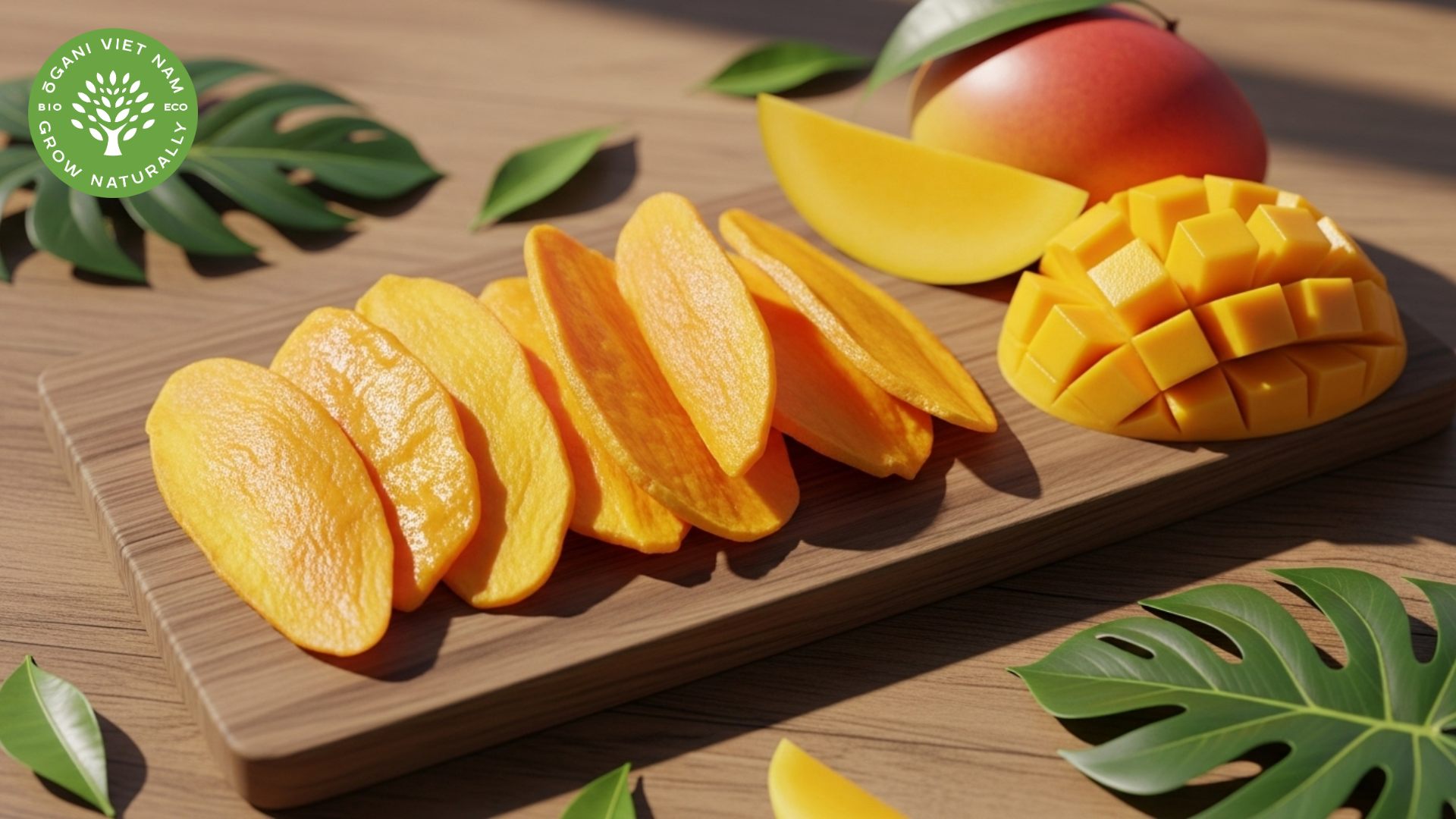
Dried fruit mango is pure, concentrated tropical goodness in every bite—no added sugar, no preservatives, just naturally sweet fruit that satisfies cravings while providing real nutritional value. At Ogani.VN, we’ve spent years perfecting our sourcing to bring you the kind of dried mango that tastes like you’re biting into fresh fruit, not chewy cardboard.
Here’s what most people don’t realize when they grab a random bag of dried mango from the supermarket shelf: not all dried fruit is created equal. Some brands load their products with refined sugar (making them basically fruit-flavored candy), others use sulfites to maintain that bright artificial color, and plenty over-process the fruit until it has the texture of shoe leather. The real stuff? It should have exactly one ingredient listed on the back.
Why our dried fruit mango stands out from the crowd
Walk through any health food store and you’ll see at least a dozen brands claiming their dried mango is “the best.” Most are lying—or at least stretching the truth pretty thin. We’ve taste-tested probably fifty different brands over the years, and here’s what separates exceptional from just okay.
First, it starts with the mango itself. Tree-ripened organic mangoes develop sweetness and complexity that you simply cannot get from fruit picked early and ripened in transit. The difference is night and day. When mangoes ripen naturally under the sun, hanging from the branch, they develop layers of flavor: that initial bright sweetness, followed by subtle buttery notes, finishing with just a hint of tartness that keeps things interesting.
Most commercial operations pick mangoes when they’re still firm and green because they ship better. Practical for logistics, terrible for flavor. These mangoes never quite hit that peak sweetness—they taste flat, one-note, vaguely tropical but missing that “close your eyes and sigh” moment.
At Ogani.VN, we wor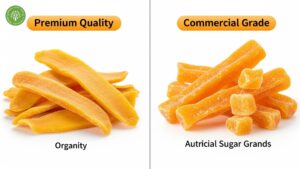 k exclusively with organic farms that prioritize flavor over convenience. Yes, it costs more. Yes, it’s more complicated. But the result speaks for itself when you actually taste the difference.
The drying process matters just as much as the fruit quality. Gentle, low-temperature dehydration preserves the natural enzymes and nutrients while creating that perfect chewy texture. High-heat industrial drying is faster and cheaper, but it literally cooks some of the goodness out of the fruit. You end up with something that’s technically dried mango but tastes more like a vague approximation.
Our dried fruit mango maintains about 18% moisture content—enough to stay pliable and enjoyable without being overly sticky. Get that balance wrong and you either have fruit leather that requires serious jaw work, or sticky candy that glues your teeth together. Neither is pleasant.
The nutritional benefits of dried fruit mango that actually matter
Let’s get something straight right away: dried mango is not a “diet food.” It’s concentrated fruit, which means concentrated natural sugars. A small handful contains roughly the same calories and sugar as eating a whole fresh mango—but in a more compact form. Understanding this upfront helps set realistic expectations.
That said, you’re also getting concentrated nutrition. The water is gone, but everything else intensifies proportionally.
Vitamin A content for vision and immune health
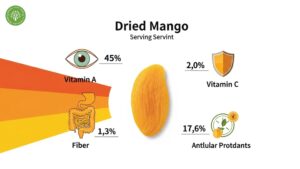
One ounce of quality dried fruit mango delivers approximately 20% of your recommended daily vitamin A intake. This isn’t trivial—vitamin A plays crucial roles in maintaining healthy vision, supporting immune function, and promoting skin health. The beta-carotene (which your body converts to vitamin A) also acts as a powerful antioxidant.
We’re not making miracle claims here. This isn’t going to cure anything or dramatically transform your health overnight. But as part of an overall balanced diet? It’s a genuinely nutritious choice that happens to taste fantastic.
Fiber that keeps things moving
Each serving provides about 2 grams of dietary fiber—not massive, but meaningful when you consider that most people fall short of the 25-30 grams recommended daily. The fiber content helps slow sugar absorption (preventing that spike-and-crash cycle) and supports digestive health.
One thing we’ve noticed from customer feedback: people who snack on our dried mango between meals report feeling satisfied longer than when they eat, say, crackers or chips. The combination of natural fruit sugars for quick energy plus fiber for sustained satisfaction seems to hit that sweet spot.
Other micronutrients worth mentioning
You’re also getting modest amounts of vitamin C (though drying does reduce this compared to fresh), vitamin E, potassium, and various polyphenols with antioxidant properties. Again, not magical, just solid nutrition in convenient snack form.
The key difference between dried mango and something like candy: candy gives you sugar and nothing else. Dried fruit mango gives you sugar alongside actual nutrients your body can use. That’s the distinction that matters.
Creative ways to enjoy dried fruit mango beyond simple snacking
Sure, eating dried mango straight from the bag while binge-watching your favorite show works perfectly fine. But if you’re looking for more creative applications that actually make sense, here are approaches we’ve tested extensively:
Morning routine boost
Chop a few pieces of dried mango into your breakfast oatmeal or yogurt. The fruit softens slightly from the moisture and adds natural sweetness without needing honey or sugar. We particularly like it with plain Greek yogurt, a handful of almonds, and a drizzle of almond butter—creates this tropical breakfast bowl that doesn’t feel like you’re “trying to eat healthy” because it legitimately tastes good.

Trail mix that doesn’t suck
Most store-bought trail mix is disappointing—too many peanuts, those weird yogurt-covered raisins nobody wants, maybe one or two actual chocolate chips if you’re lucky. Make your own by combining chopped dried fruit mango, raw cashews, dark chocolate chunks, and maybe some coconut flakes. The mango’s chewiness contrasts perfectly with crunchy nuts and provides enough sweetness that you don’t need candy masquerading as trail mix components.
Baking applications that work
Dice dried mango small and fold it into muffin or quick bread batter. The fruit rehydrates slightly during baking and creates little pockets of concentrated tropical flavor. Particularly good in banana mango muffins or coconut quick bread. Just remember to account for the added sweetness—you might want to reduce other sugars in the recipe slightly.
Savory pairings that surprise people
This one raises eyebrows until people try it: pair dried mango with sharp aged cheese. The contrast between sweet fruit and tangy, savory cheese creates this flavor complexity that’s genuinely impressive for something requiring zero cooking skills. Add some marcona almonds and suddenly you’ve got an appetizer spread that looks like you know what you’re doing.
We’ve also had customers report success adding rehydrated dried mango to curry dishes, using it in homemade chutney, and even incorporating it into salad dressings blended with lime juice and olive oil. Once you start thinking of it as an ingredient rather than just a snack, possibilities open up.
How to choose premium dried fruit mango and avoid low-quality products
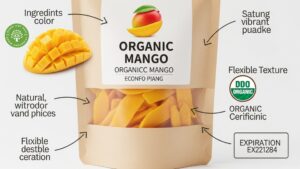
After years of sourcing and testing, we’ve developed what you might call pattern recognition for quality indicators. These practical markers separate excellent products from mediocre ones:
Ingredient list should bore you. Look for one word: “Organic mango” or “Mango.” That’s it. If you see “cane sugar,” “corn syrup,” “sulfur dioxide,” “natural flavors,” or anything else—it’s not pure fruit. Put it back. This single rule eliminates probably 70% of inferior products immediately.
Texture reveals processing quality. Feel the package. Quality dried fruit mango should feel pliable and slightly soft through the bag. If it feels rigid or crispy, that’s over-dried fruit that’ll be tough and unpleasant. If it feels wet or sticky, that’s either under-dried (shelf life issues) or has added sugars making it tacky.
Organic certification actually matters here. Mangoes typically carry moderate pesticide residues according to environmental testing. Choosing organic means you’re avoiding unnecessary chemical exposure while also ensuring certain processing standards are met. Organic certification prohibits many of the additives and sulfites that conventional dried fruit might contain.
Color provides clues but isn’t definitive. Natural dried mango ranges from golden yellow to deep amber-orange, sometimes with slight brown edges. That’s normal. What’s not normal: bright, neon orange that looks artificially uniform. That typically indicates sulfite treatment to preserve color. Some varieties naturally darken more during drying—that’s fine and doesn’t affect quality.
Origin matters, but so does processing location. The best mangoes for drying come from regions like the Philippines, Thailand, and parts of Mexico where mangoes develop optimal sweetness. However, where the fruit is grown and where it gets processed can be different locations. Check both if possible.
At Ogani.VN, we obsess over these details so our customers don’t have to. Every batch undergoes quality testing for moisture content, texture consistency, and yes—we taste everything. It’s part of the job we don’t complain about.
Common questions about dried fruit mango answered
How long does dried mango last after opening?
Stored properly in an airtight container in a cool, dark place, opened dried fruit mango stays fresh for 2-3 months. Refrigeration can extend this to 4-6 months, which we recommend in Vietnam’s humid climate. You’ll know it’s past its prime if it develops off-flavors, unusual hardness, or visible mold (though that last one is rare if stored properly).
Is dried mango suitable for people with diabetes?
Dried mango contains concentrated natural sugars that will affect blood glucose levels. People managing diabetes should consume it in moderation as part of their overall carbohydrate intake, preferably paired with protein or healthy fats to slow sugar absorption. Always consult with your healthcare provider about incorporating dried fruits into your specific meal plan.
Can children eat dried mango safely?
Absolutely, though portion control matters. For younger children (under 3-4 years), consider cutting it into smaller pieces to reduce choking risk since the chewy texture requires good chewing. One ounce (about 6-8 pieces) makes an appropriate snack portion for most kids. It’s certainly better than giving them gummy candy or processed snacks.
What’s the difference between dried mango with and without added sugar?
The difference is massive. Pure dried mango gets all its sweetness from the fruit’s natural sugars concentrated during drying. Added sugar versions contain refined sweeteners on top of the fruit’s natural sugars, essentially turning it into candy. They’re noticeably sweeter but provide empty calories without additional nutrients. Always choose unsweetened varieties—the fruit is already plenty sweet on its own.
How do I know if dried mango has gone bad?
Trust your senses. Off or fermented smell, unusual mold growth, extreme hardness or mushiness, or a rancid taste all indicate the product has spoiled. Properly stored dried fruit mango from Ogani.VN should maintain its pleasant tropical aroma and chewy texture throughout its shelf life.
Can I rehydrate dried mango to use in cooking?
Yes! Soak pieces in warm water for 10-15 minutes to partially rehydrate them. This works great for blending into smoothies, incorporating into baked goods, or adding to cooked dishes like rice or curry. The texture won’t be exactly like fresh mango, but it works well for most cooking applications where you want that mango flavor.
Start enjoying premium dried fruit mango from Ogani.VN today
Finding genuinely high-quality dried fruit mango shouldn’t require a PhD in food science or hours of research. Look for organic certification, single-ingredient products, and that perfect chewy texture that makes you want another piece. Skip anything with added sugars or preservatives—the fruit’s natural sweetness is more than enough.
At Ogani.VN, we’ve already done the hard work of sourcing, testing, and selecting the absolute best dried mango available. Our organic dried fruit mango comes from carefully chosen farms where fruit ripens naturally on the tree, then undergoes gentle processing that preserves both nutrition and that incredible flavor you’re after.
Ready to experience what real dried mango tastes like? Visit our online store to browse our premium selection. We offer fast delivery throughout Vietnam, and if your first order doesn’t meet your expectations, we’ll make it right—no complicated returns, no questions asked. Your satisfaction matters to us.
Browse our dried fruit mango collection today and discover why thousands of Vietnamese families trust Ogani.VN for their healthy snacking needs. Real fruit, real flavor, real quality—that’s our promise to you.
Read more:
- Red Pitaya Powder: The Ultimate Superfood Guide For Health
- Dried Mango Nutrition: Complete Guide To Health Benefits.
- Dried Unsweetened Mango: Healthy Snack Guide
- Dried Mango vs Freeze‑Dried Mango: Nutrition, Texture & Best Uses
- Dried Fruit Mango: The Healthy Snack That Actually Delivers